Results by title
905 books match the query 'Literary' and 44 start with d
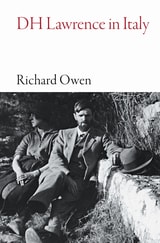
DH Lawrence in Italy
Richard Owen
Haus Publishing, 2014
In DH Lawrence in Italy, Owen reconstructs the drama leading up to the creation of one of the most controversial novels of all time by drawing on the unpublished letters and diaries of Rina Secker, the Anglo-Italian wife of Lawrence’s publisher. In addition to telling the story of the origins of Lady Chatterley, DH Lawrence in Italy explores Lawrence’s passion for all things Italian, tracking his path to the Riviera from Lake Garda to Lerici, Abruzzo, Capri, Sicily, and Sardinia.
Dare the Sea
StoriesAli Hosseini
Northwestern University Press, 2023
The stories in Dare the Sea explore Iran’s landscape, culture, and the undercurrent of change affecting its people—both in Iran and the United States. The stories in the first half of the collection are set in Iran in the time before and just after the Iranian Revolution of 1979. Each tale discloses the obstacles rural Iranians lived with on a daily basis and the exigencies of survival: petty theft, corruption, drug trafficking, religion, and love. Stories in the second half take place in exile, where characters are seemingly dropped into American locales like the Midwest or Hawaii, taking in their situation with only the survival skills they’ve learned in their own land and enduring the hardships of being strangers in a new country.
Loosely interconnected by reappearing characters, the stories in Dare the Sea are strongly linked by the country of Iran, its landscape, its history, and its hold on its people.
Dark Side of Love
Rafik Schami and Anthea Bell
Haus Publishing, 2011
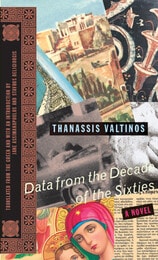
Data from the Decade of the Sixties
A NovelThanassis Valtinos
Northwestern University Press, 2000
Just as Greece today struggles to adapt to a shifting political landscape, so Greece in the 1960s was convulsed by the collision of tradition and cultural transformation. In Data from the Decade of the Sixties, Valtinos assembles voices, stories, and news clips that capture the transformation of Greece, the monarchy giving way to a republic via dictatorship, the industrialization of its agricultural society, and the replacement of arranged marriages with love matches.
The many voices in this tour de force coalesce in a bricolage of documents: personal letters between friends and family, news reports, advertisements, and other written ephemera. As governments fall, sexologists, fortune-tellers, garage owners, and lonely matrons advertise their specialties and fantasies in want ads, while the young and lonely find escape within the cheap novels, movies, and gossip columns that enliven their barren existence.
Together these testimonies illuminate the tumult of 1960s Greece, where generations and values clash and Greek society struggles to adapt. Valtinos captures the pulse of a decade, portraying the spirit of the century in Greece and throughout the world.
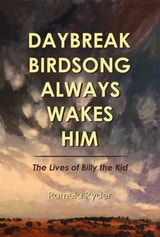
Daybreak Birdsong Always Wakes Him
The Lives of Billy the KidPamela Ryder
University of Alabama Press, 2026
A haunting reimagining of Billy the Kid—myth, violence, and regret collide in a lyrical coming-of-age story woven with history, legend, and the omnipresence of birds.
Daybreak Birdsong Always Wakes Him: The Lives of Billy the Kid by Pamela Ryder is a coming-of-age saga like no other. It reaches beyond the myth of the reckless and romantic rebel, the murdering gunslinger, and the scrappy outlaw. His story is one of survival, mayhem, and regret. Billy is portrayed as a complex and authentic figure. At times he is ruthless, often sympathetic, always clever and engaging. Yet he remains haunted by loneliness as he rides ever closer to the end of his short and violent life.
The child of Irish immigrants, Billy came of age amid hardship and lawlessness, forced to navigate a world that offered him little mercy. From his grim childhood in the tenements of New York to the unforgiving deserts of New Mexico, his journey is marked by loss, chaos, and fleeting moments of grace. He was a boy who became an outlaw, forever running from his past toward an inevitable fate.
Told through shifting perspectives and enriched by Billy’s keen observations of birds, landscapes, and the lives he has taken, the novel unfolds in lyrical, unflinching prose. His fascination with birds, whose freedom stands in stark contrast to his own doomed flight, threads through the narrative. A meditation on myth, mortality, and the stories we tell about ourselves, Daybreak Birdsong Always Wakes Him is a singular reimagining of the American West. It does not flinch from the blood or the beauty of a life lived on the edge of history.
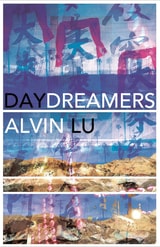
Daydreamers
A NovelAlvin Lu
University of Alabama Press, 2025
A fragmented manuscript left unfinished, a voice inherited by time, a ghost lingering in the margins—Daydreamers is what remains when fiction forgets its fiction and when the story you’re translating becomes your own.
Upon the discovery of an unfinished manuscript left behind by his late father, a son’s act of literary translation quickly descends into a ghost story of family rumors, art, and the history we inherit, whether we want them or not. As the son translates the mysterious text, what emerges is a narrative haunted by betrayal, artistic rivalry, and a murder in California’s Chinese literary underground—one that was never solved but perhaps was fictionalized.
Cycling between San Francisco, Los Angeles, China, and Taiwan, the novel unfolds across generations of Chinese immigrants and diaspora artists, linked by tenuous friendships, publishing feuds, and the obscure threads of an act of violence. At the center: a spectral woman named Lena Wu, the object of literary fixation, political allegory, and real-life scandal.
Was the manuscript meant as a novel or a confession? Was the story’s central figure—Lena Wu—a real person or an idea and persona passed between generations of writers, each shaping her into their own myth? And what is the narrator’s responsibility when his father’s version of events begins to implicate those still living?
Told through letters, interviews, travelogues, and unclaimed fragments, Daydreamers moves through foggy cities, cluttered studios, desert highways, and vanished publishing circles—where stories are currency and silence is survival. Lu constructs a novel that is both noir and anti-noir, both memoir and anti-memoir—a mystery that resists solving, and a translation that becomes its own original work.
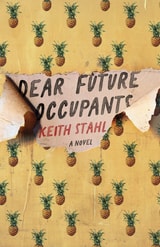
Dear Future Occupants
Keith Stahl
University of Wisconsin Press, 2026
It is 1979 and patriarch Bud relocates his family to his conservative hometown of Greenhill, Connecticut. Despite dubious restaurant experience, he uses his wife’s inheritance to purchase a diner in hopes of proving himself. Things begin to fall apart when police find an all-too-literal skeleton in the family’s basement. A series of misfortunes, accidents, and comedic events follow, including the creation of a vending-machine-sandwich/drug-dealing business and a protest-turned-siege at the local hospital.
Charting one family’s rise to subversive glory in a genteel New England town, this colonial gothic novel is told through found documents and multiple perspectives, including those of Bud; Victor, the middle son; and Herman, the ahead-of-their time, nonbinary, eldest child whose journal entries serve as a kind of Greek chorus throughout. In this breathless, exuberant work, Keith Stahl brilliantly captures the foundational dichotomies at the heart of the American experience: a puritanical distrust of anything fun and a nearly anarchic love of pleasure and freedom. Moving and bitterly humorous, Dear Future Occupants is a paean to the working class and the diversity that holds a family together.
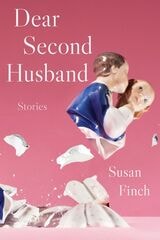
Dear Second Husband
StoriesSusan Finch
Carnegie Mellon University Press, 2026
Set in the rapidly changing city of Nashville, Tennessee, the characters in Dear Second Husband struggle to make their marriages, friendships, and families thrive despite the pressures of modern life. An unapologetic widower, a self-destructive musician, a teacher grieving a miscarriage, and a mother trying to be everything for everyone rely on resilience and persistence to find joy and belonging in the fragile connections between one another.

Death Before Compline
Short Stories by Sharan NewmanSharan Newman
Arizona Center for Medieval and Renaissance Studies, 2012
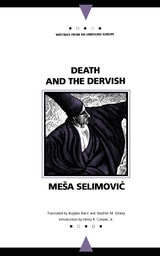
Death and the Dervish
Mesa Selimovic
Northwestern University Press, 1996
Hugely successful when published in the 1960s, Death and the Dervish is an enduring classic made into a feature length film in 1974.
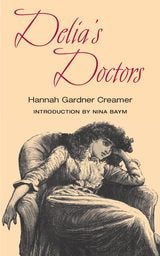
Delia's Doctors; or, A Glance behind the Scenes
Hannah Gardner Creamer
University of Illinois Press, 2002
This early feminist novel is a wickedly funny slice of mid-nineteenth-century Americana peppered with details of the era’s freakish medical tactics and leavened with a smart and sassy commentary about the societal restraints on women’s physical and intellectual abilities.
First published in 1852, Delia’s Doctors is one of four known novels by Hannah Gardner Creamer, an American writer whose life and career have been all but absent from the annals of American history. In the book, eighteen-year-old Delia Thornton is ill. Her condition, more psychological than physical, worsens during the bitter winter, even as doctor after doctor attempts to cure her.
As Delia typifies the female heroine whose sickness is aggravated by listlessness and inactivity, her brother’s fiancée, Adelaide Wilmot, is Delia’s more robust counterpart. Adelaide thinks she could do anything, if only she were a man, and she dreams of being a physician. Quick to point out the shortcomings of male doctors in treating female illnesses, Adelaide saves Delia and delivers a series of arguments against New England patriarchy.
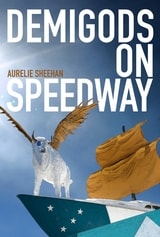
Demigods on Speedway
Aurelie Sheehan
University of Arizona Press, 2014
In the tradition of Joyce’s Dubliners, Demigods on Speedway is a portrait of a city that reflects the recession-era Southwest. Inspired by tales from Greek mythology, these gritty heroes and heroines struggle to find their place in the cosmos. Each of these linked stories develops the extremes of the modern psyche: an executive struggling to understand his wife’s illness even as he compulsively cheats on her, a teenage runaway whose attraction to her “twin” is bound to fail, an overweight boy vicariously experiencing true love through the tales of his trainer, a car-wash attendant with outsized dreams of Hollywood.
Characters with mythical-sounding names like Dagfinn and Zero plot their courses through a sky riddled with flawed constellations. Sheehan’s edgy language aptly reveals her characters as they lurch toward the next day’s irreverent beginning. As the characters’ lives overlap, their stories carry mythology out of the past and into a very modern dilemma: the cumulative sense that here is a city with its own demigods, individuals struggling to survive under siege while passionately seeking to make something immortal in their lives.
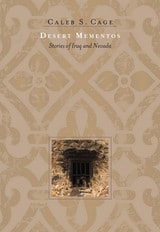
Desert Mementos
Stories of Iraq and NevadaCaleb S. Cage
University of Nevada Press, 2017
Cage captures similarities in the respective desert landscapes of both Iraq and Nevada, but it is not just a study in contrasting landscapes. The inter-connected stories explore similarities and differences in human needs from the perspectives of vastly different cultures. Specifically, the stories deftly capture the overlap in the respective desert landscapes of each region, the contrasting cultures and worldviews, and the common need for hope. Taken together, the stories represent the arc of a year-long deployment by young soldiers. Cage’s stories are bound together by the soldier’s searing experiences in the desert, bookended by leaving and returning home to Nevada, which in many ways can be just as disorienting as patrolling the Iraq desert.
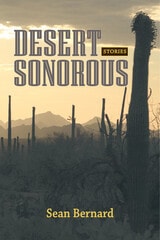
Desert sonorous
StoriesSean Bernard
University of Massachusetts Press, 2015
Desert sonorous is a unique and energetic debut collection, blending realism with flashes of experimentation. Contemporary issues—immigration, drought, shootings—hover above a cast of memorable characters in search of life's deeper meanings. As they struggle along, comic and resigned, intelligent and quiet, sad and frustrated, their strivings resound because their lives are in so many ways our own.
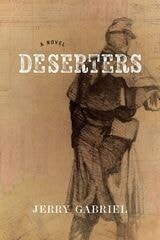
Deserters
A NovelJerry Gabriel
Acre Books, 2026
It is fall 1864, and Robert Riley has deserted his Army of the Potomac unit outside Petersburg, Virginia. Exhausted from years of war and worried about his motherless sons in Ohio, he returns to collect thirteen-year-old Michael and Sean, three years older, and flees to the Western territories. Along the way, he encounters Janey, an orphan at sixteen, who is also eager to go West. When Riley sees in her a quickness of mind, a brand of cunning that mirrors his own, he is persuaded to take her along.
Crossing the lower Midwest on horseback with little money and few possessions, the four are pursued by a wily private detective after the reward for turning in Riley. He manages to thwart the ragtag group, who abandon their plan of crossing the plains. They slip away by train to Chicago, and there, in that cold, stinking, dangerous metropolis, just before the 1864 election, they meet with problems beyond Riley’s ability to resolve. All four find themselves alone, at the mercy of fortune . . . and the fortune hunter, who finally gets the chance to face down his nemesis.
Deserters alternates between the perspectives of the four major characters as their relationships grow and shift, and as each of them strives to forge their way forward in the late war’s murky upheaval. A book whose antecedents include Charles Portis’s True Grit and Paulette Jiles’s News of the World, Gabriel’s immersive novel is an adventure story with psychological intricacy, emotional intensity, and historical heft.
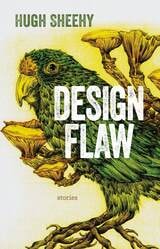
Design Flaw
StoriesHugh Sheehy
Acre Books, 2022
These are tales of seekers, often damaged, who find themselves caught up in skewed realities, facing lurking threats, violent deaths, strange entities, and alienating technologies. Confronted with unsettling, escalating, circumstances, the disparate cast of characters are driven toward self-revelation and perverse moments of poignancy.
A troubled high schooler traps a peer in an underground storage space. A traumatized felon returns home to rob the man who molested him as a child. A videogame help-line operator suspects a regular caller, obsessed with a disturbing role-playing game, of real-life misdeeds. In the title story, an unhappy couple adopts a “designer animal,” a genetic hybrid created to be the perfect pet. But the “grot” makes trouble in the neighborhood, becoming emblematic of a deeper problem. “Something is wrong with the world,” the narrator’s husband explains. “A design flaw. It’s so thoroughly corrupted, I’m not sure how to fix it.”
Inventive and unpredictable, these thirteen stories are wholly immersive, showing Sheehy at his captivating best.
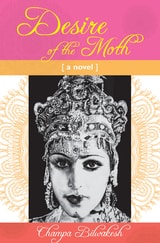
Desire of the Moth
a novelChampa Bilwakesh
UpSet Press, 2017
Hear Champa Bilwakesh reading from Desire of the Moth here: http://voicethread.com/myvoice/#thread/5863247/30058528/31699244
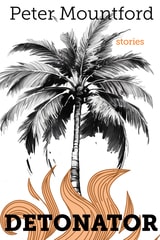
Detonator
StoriesPeter Mountford
Four Way Books, 2025
In “One More Night Behind Walls,” set against the early 1980s-onset of Sri Lanka’s civil war, the young protagonist observes, “Some say the grown-ups used the war as an excuse to let go, but I think it’s more like the war forced them together, and that’s what made them go off the rails.” Soon, the interpersonal dramas of the expat community beget casual debauchery and fatal consequences during a drunken New Year’s Party.
In other stories, an American consultant faces personal and professional ruin after fateful decisions concerning Ecuador's post-revolution economy. A divorcee in her forties finds unexpected chemistry with her ex-husband’s girlfriend after a Scottish Highland funeral. A married suburban feminist experiments with the escape of a dangerous love affair in Washington, D.C.
With remarkable sensitivity and psychological acuity, Mountford positions his characters not at the center of historical events, but at their peripheries — witnesses to momentous changes they can only partially comprehend.
“Our minds were frail, troubled by old wounds that kept calling for help, and we were forever confused and looking in the wrong direction,” says the character of the title story, “Detonator,” about a man who blows up his life, again. And again.
Rather than rendering them insignificant, this perspective reveals their profound humanity as they navigate desire, grief, and meaning against political instability and social transformation.
Mountford illuminates each character with stunning humanity — free from condescension — as consequences swirl through even the purest intentions. With striking precision, he captures the visceral authenticity of emotions as characters gather fragmented understandings of their place in the world. Each story traces a unique path along the plane curve of history, honoring the messy, beautiful complexity of lifetimes unspooled and most of all — lived.

Dexterity
A NovelDouglas Bauer
University of Iowa Press, 2014
This darkly poetic novel is imbued with the same tough and tender understanding of the emotional lives of real people that distinguishes Bauer’s subsequent novels, The Very Air and The Book of Famous Iowans.

Dialogues/Dialogi
Literary and Cultural Exchanges Between (Ex)Soviet and American WomenSusan Hardy Aiken, Adele Barker, Maya Koreneva, and Ekaterina Stetsenko
Duke University Press, 1993
Dialogues/Dialogi pairs stories by Tillie Olsen, Toni Cade Bambara, Jayne Anne Phillips, and Leslie Marmon Silko (reprinted here in full) with Russian stories by I. Grekova, Liudmila Petrushevskaya, Elena Makarova, and Anna Nerkagi, many of them appearing here for the first time in English. Exquisite in their stylistic and thematic variety, suggestive of the range of women's experience and fiction in both countries, each story is the subject of paired interpretive essays by an American and an (ex)Soviet critic from among the book's authors.
A colloquy of diverse voices speaking together in multiple, mutually illuminating exchanges, Dialogues/Dialogi testifies to the possibility of evolving relationships among women across borders once considered impassable.

Dickens's Kent
Peter Clark
Haus Publishing, 2024
Few novelists have written so intimately about a city as Charles Dickens wrote about London, but he was intimately connected to Kent more than any other part of Britain. Perhaps Kent meant more to him than the capital. He had an idyllic childhood in Chatham and Kent features in his first works of fiction, Sketches by Boz and The Pickwick Papers, and in his favorite novel, David Copperfield. In his last ten years, he wrote two novels with strong Kentish themes, Great Expectations and The Mystery of Edwin Drood. He had his honeymoon outside Gravesend and often spent the summer months in Broadstairs. In 1856, he bought Gad’s Hill Place, near Rochester, and died there in 1870.
Dickens’s Kent begins with the description of a walk from London to Dickens's main residence, Gad’s Hill Place, before taking the reader to areas in Kent most closely associated with his life and work: the Medway Towns and their surroundings, Thanet and East Kent, and finally Staplehurst, the scene of the railway accident that nearly killed him.

Dickens's London
Peter Clark
Haus Publishing, 2012
In five walks through central London, Peter Clark explores “The First Suburbs”—Camden Town, Chelsea, Greenwich, Hampstead, Highgate and Limehouse—as they feature in Dickens’s writing and illuminates the settings of Dickens’s life and his greatest works of journalism and fiction. Describing these storied spaces of today’s central London in intimate detail, Clark invites us to experience the city as it was known to Dickens and his characters. These walks take us through the locations and buildings that he interacted with and wrote about, creating an imaginative reconstruction of the Dickensian world that has been lost to time.

Disability
A NovellaCris Mazza
University of Alabama Press, 2026
Redefining strength, one truth at a time.
Told in a broken shorthand voice, Mazza's language is acute, evoking a place where the patients, the caregivers, and the system are all disabled. Teri and Cleo are minimum-wage nurse-aides at a state ward for severely retarded and physically handicapped children. They are expected to feed, bathe, clothe, and carry out the required therapies for their patients in a 4-hour shift. They're working within a system where money for therapy is only continued if therapy shows improvement--and yet the state-paid therapists who oversee the ward know the patients will never show any improvement. To keep the money coming in, it is up to the minimum-wage caregivers to "see" and chart important improvements, thus keeping the therapy program alive.
Blinded in their own way by their pet-like adoption of favorite patients, Teri and Cleo struggle to remain both optimistic and realistic. As their personal failures mount--and even transpose or emulate the travesties within the state ward--Teri and Cleo, with their own unseen "disabilities" in dealing with their lives and pasts, react harshly to the breakdown in the emotional balancing act.
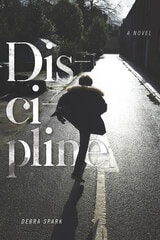
Discipline
Debra Spark
Four Way Books, 2024
How does art mirror and shape our lives? Can it transcend the boundaries of time, wealth, and circumstance? Debra Spark—whose previous work the Washington Post described as "richly imaginative" and "real world magic"—explores these themes in her new novel Discipline. With a trio of important paintings missing, the book weaves together three narratives that span almost a century. From an inhumane boarding school in Maine in the late 1970s to a contemporary Boston art appraiser struggling with raising a teen to the long-lost love letters between a painter and his wife, Discipline is a propulsive literary mystery about family strife and devotion, ambition and authorship, and the abiding and mysterious power of art.
Inspired by the life and family of Walt Kuhn (the painter responsible for the 1913 Armory Show that introduced Americans to modernism) and the scandal-ridden Elan boarding school that was forced to shut down in 2011, this richly drawn, suspenseful novel shows Spark at her most masterful.
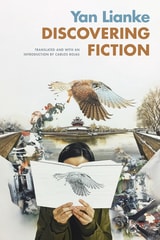
Discovering Fiction
Yan Lianke
Duke University Press, 2022
Dita Saxova
Arnost Lustig
Northwestern University Press, 1993
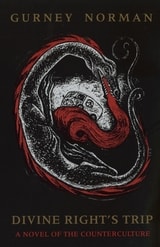
Divine Right's Trip
A Novel of the CountercultureGurney Norman
Ohio University Press, 1990
This first Gnomon Press edition was published in 1990.
Divine Right’s Trip is a countercultural classic that captures the spirit of the 1960s and early 1970s. The novel follows Divine Right (D. R.) Davenport, a restless young man on a journey of self-discovery, as he embarks on a cross-country road trip in his beloved but unreliable old Volkswagen bus, Urge. Accompanied at times by his free-spirited girlfriend, Estelle, D. R. embarks on an odyssey that takes him through communes, small towns, and encounters with eccentric characters, each offering insights into D. R.’s own struggles with identity, freedom, and belonging.
Originally published as a serial in the Last Whole Earth Catalog in 1971, Divine Right’s Trip is both a road novel and a coming-of-age story, reflecting the era’s tensions between individualism and community, rebellion and responsibility. Gurney Norman’s writing is infused with humor, sharp social observation, and a deep appreciation for the landscapes and people of Appalachia, where D. R. ultimately finds himself confronting his roots.
A defining work of Appalachian literature and the countercultural movement, Divine Right’sTrip remains a thought-provoking exploration of personal growth, societal change, and the search for meaning in an ever-shifting world.
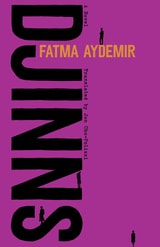
Djinns
Fatma Aydemir, Translated by Jon Cho-Polizzi
University of Wisconsin Press, 2024
In this epic tale, Fatma Aydemir explores the lives of characters who could not be more different from one another—except in their insatiable desires to be understood. Rather than a seamless narrative, the novel circles around suppressed memories, unspoken trauma, and buried pasts. Turning expectations and stereotypes of the immigrant experience on their side, Aydemir shows how we all grapple with power and beauty, the holes in our lives, and the demons that hover just out of sight.

Dog Star
Nabarun Bhattacharya
Seagull Books, 2025
A city on edge and a reckoning long overdue—Dogstar is a searing fable of vengeance and the limits of human empathy. Nabarun Bhattacharya’s novella unfolds in Calcutta, where the city’s dogs, brutalized and unseen, rise in defiant revolt against their human oppressors. As the streets turn into battlegrounds, history itself bleeds through—echoes of past atrocities and ancient mythologies intertwining with the raw immediacy of the present.
With his signature blend of dark humor and sharp political critique, Bhattacharya crafts a hypnotic tale that forces us to confront a chilling question: Who, in the end, is truly human? Blurring the boundaries between the real and the mythic, Dogstar is a dystopian allegory as disorienting as it is revelatory. For readers drawn to Orwellian fables and narratives that unsettle and illuminate in equal measure, this is a read that will haunt and provoke long after the final page.
Doing What Comes Naturally
Change, Rhetoric, and the Practice of Theory in Literary & Legal StudiesStanley Fish
Duke University Press, 1989
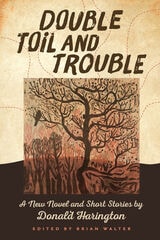
Double Toil and Trouble
A New Novel and Short Stories by Donald HaringtonDonald Harington
University of Arkansas Press, 2020
Edited by longtime Harington scholar Brian Walter, Double Toil and Trouble also includes an appendix featuring the author’s spirited correspondence with the editor who originally inspired the title novel, providing an insider’s look at the American literary scene and Harington’s own early assessment of his work. Spanning several decades of the author’s career, this volume gives readers a Harington who is at once familiar and fresh as he experiments with new formal possibilities, only to once again endear the vagaries of love, life, and folk language to us.
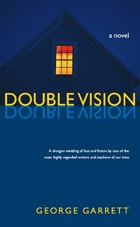
Double Vision
A NovelGeorge Garrett
University of Alabama Press, 2007
A shotgun marriage of fact and fiction by one of the most highly regarded writers and teachers of our time
A writer named George Garrett, suffering from double vision as a result of a neurological disorder, is asked to review a recent, first biography of the late Peter Taylor, a renowned writer who has been his long-time friend and neighbor in Charlottesville. Reflecting on their relationship, Garrett conceives of a character—not unlike himself—a writer in his early 70s, ill and suffering from double vision, named Frank Toomer. He gives Toomer a neighbor, a distinguished short story writer named Aubrey Carver.
As the real George Garrett and Peter Taylor are replaced by two very different and imaginary writers, the story becomes a wise and insightful exploration of American literary life, the art of biography, the comical rivalries among writers and academics, notions of success, and the knotty relationship of art to life, fact to fiction, and life to death. Double Vision is a witty tour de force and an elegy for a gifted generation of writers.
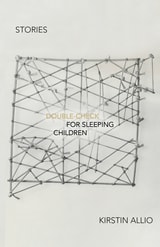
Double-Check for Sleeping Children
StoriesKirstin Allio
University of Alabama Press, 2024
WINNER OF THE FC2 CATHERINE DOCTOROW INNOVATIVE FICTION PRIZE
Double-Check for Sleeping Children is the newest work by award-winning writer Kirstin Allio
At once formal and tidal, damning and dreaming, Kirstin Allio’s Double-Check for Sleeping Children is charged with prayer, curse, redemption and abasement. Does truth come from reason, or beauty, or suffering? It takes the inner lives of outsiders, dark mirrors, and false ceilings to find an answer.
Families split by social class, a wealthy young widow, addicts, hunters, poor whites, a green card bride and a nursing mother: in twenty poetically and morally propulsive short stories, Allio disquiets the sublimated and palpates shadows. She leads us through the sometimes flooded, other times flood-lit halls of the human soul.
Part menacing, macabre Mary Gaitskill, part Denis Johnson in Jesus’ Son, and with the taut, wry, tell-all detail of Elizabeth Hardwick, Double-Check for Sleeping Children deals in codedness and transgression. The stories explore coming of age in middle age, anxiety about time and technology, inverted revelation. “What was I supposed to do with Basho and Mosie?” Sheila asks herself about her children in “Uncollected Territories.” “Be my real self? Hand myself over, do what you will with me, plant your strange selves in my private soil?”
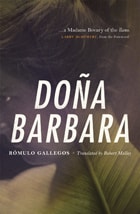
Doña Barbara
A NovelRómulo Gallegos
University of Chicago Press, 2012
Rómulo Gallegos is best known for being Venezuela’s first democratically elected president. But in his native land he is equally famous as a writer responsible for one of Venezuela’s literary treasures, the novel Doña Barbara. Published in 1929 and all but forgotten by Anglophone readers, Doña Barbara is one of the first examples of magical realism, laying the groundwork for later authors such as Gabriel García Márquez and Mario Vargas Llosa.
Following the epic struggle between two cousins for an estate in Venezuela, Doña Barbara is an examination of the conflict between town and country, violence and intellect, male and female. Doña Barbara is a beautiful and mysterious woman—rumored to be a witch—with a ferocious power over men. When her cousin Santos Luzardo returns to the plains in order to reclaim his land and cattle, he reluctantly faces off against Doña Barbara, and their battle becomes simultaneously one of violence and seduction. All of the action is set against the stunning backdrop of the Venezuelan prairie, described in loving detail. Gallegos’s plains are filled with dangerous ranchers, intrepid cowboys, and damsels in distress, all broadly and vividly drawn. A masterful novel with an important role in the inception of magical realism, Doña Barbara is a suspenseful tale that blends fantasy, adventure, and romance.
Hailed as “the Bovary of the llano” by Larry McMurtry in his new foreword to this book, Doña Barbarais a magnetic and memorable heroine, who has inspired numerous adaptations on the big and small screens, including a recent television show that aired on Telemundo.
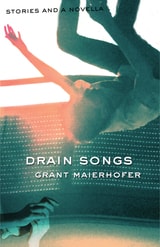
Drain Songs
Stories and a NovellaGrant Maierhofer
University of Alabama Press, 2019
Drain Songs gathers five stories and a novella focused on the many trials of modern life—addiction and depression, mania and disorder, attempts and failure at keeping the worst at bay. Grant Maierhofer’s stories focus on characters in varying states of disarray and stuckness, continuing his literary project of analyzing lives on the fringes of sanity and society. The novella “Drain Songs” is a harrowing narrative focused squarely on addiction and recovery, twelve-step programs, and codependency.
In all of these tales, Maierhofer takes a bee’s-eye view of protagonists from all walks of life, from the working class to the academy, from janitors to professors, embodying the commonalities of men and women struggling with very fundamental elements of survival, perspective, and identity—attempts formal and informal to contend with the trials that forever engage and perplex humanity.
His evocative prose conveys both despair and resignation as well as stultifying, brain-deadening routine and repetition. Still, these stories transcend angst and tilt toward agony and ecstasy and the hope of redemption.
Dream City
A NovelDouglas Unger
University of Nevada Press, 2024
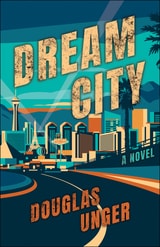
As the story progresses, C. D. comes to understand how his personal losses and the losses of his cohort of hard driving executives on the make—especially the tragic life of his work partner, Greta Olsson, the only woman to break through into their male dominated world—are a result of the make-believe environment he has helped to create, a world where representation replaces reality. Hoping to piece together his faltering marriage and family relationships, C. D. must find a new path as he struggles to hold onto his dreams.
In this fictionalized version of the city of glittering lights, author Douglas Unger pits the ideologies of marketing and consumerism in the casino economy of America against the erosion of individual and humane values that success in that world demands. Unger reveals the hard truth that Las Vegas, a blue-collar town considered by many to be “the most honest city,” can be a temple for self-deceptions, emblematic of a service economy that knows the price of everything and too often the value of little else. Dream City becomes both a love song and an elegy for Las Vegas that sets it apart from any other literary novel previously written about this global entertainment attraction that in so many ways represents postmodern America. Sooner or later, the challenge that faces everyone is to discover what matters most, and to learn how to bet on the better angels of our natures.
Drilling through Hard Boards
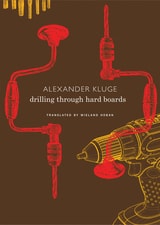
133 Political StoriesAlexander Kluge
Seagull Books, 2019
In the book, Kluge masterfully unspools more than one hundred vignettes, through which it becomes clear that the political is more often than not personal. Politics are everywhere in our everyday lives, so along with the stories of major political figures, we also find here the small, mostly unknown ones: Elfriede Eilers alongside Pericles, Chilean miners next to Napoleon, a three-month-old baby beside Alexander the Great. Drilling through Hard Boards is not just Kluge’s newest fiction, it is a masterpiece of political thought.
Driscoe
Greg Mulcahy
University of Alabama Press, 2026
A stark, hypnotic exploration of memory, identity, and the fractured stories we inherit, and invent, to survive
Driscoe is a stylistically daring novel that plunges deep into the unstable terrain of memory, identity, and the stories we tell to endure collapse. Hypnotic and recursive, it moves through contradiction as both method and meaning, tracing how belief hardens, fractures, and reforms under pressure. The prose hums with unease, balancing precision and disorientation as certainty dissolves into overlapping versions of the same events.
At its center is Jouska, a man suspended between narratives of success and failure, loyalty and betrayal, progress and ruin. He is pursued by obsessive memories of his ex-wife, his brother, and the elusive figure of Driscoe, by turns entrepreneur, fraud, chemist, builder, trickster. Everyone claims a story about Driscoe. None align, yet all insist on their authority. Entangled in familial conflict and his own faltering recollections, Jouska can neither trust nor abandon any version of the truth.
When Jouska receives an email announcing the death of his superior, the already fragile architecture of his life splinters further. What follows is a journey through a bureaucratic labyrinth where death is both confirmed and denied, and where greed, doubt, presence, and absence pulse relentlessly. Driscoe emerges as a narrative dirge for a collapsing American middle class and the myths that sustained it, tracing the impossibility of aligning personal loss with cultural unraveling. This novel will resonate with readers drawn to literary fiction that is intellectually demanding, formally inventive, and attuned to the psychic costs of living amid social and economic decay.
Drowning in Fire
Craig S. Womack
University of Arizona Press, 2001
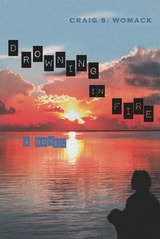
Josh Henneha has always been a traveler, drowning in dreams, burning with desires.
As a young boy growing up within the Muskogee Creek Nation in rural Oklahoma, Josh experiences a yearning for something he cannot tame. Quiet and skinny and shy, he feels out of place, at once inflamed and ashamed by his attraction to other boys. Driven by a need to understand himself and his history, Josh struggles to reconcile the conflicting voices he hears—from the messages of sin and scorn of the non-Indian Christian churches his parents attend in order to assimilate, to the powerful stories of his older Creek relatives, which have been the center of his upbringing, memory, and ongoing experience.
In his fevered and passionate dreams, Josh catches a glimpse of something that makes the Muskogee Creek world come alive. Lifted by his great-aunt Lucille’s tales of her own wild girlhood, Josh learns to fly back through time, to relive his people’s history, and uncover a hidden legacy of triumphs and betrayals, ceremonies and secrets he can forge into a new sense of himself.
When as a man, Josh rediscovers the boyhood friend who first stirred his desires, he realizes a transcendent love that helps take him even deeper into the Creek world he has explored all along in his imagination.
Interweaving past and present, history and story, explicit realism and dreamlike visions, Craig Womack’s Drowning in Fire explores a young man’s journey to understand his cultural and sexual identity within a framework drawn from the community of his origins. A groundbreaking and provocative coming-of-age story, Drowning in Fire is a vividly realized novel by an impressive literary talent.
Dry Land
B. Pladek
University of Wisconsin Press, 2023
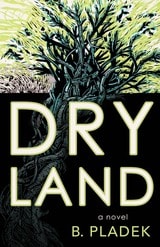
While at camp, Rand also realizes the true price of his gift: everything he grows withers and dies, leaving the soil empty of all living matter. Horrified, he throws himself into ever more self-destructive trials, buckling under the pressure of so many secrets. In order to survive, he must confront the terrifying possibility that his gift is actually a curse, upending everything he believes about nature, love, and himself.
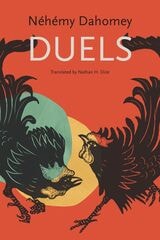
Duels
Néhémy Dahomey
Seagull Books, 2025
Set in 1842, this novel foregrounds a Haiti that is grappling with the weight of an onerous debt imposed by France, forcing its citizens to pay reparations to French colonists in exchange for diplomatic recognition of the first Black republic of the Americas. In the town of Boën, a prosperous notary, Ludovic Possible, decides to take a bold step to secure the future of his community. He opens a schoolhouse where local children can learn both artisanal skills and the essential ability to read and write. For Ludovic, education represents the best chance for the people of Boën to rise above their hardships and build a prosperous future—especially for Aïda, a quiet and enigmatic girl whose mother’s marvelous stories captivate him.
The tranquility of Boën is soon shattered, however, by a series of duels that pit families, neighbors, and even animals against each other. As tensions rise, Ludovic’s vision for a better future is threatened by the escalating violence. In Duels, Néhémy Pierre-Dahomey introduces readers to a rich and unforgettable cast of characters—Aïda, Ludovic, Balthazar Possible, Pépé the Tempest, and many others—who find themselves at the crossroads of a nation on the brink of transformative change.
Dust Devils
A NovellaRobert Laxalt
University of Nevada Press, 1997
Duty To Warn
A NovelSara Kersting
Acre Books, 2018
To aid him in the chase, Malden calls on his colleague, the awkward, remote, intimidatingly tall Sonja Nielsen. She reluctantly agrees to help, either because of or despite her previous entanglements with Malden.
Told from the perspectives of these three characters, the story swerves and jolts and switches back, much like Percy’s recollections of his upbringing. Kersting presents the interior struggles of her characters in a searingly spare style, all the while drawing the reader through an escalating series of events as Percy hitches rides and takes buses, searching the small towns of central Michigan, alternately helped and hindered by both old and new acquaintances.
While following disparate leads toward Percy’s final, surprising destination, all three conflicted souls are compelled to examine their loyalties, test their convictions, admit their frailties, and confront the ghosts lurking in their pasts, resulting in a revelatory climax.
Dying of Thinking
The Last Kingdom IXPascal Quignard
Seagull Books, 2023
Dying of Thinking is the ninth volume of Pascal Quignard’s Last Kingdom series. It explores three themes: how thought and death coincide, how thought is close to melancholy, and how thought takes shelter near traumatism. One who thinks, Quignard shows us, “compensates” for a very ancient abandonment. Even as a dream is a meaning whose disorderly, condensed, paradoxical images intuit something which has preceded sleep and which returns in them, thought is a meaning which uses words that are written, re-transcribed, dissected, etymologized and neologized. Throughout the Last Kingdom series, Quignard has sought to experience another way of thinking, one that has nothing to do with philosophy, a way of attaching himself “literally” to texts and of progressing by decomposing the imagery of dreams. Dying of Thinking is the heart of this quest.