Results by title
156 books match the query 'Los Angeles' and 9 start with d
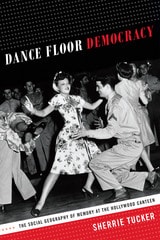
Dance Floor Democracy
The Social Geography of Memory at the Hollywood CanteenSherrie Tucker
Duke University Press, 2014

Death of the Moguls
The End of Classical HollywoodWheeler Winston Dixon
Rutgers University Press, 2012
Death of the Moguls is a detailed assessment of the last days of the “rulers of film.” Wheeler Winston Dixon examines the careers of such moguls as Harry Cohn at Columbia, Louis B. Mayer at MGM, Jack L. Warner at Warner Brothers, Adolph Zukor at Paramount, and Herbert J. Yates at Republic in the dying days of their once-mighty empires. He asserts that the sheer force of personality and business acumen displayed by these moguls made the studios successful; their deaths or departures hastened the studios’ collapse. Almost none had a plan for leadership succession; they simply couldn't imagine a world in which they didn’t reign supreme.
Covering 20th Century-Fox, Selznick International Pictures, Metro-Goldwyn-Mayer, Paramount Pictures, RKO Radio Pictures, Warner Brothers, Universal Pictures, Republic Pictures, Monogram Pictures and Columbia Pictures, Dixon briefly introduces the studios and their respective bosses in the late 1940s, just before the collapse, then chronicles the last productions from the studios and their eventual demise in the late 1950s and early 1960s. He details such game-changing factors as the de Havilland decision, which made actors free agents; the Consent Decree, which forced the studios to get rid of their theaters; how the moguls dealt with their collapsing empires in the television era; and the end of the conventional studio assembly line, where producers had rosters of directors, writers, and actors under their command.
Complemented by rare, behind-the-scenes stills, Death of the Moguls is a compelling narrative of the end of the studio system at each of the Hollywood majors as television, the de Havilland decision, and the Consent Decree forced studios to slash payrolls, make the shift to color, 3D, and CinemaScope in desperate last-ditch efforts to save their kingdoms. The aftermath for some was the final switch to television production and, in some cases, the distribution of independent film.
Deflecting Immigration
Networks, Markets, and Regulation in Los AngelesIvan Light
Russell Sage Foundation, 2006

Determined Survivors
Janice A. Smithers
Rutgers University Press, 1985
Community Life Among the Urban Elderly

Divide & Conquer
Race, Gangs, Identity, and ConflictRobert D. Weide
Temple University Press, 2022
Hyper-criminalization and the normalization of violence was an integral aspect of Robert Weide’s formative years growing up in Los Angeles in the 1980s and 1990s, where Sureño, Crip, and Blood gangs maintained a precarious coexistence, often punctuated by racialized gang violence. His insider status informs Divide & Conquer, which considers how the capitalist economy, the race concept, and nationalist ideology have made gang members the instruments of their own oppression, resulting in racialized sectarian conflicts spanning generations between African American and Latino gangs in Los Angeles and California’s prisons.
While gang members may fail to appreciate the deeper historical and conceptual foundations of these conflicts, they rarely credit naked bigotry as the root cause. As Weide asserts, they divide themselves according to inherited groupist identities, thereby turning them against one another in protracted blood feuds across gang lines and racial lines.
Weide explores both the historical foundations and the conceptual and cultural boundaries and biases that divide gang members across racial lines, detailing case studies of specific racialized gang conflicts between Sureño, Crip, and Blood gangs. Weide employs mixed-methods research, having spent nearly a decade on ethnographic fieldwork and conducted over one hundred formal interviews with gang members and gang enforcement officers concerning taboo subjects like prison and gang politics, and transracial gang membership.
Divide & Conquer concludes with encouraging developments in recent years, as gang members themselves, on their own volition, have intervened to build solidarity and bring racialized gang conflicts between them to an end.
Dodger Blue Will Fill Your Soul
Bryan Allen Fierro
University of Arizona Press, 2016
In Dodger Blue Will Fill Your Soul, Bryan Allen Fierro brings to life the people and places that form the fragile heart of the East Los Angeles community. In the title story, a father’s love of Dodger baseball is matched only by the disconnect he must bridge with his young son. In another story, a young widower remembers his wedding day with his father-in-law. The boys and men in this collection challenge masculine stereotypes, while the girls and women defy gender roles. Hope and faith in their own community defines the characters, and propels them toward an awareness of their own personal responsibility to themselves and to their families, even as they eschew those closest to them in pursuit of a different future.
Dodger Blue Will Fill Your Soul is a tour de force—the first collection of an authentic new voice examining community with humor, hope, and brutal honesty.

Domestic Economies
Women, Work, and the American Dream in Los AngelesSusanna Rosenbaum
Duke University Press, 2017
Down and Out in Los Angeles and Berlin
The Sociospatial Exclusion of Homeless PeopleJurgen von Mahs
Temple University Press, 2015
Drawing on fascinating ethnographic insights, von Mahs shows how homeless people in both cities face sociospatial exclusion-legal displacement for criminal activities, poor shelters in impoverished neighborhoods, as well as market barriers that restrict reintegration. Providing a necessary wake-up call, Down and Out in Los Angeles and Berlin addresses the critical public policy issues that can produce effective services to improve homeless people's chances for a lasting exit.

Dwan Gallery
Los Angeles to New York, 1959–1971James Meyer
University of Chicago Press, 2016
Alongside lush full-color images of one hundred leading artworks, the book deepens our understanding of the artistic exchanges Dwan facilitated during this age of mobility, when air travel and the interstate highway system linked the two coasts and transformed the making of art and the sites of its exhibition. James Meyer, the curator of the exhibition and the foremost authority on minimal art, contributes an essay that is a sophisticated and broad-ranging analysis of Dwan’s legacy.
Honoring Dwan’s significant influence and impact on postwar art, Dwan Gallery is a rich and informative collection that will be treasured by fans of contemporary art.