Results by title
153 books match the query 'Metaphysics' and 2 start with d
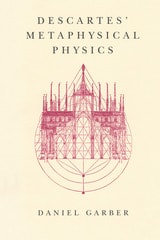
Descartes' Metaphysical Physics
Daniel Garber
University of Chicago Press, 1992
Garber achieves a philosophically rigorous reading of Descartes that is sensitive to the historical and intellectual context in which he wrote. What emerges is a novel view of this familiar figure, at once unexpected and truer to the historical Descartes.
The book begins with a discussion of Descartes' intellectual development and the larger project that frames his natural philosophy, the complete reform of all the sciences. After this introduction Garber thoroughly examines various aspects of Descartes' physics: the notion of body and its identification with extension; Descartes' rejection of the substantial forms of the scholastics; his relation to the atomistic tradition of atoms and the void; the concept of motion and the laws of motion, including Descartes' conservation principle, his laws of the persistence of motion, and his collision law; and the grounding of his laws in God.
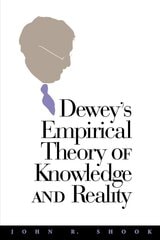
Dewey's Empirical Theory of Knowledge and Reality
John R. Shook
Vanderbilt University Press, 2000
that Dewey's metaphysical empiricism remained more indebted to Kant and Hegel than is commonly supposed;
that Dewey owed more to the influence of Wundt than is commonly believed;
that the influence of Peirce and James was not as significant for the development of Dewey's theories of mind and truth as has been argued in the past;
and that Dewey's pragmatic theory of knowledge never really abandoned idealism.
Shook's exposition of the unity of Dewey's thought challenges a large scholarly industry devoted to suppressing or explaining away the consistency between Dewey's early thought and his later work. In every respect, Dewey's Empirical Theory of Knowledge and Reality is a provocative and engaging study that will occupy a unique niche in this field. It is certain to stimulate discussion and controversy, forcing Dewey traditionalists out of habitual modes of thought and transforming our conventional understanding of the development of classical American philosophy.