175 books match the query 'Narration (Rhetoric)' and 8 start with d
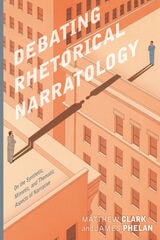
cover of Debating Rhetorical Narratology: On the Synthetic, Mimetic, and Thematic Aspects of Narrative

Debating Rhetorical Narratology

On the Synthetic, Mimetic, and Thematic Aspects of Narrative

Matthew Clark and James Phelan

The Ohio State University Press, 2020

In Debating Rhetorical Narratology:On the Synthetic, Mimetic, and Thematic Aspects of Narrative, Matthew Clark and James Phelan provide a model of lively, sharp, and good-natured scholarly exchange. Clark proposes “friendly amendments” to Phelan’s theorizing of the synthetic, mimetic, and thematic aspects of narrative, and Phelan responds, often by explaining why he finds Clark’s amendments less-than-friendly. Clark rounds off the debate by offering a brief rejoinder. Clark and Phelan consistently ground their theoretical arguments in their analyses of particular narratives, drawing on a corpus that ranges from Homer’s Iliad to Tobias Wolff’s In Pharaoh’s Army and includes, among many others, Jane Austen’s Emma, George Orwell’s 1984, and Toni Morrison’s Beloved.

Clark and Phelan’s deep dive into the synthetic, mimetic, and thematic leads them to explore many other aspects of narrative and narrative theory: style, audiences, the mimetic illusion, fictionality, and more. Their investigation also leads them into questions about rhetorical narratology’s relation to other projects in narrative theory, especially unnatural narratology, and, indeed, about how to assess the explanatory power of competing theories. Ultimately, their debate is compelling testimony about the power of both narrative theory and narrative itself.
[more]
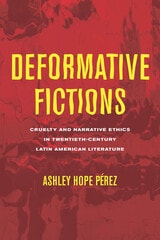
cover of Deformative Fictions: Cruelty and Narrative Ethics in Twentieth-Century Latin American Literature

Deformative Fictions

Cruelty and Narrative Ethics in Twentieth-Century Latin American Literature

Ashley Hope Pérez

The Ohio State University Press, 2024

Tapping a rich vein of Latin American literature, Deformative Fictions by Ashley Hope Pérez excavates works that unsettle, defamiliarize, and disrupt access to the conventional pleasures of reading and interpretation. Close readings highlight the nuances of texts that have been misread, underread, or fetishized because they depart from literary norms, including fiction by Roberto Bolaño and Silvina Ocampo. Interweaving rhetorical and narratological analysis with reflections on the ethical stakes of writing, reading, and interpreting deformative fictions and fictional cruelty, Pérez issues a resounding entreaty for us to expand our understandings of the value of narrative beyond the logics of utility and comfort. Doing so, she contends, allows readers to embrace the full possibilities of the relationships among authors, readers, and the worlds we inhabit on and off the page. In defamiliarizing the act of reading, deformative fictions reacquaint us with its ethical weight.
[more]
cover of Detection and Its Designs: Narrative and Power in Nineteenth-Century Detective Fiction

Detection and Its Designs

Narrative and Power in Nineteenth-Century Detective Fiction

Peter Thoms

Ohio University Press, 1998

Detective fiction is usually thought of as genre fiction, a vast group of works bound together by their use of a common formula. But, as Peter Thoms argues in his investigation of some of the most important texts in the development of detective fiction in the nineteenth century, the very works that establish the genre's formulaic structure also subvert that structure. Detection and Its Designs reads early detective fiction as a self-conscious form that is suspicious of the detective it ostensibly celebrates, and critical of the authorial power he wields in attempting to reconstruct the past and script a narrative of the crime.

In readings of Godwin's Caleb Williams, Poe's Dupin stories, Dickens's Bleak House, Collins's The Moonstone, and Doyle's The Hound of the Baskervilles, Thoms argues that the detective's figurative writing emerges out of a desire to exert control over others and sometimes over himself.

Detection and Its Designs demonstrates that, far from being a naïve form, early detective fiction grapples with the medium of storytelling itself. To pursue these inward-turning fictions is to uncover the detective's motives of controlling the representation of both himself and others, a discovery that in turn significantly undermines the authority of his solutions.
[more]
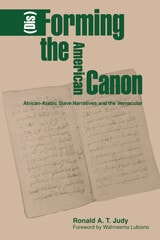
cover of Disforming The American Canon: African-Arabic Slave Narratives and the Vernacular

Disforming The American Canon

African-Arabic Slave Narratives and the Vernacular

Ronald A.T. Judy

University of Minnesota Press, 1993
[more]
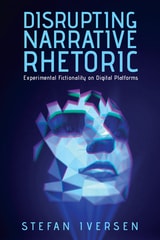
cover of Disrupting Narrative Rhetoric: Experimental Fictionality on Digital Platforms

Disrupting Narrative Rhetoric

Experimental Fictionality on Digital Platforms

Stefan Iversen

The Ohio State University Press, 2026

Disrupting Narrative Rhetoric investigates how experimental uses of fictionality on digital platforms transform public storytelling, with political and ethical consequences. Focusing on communication that initially misleads only to provoke reflection, Stefan Iversen explores how narrative rhetoric—stories used to persuade within public discourse—can be strategically disrupted to produce what he terms “metanoic reflexivity”: a distinctive mode of afterthought triggered when audiences realize they have read wrong. Drawing from narrative theory, fictionality studies, rhetorical criticism, and digital platform studies, Iversen develops a model for analyzing narratives that play with the boundaries between fiction and nonfiction to motivate action or reconsideration on urgent public issues. These narrative practices—found in humanitarian campaigns, presidential rhetoric, political trolling, and synthetic media—use the digital affordances of platforms like Instagram, X, Reddit, and YouTube to reorient audience expectations and provoke social engagement. Combining theory and close reading, Disrupting Narrative Rhetoric offers a compelling interdisciplinary framework for understanding how narrative experiments can either deepen democratic discourse or contribute to its fragmentation in today’s platformed public spheres.
[more]
cover of Dostoevsky's Idiot: Dialogue and the Spiritually Good Life

Dostoevsky's Idiot

Dialogue and the Spiritually Good Life

Bruce A. French

Northwestern University Press, 2001

Prince Myshkin is one of Dostoevsky's most perplexing creations. In this study, Bruce A. French presents a provocative interpretation of the religious dimension of Myshkin's goodness from a Bakhtinian perspective.

In three chapters, French takes up in turn the narrator and narrative points of view, the author’s use of inserted narratives, and three modes of interaction French calls Monologue, Dialogue, and Dialogical Living.
 
[more]
cover of Dry Place: Landscapes Of Belonging And Exclusion

Dry Place

Landscapes Of Belonging And Exclusion

Patricia L. Price

University of Minnesota Press, 2004

Gathers tales from the Southwestern United States and Northern Mexico to understand the relationship between people and place in a borderland

Landscape is the space of negotiation between human beings and the physical world, and rarely are the negotiations more complex and subtle than those conducted through the desert landscape along the Mexico-U.S. border.

Patricia L. Price views the shaping of the landscape on and around the border through various narratives that have sought to establish claims to these dry lands. Most prominent are the accounts of Anglo-American expansionism and Manifest Destiny juxtaposed with the Chicano nationalist tale of Aztlán in the twentieth century, all constituting collective, contending claims to the U.S. Southwest. Demonstrating how stories can become vehicles for changing places and identities, Price considers characters old and new who inhabit the contemporary borderlands between Mexico and the United States—ranging from longstanding manifestations of good and evil in the figures of the Virgin of Guadalupe and the Devil to a collection of lay saints embodying current concerns. Dry Place weaves together theoretical insights with field-based inquiry, autobiography, and creative writing to arrive at a textured understanding of the bordered landscape of late modern subjectivity.
[more]
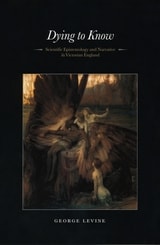
cover of Dying to Know: Scientific Epistemology and Narrative in Victorian England

Dying to Know

Scientific Epistemology and Narrative in Victorian England

George Levine

University of Chicago Press, 2002

"Dying to Know is the work of a distinguished scholar, at the peak of his powers, who is intimately familiar with his materials, and whose knowledge of Victorian fiction and scientific thought is remarkable. This elegant and evocative look at the move toward objectivity first pioneered by Descartes sheds new light on some old and still perplexing problems in modern science." Bernard Lightman, York University, Canada

In Dying to Know, eminent critic George Levine makes a landmark contribution to the history and theory of scientific knowledge. This long-awaited book explores the paradoxes of our modern ideal of objectivity, in particular its emphasis on the impersonality and disinterestedness of truth. How, asks Levine, did this idea of selfless knowledge come to be established and moralized in the nineteenth century?

Levine shows that for nineteenth-century scientists, novelists, poets, and philosophers, access to the truth depended on conditions of such profound self-abnegation that pursuit of it might be taken as tantamount to the pursuit of death. The Victorians, he argues, were dying to know in the sense that they could imagine achieving pure knowledge only in a condition where the body ceases to make its claims: to achieve enlightenment, virtue, and salvation, one must die.

Dying to Know is ultimately a study of this moral ideal of epistemology. But it is also something much more: a spirited defense of the difficult pursuit of objectivity, the ethical significance of sacrifice, and the importance of finding a shareable form of knowledge.
[more]