Results by title
99 books match the query 'National' and 5 start with d

Daniel Shays's Honorable Rebellion
An American StoryDaniel Bullen
Westholme Publishing, 2024
Daniel Shays’s Honorable Rebellion: An American Story by Daniel Bullen tells the history of the crisis from the protesters’ perspective. Through five months of nonviolent protests, the farmers kept courts throughout Massachusetts from hearing foreclosures, facing down threats from the government, which escalated to the point that Governor James Bowdoin ultimately sent an army to arrest them. Even so, the people won reforms in an electoral landslide.
Thomas Jefferson called these protests an honorable rebellion, and hoped that Americans would never let twenty years pass without such a campaign, to rein in powerful interests. This riveting and meticulously researched narrative shows that Shays and his fellow protesters were hardly a dangerous rabble, but rather a proud people who banded together peaceably, risking their lives for justice in a quintessentially American story.
Deliberative Choices
Debating Public Policy in CongressGary Mucciaroni and Paul J. Quirk
University of Chicago Press, 2006
Mucciaroni and Quirk argue that in fashioning the claims they use in debate, legislators make a strategic trade-off between boosting their rhetorical force and ensuring their ability to withstand scrutiny. Using three case studies—welfare reform, repeal of the estate tax, and telecommunications deregulation—the authors show how legislators’ varying responses to such a trade-off shape the issues they focus on, the claims they make, and the information they provide in support of those claims.
Mucciaroni and Quirk conclude that congressional debate generally is only moderately realistic and informed. It often trades in half-truths, omissions, and sometimes even outright falsehoods. Yet some debates are highly informative. Moreover, the authors believe it’s possible to improve congressional deliberation, and they recommend reforms designed to do so.
Developments in Russian Politics 8
Stephen White, Richard Sakwa and Henry E. Hale, eds.
Duke University Press, 0
Contributors. Vladimir Gel'man, Henry E. Hale, Philip Hanson, Kathryn Hendley, Margot Light, Jennifer Mathers, Ian McAllister, Sarah Oates, Thomas F. Remington, Graeme Robertson, Richard Sakwa, Darrell Slider, Svetlana Stephenson, Stephen White, John P. Willerton
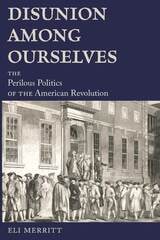
Disunion Among Ourselves
The Perilous Politics of the American RevolutionEli Merritt
University of Missouri Press, 2025
Winner of the 2024 Society of the Cincinnati Prize from the American Revolution Institute
Winner of the 2023 American Revolution Round Table of Philadelphia book award
In this eye-opening account, Eli Merritt reveals the deep political divisions that almost tore the Union apart during the American Revolution. So fractious were the founders’ political fights that they feared the War of Independence might end in disunion and civil war.
Instead of disbanding into separate regional confederacies, the founders managed to unite for the sake of liberty and self-preservation. In so doing, they succeeded in holding the young nation together. To achieve this, they forged grueling compromises, including Declaration of Independence in 1776, the Mississippi-Fisheries Compromise of 1779, and the ratification of the Articles of Confederation in 1781.
In addition to bringing new insights to the history of the American Revolution, Disunion Among Ourselves has inevitable resonances with our present era of political hyperpolarization and serves as a touchstone for contemporary politics, reminding us that the founders overcame far tougher times than our own through commitment to ethical constitutional democracy and compromise.
Divided Parties, Strong Leaders
Ruth Bloch Rubin
University of Chicago Press, 2025
Drawing on nearly a century of legislative history, this careful account invites readers to think anew about when, why, and how leaders of divided parties wield power in Congress.
For decades, legislative scholars have viewed party divisions as critical constraints on congressional leadership. The more a party’s rank and file disagree with one another, the weaker their leaders are predicted to be; as member preferences converge, leader power is thought to increase.
In a powerful corrective to this prevailing view, Ruth Bloch Rubin argues that party divisions are not inherently limiting. Divided Parties, Strong Leaders highlights and examines variation in how members of party factions choose to work together. She shows that leaders of divided parties are well positioned to overcome, and even draw strength from, their divided ranks when the collaborative efforts of their coalitions’ competing factions are evenly matched. By contrast, their capacity to get what they want is more limited when one faction has out-collaborated its competition. Presenting detailed case studies of some of the most storied leaders of the postwar Congress, including Speakers Sam Rayburn and Nancy Pelosi, Bloch Rubin analyzes the factional configuration each leader encountered and explains why it mattered for their exercise of power.