Results by title
754 books match the query 'Native American Studies' and 18 start with d

Damming the Gila
The Gila River Indian Community and the San Carlos Irrigation Project, 1900–1942David H. DeJong
University of Arizona Press, 2024
This volume continues to chronicle the history of water rights and activities on the Gila River Indian Reservation. Centered on the San Carlos Irrigation Project and Coolidge Dam, it details the history and development of the project, including the Gila Decree and the Winters Doctrine. Embedded in the narrative is the underlying tension between tribal growers on the Gila River Indian Reservation and upstream users. Told in seven chapters, the story underscores the idea that the Gila River Indian Community believed the San Carlos Irrigation Project was first and foremost for their benefit and how the project and the Gila Decree fell short of restoring their water and agricultural economy.
Damming the Gila is the third in a trio of important documentary works, beginning with DeJong’s Stealing the Gila and followed by Diverting the Gila. It continues the story of the Gila River Indian Community’s fight to regain access to their water.
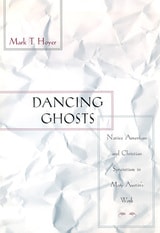
Dancing Ghosts
Native American And Christian Syncretism In Mary Austin's WorkMark T. Hoyer
University of Nevada Press, 1998
A significant and innovative contribution to Austin studies. How did an Illinois Methodist homesteader in the West come to create one of the most significant cosmological syntheses in American literature? In this study, Hoyer draws on his own knowledge of biblical religion and Native American cultures to explore Austin's creation of the "mythology of the American continent" she so valued. Austin lived in and wrote about "the land of little rain," semiarid and arid parts of California and Nevada that were home to the Northern Paiute, Shoshone, Interior Chumash, and Yokut peoples. Hoyer makes new and provocative connections between Austin and spiritual figures like Wovoka, the prophet of the Ghost Dance religion, and writers like Zitkala-sa and Mourning Dove, and he provides a particularly fine reading of Cogowea.
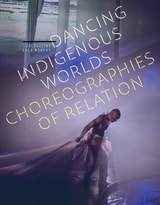
Dancing Indigenous Worlds
Choreographies of RelationJacqueline Shea Murphy
University of Minnesota Press, 2023
The vital role of dance in enacting the embodied experiences of Indigenous peoples
In Dancing Indigenous Worlds, Jacqueline Shea Murphy brings contemporary Indigenous dance makers into the spotlight, putting critical dance studies and Indigenous studies in conversation with one another in fresh and exciting new ways. Exploring Indigenous dance from North America and Aotearoa (New Zealand), she shows how dance artists communicate Indigenous ways of being, as well as generate a political force, engaging Indigenous understandings and histories.
Following specific dance works over time, Shea Murphy interweaves analysis, personal narrative, and written contributions from multiple dance artists, demonstrating dance’s crucial work in asserting and enacting Indigenous worldviews and the embodied experiences of Indigenous peoples. As Shea Murphy asserts, these dance-making practices can not only disrupt the structures that European colonization feeds upon and strives to maintain, but they can also recalibrate contemporary dance.
Based on more than twenty years of relationship building and research, Shea Murphy’s work contributes to growing, and largely underreported, discourses on decolonizing dance studies, and the geopolitical, gendered, racial, and relational meanings that dance theorizes and negotiates. She also includes discussions about the ethics of writing about Indigenous knowledge and peoples as a non-Indigenous scholar, and models approaches for doing so within structures of ongoing reciprocal, respectful, responsible action.
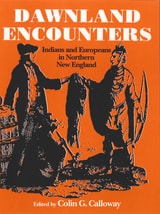
Dawnland Encounters
Indians and Europeans in Northern New EnglandEdited by Colin G. Calloway
University Press of New England, 1991
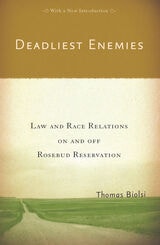
Deadliest Enemies
Law and Race Relations on and off Rosebud ReservationThomas Biolsi
University of Minnesota Press, 2007
Many people living far away from Indian reservations express sympathy for the poverty and misery experienced by Native Americans, yet, Thomas Biolsi argues, the problems faced by Native Americans are the results of white privilege.
In Deadliest Enemies, Biolsi connects the origins of racial tension between Indians and non-Indians on the Rosebud Reservation in South Dakota to federal laws, showing how the courts have created opposing political interests along race lines. Biolsi demonstrates that the court’s definitions of legal rights—both constitutional and treaty rights—make solutions to racial tensions intractable.
This powerful work sheds much-needed light on racial conflicts in South Dakota and in the rest of the United States, and holds white people accountable for the benefits of their racial privilege that come at the expense of Native Americans.
Thomas Biolsi is professor of Native American studies at the University of California at Berkeley.

Death Stalks the Yakama
Epidemiological Transitions and Mortality on the Yakama Indian Reservation, 1888-1964Clifford E. Trafzer
Michigan State University Press, 1997
Clifford Trafzer's disturbing new work, Death Stalks the Yakama, examines life, death, and the shockingly high mortality rates that have persisted among the fourteen tribes and bands living on the Yakama Reservation in the state of Washington. The work contains a valuable discussion of Indian beliefs about spirits, traditional causes of death, mourning ceremonies, and memorials. More significant, however, is Trafzer's research into heretofore unused parturition and death records from 1888-1964. In these documents, he discovers critical evidence to demonstrate how and why many reservation people died in "epidemics" of pneumonia, tuberculosis, and heart disease.
Death Stalks the Yakama, takes into account many variables, including age, gender, listed causes of death, residence, and blood quantum. In addition, analyses of fetal and infant mortality rates as well as crude death rates arising from tuberculosis, pneumonia, heart disease, accidents, and other causes are presented. Trafzer argues that Native Americans living on the Yakama Reservation were, in fact, in jeopardy as a result of the "reservation system" itself. Not only did this alien and artificial culture radically alter traditional ways of life, but sanitation methods, housing, hospitals, public education, medicine, and medical personnel affiliated with the reservation system all proved inadequate, and each in its own way contributed significantly to high Yakama death rates.
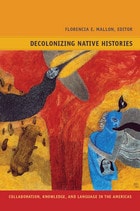
Decolonizing Native Histories
Collaboration, Knowledge, and Language in the AmericasFlorencia E. Mallon, ed.
Duke University Press, 2012
These wide-ranging case studies consider how language, the law, and the archive have historically served as instruments of colonialism and how they can be creatively transformed in constructing autonomy. The collection highlights points of commonality and solidarity across geographical, cultural, and linguistic boundaries and also reflects deep distinctions between North and South. Decolonizing Native Histories looks at Native histories and narratives in an internationally comparative context, with the hope that international collaboration and understanding of local histories will foster new possibilities for indigenous mobilization and an increasingly decolonized future.
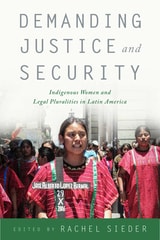
Demanding Justice and Security
Indigenous Women and Legal Pluralities in Latin AmericaSieder, Rachel
Rutgers University Press, 2017
Featuring chapters on Bolivia, Colombia, Ecuador, Guatemala, and Mexico, the contributors to Demanding Justice and Security include both leading researchers and community activists. From Kichwa women in Ecuador lobbying for the inclusion of specific clauses in the national constitution that guarantee their rights to equality and protection within indigenous community law, to Me’phaa women from Guerrero, Mexico, battling to secure justice within the Inter-American Court of Human Rights for violations committed in the context of militarizing their home state, this book is a must-have for anyone who wants to understand the struggle of indigenous women in Latin America.
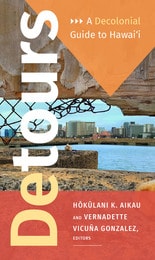
Detours
A Decolonial Guide to Hawai'iHokulani K. Aikau and Vernadetta Vicuña Gonzalez, editors
Duke University Press, 2019
Contributors. Hōkūlani K. Aikau, Malia Akutagawa, Adele Balderston, Kamanamaikalani Beamer, Ellen-Rae Cachola, Emily Cadiz, Iokepa Casumbal-Salazar, David A. Chang, Lianne Marie Leda Charlie, Greg Chun, Joy Lehuanani Enomoto, S. Joe Estores, Nicholas Kawelakai Farrant, Jessica Ka‘ui Fu, Candace Fujikane, Linda H. L. Furuto, Sonny Ganaden, Cheryl Geslani, Vernadette Vicuña Gonzalez, Noelani Goodyear-Ka‘ōpua, Tina Grandinetti, Craig Howes, Aurora Kagawa-Viviani, Noelle M. K. Y. Kahanu, Haley Kailiehu, Kyle Kajihiro, Halena Kapuni-Reynolds, Terrilee N. Kekoolani-Raymond, Kekuewa Kikiloi, William Kinney, Francesca Koethe, Karen K. Kosasa, N. Trisha Lagaso Goldberg, Kapulani Landgraf, Laura E. Lyons, David Uahikeaikalei‘ohu Maile, Brandy Nālani McDougall, Davianna Pōmaika‘i McGregor, Laurel Mei-Singh, P. Kalawai‘a Moore, Summer Kaimalia Mullins-Ibrahim, Jordan Muratsuchi, Hanohano Naehu, Malia Nobrega-Olivera, Katrina-Ann R. Kapā‘anaokalāokeola Nākoa Oliveira, Jamaica Heolimelekalani Osorio, No‘eau Peralto, No‘u Revilla, Kalaniua Ritte, Maya L. Kawailanaokeawaiki Saffery, Dean Itsuji Saranillio, Noenoe K. Silva, Ty P. Kāwika Tengan, Stephanie Nohelani Teves, Stan Tomita, Mehana Blaich Vaughan, Wendy Mapuana Waipā, Julie Warech

Diabetes among the Pima
Stories of SurvivalCarolyn Smith-Morris
University of Arizona Press, 2006
Click here for a Facilitator’s Guide to Diabetes among the Pima
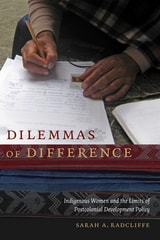
Dilemmas of Difference
Indigenous Women and the Limits of Postcolonial Development PolicySarah A. Radcliffe
Duke University Press, 2015
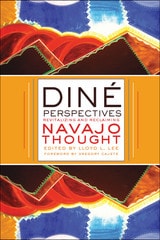
Diné Perspectives
Revitalizing and Reclaiming Navajo ThoughtEdited by Lloyd L. Lee; Foreword by Gregory Cajete
University of Arizona Press, 2014
All of the contributors are coming to personal terms with a phrase that underpins the matrix of Diné culture: Sa’ah Naagháí Bik’eh Hózhóón. Often referred to simply as SNBH, the phrase can be translated in many ways but is generally understood to mean “one’s journey of striving to live a long, harmonious life.” The book offers a variety of perspectives of Diné men and women on the Diné cultural paradigm that is embedded in SNBH. Their writings represent embodied knowledge grounded in a way of knowing that connects thought, speech, experience, history, tradition, and land. Some of the contributors are scholars. Some are Diné who are fighting for justice and prosperity for the Navajo Nation. Some are poets and artists. They are united in working to preserve both intellectual and cultural sovereignty for Diné peoples. And their contributions exemplify how Indigenous peoples are creatively applying tools of decolonization and critical research to re-create Indigenous thought and culture in a present day that rarely resembles the days of their ancestors.
More than 300,000 people self-identify as Diné today. Every one must grapple with how to make a life that acknowledges Sa’ah Naagháí Bik’eh Hózhóón. Diné Perspectives is unique in bringing such personal journeys to the public eye.
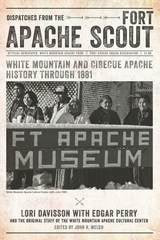
Dispatches from the Fort Apache Scout
White Mountain and Cibecue Apache History Through 1881Lori Davisson with Edgar Perry and the Original Staff of the White Mountain Apache Cultural Center; Edited by John R. Welch
University of Arizona Press, 2016
The book showcases and annotates dispatches published between June 1973 and October 1977, in the tribe’s Fort Apache Scout newspaper. This twenty-eight-part series of articles shared Western Apache culture and history through 1881 and the Battle of Cibecue, emphasizing early encounters with Spanish, Mexican, and American outsiders. Along the way, rich descriptions of Ndee ties to the land, subsistance, leadership, and values emerge. The articles were the result of the dogged work of journalist, librarian, and historian Lori Davisson along with Edgar Perry, a charismatic leader of White Mountain Apache culture and history programs, and his staff who prepared these summaries of historical information for the local readership of the Scout.
Davisson helped to pioneer a mutually beneficial partnership with the White Mountain Apache Tribe. Pursuing the same goal, Welch’s edited book of the dispatches stakes out common ground for understanding the earliest relations between the groups contesting Southwest lands, powerfully illustrating how, as elder Cline Griggs, Sr., writes in the prologue, “the past is present.”
Dispatches from the Fort Apache Scout is both a tribute to and continuation of Davisson’s and her colleagues’ work to share the broad outlines and unique details of the early history of Ndee and Ndee lands.
Disrupting Colonial Pedagogies
Theories and TransgressionsEdited by Jillian Ford and Nathalia Jaramillo
University of Illinois Press, 2023
Jillian Ford and Nathalia E. Jaramillo edit a collection of writings by women that examine womanist worldviews in philosophy, theory, curriculum, public health, and education. Drawing on thinkers like bell hooks and Cynthia Dillard, the essayists challenge the colonizing hegemonies that raise and sustain patriarchal and male-centered systems of teaching and learning. Part One examines how womanist theorizing and creative activity offer a space to study the impact of conquest and colonization on the Black female body and spirit. In Part Two, the contributors look at ways of using text, philosophy, and research methodologies to challenge colonizing and colonial definitions of womanhood, enlightenment, and well-being. The essays in Part Three undo the colonial pedagogical project and share the insights they have gained by freeing themselves from its chokehold.
Powerful and interdisciplinary, Disrupting Colonial Pedagogies challenges colonialism and its influence on education to advance freer and more just forms of knowledge making.
Contributors: Silvia García Aguilár, Khalilah Ali, Angela Malone Cartwright, Adriana Diego, LeConté Dill, Sameena Eidoo, Genevieve Flores-Haro, Jillian Ford, Leena Her, Nathalia E. Jaramillo, Patricia Krueger-Henney, Claudia Lozáno, Liliana Manriquez, Alberta Salazár, León Salazár, and Lorri Santamaría
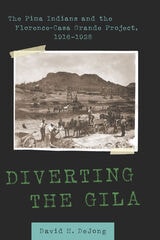
Diverting the Gila
The Pima Indians and the Florence-Casa Grande Project, 1916–1928David H. DeJong
University of Arizona Press, 2021
Diverting the Gila explores the complex web of tension, distrust, and political maneuvering to divide and divert the scarce waters of the Gila River. Residents of Florence, Casa Grande, and the Pima Reservation fought for vital access to water rights. Into this political foray stepped Arizona’s freshman congressman Carl Hayden, who not only united the farming communities but also used Pima water deprivation to the advantage of Florence-Casa Grande and Upper Gila Valley growers. The result was the federal Florence-Casa Grande Project that, as legislated, was intended to benefit Pima growers on the Gila River Indian Reservation first and foremost. As was often the case in the West, well-heeled, nontribal political interests manipulated the laws at the expense of the Indigenous community.
Diverting the Gila is the sequel to David H. DeJong’s 2009 Stealing the Gila, and it continues to tell the story of the forerunner to the San Carlos Irrigation Project and the Gila River Indian Community’s struggle to regain access to their water.
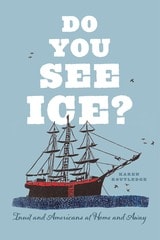
Do You See Ice?
Inuit and Americans at Home and AwayKaren Routledge
University of Chicago Press, 2018
Routledge vividly depicts the experiences of American whalers and explorers in Inuit homelands. Conversely, she relates stories of Inuit who traveled to the northeastern United States and were similarly challenged by the norms, practices, and weather they found there. Standing apart from earlier books of Arctic cultural research—which tend to focus on either Western expeditions or Inuit life—Do You See Ice? explores relationships between these two groups in a range of northern and temperate locations. Based on archival research and conversations with Inuit Elders and experts, Routledge’s book is grounded by ideas of home: how Inuit and Americans often experienced each other’s countries as dangerous and inhospitable, how they tried to feel at home in unfamiliar places, and why these feelings and experiences continue to resonate today.
The author intends to donate all royalties from this book to the Elders’ Room at the Angmarlik Center in Pangnirtung, Nunavut.
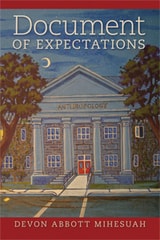
Document of Expectations
Devon Abbott Mihesuah
Michigan State University Press, 2011
When Hopi/White Mountain Apache anthropologist Tony M. Smokerise is found murdered in his office at Central Highlands University, the task of solving the crime falls to jaded Choctaw detective Monique Blue Hawk and her partner Charles T. Clarke. A seemingly tolerant and amicable office of higher education, the university, Monique soon learns, harbors parties determined to destroy the careers of Tony and his best friend, the volatile Oglala anthropologist Roxanne Badger. In the course of her investigation, Monique discovers that the scholars who control Tony’s department are also overseeing the excavation of a centuries-old tribal burial site that was uncovered during the construction of a freeway. Tony’s role in the project, she realizes, might be the key to identifying his murderer. This virtuosic mystery novel explores, in engrossing detail, the complex motives for a killing within the sometimes furtive and hermetic setting of academia.
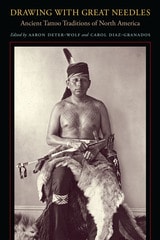
Drawing with Great Needles
Ancient Tattoo Traditions of North AmericaEdited by Aaron Deter-Wolf and Carol Diaz-Granados
University of Texas Press, 2013
For thousands of years, Native Americans throughout the Eastern Woodlands and Great Plains used the physical act and visual language of tattooing to construct and reinforce the identity of individuals and their place within society and the cosmos. The act of tattooing served as a rite of passage and supplication, while the composition and use of ancestral tattoo bundles was intimately related to group identity. The resulting symbols and imagery inscribed on the body held important social, civil, military, and ritual connotations within Native American society. Yet despite the cultural importance that tattooing held for prehistoric and early historic Native Americans, modern scholars have only recently begun to consider the implications of ancient Native American tattooing and assign tattooed symbols the same significance as imagery inscribed on pottery, shell, copper, and stone.
Drawing with Great Needles is the first book-length scholarly examination into the antiquity, meaning, and significance of Native American tattooing in the Eastern Woodlands and Great Plains. The contributors use a variety of approaches, including ethnohistorical and ethnographic accounts, ancient art, evidence of tattooing in the archaeological record, historic portraiture, tattoo tools and toolkits, gender roles, and the meanings that specific tattoos held for Dhegiha Sioux and other Native speakers, to examine Native American tattoo traditions. Their findings add an important new dimension to our understanding of ancient and early historic Native American society in the Eastern Woodlands and Great Plains.