Results by title
199 books match the query 'Peace' and 6 start with d
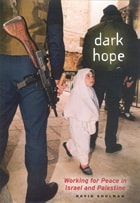
Dark Hope
Working for Peace in Israel and PalestineDavid Shulman
University of Chicago Press, 2007
For decades, we’ve been shocked by images of violent clashes between Israelis and Palestinians in the West Bank and Gaza. But for all their power, those images leave us at a loss: from our vantage at home, it’s hard for us to imagine the struggles of those living in the midst of the fighting. Now, American-born Israeli David Shulman takes us right into the heart of the conflict with Dark Hope, an eye-opening chronicle of his work as a member of the peace group Ta‘ayush, which takes its name from the Arabic for “living together.”
Though Shulman never denies the complexity of the issues fueling the conflict—nor the culpability of people on both sides—he forcefully clarifies the injustices perpetrated by Israel by showing us the human dimension of the occupation. Here we meet Palestinians whose houses have been blown up by the Israeli army, shepherds whose sheep have been poisoned by settlers, farmers stripped of their land by Israel’s dividing wall. We watch as whip-swinging police on horseback attack crowds of nonviolent demonstrators, as Israeli settlers shoot innocent Palestinians harvesting olives, and as families and communities become utterly destroyed by the unrelenting violence of the occupation.
Opposing such injustices, Shulman and his companions—Israeli and Palestinian both—doggedly work through checkpoints to bring aid, rebuild houses, and physically block the progress of the dividing wall. As they face off against police, soldiers, and hostile Israeli settlers, anger mixes with compassion, moments of kinship alternate with confrontation, and, throughout, Shulman wrestles with his duty to fight the cruelty enabled by “that dependable and devastating human failure to feel.”
With Dark Hope, Shulman has written a book of deep moral searching, an attempt to discover how his beloved Israel went wrong—and how, through acts of compassionate disobedience, it might still be brought back.
Days of Awe
Reimagining Jewishness in Solidarity with PalestiniansAtalia Omer
University of Chicago Press, 2019
In Days of Awe, Atalia Omer examines this shift through interviews with a new generation of Jewish activists, rigorous data analysis, and fieldwork within a progressive synagogue community. She highlights people politically inspired by social justice campaigns including the Black Lives Matter movement and protests against anti-immigration policies. These activists, she shows, discover that their ethical outrage at US policies extends to Israel’s treatment of Palestinians. For these American Jews, the Jewish history of dispossession and diaspora compels a search for solidarity with liberation movements. This shift produces innovations within Jewish tradition, including multi-racial and intersectional conceptions of Jewishness and movements to reclaim prophetic Judaism. Charting the rise of such religious innovation, Omer points toward the possible futures of post-Zionist Judaism.
Democratic Peace
A Political BiographyPiki Ish-Shalom
University of Michigan Press, 2015
The Democratic Peace Thesis holds that democracies rarely make war on other democracies. Political scientists have advanced numerous theories attempting to identify precisely which elements of democracy promote this mutual peace, often hoping that Democratic Peace could be the final and ultimate antidote to war. However, as the theories were taken up by political figures, the immediate outcomes were war and the perpetuation of hostilities.
Political theorist Piki Ish-Shalom sketches the origins and early academic development of the Democratic Peace Thesis. He then focuses on the ways in which various Democratic Peace Theories were used by Bill Clinton and George W. Bush both to shape and to justify U.S. foreign policy, particularly the U.S. stance on the Israeli-Palestinian situation and the War in Iraq. In the conclusion, Ish-Shalom boldly confronts the question of how much responsibility theoreticians must bear for the political uses—and misuses—of their ideas.
Disarming Doomsday
The Human Impact of Nuclear Weapons since HiroshimaBecky Alexis-Martin
Pluto Press, 2019

Dispatches From Palestine
The Rise and Fall of the Oslo Peace ProcessGraham Usher
Pluto Press, 1999
‘Usher ... does the best foreign on-the-spot reporting from Palestine.’ Edward Said, London Review of Books
‘The reader vicariously experiences what will become great moments of popular oral history that official historians will forget in the great scheme of things.’ Middle East International
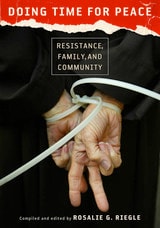
Doing Time for Peace
Resistance, Family, and CommunityRosalie G. Riegle
Vanderbilt University Press, 2013
In their own words, the narrators describe their motivations and their preparations for acts of resistance, the actions themselves, and their trials and subsequent jail time. We hear from those who do their time by caring for their families and managing communities while their partners are imprisoned. Spouses and children talk frankly of the strains on family ties that a life of working for peace in the world can cause.
The voices range from a World War II conscientious objector to those protesting the recent war in Iraq. The book includes sections on resister families, the Berrigans and Jonah House, the Plowshares Communities, the Syracuse Peace Council, and Catholic Worker houses and communities.
The introduction by Dan McKanan situates these activists in the long tradition of resistance to war and witness to peace.