Results by title
52 books match the query 'Morality' and 4 start with a

A Shadow on Our Hearts
Soldier-Poetry, Morality, and the American War in VietnamAdam Gilbert
University of Massachusetts Press, 2018
The soldier-poets provide important insights into the ethical dimensions of their physical and psychological surroundings before, during, and after the war. They also offer profound perspectives on the relationships between American soldiers and the Vietnamese people. From firsthand experiences, they reflect on what it meant to be witnesses, victims, and perpetrators of the war's violence. And they advance an uncompromising vision of moral responsibility that indicts a range of culprits for the harms caused by the conflict. Gilbert explores the powerful and perceptive work of these soldier-poets through the lens of morality and presents a radically alternative, deeply personal, and ethically penetrating account of the American war in Vietnam.

AIDS Doesn't Show Its Face
Inequality, Morality, and Social Change in NigeriaDaniel Jordan Smith
University of Chicago Press, 2014
Drawing on twenty years of fieldwork in Nigeria, Smith tells a story of dramatic social changes, ones implicated in the same inequalities that also factor into local perceptions about AIDS—inequalities of gender, generation, and social class. Nigerians, he shows, view both social inequality and the presence of AIDS in moral terms, as kinds of ethical failure. Mixing ethnographies that describe everyday life with pointed analyses of public health interventions, he demonstrates just how powerful these paired anxieties—medical and social—are, and how the world might better alleviate them through a more sensitive understanding of their relationship.

Altruism, Morality, and Economic Theory
Edmund S. Phelps
Russell Sage Foundation, 1975
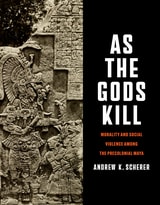
As the Gods Kill
Morality and Social Violence among the Precolonial MayaAndrew K. Scherer
University of Texas Press, 2025
An exploration of war, violence, and sacrifice in precolonial Maya culture and its importance in religious practices.
As the Gods Kill delivers new insights into warfare, weaponry, violence, and human sacrifice among the ancient Maya. While attending to the particularity of a singular historical context, anthropologist and archaeologist Andrew Scherer also suggests that Maya practices have something to tell us about human propensities toward violence more broadly.
Focusing on moral frameworks surrounding deliberate injury and killing, Scherer examines Maya justifications of violence—in particular the obligations to one another, to ancestors, and to the gods that made violence not only permissible but necessary. The analysis isolates key themes underpinning the morality of violence—including justice, vengeance, payment, and costumbre (ritual)—and explores the ethics of violent agents, including warriors, ritual specialists, and the gods. Finally, Scherer addresses motivations for warfare, including the acquisition of spoils, tribute, captives, and slaves. An interdisciplinary case study of morality in an ancient society, As the Gods Kill synthesizes scholarship on an important dimension of precolonial American culture while taking stock of its implications for the social sciences at large.