Results by title
3258 books match the query 'Performing Arts' and 166 start with d
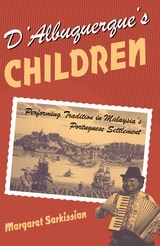
D'Albuquerque's Children
Performing Tradition in Malaysia's Portuguese SettlementMargaret Sarkissian
University of Chicago Press, 2000
Using historical and ethnographic data, Margaret Sarkissian reveals that this music and dance draws on an eclectic array of influences that span the Portuguese diaspora (one song conjures up images of Lucille Ball impersonating Carmen Miranda on "I Love Lucy"). Ironically, she shows, what began as a literate tradition in the 1950s has now become an oral one so deeply rooted in Settlement life that the younger generation, like the tourists, now see it as an unbroken heritage stretching back almost 500 years. A fascinating case of "orientalism in reverse," D'Albuquerque's Children illuminates the creative ways in which one community has adapted to life in a postcolonial world.
D-Passage
The Digital WayTrinh T. Minh-ha
Duke University Press, 2013
D. H. Lawrence
Fifty Years on FilmLouis K. Greiff
Southern Illinois University Press, 2001
Between 1949 and 1999, the life and works of D. H. Lawrence inspired ten feature films: nine based on works of fiction and one based on biography. In D. H. Lawrence: Fifty Years on Film, Louis K. Greiff examines these films as adaptations, as cultural or historical documents, and as independent works of art.
Significantly, the films were not spread evenly throughout the decades but appeared in three clusters. The first group, or the “black and white,” appeared between 1949 and 1960. With the exception of Marc Allegret’s L’Amant de Lady Chatterley (1955), all celebrate the British common man as a midcentury hero and promote an unmistakable yet never strident postwar ethos that is Marxist in spirit.
The second cluster occurred during the late 1960s and early 1970s. These films show Lawrence’s values as similar to the cultural values of the time—nonconformity, neobohemianism, sexual rebellion, war protest, and the celebration of youth. In his discussion of the third group Greiff explains why, in an un-Lawrentian decade like the 1980s, there was a revival of Lawrence’s works on film.
Greiff also deals with the contributions made by directors Ken Russell and Christopher Miles, both of whom directed Lawrence films of the latter two clusters. He shows how Russell and, to a lesser extent, Miles were responsible for bringing mass audiences in touch with the works of Lawrence.
Greiff’s final and most important goal is to interpret and evaluate the Lawrence films. He looks first at the film as a visual representation of its text, then as an original act of creation and object of art.
D.A. Pennebaker
Keith Beattie
University of Illinois Press, 2011
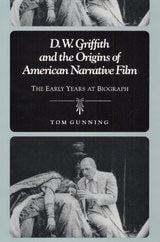
D.W. Griffith and the Origins of American Narrative Film
The Early Years at BiographTom Gunning
University of Illinois Press, 1991
In this comprehensive historical investigation, drawing on films preserved by the Library of Congress and the Museum of Modern Art, Tom Gunning reveals that the remarkable cinematic changes between 1900 and 1915 were a response to the radical reorganization within the film industry and the evolving role of film in American society. The Motion Picture Patents Company, the newly formed Film Trust, had major economic aspirations. The newly emerging industry's quest for a middle-class audience triggered Griffith's early experiments in film editing and imagery. His unique solutions permanently shaped American narrative film.
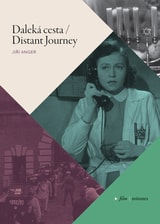
Daleká cesta / Distant Journey
By Jirí Anger
Lever Press, 2026
This volume in the film|minutes series focuses on Alfréd Radok’s Daleká cesta (Distant Journey, 1948), a pioneering Czechoslovak film admired by figures such as André Bazin and Alain Resnais. Renowned for its bold experiments in cinematic montage, the film combines fictional scenes with newsreel footage, Nazi propaganda, and images of liberated concentration camps. Produced shortly after the war, Daleká cesta remains one of the earliest and most formally daring cinematic attempts to grapple with the Holocaust. Drawing on the creators’ ideas of editing as a means of rescuing victims of atrocity—at least momentarily—from historical determinism, the book explores how a montage-like experiment in film analysis can challenge not only deterministic narratives of history, but also the conventions of established theoretical frameworks and academic writing.
Volumes in the film|minutes series cut up films into segments of exactly one minute and transform each minute into an innovative tool for thinking with the film. Each volume works rigorously with the concept of “the minute” as a non-cinematic scale/quantity, a means to zoom in on (dis)orderly fragments that do not necessarily respect the confinements of cinematic form or meaning. As a critical practice, the focus on minutes causes disruptions and displacement that create novel connections and perspectives, and uncovers hidden traces, making it possible to watch each film anew.
Dames in the Driver's Seat
Rereading Film NoirBy Jans B. Wager
University of Texas Press, 2005
With its focus on dangerous, determined femmes fatales, hardboiled detectives, and crimes that almost-but-never-quite succeed, film noir has long been popular with moviegoers and film critics alike. Film noir was a staple of classical Hollywood filmmaking during the years 1941-1958 and has enjoyed a resurgence in popularity since the 1990s. Dames in the Driver's Seat offers new views of both classical-era and contemporary noirs through the lenses of gender, class, and race. Jans Wager analyzes how changes in film noir's representation of women's and men's roles, class status, and racial identities mirror changes in a culture that is now often referred to as postmodern and postfeminist.
Following introductory chapters that establish the theoretical basis of her arguments, Wager engages in close readings of the classic noirs The Killers, Out of the Past, and Kiss Me Deadly and the contemporary noirs L. A. Confidential, Mulholland Falls, Fight Club, Twilight, Fargo, and Jackie Brown. Wager divides recent films into retro-noirs (made in the present, but set in the 1940s and 1950s) and neo-noirs (made and set in the present but referring to classic noir narratively or stylistically). Going beyond previous studies of noir, her perceptive readings of these films reveal that retro-noirs fulfill a reactionary social function, looking back nostalgically to outdated gender roles and racial relations, while neo-noirs often offer more revisionary representations of women, though not necessarily of people of color.
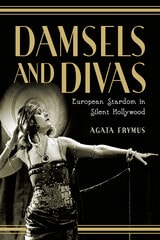
Damsels and Divas
European Stardom in Silent HollywoodAgata Frymus
Rutgers University Press, 2020
Damsels and Divas investigates the meanings of Europeanness in Hollywood during the 1920s by charting professional trajectories of three movie stars: Pola Negri, Vilma Bánky and Jetta Goudal. It combines the investigation of American fan magazines with the analysis of studio documents, and the examination of the narratives of their films, to develop a thorough understanding of the ways in which Negri, Bánky and Goudal were understood within the realm of their contemporary American culture. This discussion places their star personae in the context of whiteness, femininity and Americanization. Every age has its heroines, and they reveal a lot about prevailing attitudes towards women in their respective eras. In the United States, where the stories of rags-to-riches were especially potent, stars could offer models of successful cultural integration.

Dance Studies in China
Selected Writings from the Journal of Beijing Dance AcademyEdited by Deng Youling and Zhang Yanjie
Intellect Books, 2022
Officially founded in 1978, the Beijing Dance School was the first professional dance school established after the creation of the People’s Republic of China. In the years since, the Beijing Dance Academy has become the only institution of higher learning for professional dance education in the country, as well as the largest prestigious dance school in the world. It is a full-time institution of higher learning with commitments to developing excellent professional dancers, choreographers, and dance researchers. Dance Studies in China is a collection of articles selected from issues of the Journal of Beijing Dance Academy, the only academic journal of dance studies in China. The collection also includes an interview with Shen Wei, the Chinese American choreographer, painter, and director living in New York.
Dance across Texas
By Betty Casey
University of Texas Press, 1985
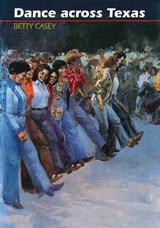
Generations of Texans have believed that “to dance is to live.” At rustic “play parties” and elegant cotillions, in tiny family dance halls and expansive urban honky-tonks, from historic beginnings to next Saturday night, Texans have waltzed, polkaed, schottisched, and shuffled their way across the state.
In Dance across Texas, internationally known dance instructor and writer Betty Casey takes an informal look at the history of Texas dancing and, in clear diagrams, photos, and detailed instructions, tells “how to” do more than twenty Texas dances.
Previously, little had been recorded about the history of dancing on the frontier. Journal and diary entries, letters, and newspaper clippings preserve enticing, if sketchy, descriptions of the types of dances that were popular. Casey uses a variety of sources, including interviews and previously unpublished historical materials, such as dance cards, invitations, and photographs, to give us a delightful look at the social context of dance. The importance of dance to early Texans is documented through colorful descriptions of clothing worn to the dances, of the various locations where dances were held, ranging from a formal hall to a wagon sheet spread on the ground, and of the hardships endured to get to a dance.
Also included in the historical section of Dance across Texas are notes on the “morality” of dance, the influence of country music on modern dance forms, and the popularity of such Texas dance halls and clubs as Crider’s and Gilley’s.
The instruction section of the book diagrams twenty-two Texas dances, including standard waltzes and two-steps as well as the Cotton-Eyed Joe, Put Your Little Foot, Herr Schmidt, the Western Schottische, and such “whistle’” or mixer dances as Paul Jones, Popcorn, and Snowball. Clear and detailed directions for each dance, along with suggested musical selections, accompany the diagrams and photos. Dance and physical education teachers and students will find this section invaluable, and aspiring urban cowboys can follow the easy-to-read diagrammed footsteps to a satisfying spin around the honky-tonk floor. Anyone interested in dance or in the history of social customs in Texas will find much to enjoy in this refreshing and often amusing look at a Texas “national” pastime.
Dance and American Art
A Long EmbraceSharyn R. Udall
University of Wisconsin Press, 2012
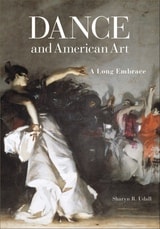
From ballet to burlesque, from the frontier jig to the jitterbug, Americans have always loved watching dance, whether in grand ballrooms, on Mississippi riverboats, or in the streets. Dance and American Art is an innovative look at the elusive, evocative nature of dance and the American visual artists who captured it through their paintings, sculpture, photography, and prints from the early nineteenth century through the mid-twentieth century. The scores of artists discussed include many icons of American art: Winslow Homer, George Caleb Bingham, Mary Cassatt, James McNeill Whistler, Alexander Calder, Joseph Cornell, Edward Steichen, David Smith, and others.
As a subject for visual artists, dance has given new meaning to America’s perennial myths, cherished identities, and most powerful dreams. Their portrayals of dance and dancers, from the anonymous to the famous—Anna Pavlova, Isadora Duncan, Loïe Fuller, Josephine Baker, Martha Graham—have testified to the enduring importance of spatial organization, physical pattern, and rhythmic motion in creating aesthetic form.
Through extensive research, sparkling prose, and beautiful color reproductions, art historian Sharyn R. Udall draws attention to the ways that artists’ portrayals of dance have defined the visual character of the modern world and have embodied culturally specific ideas about order and meaning, about the human body, and about the diverse fusions that comprise American culture.
Dance and Authoritarianism
These Boots are Made for DancingAnthony Shay
Intellect Books, 2021
Using dance as a lens through which to study political, ethnic, and gendered phenomena, Anthony Shay shows us how dance and mass movement have served as important political tools throughout history and across a variety of authoritarian regimes. Dance and Authoritarianism is a significant and original contribution to the scholarship at the intersection of dance, ethnology, anthropology, cultural studies, and history.
Dance and Ethics
Moving Towards a More Humane Dance CultureNaomi M. Jackson
Intellect Books, 2022
This work examines ethics and the changing values in the world of dance, especially as faced by young dancers entering the profession. Since the 1960s, scholars and practitioners from the fields of dance education, somatics, and the realms of postmodern dance and ballet have increasingly believed that attitudes and practices involving psychological, physical, and sexual mistreatment of students and dancers must be challenged.
Dance and Ethics examines key ethical issues related to the dance field, primarily within the United States, and how those directly impact different aspects of the lives of dance artists throughout their careers. The issues discussed include the basic ethical choices facing a dance artist in terms of whether to care about ethics or separate art from morality; ethical issues involved in student–teacher and dancer–choreographer relationships; how ethical concerns relate to the creation and reception of choreographic work; ethical aspects of the critical assessment of dance and dancers; and ethical issues related to presenting systems and institutional infrastructures within the dance field.
Dance and the Hollywood Latina
Race, Sex, and StardomOvalle, Priscilla P
Rutgers University Press, 2011
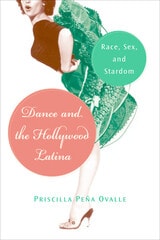
Introducing the concepts of "inbetween-ness" and "racial mobility" to further illuminate how racialized sexuality and the dancing female body operate in film, Priscilla Peña Ovalle focuses on the careers of Dolores Del Rio, Rita Hayworth, Carmen Miranda, Rita Moreno, and Jennifer Lopez. Dance and the Hollywood Latina helps readers better understand how the United States grapples with race, gender, and sexuality through dancing bodies on screen.
Dance and the Nation
Performance, Ritual, and Politics in Sri LankaSusan A. Reed
University of Wisconsin Press, 2010
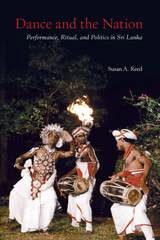
As the national dance of Sri Lanka, Kandyan dance is identified with the majority Sinhala ethnic group and heavily supported by the state. Derived from the kohomba kankariya—an elaborate village ritual performed by men of the hereditary drummer caste—the dance was adopted by the state as a symbol of traditional Sinhala culture in the post-independence period. When state officials introduced the dance into the school curriculum, it was opened to individuals of all castes, and high-caste women have emerged as prominent teachers and performers. Reed’s evocative account traces the history and consequences of this transition from ritual to stage, situating the dance in relation to postcolonial nationalism and ethnic politics and emphasizing the voices and perspectives of the hereditary dancers and of women performers.
Although Kandyan dance is related to other south Asian dance forms, it is unique, distinguished by an elegant, energetic style, and lively displays of acrobatics and agility. The companion DVD includes unparalleled footage of this vibrant dance in ritual, stage, and training contexts, and features the most esteemed performers of the Kandyan region.
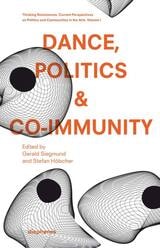
Dance, Politics & Co-Immunity
Current Perspectives on Politics and Communities in the Arts Vol. 1Edited by Stefan Hölscher and Gerald Siegmund
Diaphanes, 2013
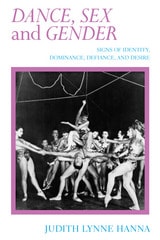
Dance, Sex, and Gender
Signs of Identity, Dominance, Defiance, and DesireJudith Lynne Hanna
University of Chicago Press, 1988
Dance, Somatics and Spiritualities
Contemporary Sacred NarrativesEdited by Amanda Williamson, Glenna Batson, Sarah Whatley, and Rebecca Weber
Intellect Books, 2014
Presenting a rich mosaic of embodied contemporary narratives in spirituality and movement studies, this book explicitly studies the relationship between spirituality and the field of Somatic Movement Dance Education. It is the first scholarly text to focus on contemporary spirituality within the domain of dance and somatic movement studies.
Dance, Somatics and Spiritualities brings together prominent authors and practitioners in order to elucidate how a wide range of sacred narratives/spiritualities are informing pedagogy, educational and therapeutic practice. As well as providing new insights and promoting creative/artistic awareness, this seminal text de-mystifies the spiritual/sacred and brings clarity and academic visibility to this largely uncharted and often misrepresented subject.
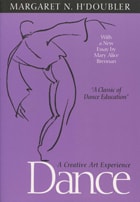
Dance
A Creative Art ExperienceMargaret N. H'Doubler; with a new essay by Mary Alice Brennan
University of Wisconsin Press, 1959
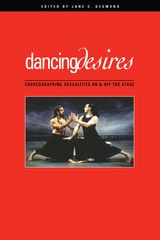
Dancing Desires
Choreographing Sexualities On And Off The StageJane C. Desmond
University of Wisconsin Press, 2001
What happens to the writing of dance history when issues of sexuality and sexual identity are made central? What happens to queer theory, and to other theoretical constructs of gender and sexuality, when a dancing body takes center stage? Dancing Desires asks these questions, exploring the relationship between dancing bodies and sexual identity on the concert stage, in nightclubs, in film, in the courts, and on the streets. From Nijinsky’s balletic prowess to Charlie Chaplin's lightfooted "Little Tramp," from lesbian go-go dancers to the swans of Swan Lake, from the postmodern works of Bill T. Jones to the dangers of same-sex social dancing at Disneyland and the ecstatic Mardi Gras dance parties of Sydney, Australia, this book tracks the intersections of dance and human sexuality in the twentieth century as the definition of each has shifted and expanded.
The contributors come from a number of fields (literature, history, theater, dance, film studies, legal studies, critical race studies) and employ methodologies ranging from textual analysis and film theory to ethnography. By embracing dance, and bodily movement more generally, as a crucial focus for investigation, together they initiate a new agenda for tracking the historical kinesthetics of sexuality.
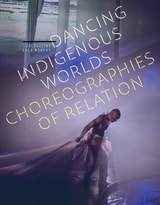
Dancing Indigenous Worlds
Choreographies of RelationJacqueline Shea Murphy
University of Minnesota Press, 2023
The vital role of dance in enacting the embodied experiences of Indigenous peoples
In Dancing Indigenous Worlds, Jacqueline Shea Murphy brings contemporary Indigenous dance makers into the spotlight, putting critical dance studies and Indigenous studies in conversation with one another in fresh and exciting new ways. Exploring Indigenous dance from North America and Aotearoa (New Zealand), she shows how dance artists communicate Indigenous ways of being, as well as generate a political force, engaging Indigenous understandings and histories.
Following specific dance works over time, Shea Murphy interweaves analysis, personal narrative, and written contributions from multiple dance artists, demonstrating dance’s crucial work in asserting and enacting Indigenous worldviews and the embodied experiences of Indigenous peoples. As Shea Murphy asserts, these dance-making practices can not only disrupt the structures that European colonization feeds upon and strives to maintain, but they can also recalibrate contemporary dance.
Based on more than twenty years of relationship building and research, Shea Murphy’s work contributes to growing, and largely underreported, discourses on decolonizing dance studies, and the geopolitical, gendered, racial, and relational meanings that dance theorizes and negotiates. She also includes discussions about the ethics of writing about Indigenous knowledge and peoples as a non-Indigenous scholar, and models approaches for doing so within structures of ongoing reciprocal, respectful, responsible action.

Dancing Ledge
Derek Jarman
University of Minnesota Press, 2010
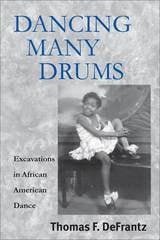
Dancing Many Drums
Excavations In African American DanceThomas F. Defrantz
University of Wisconsin Press, 2002
Few will dispute the profound influence that African American music and movement has had in American and world culture. Dancing Many Drums explores that influence through a groundbreaking collection of essays on African American dance history, theory, and practice. In so doing, it reevaluates "black" and "African American " as both racial and dance categories. Abundantly illustrated, the volume includes images of a wide variety of dance forms and performers, from ring shouts, vaudeville, and social dances to professional dance companies and Hollywood movie dancing.
Bringing together issues of race, gender, politics, history, and dance, Dancing Many Drums ranges widely, including discussions of dance instruction songs, the blues aesthetic, and Katherine Dunham’s controversial ballet about lynching, Southland. In addition, there are two photo essays: the first on African dance in New York by noted dance photographer Mansa Mussa, and another on the 1934 "African opera," Kykunkor, or the Witch Woman.
Dancing Opacity
Contemporary Dance, Transnationalism, and Queer Possibility in SenegalAmy E. Swanson
University of Michigan Press, 2025
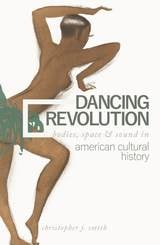
Dancing Revolution
Bodies, Space, and Sound in American Cultural HistoryChristopher J. Smith
University of Illinois Press, 2019
Dancing Revolution presents richly diverse case studies to illuminate these patterns of movement and influence in movement and sound in the history of American public life. Christopher J. Smith spans centuries, geographies, and cultural identities as he delves into a wide range of historical moments. These include the God-intoxicated public demonstrations of Shakers and Ghost Dancers in the First and Second Great Awakenings; creolized antebellum dance in cities from New Orleans to Bristol; the modernism and racial integration that imbued twentieth-century African American popular dance; the revolutionary connotations behind images of dance from Josephine Baker to the Marx Brothers; and public movement's contributions to hip hop, antihegemonic protest, and other contemporary transgressive communities’ physical expressions of dissent and solidarity.
Multidisciplinary and wide-ranging, Dancing Revolution examines how Americans turned the rhythms of history into the movement behind the movements.
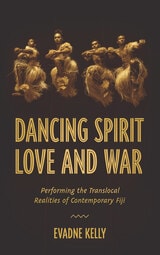
Dancing Spirit, Love, and War
Performing the Translocal Realities of Contemporary FijiEvadne Kelly
University of Wisconsin Press, 2022
Through extensive archival and ethnographic fieldwork in both Fiji and Canada, Kelly offers key insights into an underrepresented dance form, region, and culture. Her perceptive analysis of meke will be of interest in dance studies, postcolonial and Indigenous studies, anthropology and performance ethnography, and Pacific Island studies.
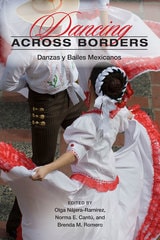
Dancing across Borders
Danzas y Bailes MexicanosEdited by Olga Najera-Ramirez, Norma E. Cantu, and Brenda M. Romero
University of Illinois Press, 2009
Contributors are Norma E. Cantú, Susan Cashion, María Teresa Ceseña, Xóchitl C. Chávez, Adriana Cruz-Manjarrez, Renée de la Torre Castellanos, Peter J. García, Rudy F. García, Chris Goertzen, Martha González, Elisa Diana Huerta, Sydney Hutchinson, Marie "Keta" Miranda, Olga Nájera-Ramírez, Shakina Nayfack, Russell Rodríguez, Brenda M. Romero, Nancy Lee Chalfa Ruyter, José Sánchez Jiménez, and Alberto Zárate Rosales.
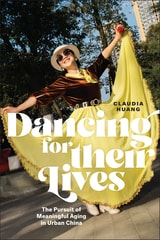
Dancing for Their Lives
The Pursuit of Meaningful Aging in Urban ChinaClaudia Huang
Rutgers University Press, 2025
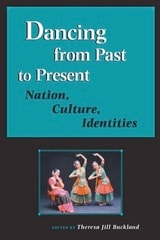
Dancing from Past to Present
Nation, Culture, IdentitiesEdited by Theresa Jill Buckland
University of Wisconsin Press, 2007
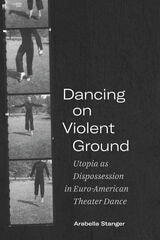
Dancing on Violent Ground
Utopia as Dispossession in Euro-American Theater DanceArabella Stanger
Northwestern University Press, 2021
Developing a new theory of choreographic space, Arabella Stanger shows how embodied forms of hope promised in ballet and progressive dance modernisms conceal and depend on spatial operations of imperial, colonial, and racial subjection. Stanger unearths dance’s violent ground by interrogating the expansionist fantasies of Marius Petipa’s imperial ballet, settler colonial and corporate land practices in the modern dance of Martha Graham and George Balanchine, reactionary discourses of the human in Rudolf von Laban’s and Oskar Schlemmer’s movement geometries; Merce Cunningham’s experimentalism as a white settler fantasy of the land of the free, and the imperial amnesia of Boris Charmatz’s interventions into metropolitan museums. Drawing on materialist thought, critical race theory, and indigenous studies, Stanger ultimately advocates for dance studies to adopt a position of “critical negativity,” an analytical attitude attuned to how dance’s exuberant modeling of certain forms of life might provide cover for life-negating practices. Bold in its arguments and rigorous in its critique, Dancing on Violent Ground asks how performance scholars can develop a practice of thinking hopefully, without expunging history from their site of analysis.
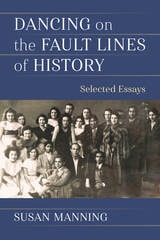
Dancing on the Fault Lines of History
Selected EssaysSusan Manning
University of Michigan Press, 2025
Like the artists at the center of her research, Manning’s writing dances on the fault lines of history. Her introduction and annotations to the essays reflect on how and why these keywords became central to her research, revealing the autobiographical resonances of her scholarship as she confronts the cultural politics of the late twentieth and early twenty-first centuries.
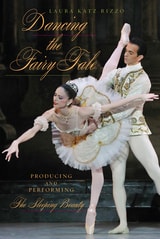
Dancing the Fairy Tale
Producing and Performing The Sleeping BeautyLaura Katz Rizzo
Temple University Press, 2015
Using extensive archival research, dance analysis, and American feminist theory, Dancing the Fairy Tale places women at the center of a historical narrative to reveal how the production and performance of The Sleeping Beauty in the years between 1937 and 2002 made significant contributions to the development and establishment of an American classical ballet. Katz Rizzo highlights not only what women have done not only behind the scenes, as administrators, producers, or directors of ballet companies and schools, but also as active interpreters embodying the ballet's title role.
In the process, Katz Rizzo also emphasizes the importance of regional sites outside of locations traditionally understood as central to the development of ballet in the United States.
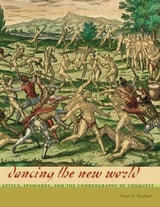
Dancing the New World
Aztecs, Spaniards, and the Choreography of ConquestBy Paul A. Scolieri
University of Texas Press, 2013
Winner, Oscar G. Brockett Book Prize in Dance Research, 2014
Honorable Mention, Sally Banes Publication Prize, American Society for Theatre Research, 2014
de la Torre Bueno® Special Citation, Society of Dance History Scholars, 2013
From Christopher Columbus to “first anthropologist” Friar Bernardino de Sahagún, fifteenth- and sixteenth-century explorers, conquistadors, clerics, scientists, and travelers wrote about the “Indian” dances they encountered throughout the New World. This was especially true of Spanish missionaries who intensively studied and documented native dances in an attempt to identify and eradicate the “idolatrous” behaviors of the Aztec, the largest indigenous empire in Mesoamerica at the time of its European discovery.
Dancing the New World traces the transformation of the Aztec empire into a Spanish colony through written and visual representations of dance in colonial discourse—the vast constellation of chronicles, histories, letters, and travel books by Europeans in and about the New World. Scolieri analyzes how the chroniclers used the Indian dancing body to represent their own experiences of wonder and terror in the New World, as well as to justify, lament, and/or deny their role in its political, spiritual, and physical conquest. He also reveals that Spaniards and Aztecs shared an understanding that dance played an important role in the formation, maintenance, and representation of imperial power, and describes how Spaniards compelled Indians to perform dances that dramatized their own conquest, thereby transforming them into colonial subjects. Scolieri’s pathfinding analysis of the vast colonial “dance archive” conclusively demonstrates that dance played a crucial role in one of the defining moments in modern history—the European colonization of the Americas.
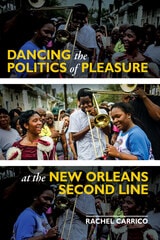
Dancing the Politics of Pleasure at the New Orleans Second Line
Rachel Carrico
University of Illinois Press, 2024
On many Sundays, Black New Orleanians dance through city streets in Second Lines. These processions invite would-be spectators to join in, grooving to an ambulatory brass band for several hours. Though an increasingly popular attraction for tourists, parading provides the second liners themselves with a potent public expression of Black resistance.
Rachel Carrico examines the parading bodies in motion as a form of negotiating and understanding power. Seeing pleasure as a bodily experience, Carrico reveals how second liners’ moves link joy and liberation, self and communal identities, play and dissent, and reclamations of place. As she shows, dancers’ choices allow them to access the pleasure of reclaiming self and city through motion and rhythm while expanding a sense of the possible in the present and for the future.
In-depth and empathetic, Dancing the Politics of Pleasure at the New Orleans Second Line blends analysis with a chorus of Black voices to reveal an indelible facet of Black culture in the Crescent City.
Dancing to Transform
How Concert Dance Becomes Religious in American ChristianityEmily Wright
Intellect Books, 2020
In response to a scarcity of writings on the intersections between dance and Christianity, Dancing to Transform examines the religious lives of American Christians who, despite the historically tenuous place of dance within Christianity, are also professional dancers.
Through a multi-site study of four professional dance companies, Wright conducted participant-observations and ethnographic interviews with artistic directors, choreographers, and company members who self-identify as Christian. She then analyzed choreography from each company to determine how concert dance becomes religious and what effects danced religious practices have for these participants. Her research reveals that the participants turn what they perceive as secular professional dance into different kinds of religious practices in order to actualize individual and communal religious identities—they dance to transform.
Dancing with Parkinson's
Sara Houston
Intellect Books, 2019
Presenting personal narratives from a study that investigates the experience of people with Parkinson’s who dance, intertwined with the social and political contexts in which the dancers live, this volume examines the personal and systemic issues as well as the attitudes and identities that shape people’s relationship to dance. Taking this new primary research as a starting point, Dancing with Parkinson’s builds an argument for how dance becomes a way of helping people live well with Parkinson’s.
Dancing with the Dead
Memory, Performance, and Everyday Life in Postwar OkinawaChristopher T. Nelson
Duke University Press, 2008
Nelson analyzes the practices of specific performers, showing how memories are recalled, bodies remade, and actions rethought as Okinawans work through fragments of the past in order to reconstruct the fabric of everyday life. Artists such as the popular Okinawan actor and storyteller Fujiki Hayato weave together genres including Japanese stand-up comedy, Okinawan celebratory rituals, and ethnographic studies of war memory, encouraging their audiences to imagine other ways to live in the modern world. Nelson looks at the efforts of performers and activists to wrest the Okinawan past from romantic representations of idyllic rural life in the Japanese media and reactionary appropriations of traditional values by conservative politicians. In his consideration of eisā, the traditional dance for the dead, Nelson finds a practice that reaches beyond the expected boundaries of mourning and commemoration, as the living and the dead come together to create a moment in which a new world might be built from the ruins of the old.

Dancing with the Zapatistas
Diana Taylor and Lorie Novak, editors
Duke University Press, 0

Dangerous Dames
Women and Representation in Film Noir and the Weimar Street FilmJans B. Wager
Ohio University Press, 1999
Both film noir and the Weimar street film hold a continuing fascination for film spectators and film theorists alike. The female characters, especially the alluring femmes fatales, remain a focus for critical and popular attention. In the tradition of such attention, Dangerous Dames focuses on the femme fatale and her antithesis, the femme attrapée.
Unlike most theorists, Jans Wager examines these archetypes from the perspective of the female spectator and rejects the persistence of vision that allows a reading of these female characters only as representations of unstable postwar masculinity. Professor Wager suggests that the woman in the audience has always seen and understood these characters as representations of a complex aspect of her existence.
Dangerous Dames looks at the Weimar street films The Street, Variety, Asphalt, and M and the film noir movies The Maltese Falcon, Gun Crazy, and The Big Heat. This book opens the doors to spectators and theorists alike, suggesting cinematic pleasures outside the bounds of accepted readings and beyond the narrow categorization of film noir and the Weimar street film as masculine forms.
Danish Directors
Dialogues on a Contemporary National CinemaEdited by Mette Hjort and Ib Bondebjerg
Intellect Books, 1995
Each interview is preceded by a photograph of the director, biographical information, and a filmography. Frame enlargements are used throughout to help clarify particular points of discussion and the book as a whole is contextualised by an informative general introduction. A valuable addition to the growing library of books on Scandinavian film, national cinema and minority cinema.
Danzón Days
Age, Race, and Romance in MexicoHettie Malcomson
University of Illinois Press, 2023
Winner of the 2024 BFE Book Prize (British Forum for Ethnomusicology)
Older people negotiating dance routines, intimacy, and racialized differences provide a focal point for an ethnography of danzón in Veracruz, the Mexican city closely associated with the music-dance genre. Hettie Malcomson draws upon on-site research with semi-professional musicians and amateur dancers to reveal how danzón connects, and does not connect, to blackness, joyousness, nostalgia, ageing, and romance. Challenging pervasive utopian views of danzón, Malcomson uses the idea of ambivalence to explore the frictions and opportunities created by seemingly contrary sentiments, ideas, sensations, and impulses. Interspersed with experimental ethnographic vignettes, her account takes readers into black and mestizo elements of local identity in Veracruz, nostalgic and newer styles of music and dance, and the friendships, romances, and rivalries at the heart of regular danzón performance and its complex social world.
Fine-grained and evocative, Danzón Days journeys to one of the genre’s essential cities to provide new perspectives on aging and romance and new explorations of nostalgia and ambivalence.
Dario Argento
L. Andrew Cooper
University of Illinois Press, 2012
Commanding a cult following among horror fans, Italian film director Dario Argento is best known for his work in two closely related genres, the crime thriller and supernatural horror, as well as his influence on modern horror and slasher movies. In his four decades of filmmaking, Argento has displayed a commitment to innovation, from his directorial debut with 1970's suspense thriller The Bird with the Crystal Plumage to 2009's Giallo. His films, like the lurid yellow-covered murder-mystery novels they are inspired by, follow the suspense tradition of hard-boiled American detective fiction while incorporating baroque scenes of violence and excess.
While considerations of Argento's films often describe them as irrational nightmares, L. Andrew Cooper uses controversies and theories about the films' reflections on sadism, gender, sexuality, psychoanalysis, aestheticism, and genre to declare the anti-rational logic of Argento's oeuvre. Approaching the films as rhetorical statements made through extremes of sound and vision, Cooper places Argento in a tradition of aestheticized horror that includes De Sade, De Quincey, Poe, and Hitchcock. Analyzing individual images and sequences as well as larger narrative structures, he reveals how the director's stylistic excesses, often condemned for glorifying misogyny and other forms of violence, offer productive resistance to the cinema's visual, narrative, and political norms.
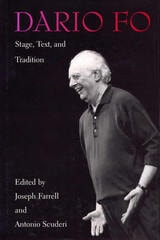
Dario Fo
Stage, Text, and TraditionEdited by Joseph Farrell and Antonio Scuderi
Southern Illinois University Press, 2000
Joseph Farrell and Antonio Scuderi present an international collection of essays reevaluating the multifaceted performance art of Nobel laureate Dario Fo.
The contributors, all of whom either have previously published on Fo or have worked with him, are the major Dario Fo scholars of three continents. Going beyond the Marxist criticism of the 1970s and 1980s, the editors and contributors try to establish an appropriate language in which to debate Fo’s theater. They seek to identify the core of Fo’s work, the material that will be of lasting value. This involves locating Fo in history, examining the nature of his development through successive phases, incorporating his politics into a wider framework of radical dissent, and setting his theatrical achievements in a context and a tradition.
The essays cover every aspect of Dario Fo: as actor, playwright, performer, and songwriter. They also provide the historical background of Fo’s theater, as well as an in-depth analyses of specific works and the contribution of Franca Rame.

Dark Borders
Film Noir and American CitizenshipJonathan Auerbach
Duke University Press, 2011
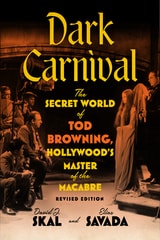
Dark Carnival
The Secret World of Tod Browning, Hollywood’s Master of the MacabreDavid J. Skal
University of Minnesota Press, 2025
The definitive biography of Hollywood horror legend Tod Browning—now revised and expanded with new material
One of the most original and unsettling filmmakers of all time, Tod Browning (1880–1962) began his career buried alive in a carnival sideshow and saw his Hollywood reputation crash with the box office disaster–turned–cult classic Freaks. Penetrating the secret world of “the Edgar Allan Poe of the cinema,” Dark Carnival excavates the story of this complicated, fiercely private man. In this newly revised and expanded edition of their biography first published in 1995, David J. Skal and Elias Savada researched Browning’s recently unearthed scrapbooks and photography archives to add further nuance and depth to their previous portrait of this enigmatic artist.
Skal and Savada chronicle Browning’s turn-of-the-century flight from an eccentric Louisville family into the realm of carnivals and vaudeville, his disastrous first marriage, his rapid climb to riches in the burgeoning silent film industry, and the alcoholism that would plague him throughout his life. They offer a close look at Browning’s legendary collaborations with Lon Chaney and Bela Lugosi as well as the studio politics that brought his remarkable run to an inglorious conclusion. With a revised prologue, epilogue, filmography, and new text and illustrations throughout, Dark Carnival is an unparalleled account of a singular filmmaker and an illuminating depiction of the evolution of horror and the early film industry.
Dark Deleuze
Andrew Culp
University of Minnesota Press, 2016
French philosopher Gilles Deleuze is known as a thinker of creation, joyous affirmation, and rhizomatic assemblages. In this short book, Andrew Culp polemically argues that this once-radical canon of joy has lost its resistance to the present. Concepts created to defeat capitalism have been recycled into business mantras that joyously affirm “Power is vertical; potential is horizontal!”
Culp recovers the Deleuze’s forgotten negativity. He unsettles the prevailing interpretation through an underground network of references to conspiracy, cruelty, the terror of the outside, and the shame of being human. Ultimately, he rekindles opposition to what is intolerable about this world.
Forerunners is a thought-in-process series of breakthrough digital works. Written between fresh ideas and finished books, Forerunners draws on scholarly work initiated in notable blogs, social media, conference plenaries, journal articles, and the synergy of academic exchange. This is gray literature publishing: where intense thinking, change, and speculation take place in scholarship.
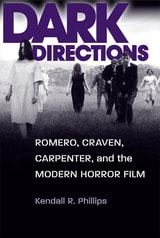
Dark Directions
Romero, Craven, Carpenter, and the Modern Horror FilmKendall R. Phillips
Southern Illinois University Press, 2012
A Nightmare on Elm Street. Halloween. Night of the Living Dead. These films have been indelibly stamped on moviegoers’ psyches and are now considered seminal works of horror. Guiding readers along the twisted paths between audience, auteur, and cultural history, author Kendall R. Phillips reveals the macabre visions of these films’ directors in Dark Directions: Romero, Craven, Carpenter, and the Modern Horror Film.
Phillips begins by analyzing the works of George Romero, focusing on how the body is used cinematically to reflect the duality between society and chaos, concluding that the unconstrained bodies of the Living Dead films act as a critical intervention into social norms. Phillips then explores the shadowy worlds of director Wes Craven. In his study of the films The Serpent and the Rainbow, Deadly Friend, Swamp Thing, Red Eye, and Shocker, Phillips reveals Craven’s vision of technology as inherently dangerous in its ability to cross the gossamer thresholds of the gothic. Finally, the volume traverses the desolate frontiers of iconic director John Carpenter. Through an exploration of such works as Halloween, The Fog, and In the Mouth of Madness, Phillips delves into the director’s representations of boundaries—and the haunting consequences for those who cross them.
The first volume ever to address these three artists together, Dark Directions is a spine-tingling and thought-provoking study of the horror genre. In analyzing the individual works of Romero, Craven, and Carpenter, Phillips illuminates some of the darkest minds in horror cinema.
Dark Film, Blood Money
The Economic Unconscious of American Neo-Noir CinemaVernon Shetley
Intellect Books, 2027
Neo-noir films exert their fascination not only through their suspense, shadowy atmosphere, and moral ambiguity, but also through their registration of the experience of American life in the long twilight of the American Dream. With a sharp curatorial eye and an elegant critical voice, Vernon Shetley interprets landmark works from the noir revival of the early 1970s to the present, showing how neo-noir reflects the darkening national mood as postwar prosperity gave way to economic stagnation and inequality, social alienation, and a deepening sense of crisis.
Through close readings of key films and overviews of neo-noir’s treatment of the genre’s defining themes and archetypes—desire and betrayal, corruption and alienation, the private detective and the femme fatale—Shetley delineates neo-noir’s exploration of anxieties about work, money, trust, and exchange. From Chinatown to Mulholland Drive, from Night Moves to Nightmare Alley, neo-noir’s marginalized characters and extreme situations emerge in Shetley’s account as powerful representations of concerns central to economic and social life. Combining illuminating analysis with lucid prose, this book offers scholars and general readers alike a fresh, penetrating understanding of the dynamics of neo-noir filmmaking and its continually renewed vitality over the last five decades.
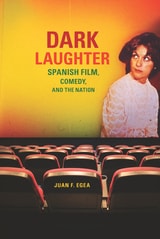
Dark Laughter
Spanish Film, Comedy, and the NationJuan F. Egea
University of Wisconsin Press, 2013
Egea begins his analysis with General Franco's dictatorship in the 1960s—a regime that opened the country to new economic forces while maintaining its repressive nature—exploring key works by Luis García Berlanga, Marco Ferreri, Fernando Fernán-Gómez, and Luis Buñuel. Dark Laughter then moves to the first films of Pedro Almodóvar in the early 1980s during the Spanish political transition to democracy before examining Alex de la Iglesia and the new dark comedies of the 1990s. Analyzing this younger generation of filmmakers, Egea traces dark comedy to Spain's displays of ultramodernity such as the Universal Exposition in Seville and the Barcelona Olympic Games.
At its core, Dark Laughter is a substantial inquiry into the epistemology of comedy, the intricacies of visual modernity, and the relationship between cinema and a wider framework of representational practices.
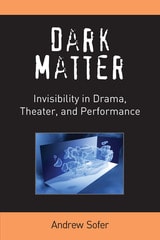
Dark Matter
Invisibility in Drama, Theater, and PerformanceAndrew Sofer
University of Michigan Press, 2013
Dark Mattermaps the invisible dimension of theater whose effects are felt everywhere in performance. Examining phenomena such as hallucination, offstage character, offstage action, sexuality, masking, technology, and trauma, Andrew Sofer engagingly illuminates the invisible in different periods of postclassical western theater and drama. He reveals how the invisible continually structures and focuses an audience’s theatrical experience, whether it’s black magic in Doctor Faustus, offstage sex in A Midsummer Night’s Dream, masked women in The Rover, self-consuming bodies in Suddenly Last Summer, or surveillance technology in The Archbishop’s Ceiling. Each discussion pinpoints new and striking facets of drama and performance that escape sight. Taken together, Sofer’s lively case studies illuminate how dark matter is woven into the very fabric of theatrical representation. Written in an accessible style and grounded in theater studies but interdisciplinary by design, Dark Matter will appeal to theater and performance scholars, literary critics, students, and theater practitioners, particularly playwrights and directors.