Results by title
557 books match the query 'Poems' and 18 start with d

Daisy
PoemsRachel Feder
Northwestern University Press, 2025
A narrative-poetic retelling of The Great Gatsby from the perspective of a 1990s teen poet
Daisy: Poems is a captivating and imaginative take on The Great Gatsby that puts F. Scott Fitzgerald’s 1925 classic in the hands of a messy, ambitious, and possibly devious teen poet. From her privileged yet precarious perch in the roaring 1990s, Daisy navigates the expectations of her parents, boyfriend, and lover, alongside her own artistic ambitions, as she explores whether freedom is what she truly desires—and wonders if it’s even possible. Rachel Feder puts a new spin on beloved characters: Jay, longtime and secret lover; Nick, somewhat mysterious and always meddling cousin; and Jordyn, best friend and companion in doomed relationships. A meditation on juvenilia, constructions of femininity, the purity myth, and canonical literary silences, Daisy is told in sparse, evocative verse that pulsates with youthful passion and offers a new elegy for our lost American dreams.

Dark Braid
PoemsDara Yen Elerath
BkMk Press, 2020
Julie Suk Prize longlist
Through the use of imagination, fairy tale and persona Dark Braid bridges the universal and the personal by focusing on the body, problematic relationships, illness (both mental and physical) and feelings of being an outsider.
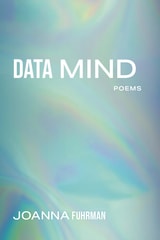
Data Mind
PoemsJoanna Fuhrman
Northwestern University Press, 2025
Wrestling with the experience of living online as a non-digital native
Joanna Fuhrman didn’t grow up online. Her generation entered the digital age as adults, with optimism about the possibilities it would bring for community building. In the alien landscape of the internet, they indeed found moments of joy and connection, but they also watched in anguish as what had been sold as a utopian space instead magnified the anti-democratic demons of necrocapitalism. In this darkly comic and surreal collection, Fuhrman lets herself fall into the internet wormhole of these conflicting realities. With titles ranging from “You Won’t Believe How Your Favorite Childhood Star Looks Now” to “We’ll Burn That Algorithm When We Get to It,” the feminist prose poems in Data Mind remix the tropes of digital life with the puckishness and embodied urgency for which Fuhrman is celebrated.
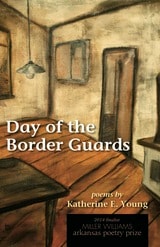
Day of the Border Guards
PoemsKatherine E. Young
University of Arkansas Press, 2014

Dear John, Dear Coltrane
PoemsMichael S. Harper
University of Illinois Press, 1985
unflinching record of a man alive in his time. When he is at his best,
in both his public and his private voice, he creates a language humming
with emotion and ennobled by a deeply felt human dignity."
-- Virginia Quarterly Review
". . . one of the finest poets of our time."
-- San Francisco Examiner & Chronicle
Stephen Henderson Award, African American Literature and Culture Society (AALCS), 2013. Author is recipient of the Frost Medal for Lifetime Achievement, Poetry Society of America, 2008.

Delinquent Palaces
PoemsDanielle Chapman
Northwestern University Press, 2015
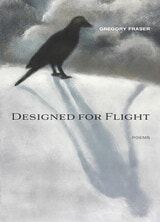
Designed for Flight
PoemsGregory Fraser
Northwestern University Press, 2014
Designed for Flight both continues and enlarges the exploration of the rhythms of our emotional lives undertaken in Gregory Fraser’s first two collections. A master of metaphor, Fraser works magic within tightly controlled forms, loading lines with surprising juxtapositions and changes of direction. Taken together, the poems trace the sometimes instant, sometimes decades-long movement from incomprehensible loss and grief to rueful reflection and, if we’re lucky, uneasy accommodation. Casting a sharply observant eye on past selves, always steering clear of simple sentiment, the speaker in this collection looks back with bitter irony and forgiveness in equal measure. Against the fears and frustrations of childhood, the dissolution of a doomed relationship, and the distance between the hoped for and the actual, Fraser’s poems offer the imagination’s capacity for endless invention and the compensatory pleasures of art.
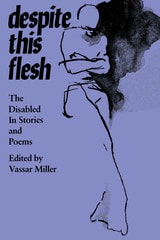
Despite this Flesh
The Disabled in Stories and PoemsEdited by Vassar Miller
University of Texas Press, 1985
Killed by kindness, stifled by overprotection, choked by subtle if sometimes unconscious snubs, the physically handicapped are one of the world's most invisible minorities. Seeking to draw attention to the various attitudes and perceptions about the handicapped, renowned poet Vassar Miller has assembled this collection of short stories and poems culled from the best of contemporary literature.
The forty-five works focus on characters with motor and/or sensory disabilities. Ranging from optimistic to embittered and from sentimental to realistic, they portray the handicapped and the family; the handicapped and society; the myth of the holy idiot; the handicapped as human being, good, evil, and indifferent; the handicapped as unique. Both instructional and entertaining, this book will be of interest to a wide variety of readers, including the handicapped themselves. It will be especially helpful to professionals in the medical, education, and social service fields. As Vassar Miller says in her introduction, "... the book is meant as a midwife in bringing to birth a renewed understanding of all human beings as so many mirrors of God, however seemingly distorted ..."
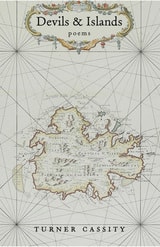
Devils & Islands
PoemsTurner Cassity
Ohio University Press, 2007
As he approaches eighty, Turner Cassity may finally be out of control. His hatchet has never fallen more lethally, meaning if you have the stomach for him he is more enjoyable than ever. Under the blade come Martha Graham, Johann Sebastian Bach, musicologists, tree huggers, Frank Gehry, folk music, folk art of all times and all places, folk… . There are, however, his unpredictable sympathies: Edith Wilson, skyscrapers, Pontius Pilate, Pilate’s legionnaires. He obviously has a soft spot for Pop Culture, although he cannot avoid seeingit de haut en bas.
As usual, he is all over the place geographically. One feels he would slash his wrists before he would write a poem about any city on the traditional Grand Tour. Manaus, Campeche, Trieste, Budapest (as destroyed by Godzilla)—these are his places. He has a disturbing willingness to write on both sides of an issue, resembling in this Bernard Shaw. You have to read very carefully to see whether he tips his hand.
One looks forward to Mr. Cassity’s posthumous poems, when he is beyond the reach of libel. For now, at least, we have Devils & Islands.
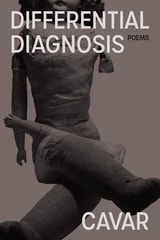
Differential Diagnosis
PoemsCavar
Northwestern University Press, 2026
Undoing traditional psychiatric narratives in this innovative and bold first collection
Drawing from queer, trans, disabled, and Mad poetic traditions, Differential Diagnosis introduces a deeply entangled transMad approach, investigating ways of knowing, loving, and living not legible to the normative eye. This collection challenges the architecture of institutional psychiatry and its popular “wellness” analogues, offering instead a counternarrative of forced institutionalization, disorderly embodiment, and transMad self-determination.
At once jarring and joyful, Differential Diagnosis interrogates psychiatric power and locates capacities for disabled and/or transMad resistance in the oblique, the speculative, and the “nonsensical.” Cavar’s inventive full-length debut defamiliarizes cis, sane, abled existence through linguistic play and speculative imagery, offering Madness not only as poetic content, but also as craft technique and, ultimately, as a new way of being in the normative world.
Disbound
PoemsHajar Hussaini
University of Iowa Press, 2022
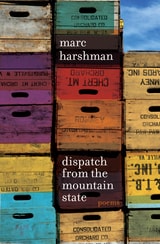
Dispatch from the Mountain State
PoemsMarc Harshman
West Virginia University Press, 2025
This collection of over forty poems sings with a fluid voice and dazzles with imagery that surprises and rings true, often underlain by and intertwined with the darker threads of our common living and dying as contemporary Appalachians. It is rare to find a poet like Harshman, who is deeply connected to the life of rural America and yet writes poetry untouched by any sentiment for the old ways found there.
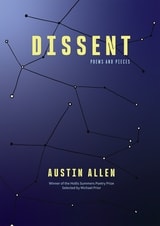
Dissent
Poems and PiecesAustin Allen
Ohio University Press, 2027
Winner of the Hollis Summers Poetry Prize, selected by Michael Prior
Dissent, the third book of poems by Austin Allen, explores division, resistance, and exile in a variety of settings, from nineteenth-century New England to distant solar systems. Here readers will find snapshots of warring planets and pandemic-era France, revelations from government servers and Frank Capra’s Bedford Falls, and a testimonial from a fringe religious sect in the New Mexico desert.
The poems capture the dignity of eccentricity and the uncertainties of protest (“I speak out. I feel that I must. / I hear my own spiel with disgust”). Featured along the way are many lively dissenters and outsiders: Yoko Ono, a reclusive mathematician, a brain in a jar. Futuristic scenarios mingle with personal elegies and love lyrics—efforts to preserve bonds and memories threatened by an age of schisms.
Avoiding allegiance to any one school or style, the collection serves up apocalyptic limericks, a “high-octane blockbuster sonnet,” a catalog of items cleared out of a parent’s home, and instruction pieces in the style of Ono’s Grapefruit. Whether depicting a visionary mailman or happy thieves on Christmas, Dissent probes the unorthodox corners of a world where poetry itself can feel heretical.
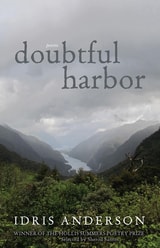
Doubtful Harbor
PoemsIdris Anderson
Ohio University Press, 2018
In Doubtful Harbor, Idris Anderson turns wandering into art. From large landscapes to the minutest details, she seeks with each poem to convey the world more clearly, acutely, and exquisitely. As she meditates on indelible moments with intimate others, friends, and strangers, she teases from these encounters their elusive connections and disconnections. As Sherod Santos wrote when selecting the book for the Hollis Summers Poetry Prize, “These are not the journeys of a tourist, but of a wandering solitaire whose purpose is not to maintain a travelogue, but to lose herself in the otherness of her surroundings.”
Doubt is itself a driving force here, an engine of both questing and questioning. As exact as Anderson’s eye is, her poems draw energy from ambiguity as she renders interior and exterior landscapes—foreign and domestic, lovely and littered, familiar and strange.
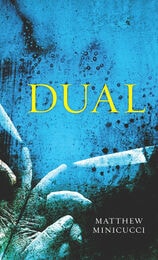
Dual
PoemsMatthew Minicucci
Acre Books, 2023
In his fourth poetry collection, Matthew Minicucci examines masculinity and gun violence as he brings to life the grammatical concept of the dual, a number that is neither singular nor plural. Though now lost in English, the concept is present in other languages both extant and ancient. The poems’ forms fittingly include the elegy, palinode, and contrapuntal, which is both a single poem and two poems intertwined. They align contemporary moments with key texts from Western literature, including ancient Greek epics, in a way that helps us reconsider the aggression of young men. “The world kills kind boys,” Minicucci writes, and “we bury the bodies inside men.”
Minicucci recategorizes our idea of “West,” the Western canon, and the Old West and its bullets, comparing them to modern-day landscapes in Utah, Oregon, Washington, California, and Hawai’i. Whether memorializing a woodworking grandfather or poets Brigit Pegeen Kelly and James Longenbach, Dual notes that loss has a double vision. While weighty in their subjects, Dual’s poems make room for unexpected moments of lightness, such as when the speaker compares the complications of love to “reading the Iliad and realizing, sure, there's anger, // but before that there’s just a lot of camping.”
The book argues, in the end, that there is an unalienable dual between the observer and the observed, the self and the self as confessed to another.
Dual
PoemsMatthew Minicucci
Acre Books, 2023
In his fourth poetry collection, Matthew Minicucci examines masculinity and gun violence as he brings to life the grammatical concept of the dual, a number that is neither singular nor plural. Though now lost in English, the concept is present in other languages both extant and ancient. The poems’ forms fittingly include the elegy, palinode, and contrapuntal, which is both a single poem and two poems intertwined. They align contemporary moments with key texts from Western literature, including ancient Greek epics, in a way that helps us reconsider the aggression of young men. “The world kills kind boys,” Minicucci writes, and “we bury the bodies inside men.”
Minicucci recategorizes our idea of “West,” the Western canon, and the Old West and its bullets, comparing them to modern-day landscapes in Utah, Oregon, Washington, California, and Hawai’i. Whether memorializing a woodworking grandfather or poets Brigit Pegeen Kelly and James Longenbach, Dual notes that loss has a double vision. While weighty in their subjects, Dual’s poems make room for unexpected moments of lightness, such as when the speaker compares the complications of love to “reading the Iliad and realizing, sure, there's anger, // but before that there’s just a lot of camping.”
The book argues, in the end, that there is an unalienable dual between the observer and the observed, the self and the self as confessed to another.
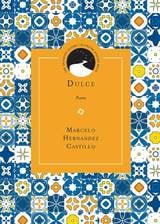
Dulce
PoemsMarcelo Hernandez Castillo
Northwestern University Press, 2018
The poems in Dulce are at once confession and elegy that admit the speaker’s attempt and possible failure to reconcile intimacy toward another and toward the self. The collection asks: what’s the point in any of this?—meaning, what’s the use of longing beyond pleasure; what’s the use of looking for an origin if we already know the ending?
Surreal and deeply imagistic, the poems map a parallel between the landscape of the border and the landscape of sexuality. Marcelo Hernandez Castillo invites the reader to confront and challenge the distinctions of borders and categories, and in doing so, he obscures and negates such divisions. He allows for the possibility of an and in a world of either/or.
These poems enact a prescient anxiety of what is to come, “I want to say all of this is true / but we both know it isn’t. . . . We already know what’s at the other end of this.” Dulce is truly a lyrical force rife with the rich language of longing and regret that disturbs even the most serene quiet.
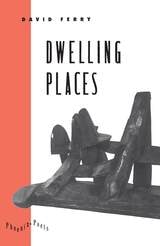
Dwelling Places
Poems and TranslationsDavid Ferry
University of Chicago Press, 1993
"David Ferry's Dwelling Places is a marvelous, extremely moving book, distinguished by Ferry's characteristic formal virtuosity, extraordinarily fresh and 'inner' translations, and a kind of driven anguished rage at both the social conditions in which human beings have to live and the mysteriously unchangeable tragedies of individual human lives. The translations amplify and deepen the contemporary scenes. I feel that in the future this will be perceived as a great book."—Frank Bidart
"Not until I had read Dwelling Places several times did I see how ingeniously resourceful, ambitious, and admirably modest a book David Ferry has made."—Boston Review