Results by title
637 books match the query 'Political activity' and 33 start with d
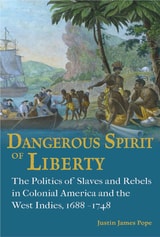
Dangerous Spirit of Liberty
The Politics of Slaves and Rebels in Early America and the West Indies, 1688-1748Justin James Pope
University of Missouri Press, 2024
Dangerous Spirit of Liberty's distinguishing feature is its focus on the role of communication in the development of a rebellious early eighteenth-century Atlantic. Most historians of slavery have presupposed that slave unrest was confined to small locales in the first half of the eighteenth century. In fact, slaves found ways to share news across provinces to great effect. Benefiting from research in the archives of Great Britain, Spain, Barbados, Bermuda, Jamaica, Antigua, the U.S. Virgin Islands, and the mainland United States, the book reveals new evidence of slave communication networks and shows how people of African ancestry shared rumors of emancipation and rebellion in this period. Slaves laboring in colonial commerce and working aboard ships helped foster an increasingly restive Black community. Banished slaves, convicted conspirators accused of plotting insurrection, carried their experiences with them in exile to neighboring colonies. By reconstructing the path of news, the book reveals rumors and reports that particularly resonated among slaves in the early eighteenth century.

Dark Days in the Newsroom
McCarthyism Aimed at the PressEdward Alwood
Temple University Press, 2007
Dark Days in the Newsroom traces how journalists became radicalized during the Depression era, only to become targets of Senator Joseph McCarthy and like-minded anti-Communist crusaders during the 1950s. Edward Alwood, a former news correspondent describes this remarkable story of conflict, principle, and personal sacrifice with noticeable élan. He shows how McCarthy's minions pried inside newsrooms thought to be sacrosanct under the First Amendment, and details how journalists mounted a heroic defense of freedom of the press while others secretly enlisted in the government's anti-communist crusade.
Relying on previously undisclosed documents from FBI files, along with personal interviews, Alwood provides a richly informed commentary on one of the most significant moments in the history of American journalism. Arguing that the experiences of the McCarthy years profoundly influenced the practice of journalism, he shows how many of the issues faced by journalists in the 1950s prefigure today's conflicts over the right of journalists to protect their sources.

Dark Hope
Working for Peace in Israel and PalestineDavid Shulman
University of Chicago Press, 2007
For decades, we’ve been shocked by images of violent clashes between Israelis and Palestinians in the West Bank and Gaza. But for all their power, those images leave us at a loss: from our vantage at home, it’s hard for us to imagine the struggles of those living in the midst of the fighting. Now, American-born Israeli David Shulman takes us right into the heart of the conflict with Dark Hope, an eye-opening chronicle of his work as a member of the peace group Ta‘ayush, which takes its name from the Arabic for “living together.”
Though Shulman never denies the complexity of the issues fueling the conflict—nor the culpability of people on both sides—he forcefully clarifies the injustices perpetrated by Israel by showing us the human dimension of the occupation. Here we meet Palestinians whose houses have been blown up by the Israeli army, shepherds whose sheep have been poisoned by settlers, farmers stripped of their land by Israel’s dividing wall. We watch as whip-swinging police on horseback attack crowds of nonviolent demonstrators, as Israeli settlers shoot innocent Palestinians harvesting olives, and as families and communities become utterly destroyed by the unrelenting violence of the occupation.
Opposing such injustices, Shulman and his companions—Israeli and Palestinian both—doggedly work through checkpoints to bring aid, rebuild houses, and physically block the progress of the dividing wall. As they face off against police, soldiers, and hostile Israeli settlers, anger mixes with compassion, moments of kinship alternate with confrontation, and, throughout, Shulman wrestles with his duty to fight the cruelty enabled by “that dependable and devastating human failure to feel.”
With Dark Hope, Shulman has written a book of deep moral searching, an attempt to discover how his beloved Israel went wrong—and how, through acts of compassionate disobedience, it might still be brought back.

Dark Matter
Art and Politics in the Age of Enterprise CultureGregory Sholette
Pluto Press, 2011
Gregory Sholette, a politically engaged artist, argues that imagination and creativity in the art world originate thrive in the non-commercial sector shut off from prestigious galleries and champagne receptions. This broader creative culture feeds the mainstream with new forms and styles that can be commodified and used to sustain the few artists admitted into the elite.
This dependency, and the advent of inexpensive communication, audio and video technology, has allowed this 'dark matter' of the alternative art world to increasingly subvert the mainstream and intervene politically as both new and old forms of non-capitalist, public art. This book is essential for anyone interested in interventionist art, collectivism, and the political economy of the art world.

Daughter, Mother, Grandmother, and Whore
The Story of a Woman Who Decided to be a PutaGabriela Leite
Duke University Press, 2024

Days of Awe
Reimagining Jewishness in Solidarity with PalestiniansAtalia Omer
University of Chicago Press, 2019
In Days of Awe, Atalia Omer examines this shift through interviews with a new generation of Jewish activists, rigorous data analysis, and fieldwork within a progressive synagogue community. She highlights people politically inspired by social justice campaigns including the Black Lives Matter movement and protests against anti-immigration policies. These activists, she shows, discover that their ethical outrage at US policies extends to Israel’s treatment of Palestinians. For these American Jews, the Jewish history of dispossession and diaspora compels a search for solidarity with liberation movements. This shift produces innovations within Jewish tradition, including multi-racial and intersectional conceptions of Jewishness and movements to reclaim prophetic Judaism. Charting the rise of such religious innovation, Omer points toward the possible futures of post-Zionist Judaism.
Deaf to the Marrow
Deaf Social Organizing and Active Citizenship in Viet NamAudrey C. Cooper
Gallaudet University Press, 2017
Drawing on research data and work with Vietnamese Deaf colleagues covering an eight-year span, Cooper develops ethnographic and language-centered accounts of Deaf social organizing. These accounts illuminate the ways that Deaf citizens are assuming self-determining roles, or active citizenship, in decisions of local, national, and international importance. By placing Deaf social action in the historical context of state development and modernization projects, Cooper shows how educational structuring reflects dominant, spoken-language-centered views of Vietnamese Deaf people and signed languages. She also addresses the impact of international aid agendas on education, especially those related to disability. Deaf to the Marrow examines perspectives largely ignored in Deaf education, Deaf studies, signed-language linguistics, and anthropological literatures, thereby contributing to scholarship on language and sociopolitical formation broadly and the study of Deaf people’s citizenship practices specifically.
Decoding the Digital Church
Evangelical Storytelling and the Election of Donald J. TrumpStephanie A. Martin
University of Alabama Press, 2021
"This investigation tries to understand why many Evangelical pastors were blamed for endorsing Trump when, in fact, most did not. This book joins other attempts by scholars and journalists to analyze the relationship between Trump and Evangelicals. Recommended.” —CHOICE
Tracing the digital narratives that shaped evangelical identity in a pivotal political moment.
As a political constituency, white conservative evangelicals are generally portrayed as easy to dupe, disposed to vote against their own interests, and prone to intolerance and knee-jerk reactions. In Decoding the Digital Church: Evangelical Storytelling and the Election of Donald J. Trump, Stephanie A. Martin challenges this assumption and moves beyond these overused stereotypes to develop a refined explanation for this constituency’s voting behavior.
This volume offers a fresh perspective on the study of religion and politics and stems from the author’s personal interest in the ways her experiences with believers differ from how scholars often frame this group’s rationale and behaviors. To address this disparity, Martin examines sermons, drawing on her expertise in rhetoric and communication studies with the benefits of ethnographic research in an innovative hybrid approach she terms a “digital rhetorical ethnography.” Martin’s thorough research surveys more than 150 online sermons from America’s largest evangelical megachurches in 37 different states. Through listening closely to the words of the pastors who lead these conservative congregations, Martin describes a gentler discourse less obsessed with issues like abortion or marriage equality than stereotypes of evangelicals might suggest. Instead, the politicaleconomic sermons and stories from pastors encourage true believers
to remember the exceptional nature of the nation’s founding while also deemphasizing how much American citizenship really means.
Martin grapples with and pays serious, scholarly attention to a seeming contradiction: while the large majority of white conservative evangelicals voted in 2016 for Donald J. Trump, Martin shows that many of their pastors were deeply concerned about the candidate, the divisive nature of the campaign, and the potential effect of the race on their congregants’ devotion to democratic process itself. In-depth chapters provide a fuller analysis of our current political climate, recapping previous scholarship on the history of this growing divide and establishing the groundwork to set up the dissonance between the political commitments of evangelicals and their faith that the rhetorical ethnography addresses.
Decolonizing the University
Edited by Gurminder K. Bhambra, Kerem Nisancioglu and Dalia Gebrial
Pluto Press, 2018
In 2015, students at the University of Cape Town demanded the removal of a statue of Cecil Rhodes, the imperialist, racist business magnate, from their campus. Their battle cry, #RhodesMustFall, sparked an international movement calling for the decolonization of universities all over the world.
Today, as the movement develops beyond the picket line, how might it go on to radically transform the terms upon which universities exist? In this book, students, activists, and scholars discuss the possibilities and the pitfalls of doing decolonial work in the heart of the establishment. Subverting curricula, demanding diversity, and destroying old boundaries, this is a radical call for a new era of education. Chapters include:
*Rhodes Must Fall: Oxford and Movements for Change (Dalia Febrial)
*Race and the Neoliberal University ((John Holmwood)
*Black/Academia (Robbie Shilliam)
*The Challenge for Black Studies in the Neoliberal University (Kehinde Andrews)
*Open Initiatives for Decolonising the Curriculum (Pat Lockley)
*Decolonising Education: A Pedagogic Intervention (Carol Azumah Dennis)
*Understanding Eurocentrism as a Structural Problem of Undone Science (William Jamal Richardson)
As the book’s insightful Introduction states, "Taking colonialism as a global project as a starting point, it becomes difficult to turn away from the Western university as a key site through which colonialism—and colonial knowledge in particular—is produced, consecrated, institutionalized and naturalized." Offering resources for students and academics to challenge and resist colonialism inside and outside the classroom, Decolonizing the University provides the tools for radical change in educational disciplines, pedagogies, and institutions.

Demanding Justice and Security
Indigenous Women and Legal Pluralities in Latin AmericaSieder, Rachel
Rutgers University Press, 2017
Featuring chapters on Bolivia, Colombia, Ecuador, Guatemala, and Mexico, the contributors to Demanding Justice and Security include both leading researchers and community activists. From Kichwa women in Ecuador lobbying for the inclusion of specific clauses in the national constitution that guarantee their rights to equality and protection within indigenous community law, to Me’phaa women from Guerrero, Mexico, battling to secure justice within the Inter-American Court of Human Rights for violations committed in the context of militarizing their home state, this book is a must-have for anyone who wants to understand the struggle of indigenous women in Latin America.
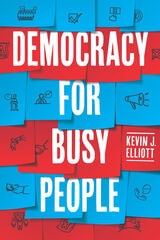
Democracy for Busy People
Kevin J. Elliott
University of Chicago Press, 2023
How do we make democracy more equal? Although in theory, all citizens in a democracy have the right to participate in politics, time-consuming forms of participation often advantage some groups over others. Where some citizens may have time to wait in long lines to vote, to volunteer for a campaign, to attend community board meetings, or to stay up to date on national, state, and local news, other citizens struggle to do the same. Since not all people have the time or inclination to devote substantial energy to politics, certain forms of participation exacerbate existing inequalities.
Democracy for Busy People takes up the very real challenge of how to build a democracy that empowers people with limited time for politics. While many plans for democratic renewal emphasize demanding forms of political participation and daunting ideals of democratic citizenship, political theorist Kevin J. Elliott proposes a fundamentally different approach. He focuses instead on making democratic citizenship undemanding so that even busy people can be politically included. This approach emphasizes the core institutions of electoral democracy, such as political parties, against deliberative reforms and sortition. Timely and action-focused, Democracy for Busy People is necessary reading.
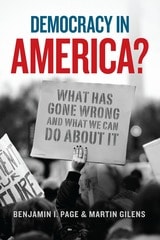
Democracy in America?
What Has Gone Wrong and What We Can Do About ItBenjamin I. Page and Martin Gilens
University of Chicago Press, 2017
How did we get here? Through decades of dysfunctional government. In Democracy in America? veteran political observers Benjamin I. Page and Martin Gilens marshal an unprecedented array of evidence to show that while other countries have responded to a rapidly changing economy by helping people who’ve been left behind, the United States has failed to do so. Instead, we have actually exacerbated inequality, enriching corporations and the wealthy while leaving ordinary citizens to fend for themselves.
What’s the solution? More democracy. More opportunity for citizens to shape what their government does. To repair our democracy, Page and Gilens argue, we must change the way we choose candidates and conduct our elections, reform our governing institutions, and curb the power of money in politics. By doing so, we can reduce polarization and gridlock, address pressing challenges, and enact policies that truly reflect the interests of average Americans.
This book presents a damning indictment. But the situation is far from hopeless. With increased democratic participation as their guide, Page and Gilens lay out a set of proposals that would boost citizen participation, curb the power of money, and democratize the House and Senate. The only certainty is that inaction is not an option. Now is the time to act to restore and extend American democracy.
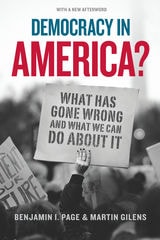
Democracy in America?
What Has Gone Wrong and What We Can Do About ItBenjamin I. Page and Martin Gilens
University of Chicago Press, 2020
What’s the solution? More democracy. More opportunities for citizens to shape what their government does. To repair our democracy, Page and Gilens argue, we must change the way we choose candidates and conduct our elections, reform our governing institutions, and curb the power of money in politics. By doing so, we can reduce polarization and gridlock, address pressing challenges, and enact policies that truly reflect the interests of average Americans.
Updated with new information, this book lays out a set of proposals that would boost citizen participation, curb the power of money, and democratize the House and Senate.
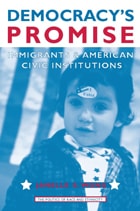
Democracy's Promise
Immigrants and American Civic InstitutionsJanelle S. Wong
University of Michigan Press, 2006
Given the massive demographic changes in the United States during the past few decades, understanding the place of immigrants in the public sphere has never been more critical. Democracy's Promise examines both the challenges and opportunities posed to American civic institutions by the presence of increasing numbers of immigrants. Author Janelle Wong argues that the low levels of political participation among contemporary immigrants are not due to apathy or preoccupation with their homeland, but to the inability of American political parties and advocacy organizations to mobilize immigrant voters. Wong's rich study of Chinese and Mexican immigrants in New York and Los Angeles complements traditional studies of political behavior and civic institutions while offering a nuanced examination of immigrants' political activity.
Democracy's Promise will appeal to a broad spectrum of social scientists and ethnic studies scholars who study or teach immigration, racial and ethnic politics, political participation, civic engagement, and American political institutions. In addition, it will appeal to community organizers and party activists who are interested in issues of race and ethnicity, immigration, political participation, and political mobilization.
Janelle Wong is Assistant Professor of Political Science and American Studies and Ethnicity at the University of Southern California.
--Jennifer L. Hochschild, Harvard University
"Wong draws on the Latino and Asian immigrant experience, with specific examples from the Chinese and Mexican communities of New York and Los Angeles, to show how the political parties have largely failed to organize these groups and why labor unions and immigrant advocacy organizations have stepped in to take their place. Far from 'disuniting' America, she clearly shows that bringing these groups into the political fray is central to the project of renewing American democracy."
--John Mollenkopf, CUNY Graduate Center
"A scathing critique of the role of parties in the mobilization of new immigrants and an invaluable analysis of alternative pathways of mobilization through community organizations."
--Michael Jones-Correa, Cornell University
"By employing multiple empirical methods, including in-depth interviews and sophisticated survey analyses, Janelle Wong provides a compelling account of the political activities and allegiances of America's Asian and Latino immigrants that challenges much conventional wisdom. Often the political parties are failing to reach out to these groups, and often immigrants remain concerned about their home countries; but they are nonetheless increasingly active in American politics, in ways that may do much to shape the course of American political development in the 21st century. Democracy's Promise is a major contribution to our understanding of this crucial dimension of American politics."
--Rogers M. Smith, University of Pennsylvania
"Democracy's Promise challenges political parties to reexamine their priorities for mobilizing new voters, and identifies the critical role civic institutions play in invigorating participation among immigrant citizens. Wong's analysis is at once precise and expansive; illuminating the contours of Latino and Asian American political incorporation and provoking thoughtful debate on inclusion in democratic theory."
--Jane Junn, Rutgers University
Democracy, Militarism, and Nationalism in Argentina, 1930–1966
An InterpretationBy Marvin Goldwert
University of Texas Press, 1972
Until 1930, Argentina was one of the great hopes for stable democracy in Latin America. Argentines themselves believed in the destiny of their nation to become the leading Latin American country in wealth, power, and culture. But the revolution of 1930 unleashed the scourges of modern militarism and chronic instability in the land. Between 1930 and 1966, the Argentine armed forces, or factions of the armed forces, overthrew the government five times.
For several decades, militarism was the central problem in Argentine political life. In this study, Marvin Goldwert interprets the rise, growth, and development of militarism in Argentina from 1930 to 1966. The tortuous course of Argentine militarism is explained through an integrating hypothesis. The army is viewed as a “power factor,” torn by a permanent dichotomy of values, which rendered it incapable of bringing modernization to Argentina. Caught between conflicting drives for social order and modernization, the army was an ambivalent force for change. First frustrated by incompetent politicians (1916–1943), the army was later driven by Colonel Juan D. Perón into an uneasy alliance with labor (1943–1955). Peronism initially represented the means by which army officers could have their cake—nationalistic modernization—and still eat it in peace, with the masses organized in captive unions tied to an authoritarian state.
After 1955, when Perón was overthrown, a deeply divided army struggled to contain the remnants of its own dictatorial creation. In 1966, the army, dedicated to staunch anti-Peronism, again seized the state and revived the dream of reconciling social order and modernization through military rule.
Although militarism has been a central problem in Argentine political life, it is also the fever that suggests deeper maladies in the body politic. Marvin Goldwert seeks to relate developments in the military to the larger political, social, and economic developments in Argentine history. The army and its factions are viewed as integral parts of the whole political spectrum during the period under study.
Democratic Theorizing from the Margins
Marla Brettschneider
Temple University Press, 2007

Democratizing Communist Militaries
The Cases of the Czech and Russian Armed ForcesMarybeth Peterson Ulrich
University of Michigan Press, 2000
In a groundbreaking study, Marybeth Peterson Ulrich explores the attitudes of the leaders of the armed forces in Russia and the Czech Republic toward the new democratic governments and suggests ways in which we might encourage the development of politically neutral militaries in these states. Building on the work of Samuel Huntington and others on the relationship between the military and the state, the author suggests that norms of military professionalism must change if the armies in countries making a transition from communist rule are to become strong supporters of the democratic state. The Czech Republic and Russia are interesting cases, because they have had very different experiences in the transition; they have different geopolitical goals; and they experienced different military-civilian relationships during the Soviet period. The author also explores American and NATO programs to promote democratization in these militaries and suggests changes in the programs.
Marybeth Peterson Ulrich is Associate Professor of Government, U.S. Army War College.

Demonic Grounds
Black Women And The Cartographies Of StruggleKatherine McKittrick
University of Minnesota Press, 2006
Demonic Grounds moves between past and present, archives and fiction, theory and everyday, to focus on places negotiated by black women during and after the transatlantic slave trade. Specifically, the author addresses the geographic implications of slave auction blocks, Harriet Jacobs’s attic, black Canada and New France, as well as the conceptual spaces of feminism and Sylvia Wynter’s philosophies.
Central to McKittrick’s argument are the ways in which black women are not passive recipients of their surroundings and how a sense of place relates to the struggle against domination. Ultimately, McKittrick argues, these complex black geographies are alterable and may provide the opportunity for social and cultural change.
Katherine McKittrick is assistant professor of women’s studies at Queen’s University.

Detroit's Cold War
The Origins of Postwar ConservatismColleen Doody
University of Illinois Press, 2017
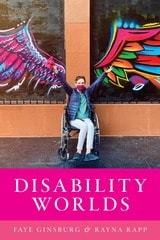
Disability Worlds
Faye Ginsburg and Rayna Rapp
Duke University Press, 2024

Discrimination in Modern Japan
Case Studies in Identity PoliticsJ. Mark Ramseyer
University of Chicago Press, 2023
In this book, J. Mark Ramseyer, a noted authority on Japan looks at discrimination against groups in Japanese society, focusing on the Korean, Okinawan, and Burakumin groups. Ramseyer asks why they experience discrimination in Japan, an unusually homogeneous society. Is it because of some prejudice on the part of the majority that prevents their integration into mainstream Japanese society? Or is it because some of the dynamics within the group create incentives for the group to stay together and to be on the fringes of society?
Ramseyer argues that the real explanation is the latter, and each of these three groups has been victimized by its own leadership. Precisely because the groups are dysfunctional, members of the group cannot control members who would appoint themselves group leaders. The result has been the capture of leadership positions by people who manipulate the group to their own private advantage and to the detriment of the group as a whole.
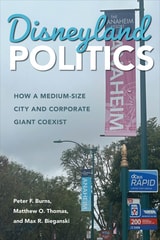
Disneyland Politics
How a Medium-Size City and Corporate Giant CoexistPeter F. Burns, Matthew O. Thomas, and Max R. Bieganski
Temple University Press, 2026
Disneyland Politics is a cogent examination of this urban power struggle, which has been playing out for 70 years. The authors show how the city was initially bound to the Disneyland Imperative, which placed the theme park above everything else in the city, including other economic development projects. However, starting in the 1990s, citizens pushed back against the corporation and its supporters, wanting a more balanced public policy agenda and ultimately loosening the stranglehold Disneyland had over the city’s political order.
Recounting the history of Disney’s power in action and the tension between democratic governance and reliance on private investment, Disneyland Politics illustrates how those who pursue alternative agendas attempt to get their way, and how the fight for a more balanced public policy agenda has changed local power dynamics to be less favorable to Disneyland over time.
In the series Urban Life, Landscape, and Policy
Disruptive Archives
Feminist Memories of Resistance in Latin America's Dirty WarsViviana Beatriz MacManus
University of Illinois Press, 2020
Haunting and methodologically innovative, Disruptive Archives attests to the power of women's storytelling and memory in the struggle to reclaim history.
Dissenting Through Dance
Folk Dance, Gender, and Political Protest in TurkeySevi Bayraktar
University of Michigan Press, 2026
Dissenting Through Dance examines how femme activists in contemporary Turkey deploy folk dance as a powerful tool of political resistance and collective solidarity. Drawing on extensive ethnographic fieldwork, choreographic analysis, and archival research, the book examines how traditional dances, particularly those rooted in marginalized cultures such as Kurdish, Roma, Alevi, Laz, and Hemşin communities, are reimagined to contest misogyny, cultural erasure, and oppressive gender politics. Sevi Bayraktar brings to life the stories of feminist, LGBTQ+, and grassroots activists occupying public spaces with dance as a form of protest when conventional forms of assembly are suppressed or criminalized in Turkey.
Working outward from these femmes’ stories, protests, and dances, Bayraktar argues that by reconfiguring Turkey’s folk-dance heritage for their contemporary political aims, dissenting femmes rechoreograph national space in opposition to the state as a way to reclaim the public sphere for pluralist democracy and to subvert hegemonic discourses about Turkish national identity, neoliberal economic development, and female and ethnic bodies. By moving together, activists subvert patriarchal norms, embody new visions of community, and create moments of hope, joy, and resistance even under conditions of surveillance and fear.

Distorted Mirrors
Americans and Their Relations with Russia and China in the Twentieth CenturyDonald E. Davis & Eugene P. Trani
University of Missouri Press, 2009
Divined Intervention
Religious Institutions and Collective ActionChristopher W. Hale
University of Michigan Press, 2020
Divined Intervention provides an innovative institutionalist account for why religion enables political activism in some settings, but not others. Christopher W. Hale argues that decentralized religious institutions facilitate grassroots collective action, and he uses a multimethod approach to test this explanation against several theoretical alternatives. Utilizing nationally representative Mexican survey data, the book’s statistical analyses demonstrate that decentralization by the Catholic Church is positively associated with greater individual political activism across the country. Using case studies centered in the Mexican states of Chiapas, Yucatán, and Morelos, the author shows that religious decentralization encourages reciprocal cooperative interactions at a local level. This then increases the ability of religion to provide goods and services to its local adherents. These processes then prompt the growth of organizational capacities at the grassroots, enabling secular political activism.
Because this theoretical framework is grounded in human behavior, it shows how local institutions politically organize at the grassroots level. Divined Intervention also offers an improved understanding of religion’s relationship with political activism, a topic of ever-increasing significance as religion fuels political engagement across the globe. The book further synthesizes seemingly disparate approaches to the study of collective action into a cohesive framework. Finally, there is some debate as to the impact of ethnic diversity on the provision of public goods, and this study helps us understand how local institutional configurations can enable collective action across ethnic boundaries.
Dockworker Power
Race and Activism in Durban and the San Francisco Bay AreaPeter Cole
University of Illinois Press, 2018
Philip Taft Labor History Book Award, Labor and Working-Class History Association (LAWCHA) and the Cornell ILR School, 2019
A Black Perspectives Best Black History Book of 2018
Dockworkers have power. Often missed in commentary on today's globalizing economy, workers in the world's ports can harness their role, at a strategic choke point, to promote their labor rights and social justice causes. Peter Cole brings such overlooked experiences to light in an eye-opening comparative study of Durban, South Africa, and the San Francisco Bay Area, California. Path-breaking research reveals how unions effected lasting change in some of the most far-reaching struggles of modern times. First, dockworkers in each city drew on longstanding radical traditions to promote racial equality. Second, they persevered when a new technology--container ships--sent a shockwave of layoffs through the industry. Finally, their commitment to black internationalism and leftist politics sparked transnational work stoppages to protest apartheid and authoritarianism. Dockworker Power not only brings to light surprising parallels in the experiences of dockers half a world away from each other. It also offers a new perspective on how workers can change their conditions and world.
Does Business Learn?
Tax Breaks, Uncertainty, and Political StrategiesSandra L. Suarez
University of Michigan Press, 2000
Dollars And Votes
Dan Clawson
Temple University Press, 1998
What donors, especially business donors, expect for their money is "access" and access means a lot more than a chance to meet and talk. They count on secret behind-the-scenes deals, like a tax provision that applies only to a "corporation incorporated on June 13, 1917, which has its principal place of business in Bartlesville, Oklahoma." After a deal is worked out behind closed doors, one executive explains, "it doesn't much matter how people vote afterwards."
Ordinary contributions give access to Congress; megabuck "soft money" contributions ensure access to the President and top leaders. The striking truth revealed by these authors is that half the soft money comes from fewer than five hundred big donors, and that most contributions come, directly or indirectly, from business. Reform is possible, they argue, by turning away from the temptation of looking at specific scandals and developing a new system that removes the influence of big money campaign contributors.
Domesticating Democracy
The Politics of Conflict Resolution in BoliviaSusan Helen Ellison
Duke University Press, 2018

Don't Look Away
Art, Nonviolence, and Preventive Publics in Contemporary EuropeBrianne Cohen
Duke University Press, 2023

Doña María's Story
Life History, Memory, and Political IdentityDaniel James
Duke University Press, 2000
Doña María’s testimony is grounded in both the local context (based on the author’s thirteen years of historical and ethnographic research in Berisso) and a broader national narrative. In this way, it differs from the dominant genre of women’s testimonial literature, and much recent ethnographic work in Latin America, which have often neglected historical and communal contextualization in order to celebrate individual agency and self-construction. James examines in particular the ways that gender influences Doña María’s representation of her story. He is careful to acknowledge that oral history challenges the historian to sort through complicated sets of motivations and desires—the historian’s own wish to uncover “the truth” of an informant’s life and the interviewee’s hope to make sense of her or his past and encode it with myths of the self. This work is thus James’s effort to present his research and his relationship with Doña María with both theoretical sophistication and recognition of their mutual affection.
While written by a historian, Doña María’s Story also engages with concerns drawn from such disciplines as anthropology, cultural studies, and literary criticism. It will be especially appreciated by those involved in oral, Latin American, and working-class history.
Dreamer Nation
Immigration, Activism, and NeoliberalismAna Milena Ribero
University of Alabama Press, 2023
Dreamer Nation tells the story of how Dreamers in the Obama era creatively confronted a complex sociopolitical landscape to advocate for immigrant rights and empower undocumented youth to proudly represent their lives and identities, all while under the ever-present threat of detention and deportation. Contributing to rhetorical studies of social movements, immigration, and minoritized rhetorics, Ribero argues that even though Dreamer rhetorics were reflective of the discursive limits of the neoliberal milieu, they also worked to disrupt neoliberal constraints through activism that troubled the primacy of the nation-state and citizenship, refused to adhere to respectability politics, forwarded embodied identity and transnational belonging, and looked for liberation in community—not solely in legislative action.
Each chapter presents a different rhetorical situation within the US “crisis” of immigration and the rhetoric that Dreamers used to respond to it. Organized chronologically, the chapters document Dreamer activism during the Obama presidency, from the 2010 hunger strikes advocating for the DREAM Act to undocuqueer “artivism” responding to Trump’s presidential campaign. The author draws not only on the methods and theories of rhetorical studies but also on women of color feminisms, ethnic studies, critical theory, and queer theory. In this way, the book looks across disciplines to illustrate the rhetorical savvy of one of the most important US social movements of our time.