57 books match the query 'Realism in literature' and 4 start with d
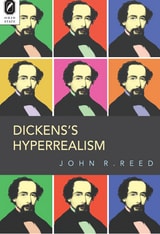
cover of Dickens's Hyperrealism

Dickens's Hyperrealism

John R. Reed

The Ohio State University Press, 2009

In Dickens’s Hyperrealism, John R. Reed examines certain features of Dickens’s style to demonstrate that the Inimitable consciously resisted what came to be known as realism in the genre of the novel. Dickens used some techniques associated with realism, such as description and metonymy, to subvert the purposes usually associated with it. Reed argues that Dickens used such devices as personification and present-tense narration, which are anathema to the realist approach. He asserts that Dickens preferred a heightened reality, not realism. And, unlike the realism which seeks to mask authorial control of how readers read his novels, Dickens wanted to demonstrate, first openly, and later in his career more subtly, his command over his narratives.
 
This book opens a new avenue for investigating Dickens’s mastery of his art and his awareness of its literary context. In addition, it reopens the whole issue of realism as a definition and examines the variety of genres that coexisted in the Victorian period.
[more]
cover of Discovering Fiction

Discovering Fiction

Yan Lianke

Duke University Press, 2022
Over the past twenty years, Chinese novelist Yan Lianke has emerged as one of the most important writers in the world. In Discovering Fiction, Yan offers insights into his views on literature and realism, the major works that inspired him, and his theories of writing. He juxtaposes discussions of the high realism of Leo Tolstoy and Lu Xun against Franz Kafka’s modernism and Gabriel García Márquez’s magical realism, charting the relationship between causality, truth, and modes of realism. He also discusses his approach to realism, which he terms “mythorealism”—a way of capturing the world’s underlying truth by relying on the allegories, myths, legends, and dreamscapes that emerge from daily life. Revealing and instructive, Discovering Fiction gives readers an unprecedented look into the mind and art of a literary giant.
[more]
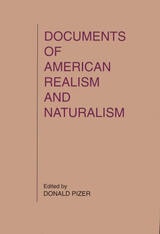
cover of Documents of American Realism and Naturalism

Documents of American Realism and Naturalism

Donald Pizer

Southern Illinois University Press, 1998

Donald Pizer presents the major critical discussions of American realism and naturalism from the beginnings of the movement in the 1870s to the present. He includes the most often cited discussions ranging from William Dean Howells, Henry James, and Frank Norris in the late nineteenth century to those by V. L. Parrington, Malcolm Cowley, and Lionel Trilling in the early twentieth century. To provide the full context for the effort to interpret the nature and significance of realism and naturalism during the periods when the movements were live issues on the critical scene, however, he also includes many uncollected essays. His selections since World War II reflect the major recent tendencies in academic criticism of the movements.

Through introductions to each of the three sections, Pizer provides background, delineating the underlying issues motivating attempts to attack, defend, or describe American realism and naturalism. In particular, Pizer attempts to reveal the close ties between criticism of the two movements and significant cultural concerns of the period in which the criticism appeared. Before each selection, Pizer provides a brief biographical note and establishes the cultural milieu in which the essay was originally published. He closes his anthology with a bibliography of twentieth-century academic criticism of American realism and naturalism.
[more]
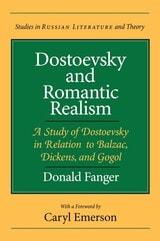
cover of Dostoevsky and Romantic Realism: A Study of Dostoevsky in Relation to Balzac, Dickens, and Gogol

Dostoevsky and Romantic Realism

A Study of Dostoevsky in Relation to Balzac, Dickens, and Gogol

Donald Fanger

Northwestern University Press, 1998

Dostoevsky and Romantic Realism is Donald Fanger's groundbreaking study of the art of Dostoevsky and the literary and historical context in which it was created. Through detailed analyses of the work of Balzac, Dickens, and Gogol, Fanger identifies romantic realism, the transformative fusion of two generic categories, as a powerful imaginary response to the great modern city. This fusion reaches its aesthetic and metaphysical climax in Dostoevsky, whose vision culminating in Crime and Punishment is seen by Fanger as the final synthesis of romantic realism.
[more]