Results by title
1017 books match the query 'Reference' and 34 start with d

DIGITAL RESOURCES
FRANCES CONDRON
West Virginia University Press, 2001
Dane County Place-Names
Frederic G. Cassidy; New introduction by Tracy Will; New foreword by David Medaris
University of Wisconsin Press, 2009
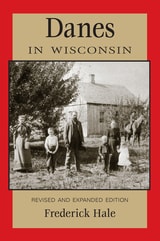
Danes in Wisconsin
Revised and Expanded EditionFrederick Hale
Wisconsin Historical Society Press, 2005
Wisconsin Territory's first Dane arrived in 1829, and by 1860 the state's Danish-born population had reached 1,150. Yet these newcomers remained only a small segment of Wisconsin's increasingly complex cultural mosaic, and the challenges of adapting to life in this new land shaped the Danish experience in the state. In this popular book, now revised and expanded with additional historical photos and documents, Frederick Hale offers a concise introduction to Wisconsin's Danish settlers, exploring their reasons for leaving their homeland, describing their difficult journeys, and examining their adjustments to life on Wisconsin soil.
New to this edition are the selected letters of Danish immigrant Andrew Frederickson. These compelling documents, written over a 40-year span, capture the personal observations of one Dane as he made a new life in Wisconsin.
Data Analysis in Qualitative Research
Theorizing with Abductive AnalysisStefan Timmermans and Iddo Tavory
University of Chicago Press, 2022
In Data Analysis in Qualitative Research, Iddo Tavory and Stefan Timmermans provide a how-to guide filled with tricks of the trade for researchers who hope to take excellent qualitative data and transform it into powerful scholarship. In their previous book, Abductive Analysis: Theorizing Qualitative Research, Timmermans and Tavory offered a toolkit for innovative theorizing in the social sciences. In this companion, they go one step further to show how to uncover the surprising revelations that lie waiting in qualitative data—in sociology and beyond.
In this book, they lay out a series of tools designed to help both novice and expert scholars see and understand their data in surprising ways. Timmermans and Tavory show researchers how to “stack the deck” of qualitative research in favor of locating surprising findings that may lead to theoretical breakthroughs, whether by engaging with theory, discussing research strategies, or walking the reader through the process of coding data. From beginning to end of a research project, Data Analysis in Qualitative Research helps social scientists pinpoint the most promising paths to take in their approach.
Daughters of Stone and Tide
Loss and Resilience in a Fisherman's FamilyWritten by Maria "Mia" Millefoglie. Read by Maria Marquis.
University of Massachusetts Press, 2026
A powerful family memoir about inheritance, identity, and the pull of the sea
Surrendered as an infant in America, Maria “Mia” was taken in by Sicilian immigrants in Gloucester, Massachusetts—a gritty working-class town steeped in salt and tradition. She inherits a name that traces back to 19th-century Sicily, where her great-grandfather was abandoned as a newborn on la ruota dei proietti, the “wheel of the castoffs.” Christened Millefoglie, “a thousand leaves, a thousand pages,” he crossed the bold Atlantic to America’s shores, carrying with him a legacy of endurance and exile.
For generations, the Millefoglie men went to sea: dorymen who rose before dawn to cast their nets along jagged coastlines, captains of eastern-rig draggers navigating storms that could split a vessel in half, stowaways chasing the promise of a life they could scarcely imagine. They lived by tides, currents, and the unspoken rules of the ocean; their courage and skill tested daily by wind and water. The women, left on shore, learned a different kind of survival, keeping households, raising children, and enduring the constant absence of fathers, brothers, and husbands.
Into this world of fishermen and keepers of the shore, Mia was adopted, learning early that bloodlines dictate identity and tradition shapes fate. College is forbidden; marriages are arranged, and no one abandons the family. By nineteen, trapped in a fish-packing job and lost in a haze of drugs, Mia does the unthinkable: she leaves. Decades later, drawn back to Gloucester’s weathered harbor to care for her aging parents, Mia begins to unearth her family’s buried stories, tracing the lineage from a Sicilian orphanage to a New England fishing port and the invisible inheritance that shaped them all.
Both intimate and historical, Daughters of Stone and Tide is a meditation on identity, abandonment, and belonging—a fisherman’s daughter’s search to understand the forces that bind and break a family across generations and seas.
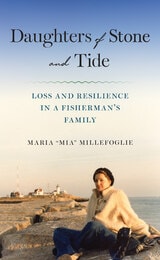
Daughters of Stone and Tide
Loss and Resilience in a Fisherman’s FamilyMaria "Mia" Millefoglie
University of Massachusetts Press, 2026
A powerful family memoir about inheritance, identity, and the pull of the sea
Surrendered as an infant in America, Maria “Mia” was taken in by Sicilian immigrants in Gloucester, Massachusetts—a gritty working-class town steeped in salt and tradition. She inherits a name that traces back to 19th-century Sicily, where her great-grandfather was abandoned as a newborn on la ruota dei proietti, the “wheel of the castoffs.” Christened Millefoglie, “a thousand leaves, a thousand pages,” he crossed the bold Atlantic to America’s shores, carrying with him a legacy of endurance and exile.
For generations, the Millefoglie men went to sea: dorymen who rose before dawn to cast their nets along jagged coastlines, captains of eastern-rig draggers navigating storms that could split a vessel in half, stowaways chasing the promise of a life they could scarcely imagine. They lived by tides, currents, and the unspoken rules of the ocean; their courage and skill tested daily by wind and water. The women, left on shore, learned a different kind of survival, keeping households, raising children, and enduring the constant absence of fathers, brothers, and husbands.
Into this world of fishermen and keepers of the shore, Mia was adopted, learning early that bloodlines dictate identity and tradition shapes fate. College is forbidden; marriages are arranged, and no one abandons the family. By nineteen, trapped in a fish-packing job and lost in a haze of drugs, Mia does the unthinkable: she leaves. Decades later, drawn back to Gloucester’s weathered harbor to care for her aging parents, Mia begins to unearth her family’s buried stories, tracing the lineage from a Sicilian orphanage to a New England fishing port and the invisible inheritance that shaped them all.
Both intimate and historical, Daughters of Stone and Tide is a meditation on identity, abandonment, and belonging—a fisherman’s daughter’s search to understand the forces that bind and break a family across generations and seas.

Days on the Night Train
Millay Hyatt
Haus Publishing, 2026
A paean to traveling by train, to the variety of Europe’s landscape, and to an immersive way of approaching and seeing the world.
For Millay Hyatt, it is the charm of “uncushioned encounters with the world” that makes her, whenever possible, choose to travel by train.
Days on the Night Train is a story of serendipities and missed connections, of sluggish border crossings, of embracing unpredictability and shunning the stifling regimentation of contemporary travel. In her accounts of her journeys across Europe and beyond, ranging from Edinburgh to Tunis, from Valencia to Tbilisi, Hyatt shows us that it is in movement that our perspective changes, and that this is never truer than when traveling by train, at half speed, with wide carriage windows framing a slowly shifting world. Inside, surrounded by strangers, she becomes intrigued by the intimate habits of her fellow passengers, listens in on arguing couples and bantering teenagers, and gives her imagination free rein to speculate about their lives. Later, in a couchette, even sleep takes on an unfamiliar quality, echoing Proust’s comment that people on trains sleep like fish in the sea, gently rocked by the waves and currents.
Traveling by rail brings Hyatt into contact with the world in a way that disturbs and upends her certainties. Perception slows and widens. Experiencing the excitement of departure and arrival—and in between the bittersweet joy of being in limbo, of looking inward—she notices how long train journeys, like books, can still alter us in a way jet travel has all but extinguished. Days on the Night Train is itself a journey, abundant with reflection, poetic observation, revealing encounter, and literary excursions.
Death and Dissymmetry
The Politics of Coherence in the Book of JudgesMieke Bal
University of Chicago Press, 1988
Counter to standard readings of Judges, Bal's interpretation demonstrates that the book has a political and ideological coherence in which the treatment of women plays a pivotal role. Bal concentrates here not on the assassinations and battles that rage through Judges but on the violence in the domestic lives of individual characters, particularly sexual violence directed at women. Her skillful reading reveals that murder, in this text, relates to gender and reflects a social structure that is inherently contradictory. By foregrounding the stories of women and subjecting them to subtle narrative analysis, she is able to expose a set of preoccupations that are essential to the sense of these stories but are not articulated in them. Bal thereby develops a "countercoherence" in conflict with the apparent emphases of Judges—the politics, wars, and historiography that have been the constant focus of commentators on the book.
Death and Dissymmetry makes an important contribution to the development of a feminist method of interpreting ancient texts, with consequences for religious studies, ancient history, literary theory, and gender studies.
Designing Experiments in Education and the Social Sciences
Larry V. Hedges
Russell Sage Foundation, 2026
Randomized experiments—often referred to as the gold standard of research design—are generally accepted as the type of studies that provide the strongest evidence about cause and effect. There has been a wide adoption of experimental methods in agriculture, medicine, industrial design, and laboratory social sciences, such as experimental psychology, where conditions can be controlled. Since then, there has been an increase in the use of field experiments to provide evidence of cause and effect beyond the laboratory. However, the social settings in which these studies take place complicate the design and evaluation of experiments because their social contexts must be taken into account in order for the experiment to provide useful and unambiguous results. In Designing Experiments in Education and the Social Sciences, statistician Larry V. Hedges details how to design educational and social science field experiments that are sensitive enough to provide clear-cut evidence on the effects of social interventions.
Hedges draws on one hundred years of statistical theory and classic experimental design in Designing Experiments in Education and the Social Sciences. Highlighting the social-structural information embedded in field experiments, he links this history with contemporary statistical methods in the social sciences to explain how to design social experiments that are adequately sensitive to determine the influence of an intervention. He covers the four basic research designs—and 39 elaborations of those designs—that are used most often in social experiments while also introducing additional, more complex, designs. He brings together, in the same notation, work on experimental design, design sensitivity, and optimal design of experiments for the most frequently used research designs in education and the social sciences, emphasizing their conceptual consistency. Hedges also discusses the practical problems of how to recruit and maintain a sample throughout the duration of an experiment.
Designing Experiments in Education and the Social Sciences is an essential resource for researchers planning educational and social field experiments and graduate students.

Designing and Conducting Practice-Based Research Projects
A Practical Guide for Arts Student ResearchersR. Lyle Skains
Intellect Books, 2024
This book offers definitions and a brief background to practice-based research in the arts, contextualization of practice-based methods, a step-by-step approach to designing research projects, chapter summaries, examples of practice-related research, exercises for progressing methods design and evaluating research approach, and lists for further reading. This textbook can serve as the foundation for a wider, online “living” textbook for practice-related research in the arts.
Developing Writers in Higher Education
A Longitudinal StudyAnne Ruggles Gere, editor
University of Michigan Press, 2019
This volume draws on an in-depth study of the writing and experiences of 169 University of Michigan undergraduates, using statistical analysis of 322 surveys, qualitative analysis of 131 interviews, use of corpus linguistics on 94 electronic portfolios and 2,406 pieces of student writing, and case studies of individual students to trace the multiple paths taken by student writers. Topics include student writers’ interaction with feedback; perceptions of genre; the role of disciplinary writing; generality and certainty in student writing; students’ concepts of voice and style; students’ understanding of multimodal and digital writing; high school’s influence on college writers; and writing development after college. The digital edition offers samples of student writing, electronic portfolios produced by student writers, transcripts of interviews with students, and explanations of some of the analysis conducted by the contributors.
This is an important book for researchers and graduate students in multiple fields. Those in writing studies get an overview of other longitudinal studies as well as key questions currently circulating. For linguists, it demonstrates how corpus linguistics can inform writing studies. Scholars in higher education will gain a new perspective on college student development. The book also adds to current understandings of sociocultural theories of literacy and offers prospective teachers insights into how students learn to write. Finally, for high school teachers, this volume will answer questions about college writing.
Companion Website
Click here to access the Developing Writers project and its findings at the interactive companion website.
Project Data
Access the data from the project through this tutorial.
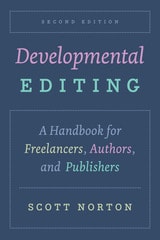
Developmental Editing, Second Edition
A Handbook for Freelancers, Authors, and PublishersScott Norton
University of Chicago Press, 2023
Developmental editing—transforming a manuscript into a book that edifies, inspires, and sells—is a special skill, and Scott Norton is one of the best at it. With more than three decades of experience in the field, Norton offers his expert advice on how to approach the task of diagnosing and fixing structural problems with book manuscripts in consultation with authors and publishers. He illustrates these principles through a series of detailed case studies featuring before-and-after tables of contents, samples of edited text, and other materials to make an otherwise invisible process tangible.
This revised edition for the first time includes exercises that allow readers to edit sample materials and compare their work with that of an experienced professional as well as a new chapter on the unique challenges of editing fiction. In addition, it features expanded coverage of freelance business arrangements, self-published authors, e-books, content marketing, and more.
Whether you are an aspiring or experienced developmental editor or an author who works alongside one, you will benefit from Norton’s accessible, collaborative, and realistic approach and guidance. This handbook offers the concrete and essential tools it takes to help books to find their voice and their audience.
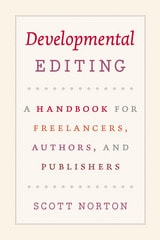
Developmental Editing
A Handbook for Freelancers, Authors, and PublishersScott Norton
University of Chicago Press, 2009
Editing is a tricky business. It requires analytical flair and creative panache, the patience of a saint and the vision of a writer. Transforming a manuscript into a book that edifies, inspires, and sells? That’s the job of the developmental editor, whose desk is the first stop for many manuscripts on the road to bookdom—a route ably mapped out in the pages of Developmental Editing.
Author Scott Norton has worked with a diverse range of authors, editors, and publishers, and his handbook provides an approach to developmental editing that is logical, collaborative, humorous, and realistic. He starts with the core tasks of shaping the proposal, finding the hook, and building the narrative or argument, and then turns to the hard work of executing the plan and establishing a style.
Developmental Editing includes detailed case studies featuring a variety of nonfiction books—election-year polemic, popular science, memoir, travel guide—and authors ranging from first-timer to veteran, journalist to scholar. Handy sidebars offer advice on how to become a developmental editor, create effective illustration programs, and adapt sophisticated fiction techniques (such as point of view, suspense, plotting, character, and setting) to nonfiction writing.
Norton’s book also provides freelance copyeditors with a way to earn higher fees while introducing more creativity into their work lives. It gives acquisitions, marketing, and production staff a vocabulary for diagnosing a manuscript’s flaws and techniques for transforming it into a bestseller. And perhaps most importantly, Developmental Editing equips authors with the concrete tools they need to reach their audiences.

Developments in Russian Politics 10
Henry E. Hale, Juliet Johnson, and Tomila V. Lankina, editors
Duke University Press, 0

Dictionary of Indonesian Islam
Mis Sea#94Howard M. Federspiel
Ohio University Press, 1994
This dictionary will be indispensable to English–speaking students and researchers working in Indonesian or Southeast Asian studies. It will also be useful for scholars working in Bahasa Indonesian, reading texts written about Islam by Indonesian Muslims, as well as for Southeast Asia area scholars generally who are using sources in Western languages.
Dictionary of Manitoba Biography
J.M. Bumsted
University of Manitoba Press, 1999
Dictionary of Music
Theodore Karp
Northwestern University Press, 1983
Digital Magazine Design
With Case StudiesDaniel Carpenter and Paul Honeywill
Intellect Books, 2000
Digital Magazine Design provides detailed descriptions of all the necessary rules of design, and uses these rules to cast a critical eye over a selection of contemporary high-street magazines.
The second part of this volume, written by publishing students, demonstrates how the tools of design can be applied to the analysis and practice of contemporary magazine design.
Through an understanding of the relationship between text, image and design, and the ability to make informed judgements, the student is able to critically evaluate all publishable material.
Digital Paper
A Manual for Research and Writing with Library and Internet MaterialsAndrew Abbott
University of Chicago Press, 2014
Abbott tells what every senior researcher knows: that research is not a mechanical, linear process, but a thoughtful and adventurous journey through a nonlinear world. He breaks library research down into seven basic and simultaneous tasks: design, search, scanning/browsing, reading, analyzing, filing, and writing. He moves the reader through the phases of research, from confusion to organization, from vague idea to polished result. He teaches how to evaluate data and prior research; how to follow a trail to elusive treasures; how to organize a project; when to start over; when to ask for help. He shows how an understanding of scholarly values, a commitment to hard work, and the flexibility to change direction combine to enable the researcher to turn a daunting mass of found material into an effective paper or thesis.
More than a mere how-to manual, Abbott’s guidebook helps teach good habits for acquiring knowledge, the foundation of knowledge worth knowing. Those looking for ten easy steps to a perfect paper may want to look elsewhere. But serious scholars, who want their work to stand the test of time, will appreciate Abbott’s unique, forthright approach and relish every page of Digital Paper.
Digital Typography
Donald E. Knuth
CSLI, 1998
Directing
Virginia Wright Wexman
Rutgers University Press, 2017
The latest volume in the Behind the Silver Screen series, this collection provides the first comprehensive overview of how directing, as both an art and profession, has evolved in tandem with changing film industry practices. Each chapter is written by an expert on a different period of Hollywood, from the silent film era to today’s digital filmmaking, providing in-depth examinations of key trends like the emergence of independent production after World War II and the rise of auteurism in the 1970s. Challenging the myth of the lone director, these studies demonstrate how directors work with a multitude of other talented creative professionals, including actors, writers, producers, editors, and cinematographers.
Directing examines a diverse range of classic and contemporary directors, including Orson Welles, Tim Burton, Cecil B. DeMille, Steven Soderbergh, Spike Lee, and Ida Lupino, offering a rich composite picture of how they have negotiated industry constraints, utilized new technologies, and harnessed the creative contributions of their many collaborators throughout a century of Hollywood filmmaking.
Directory of World Cinema
American IndependentEdited by John Berra
Intellect Books, 2010
With high-profile Academy Award nominations and an increasing number of big-name actors eager to sign on to promising projects, independent films have been at the forefront in recent years like never before. But the roots of such critical and commercial successes as The Hurt Locker and Precious can be traced to the first boom of independent cinema in the 1960s, when a raft of talented filmmakers emergedto capture the attention of a rapidly growing audience of young viewers.
A thorough overview of a thriving area of cultural life, Directory of World Cinema: American Independent chronicles the rise of the independent sector as an outlet for directors who challenge the status quo, yet still produce accessible feature films that not only find wide audiences but enjoy considerable box office appeal—without sacrificing critical legitimacy. Key directors are interviewed and profiled, and a sizeable selection of films are referenced and reviewed. More than a dozen sub-genres—including African American cinema, queer cinema, documentary, familial dysfunction, and exploitation—are individually considered, with an emphasis on their ability to engage with tensions inherent in American society. Copious illustrations and a range of research resources round out the volume, making this a truly comprehensive guide.
At a time when independent films are enjoying considerable cultural cachet, this easy-to-use yet authoritative guide will find an eager audience in media historians, film studies scholars, and movie buffs alike.
Directory of World Cinema
Australia and New ZealandEdited by Ben Goldsmith and Geoff Lealand
Intellect Books, 2010
This addition to Intellect's Directory of World Cinema series turns the spotlight on Australia and New Zealand and offers an in-depth and exciting look at the cinema produced in these two countries since the turn of the twentieth century. Though the two nations share considerable cultural and economic connections, their film industries remain distinct, marked by differences of scale, level of government involvement and funding, and relations with other countries and national cinemas. Through essays about prominent genres and themes, profiles of directors, and comprehensive reviews of significant titles, this user-friendly guide explores the diversity and distinctiveness of films from Australia and New Zealand from Whale Rider to The Piano to Wolf Creek.
Disciplining Music
Musicology and Its CanonsEdited by Katherine Bergeron and Philip V. Bohlman
University of Chicago Press, 1992
"Fortunately, in a blaze of good-humored . . . scholarship, [this] book helps brains unaccustomed to thinking about the future without jeopardizing the past imagine the wonder classical-music life might become if it embraced all people and all musics."—Laurence Vittes, Los Angeles Reader
"These essays will force us to rethink our position on many issues. . . [and] advance musicology into the twenty-first century."—Giulio Ongaro, American Music Teacher
With essays by Katherine Bergeron, Philip V. Bohlman, Richard Cohn and Douglas Dempster, Philip Gossett, Robert P. Morgan, Bruno Nettl, Don Michael Randel, Ruth A. Solie, and Gary Tomlinson.

Distribution of Illinois Vascular Plants
Robert H. Mohlenbrock and Douglas M. Ladd
Southern Illinois University Press, 1978
There are 251 pages of distribution maps included in this book. The plants are arranged alphabetically by genus, and under each genus alphabetically by species. The nomenclature follows Mohlenbrock, Guide to the Vascular Flora of Illinois (1975).
In addition, a list of synonyms applied to Illinois taxa by Fernald (1950), Gleason (1952), and Jones (1963) follows the distribution maps.
Finally, in order to gain an understanding of relationships of the plants in the Illinois flora, all 3,001 taxa are arranged in a phylogenetic sequence at the end of the book.
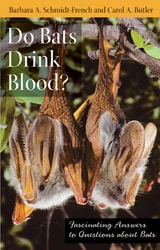
Do Bats Drink Blood?
Fascinating Answers to Questions about BatsSchmidt-French, Barbara A
Rutgers University Press, 2009
Highly beneficial animals, bats are critical to global ecological, economic, and public health. Do Bats Drink Blood? illuminates the role bats play in the ecosystem, their complex social behavior, and how they glide through the night sky using their acute hearing: echolocation skills that have helped in the development of navigational aids for the blind. Personal in voice with the perspective of a skilled bat researcher, this book explores wide-ranging topics as well as common questions people have about bats, providing a trove of fascinating facts.
Featuring rare color and black-and-white photographs, including some by renowned biologist, photographer, and author Merlin Tuttle, Do Bats Drink Blood? provides a comprehensive resource for general readers, students, teachers, zoo and museum enthusiasts, farmers and orchardists, or anyone who may encounter or be fascinated by these extraordinary animals.
Doctoral Dissertations on South Asia, 1966–1970
An Annotated Bibliography Covering North America, Europe, and AustraliaFrank Joseph Shulman
University of Michigan Press, 1971
Dog Whistles, Walk-Backs, and Washington Handshakes
Decoding the Jargon, Slang, and Bluster of American Political SpeechChuck McCutcheon and David Mark
University Press of New England, 2014
Doing Honest Work in College, Third Edition
How to Prepare Citations, Avoid Plagiarism, and Achieve Real Academic SuccessCharles Lipson
University of Chicago Press, 2018
Doing Honest Work in College
How to Prepare Citations, Avoid Plagiarism, and Achieve Real Academic SuccessCharles Lipson
University of Chicago Press, 2004
In the first part of the book, Lipson outlines three core principles of academic honesty and explores how these principles inform all aspects of college work. He discusses plagiarism in detail, outlining an ingenious note-taking system and offering guidelines for quoting and paraphrasing. Careful attention is paid to online research, including the perils of "dragging and dropping" text without proper citation. These chapters include numerous tips, all highlighted for students, on how to work honestly and study effectively.
The second part of the book gives a full account of citation styles in the humanities, social sciences, and physical and biological sciences, as well as in pre-professional studies. Filled with examples, these chapters show students exactly how to cite books, journals, edited volumes, Web sites, online publications, and much more—in every citation style imaginable.
By clearly communicating the basic principles of academic honesty and exploring these principles in action, Doing Honest Work in College promotes genuine learning and academic success. This must-have reference empowers faculty and students to address questions about academic honesty before problems arise. It will be the book students turn to for advice from their first class to their final exam.
Doing Honest Work in College
How to Prepare Citations, Avoid Plagiarism, and Achieve Real Academic Success, Second EditionCharles Lipson
University of Chicago Press, 2008
For this second edition, Charles Lipson has updated hundreds of examples and included many new media sources. There is now a full chapter on how to take good notes and use them properly in papers and assignments. The extensive list of citation styles incorporates guidelines from the American Anthropological Association. The result is the definitive resource on academic integrity that students can use every day.
“Georgetown’s entering class will discover that we actually have given them what we expect will be a very useful book, Doing Honest Work in College. It will be one of the first things students see on their residence hall desks when they move in, and we hope they will realize how important the topic is.”—James J. O’Donnell, Provost, Georgetown University
“A useful book to keep on your reference shelf.”—Bonita L. Wilcox, English Leadership Quarterly
Doing What Comes Naturally
Change, Rhetoric, and the Practice of Theory in Literary & Legal StudiesStanley Fish
Duke University Press, 1989
Drafting for the Theatre
Dennis Dorn and Mark Shanda
Southern Illinois University Press, 2012
Early chapters focus on the basics of geometric constructions, orthographic techniques, soft-line sketching applications, lettering, and dimensioning. Later chapters discuss real-life applications of production drawing and ancillary skills such as time and material estimation and shop-drawing nomenclature. Two chapters detail a series of design and shop drawings required to mount a specific design project, providing a guided path through both phases of the design/construction process. Most chapters conclude with one or more worksheets or problems that provide readers with an opportunity to test their understanding of the material presented.
The authors' discussion of universal CAD principles throughout the manuscript provides a valuable foundation that can be used in any computer-based design, regardless of the software. Dorn and Shanda treat the computer as another drawing tool, like the pencil or T-square, but one that can help a knowledgeable drafter potentially increase personal productivity and accuracy when compared to traditional hand-drafting techniques.
Drafting for the Theatre, second edition assembles in one book all the principal types of drawings, techniques, and conventional wisdom necessary for the production of scenic drafting, design, and shop drawings. It is richly illustrated with numerous production examples and is fully indexed to assist students and technicians in finding important information. It is structured to support a college-level course in drafting, but will also serve as a handy reference for the working theatre professional.
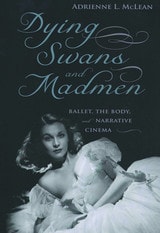
Dying Swans and Madmen
Ballet, the Body, and Narrative CinemaMcLean, Adrienne L
Rutgers University Press, 2008
Drawing on examples that range from musicals to tragic melodramas, she shows how commercial films have produced an image of ballet and its artists that is associated both with joy, fulfillment, fame, and power and with sexual and mental perversity, melancholy, and death. Although ballet is still received by many with a lack of interest or outright suspicion, McLean argues that these attitudes as well as ballet's popularity and its acceptability as a way of life and a profession have often depended on what audiences first learned about it from the movies.