Results by title
70 books match the query 'Rehabilitation' and 3 start with d

Discretionary Justice
Looking Inside a Juvenile Drug CourtPaik, Leslie
Rutgers University Press, 2011
Juvenile drug courts are on the rise in the United States, as a result of a favorable political climate and justice officials' endorsement of the therapeutic jurisprudence movement--the concept of combining therapeutic care with correctional discipline. The goal is to divert nonviolent youth drug offenders into addiction treatment instead of long-term incarceration. Discretionary Justice overviews the system, taking readers behind the scenes of the juvenile drug court. Based on fifteen months of ethnographic fieldwork and interviews at a California court, Leslie Paik explores the staff's decision-making practices in assessing the youths' cases, concentrating on the way accountability and noncompliance are assessed. Using the concept of "workability," Paik demonstrates how compliance, and what is seen by staff as "noncompliance," are the constructed results of staff decisions, fluctuating budgets, and sometimes questionable drug test results.
While these courts largely focus on holding youths responsible for their actions, this book underscores the social factors that shape how staff members view progress in the court. Paik also emphasizes the perspectives of children and parents. Given the growing emphasis on individual responsibility in other settings, such as schools and public welfare agencies, Paik's findings are relevant outside the juvenile justice system.
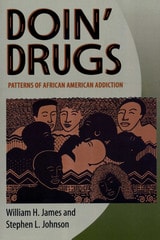
Doin’ Drugs
Patterns of African American AddictionBy William H. James and Stephen L. Johnson
University of Texas Press, 1996
Throughout the African American community, individuals and organizations ranging from churches to schools to drug treatment centers are fighting the widespread use of crack cocaine. To put that fight in a larger cultural context, Doin' Drugs explores historical patterns of alcohol and drug use from pre-slavery Africa to present-day urban America.
William Henry James and Stephen Lloyd Johnson document the role of alcohol and other drugs in traditional African cultures, among African slaves before the American Civil War, and in contemporary African American society, which has experienced the epidemics of marijuana, heroin, crack cocaine, and gangs since the beginning of this century. The authors zero in on the interplay of addiction and race to uncover the social and psychological factors that underlie addiction.
James and Johnson also highlight many culturally informed programs, particularly those sponsored by African American churches, that are successfully breaking the patterns of addiction. The authors hope that the information in this book will be used to train a new generation of counselors, ministers, social workers, nurses, and physicians to be better prepared to face the epidemic of drug addiction in African American communities.
Double Jeopardy
Adolescent Offenders with Mental DisordersThomas Grisso
University of Chicago Press, 2004
Double Jeopardy considers the newest data on the nature of youths' mental disorders—their relationships to delinquency, the values and limits of methods to treat them, and the common patterns of adolescent offending. That information is used to chart a rational course for fulfilling the juvenile justice system's duty—as a custodian of children in need of health care, as a legal system promoting fairness in youth adjudication, and as a protector of public safety—to respond to delinquent youths' mental disorders. Moreover, Double Jeopardy provides a scientific yet practical foundation for lawmakers, judges, attorneys, and mental health care professionals, as well as researchers who must fill the knowledge gaps that limit the juvenile justice system's abilities to meet youths' mental health needs.