Results by title
88 books match the query 'Religion and politics' and 5 start with d

Devotion
Three Inquiries in Religion, Literature, and Political ImaginationConstance M. Furey, Sarah Hammerschlag, and Amy Hollywood
University of Chicago Press, 2021
We are living in a time of radical uncertainty, faced with serious political, ecological, economic, epidemiological, and social problems. Scholars of religion Constance M. Furey, Sarah Hammerschlag, and Amy Hollywood come together in this volume with a shared conviction that what and how we read opens new ways of imagining our political futures and our lives.
Each essay in this book suggests different ways to characterize the object of devotion and the stance of the devout subject before it. Furey writes about devotion in terms of vivification, energy, and artifice; Hammerschlag in terms of commentary, mimicry, and fetishism; and Hollywood in terms of anarchy, antinomianism, and atopia. They are interested in literature not as providing models for ethical, political, or religious life, but as creating the site in which the possible—and the impossible—transport the reader, enabling new forms of thought, habits of mind, and ways of life. Ranging from German theologian Martin Luther to French-Jewish philosopher Sarah Kofman to American poet Susan Howe, this volume is not just a reflection on forms of devotion and their critical and creative import but also a powerful enactment of devotion itself.
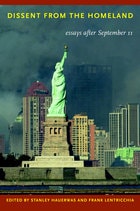
Dissent from the Homeland
Essays after September 11Stanley Hauerwas and Frank Lentricchia, eds.
Duke University Press, 2003
Whether illuminating the narratives that have been used to legitimate the war on terror, reflecting on the power of American consumer culture to transform the attack sites into patriotic tourist attractions, or insisting that to be a Christian is to be a pacifist, these essays refuse easy answers. They consider why the Middle East harbors a deep-seated hatred for the United States. They argue that the U.S. drive to win the cold war made the nation more like its enemies, leading the government to support ruthless anti-Communist tyrants such as Mobutu, Suharto, and Pinochet. They urge Americans away from the pitfall of national self-righteousness toward an active peaceableness—an alert, informed, practiced state of being—deeply contrary to both passivity and war. Above all, the essays assembled in Dissent from the Homeland are a powerful entreaty for thought, analysis, and understanding. Originally published as a special issue of the journal South Atlantic Quarterly, Dissent from the Homeland has been expanded to include new essays as well as a new introduction and postscript.
Contributors. Srinivas Aravamudan, Michael J. Baxter, Jean Baudrillard, Robert N. Bellah, Daniel Berrigan, Wendell Berry, Vincent J. Cornell, David James Duncan, Stanley Hauerwas, Fredric Jameson, Frank Lentricchia, Catherine Lutz, Jody McAuliffe, John Milbank, Peter Ochs, Donald E. Pease, Anne R. Slifkin, Rowan Williams, Susan Willis, Slavoj Zizek
Disturbing Revelation
Leo Strauss, Eric Voegelin, and the BibleJohn J. Ranieri
University of Missouri Press, 2009
Divination, Politics, and Ancient Near Eastern Empires
Alan Lenzi
SBL Press, 2014
Advance your understanding of divination’s role in supporting or undermining imperial aspirations in the ancient Near East
This collection examines the ways that divinatory texts in the Hebrew Bible and the ancient Near East undermined and upheld the empires in which the texts were composed, edited, and read. Nine essays and an introduction engage biblical scholarship on the Prophets, Assyriology, the Dead Sea Scrolls, and the critical study of Ancient Empires.
Features:
- Interdisciplinary approaches include propaganda studies
- Essays examine how biblical and other ancient Near Eastern texts were shaped by political and theological empires
- Index of ancient sources
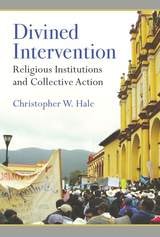
Divined Intervention
Religious Institutions and Collective ActionChristopher W. Hale
University of Michigan Press, 2020
Divined Intervention provides an innovative institutionalist account for why religion enables political activism in some settings, but not others. Christopher W. Hale argues that decentralized religious institutions facilitate grassroots collective action, and he uses a multimethod approach to test this explanation against several theoretical alternatives. Utilizing nationally representative Mexican survey data, the book’s statistical analyses demonstrate that decentralization by the Catholic Church is positively associated with greater individual political activism across the country. Using case studies centered in the Mexican states of Chiapas, Yucatán, and Morelos, the author shows that religious decentralization encourages reciprocal cooperative interactions at a local level. This then increases the ability of religion to provide goods and services to its local adherents. These processes then prompt the growth of organizational capacities at the grassroots, enabling secular political activism.
Because this theoretical framework is grounded in human behavior, it shows how local institutions politically organize at the grassroots level. Divined Intervention also offers an improved understanding of religion’s relationship with political activism, a topic of ever-increasing significance as religion fuels political engagement across the globe. The book further synthesizes seemingly disparate approaches to the study of collective action into a cohesive framework. Finally, there is some debate as to the impact of ethnic diversity on the provision of public goods, and this study helps us understand how local institutional configurations can enable collective action across ethnic boundaries.