Results by title
939 books match the query 'Religious aspects' and 34 start with d
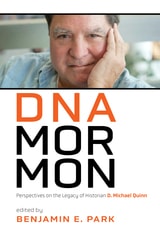
DNA Mormon
Perspectives on the Legacy of Historian D. Michael QuinnBenjamin E. Park
Signature Books, 2022
This compilation is a rigorous and riveting assessment of Quinn’s legacy. In this volume, scholars examine him as a historical figure who helps us better understand modern Mormonism. They also probe his role as a historiographical titan. These essays enable us to analyze his influence on scholarship that both preceded and followed him. More than an investigation into his life and work, DNA Mormon uncovers the world in which he lived.

Dancing Wisdom
Embodied Knowledge in Haitian Vodou, Cuban Yoruba, and Bahian CandombléYvonne Daniel
University of Illinois Press, 2005
Combining her background in dance and anthropology to parallel the participant/scholar dichotomy inherent to dancing's "embodied knowledge," Daniel examines these misunderstood and oppressed performative dances in terms of physiology, psychology, philosophy, mathematics, ethics, and aesthetics.
"Dancing Wisdom offers the rare opportunity to see into the world of mystical spiritual belief as articulated and manifested in ritual by dance. Whether it is a Cuban Yoruba dance ritual, slave Ring Shout or contemporary Pentecostal Holy Ghost possession dancing shout, we are able to understand the relationship with spirit through dancing with the Divine. Yvonne Daniel's work synthesizes the cognitive empirical objectivity of an anthropologist with the passionate storytelling of a poetic artist in articulating how dance becomes prayer in ritual for Africans of the Diaspora."
--Leon T. Burrows, Protestant Chaplain, Smith College’

Dangerous Speech
A Social History of Blasphemy in Colonial MexicoJavier Villa-Flores
University of Arizona Press, 2006
Why then, asks Villa-Flores, did Spaniards dare to blaspheme? Having mined the period’s moral literature—philosophical works as well as royal decrees and Inquisition treatises and trial records in Spanish, Mexican, and U.S. archives and research libraries—Villa-Flores deftly interweaves images of daily life in colonial Mexico with vivid descriptions of human interactions to illustrate the complexity of a culture profoundly influenced by the Catholic Church. In entertaining and sometimes horrifying vignettes, the reader comes face to face with individuals who used language to assert or manipulate their identities within that repressive society.
Villa-Flores offers an innovative interpretation of the social uses of blasphemous speech by focusing on specific groups—conquistadors, Spanish settlers, Spanish women, and slaves of both genders—as a lens to examine race, class, and gender relations in colonial Mexico. He finds that multiple motivations led people to resort to blasphemy through a gamut of practices ranging from catharsis and gender self-fashioning to religious rejection and active resistance.
Dangerous Speech is a valuable resource for students and scholars of colonialism, the social history of language, Mexican history, and the changing relations of gender, class, and ethnicity in colonial Latin America.
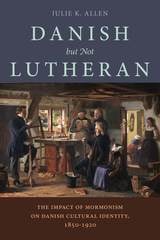
Danish, But Not Lutheran
The Impact of Mormonism on Danish Cultural Identity, 1850–1920Julie K. Allen
University of Utah Press, 2017
The Danish-Mormon migration to Utah in the nineteenth century was, relative to population size, one of the largest European religious out-migrations in history. Hundreds of thousands of Americans can trace their ancestry to Danish Mormons, but few know about the social and cultural ramifications of their ancestors’ conversion to Mormonism. This book tells that exciting and complex story for the first time.
In 1849, after nearly a thousand years of state- controlled religion, Denmark’s first democratic constitution granted religious freedom. One year later, the arrival of three Mormon missionaries in Denmark and their rapid success at winning converts to their faith caused a crisis in Danish society over the existential question: "How could someone be Danish but not Lutheran?" Over the next half-century nearly thirty thousand Danes joined the LDS Church, more than eighteen thousand of whom emigrated to join their fellow Mormons in Utah. This volume explores the range of Danish public reactions to Mormonism over a seventy-year period—from theological concerns articulated by Søren and Peter Christian Kierkegaard in the 1850s to fear-mongering about polygamy and white slavery in silent films of the 1910s and 1920s—and looks at the personal histories of converts.
Honorable Mention for Best International Book from the Mormon History Association.

Dante's Interpretive Journey
William Franke
University of Chicago Press, 1996
Reading the poem through the lens of hermeneutical theory, Franke focuses particularly on Dante's address to the reader as the site of a disclosure of truth. The event of the poem for its reader becomes potentially an experience of truth both human and divine. While contemporary criticism has concentrated on the historical character of Dante's poem, often insisting on it as undermining the poem's claims to transcendence, Franke argues that precisely the poem's historicity forms the ground for its mediation of a religious revelation. Dante's dramatization, on an epic scale, of the act of interpretation itself participates in the self-manifestation of the Word in poetic form.
Dante's Interpretive Journey is an indispensable addition to the field of Dante studies and offers rich insights for philosophy and theology as well.
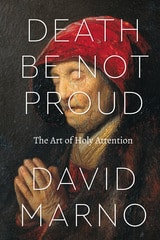
Death Be Not Proud
The Art of Holy AttentionDavid Marno
University of Chicago Press, 2016
If, in Malebranche’s view, attention is a hidden bond between religion and philosophy, devotional poetry is the area where this bond becomes visible. Marno shows that in works like “Death be not proud,” Donne’s most triumphant poem about the resurrection, the goal is to allow the poem’s speaker to experience a given doctrine as his own thought, as an idea occurring to him. But while the thought must feel like an unexpected event for the speaker, the poem itself is a careful preparation for it. And the key to this preparation is attention, the only state in which the speaker can perceive the doctrine as a cognitive gift. Along the way, Marno illuminates why attention is required in Christian devotion in the first place and uncovers a tradition of battling distraction that spans from ascetic thinkers and Church Fathers to Catholic spiritual exercises and Protestant prayer manuals.
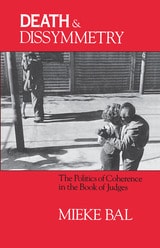
Death and Dissymmetry
The Politics of Coherence in the Book of JudgesMieke Bal
University of Chicago Press, 1988
Counter to standard readings of Judges, Bal's interpretation demonstrates that the book has a political and ideological coherence in which the treatment of women plays a pivotal role. Bal concentrates here not on the assassinations and battles that rage through Judges but on the violence in the domestic lives of individual characters, particularly sexual violence directed at women. Her skillful reading reveals that murder, in this text, relates to gender and reflects a social structure that is inherently contradictory. By foregrounding the stories of women and subjecting them to subtle narrative analysis, she is able to expose a set of preoccupations that are essential to the sense of these stories but are not articulated in them. Bal thereby develops a "countercoherence" in conflict with the apparent emphases of Judges—the politics, wars, and historiography that have been the constant focus of commentators on the book.
Death and Dissymmetry makes an important contribution to the development of a feminist method of interpreting ancient texts, with consequences for religious studies, ancient history, literary theory, and gender studies.
Death with Dignity
Ethical and Practical Considerations for Caregivers of the Terminally IllPeter A. Clark, S.J
University of Scranton Press, 2010
End-of-life issues and questions are complex and frequently cause confusion and anxiety. In Death with Dignity,theologian, medical ethicist, and pastoral caregiver Peter A. Clark examines numerous issues that are pertinent to patients, family members, and health care professionals, including physiology, consciousness, the definition of death, the distinction between extraordinary and ordinary means, medical futility, “Do Not Resuscitate” orders, living wills, power of attorney, pain assessment and pain management, palliative and hospice care, the role of spirituality in end-of-life care, and physicians’ communication with terminal patients. Patients, family members, medical students, and health care professionals will find in Death with Dignity thepractical and ethical knowledge they need to capably and confidently cope with end-of-life challenges.
Death, War, and Sacrifice
Studies in Ideology & PracticeBruce Lincoln
University of Chicago Press, 1991
religion and society, Bruce Lincoln expresses in these essays
his severe doubts about the existence of a much-hypothesized
prototypical Indo-European religion.
Written over fifteen years, the essays—six of them
previously unpublished—fall into three parts. Part I deals
with matters "Indo-European" in a relatively unproblematized
way, exploring a set of haunting images that recur in
descriptions of the Otherworld from many cultures. While
Lincoln later rejects this methodology, these chapters remain
the best available source of data for the topics they
address.
In Part II, Lincoln takes the data for each essay from a
single culture area and shifts from the topic of dying to
that of killing. Of particular interest are the chapters
connecting sacrifice to physiology, a master discourse of
antiquity that brought the cosmos, the human body, and human
society into an ideologically charged correlation.
Part III presents Lincoln's most controversial case
against a hypothetical Indo-European protoculture.
Reconsidering the work of the prominent Indo-Europeanist
Georges Dumézil, Lincoln argues that Dumézil's writings
were informed and inflected by covert political concerns
characteristic of French fascism. This collection is an
invaluable resource for students of myth, ritual, ancient
societies, anthropology, and the history of religions.
Bruce Lincoln is professor of humanities and religious
studies at the University of Minnesota.

Deathlife
Hip Hop and Thanatological Narrations of BlacknessAnthony B. Pinn
Duke University Press, 2024

Decolonizing Discipline
Children, Corporal Punishment, Christian Theologies, and ReconciliationValerie E. Michaelson
University of Manitoba Press, 2020
Decolonizing Mormonism
Approaching a Postcolonial ZionEdited by Gina Colvin and Joanna Brooks
University of Utah Press, 2018
As a social institution, Mormonism is shaped around cultural notions, systems, and ideas that have currency in the United States but make less sense beyond the land of its genesis. Even as an avowedly international religion some 183 years out from its inception, it makes few allowances for diverse international contexts, with Salt Lake City prescribing programs, policies, curricula, leadership, and edicts for the church’s international regions. While Mormonism’s greatest strength is its organizational coherence, there is also a cost paid for those at the church’s peripheries.
Decolonizing Mormonism brings together the work of 15 scholars from around the globe who critically reflect on global Mormon experiences and American-Mormon cultural imperialism. Indigenous, minority, and Global South Mormons ask in unison: what is the relationship between Mormonism and imperialism and where must the Mormon movement go in order to achieve its long-cherished dream of equality for all in Zion? Their stories are both heartbreaking and heartening and provide a rich resource for thinking about the future of Mormon missiology and the possibilities inherent in the work of Mormon contextual theology.
Deconstruction, Feminist Theology, and the Problem of Difference
Subverting the Race/Gender DivideEllen T. Armour
University of Chicago Press, 1999
Armour shows how the writings of Jacques Derrida and Luce Irigaray can be used to uncover feminism's white presumptions so that race and gender can be thought of differently. In clear, concise terms she explores the possibilities and limitations for feminist theology of Derrida's conception of "woman" and Irigaray's "multiple woman," as well as Derrida's thinking on race and Irigaray's work on religion. Armour then points a way beyond the race/gender divide with the help of African-American theorists such as bell hooks, Hortense Spillers, and Patricia Hill Collins.
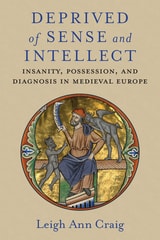
Deprived of Sense and Intellect
Insanity, Possession, and Diagnosis in Medieval EuropeLeigh Ann Craig
University of Michigan Press, 2026
While medieval communities assigned these tensions to a malfunction of consciousness in a single person, medieval miracle texts also reveal how the function and malfunction of consciousness was named and classified. In studying these texts, Leigh Ann Craig explores the terminology and rhetoric used to diagnose a loss of mind as either from natural causes or as an effect of demonic predation, tracing the use of Latin vocabulary in medical compendia, law, and theology. Deprived of Sense and Intellect finds that since diagnoses were difficult and frequently subject to doubt, they varied based on regional cultures of disability in northern and southern Europe, the influences on the development of community consensus in Latin Europe in the Middle Ages, and assumptions based on gender, material evidence, and self-diagnosis.
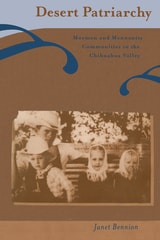
Desert Patriarchy
Mormon and Mennonite Communities in the Chihuahua ValleyJanet Bennion
University of Arizona Press, 2004
Janet Bennion has lived and worked among these people, and in this book she introduces a new paradigm—"desert patriarchy"—to explain their way of life. This perspective sheds light not only on these particular communities but also on the role of the desert environment in the development and maintenance of fundamentalist ideology in other parts of the United States and around the globe.
Making new connections between the arid environment, opposition to technology, and gender ideology, Bennion shows that it is the interplay of the desert and the unique social traditions and gender dynamics embedded in Anglo patriarchal fundamentalism that accounts for the successful longevity of the Mexican colonies. Her model defines the process by which male supremacy, female autonomous networking, and religious fundamentalism all facilitate successful adaptation to the environment.
More than a theoretical analysis, Desert Patriarchy provides an intimate glimpse into the daily lives of these people, showing how they have taken refuge in the desert to escape religious persecution, the forced secular education of their children, and economic and political marginalization. It particularly sheds light on the ironic autonomy of women within a patriarchal system, showing how fundamentalist women in Chihuahua are finding numerous creative ways to access power and satisfaction in a society structured to subordinate and even degrade them.
Desert Patriarchy richly expands the literature on nontraditional religious movements as it enhances our understanding of how environment can shape society. It offers unique insights into women's status in patriarchal communities and provides a new way of looking at similar communities worldwide.
Desire Work
Ex-Gay and Pentecostal Masculinity in South AfricaMelissa Hackman
Duke University Press, 2018
Desiring Theology
Charles E. Winquist
University of Chicago Press, 1994
Winquist's work is tactical as well as theoretical, showing what kind of work theology can do in a postmodern age. He suggests that theology is closely akin to what Gilles Deleuze and Felix Guattari refer to as a minor intensive use of a major language. The minor intensive theological use of language, Winquist argues, pressures the ordinary weave of discourse and opens it to desire. Thus theology becomes a work against "the disappointment of thinking." Deeply engaged with the work of Nietzsche, Derrida, Tillich, Robert P. Scharlemann, and Mark C. Taylor, among others, this book is a significant addition to contemporary theology.
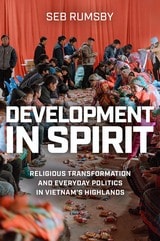
Development in Spirit
Religious Transformation and Everyday Politics in Vietnam’s HighlandsSeb Rumsby
University of Wisconsin Press, 2023
Following state-led market reforms in the 1980s, Vietnam experienced stunning economic transformation. But for the Hmong communities of the country’s north and central highlands, the benefits proved elusive. Instead, the Hmong people have pursued their own alternative paths to development. Rumsby shows how mass conversion to Christianity led to a case of “unplanned development” that put the Hmong on a trajectory of simultaneous integration into the market economy and resistance to state authority.
Many of the strategies community members employ are tied to the Christianization of everyday life. Religious actors play complex and often contradictory roles in facilitating networks of exchange, challenging or enforcing gender norms, promoting communalism and enforcing discipline, and shaping local ideas about progress. They are influenced by national and transnational religious networks, especially US-produced radio broadcasts by Hmong American Christians and local converts.
This compelling account provides fresh theoretical and empirical insights into the interplay of religion, neoliberal development, and marketization across the world.
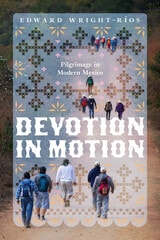
Devotion in Motion
Pilgrimage in Modern MexicoEdward Wright-Ríos
University of Chicago Press, 2025
For many, pilgrimage conjures ideas about ancient traditions and somber journeys of self-discovery—an escape from modern life. In Devotion in Motion, Edward Wright-Ríos argues that we misunderstand pilgrimage (past and present) if we ignore its dynamic relationship with the rhythms of daily life and community.
Through the story of a centuries-old, ever-changing Catholic shrine to Our Lady of Juquila in Oaxaca, Mexico, Wright-Ríos reveals how tradition, innovation, marketing, and devotion coexist and interact in pilgrimage. Devotees, he shows, are not dissuaded by the embeddedness of the sacred site in the complexities, hierarchies, or conflicts of their lives. In fact, the truckers, accountants, and health-care workers we meet in this book actively seek new resources (including social media) to aid and share their devotion. Part microhistory, part ethnography, Devotion in Motion is a celebration of pilgrimage as a living experience in every generation.
Dialogic Confession
Bonhoeffer's Rhetoric of ResponsibilityRonald C. Arnett. Foreword by Clifford Christians
Southern Illinois University Press, 2005
In this landmark volume of contemporary communication theory, Ronald C. Arnett applies the metaphor of dialogic confession—which enables historical moments to be addressed from a confessed standpoint and through a communicative lens—to the works of German theologian Dietrich Bonhoeffer, who pointed to an era of postmodern difference with his notion of "a world come of age." Arnett’s interpretations of Bonhoeffer’s life and scholarship in contention with Nazi dominance offer implications for a dialogic confession that engages the complexity of postmodern narrative contention.
Rooted in classical theory, the field of communication ethics is abstract and arguably outmoded. In Dialogic Confession: Bonhoeffer’s Rhetoric of Responsibility, Arnett locates cross-cultural and comparative anchors that not only bring legitimacy and relevance to the field but also develop a conceptual framework that will advance and inspire future scholarship.

Dictates of Conscience
From Mormon High Priest to My New Life as a WomanLaurie Lee Hall
Signature Books, 2024
Laurie Lee Hall’s growing-up years were defined by the conflict between her physical condition as a boy and her inherent identity as a girl. Unable to explain or resolve her gender dysphoria, she committed to living her adult life as a male. She joined the Church of Jesus Christ of Latter-day Saints, eventually becoming chief architect of its temples and an ecclesiastical leader. In her church and community, rigid adherence to gender roles is not only the norm, but the defining issue of a faith that doctrinally declares one’s gender as an “eternal identity.” Against this traditional backdrop, Hall finally received spiritual confirmation and personally accepted that she was transgender and always had been. In this remarkable memoir, Laurie Lee details how she risked everything to live true to her long-suppressed gender identity.
Through the power of lived experience, Laurie Lee’s story affirms the reality of gender identity and the strength and joy of self-acceptance.
Dimensions Of Forgiveness
A Research ApproachEverett L. Worthington
Templeton Press, 1999
The scientific study of forgiveness is a new approach to an age-old problem. For thousands of years, people have practiced forgiveness within religious systems. Now, the field of scholarly research of forgiveness reveals the beneficial aspects of the process.
p>Contributors include Elliot Dorff and Martin Marty discussing religious interpretations, followed by social implications explained by Kenneth Pargament and Mark Rye. Roy Baumeister, Julie Exline, and Kristin Sommer present the victim's point of view. Other contributors focusing on the forgiveness research are: Everett Worthington, Robert Enright, Catherine Coyle, Carl Thoresen, Frederic Luskin, and Alex Harris. An annotated bibliography by Michael McCullough, Julie Exline, and Roy Baumeister, covers the empirical literature on the subject. Lewis Smedes concludes with the four steps necessary for forgiveness: moving from estrangement to forgiveness to reconciliation to hope.
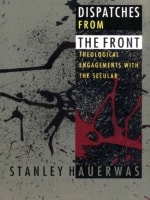
Dispatches from the Front
Theological Engagements with the SecularStanley Hauerwas
Duke University Press, 1994
At once Christian theology and social criticism, this book aims to show that the two cannot be separated. In this spirit, Hauerwas mounts a forceful attack on current sentimentalities about the significance of democracy, the importance of the family, and compassion, which appears here as a literally fatal virtue. In this time of the decline of religious knowledge, when knowing a little about a religion tends to do more harm than good, Hauerwas offers direction to those who would make Christian discourse both useful and truthful. Animated by a deep commitment, his essays exhibit the difference that Christian theology can make in the shaping of lives and the world.
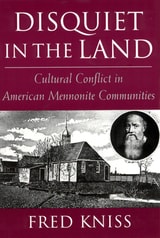
Disquiet in the Land
Cultural Conflict in American Mennonite CommunitiesKniss, Fred
Rutgers University Press, 1997
Mennonites have long referred to themselves as "The Quiet in the Land," but their actual historical experience has been marked by internal disquiet and contention over religious values and cultural practice. As Fred Kniss argues in his impressive study of Mennonite history, the story of this sectarian pacifist group is a story of conflict. How can we understand the ironic phenomenon of Mennonite conflict? How do ideas and symbols-both those of the American mainstream and those that are specifically Mennonite-influence the emergence and course of this conflict? What is the relationship betweenintra-Mennonite conflict and the changing historical context in which Mennonites are situated?
Through a rigorous analysis of a century of disputes over dress codes, congregational authority, and religious practice, Kniss offers the tools both to understand conflict within a specific religious group and to answer larger questions about culture, ideology, and social and historical change.
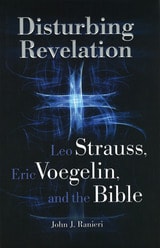
Disturbing Revelation
Leo Strauss, Eric Voegelin, and the BibleJohn J. Ranieri
University of Missouri Press, 2009
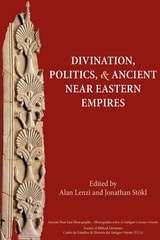
Divination, Politics, and Ancient Near Eastern Empires
Alan Lenzi
SBL Press, 2014
Advance your understanding of divination’s role in supporting or undermining imperial aspirations in the ancient Near East
This collection examines the ways that divinatory texts in the Hebrew Bible and the ancient Near East undermined and upheld the empires in which the texts were composed, edited, and read. Nine essays and an introduction engage biblical scholarship on the Prophets, Assyriology, the Dead Sea Scrolls, and the critical study of Ancient Empires.
Features:
- Interdisciplinary approaches include propaganda studies
- Essays examine how biblical and other ancient Near Eastern texts were shaped by political and theological empires
- Index of ancient sources
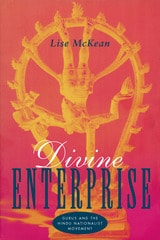
Divine Enterprise
Gurus and the Hindu Nationalist MovementLise McKean
University of Chicago Press, 1996
In this close look at the business of religion, McKean traces the ideological and organizational antecedents to the Hindu nationalist movement. The Indian state's increasing patronage of Hindu institutions makes competition for its support greater than ever. Using materials from guru's publications, the press, and extensive field research, McKean examines how participation by upper-caste ruling class groups in the Divine Life Society and other Hindu organizations further legitimates their own authority.
With a remarkable selection of photographs and advertisements showing icons of spirituality used to sell commodities from textiles to cement to comic books, McKean illustrates the pervasive presence of Hindu imagery in India's burgeoning market economy. She shows how gurus popularize Hindu nationalism through imagery such as the goddess, Mother India, and her martyred sons and daughters.
Divine Love
Perspectives from the World's Religious TraditionsJeff Levin
Templeton Press, 2010
The contributors to Divine Love cover a broad spectrum of world religions, comparing and contrasting approaches among Christians of several denominations, Jews, Buddhists, Muslims, Hindus, and adherents of traditional African religions. Each chapter focuses on the definition and conceptual boundaries of divine love; its expression and experience; its instrumentality and salience; how it can become distorted, and how it has been made manifest or restored by great historic exemplars of altruism, compassion, and unlimited love.
The ultimate aim for many of the world’s major faith traditions is to love and be loved by God—to live in connection with the Divine, in union with the Beloved, in reconciliation with the Ultimate. Religious scholars Jeff Levin and Stephen G. Post have termed this connection “divine love.” In their new collection of the same name, they have invited eight of the world’s preeminent religious scholars to share their perspectives on the what, how, and why of divine love.From this diverse gathering of perspectives emerges evidence that to love and to be loved by God, to enter into a mutual and covenantal relationship with the Divine, may well offer solutions to many of the current crises around the world. Only a loving relationship with the Source of being within the context of the great faith and wisdom traditions of the world can fully inform and motivate the acts of love, unity, justice, compassion, kindness, and mercy for all beings that are so desperately required to counter the toxic influences in the world.
Contributors: William C. Chittick, Vigen Guroian, Ruben L. F. Habito, William K. Mahony, John S. Mbiti, Jacob Neusner, Clark H. Pinnock, and David Tracy.
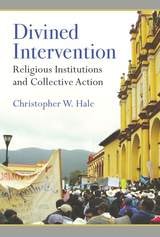
Divined Intervention
Religious Institutions and Collective ActionChristopher W. Hale
University of Michigan Press, 2020
Divined Intervention provides an innovative institutionalist account for why religion enables political activism in some settings, but not others. Christopher W. Hale argues that decentralized religious institutions facilitate grassroots collective action, and he uses a multimethod approach to test this explanation against several theoretical alternatives. Utilizing nationally representative Mexican survey data, the book’s statistical analyses demonstrate that decentralization by the Catholic Church is positively associated with greater individual political activism across the country. Using case studies centered in the Mexican states of Chiapas, Yucatán, and Morelos, the author shows that religious decentralization encourages reciprocal cooperative interactions at a local level. This then increases the ability of religion to provide goods and services to its local adherents. These processes then prompt the growth of organizational capacities at the grassroots, enabling secular political activism.
Because this theoretical framework is grounded in human behavior, it shows how local institutions politically organize at the grassroots level. Divined Intervention also offers an improved understanding of religion’s relationship with political activism, a topic of ever-increasing significance as religion fuels political engagement across the globe. The book further synthesizes seemingly disparate approaches to the study of collective action into a cohesive framework. Finally, there is some debate as to the impact of ethnic diversity on the provision of public goods, and this study helps us understand how local institutional configurations can enable collective action across ethnic boundaries.
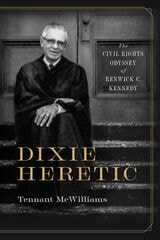
Dixie Heretic
The Civil Rights Odyssey of Renwick C. KennedyTennant McWilliams
University of Alabama Press, 2023
A life-and-times biography of the minister and social reformer Renwick C. Kennedy
Drawn from some 5,000 letters, six decades of daily-diary writings, and extensive interviews, Dixie Heretic: The Civil Rights Odyssey of Renwick C. Kennedy offers a life-and-times biography of the Alabama Black Belt minister, Renwick C. Kennedy (1900–1985). Here, Tennant McWilliams gives an unvarnished account of Kennedy’s tortuous efforts to make his congregants and other southern whites “better Christians.”
Kennedy came from “upcountry” South Carolina, a place rife with Scotch-Irish Associate Reformed Presbyterians—people of biblical infallibility and individual piety and salvation. In 1927, after a life-changing theology education at Princeton, he moved to Camden, Alabama, county seat of Wilcox County. There, he came to believe that God had a mandate for him: to change the “Half Christian” conservative, and the often violent, racial behaviors around him. As a neo-orthodox Protestant, Kennedy never rejected literal approaches to the Bible. Still, out of the “Full Christian” Social Gospel, he urged changed racial behavior. Ultimately this led him to publish confrontational short stories and essays in Christian Century and New Republic—most set in fictitious “Yaupon County.”
In World War II, Kennedy served as a chaplain with the famed 102nd Evacuation Hospital. He came home hoping the Allied victory would spur Americans to fight racial segregation just as they had fought racial fascism in Europe. The 1948 Dixiecrat movement dashed these hopes, turning much of his neo-orthodox optimism to cynicism. His hope found fleeting resurgence in the civil rights movement, and saw Kennedy quietly leading desegregation of Troy University, where he was an administrator. But the era’s assassinations, combined with George Wallace and the rise of southern white Republicans, regularly returned him to the frustrated hopes of 1948 and fostered a pessimism about truly changed hearts that he took to his grave in 1985.

Domestic Broils
Shakers, Antebellum Marriage, and the Narratives of Mary and Joseph DyerElizabeth De Wolfe
University of Massachusetts Press, 2010
Domestic Frontiers
Gender, Reform, and American Interventions in the Ottoman Balkans and the Near EastBarbara Reeves-Ellington
University of Massachusetts Press, 2013
During the nineteenth and early twentieth centuries, American Protestant missionaries attempted to export their religious beliefs and cultural ideals to the Ottoman Empire. Seeking to attract Orthodox Christians and even Muslims to their faith, they promoted the paradigm of the “Christian home” as the foundation of national progress. Yet the missionaries' efforts not only failed to win many converts but also produced some unexpected results.
Drawing on a broad range of sources—Ottoman, Bulgarian, Russian, French, and English—Barbara Reeves-Ellington tracks the transnational history of this little-known episode of American cultural expansion. She shows how issues of gender and race influenced the missionaries' efforts as well as the complex responses of Ottoman subjects to American intrusions into their everyday lives. Women missionaries—married and single—employed the language of Christian domesticity and female moral authority to challenge the male-dominated hierarchy of missionary society and to forge bonds of feminist internationalism. At the same time, Orthodox Christians adapted the missionaries' ideology to their own purposes in developing a new strain of nationalism that undermined Ottoman efforts to stem growing sectarianism within their empire. By the beginning of the twentieth century, as some missionaries began to promote international understanding rather than Protestantism, they also paved the way for future expansion of American political and commercial interests.

Dream Trippers
Global Daoism and the Predicament of Modern SpiritualityDavid A. Palmer and Elijah Siegler
University of Chicago Press, 2017
Dream Trippers draws on more than a decade of ethnographic work with Daoist monks and Western seekers to trace the spread of Westernized Daoism in contemporary China. David A. Palmer and Elijah Siegler take us into the daily life of the monastic community atop the mountain of Huashan and explore its relationship to the socialist state. They follow the international circuit of Daoist "energy tourism," which connects a number of sites throughout China, and examine the controversies around Western scholars who become practitioners and promoters of Daoism. Throughout are lively portrayals of encounters among the book’s various characters—Chinese hermits and monks, Western seekers, and scholar-practitioners—as they interact with each other in obtuse, often humorous, and yet sometimes enlightening and transformative ways. Dream Trippers untangles the anxieties, confusions, and ambiguities that arise as Chinese and American practitioners balance cosmological attunement and radical spiritual individualism in their search for authenticity in a globalized world.
Dreaming in Christianity and Islam
Culture, Conflict, and CreativityEdited and with an Introduction by Kelly Bulkeley, Kate Adams, and Patricia M. Davis
Rutgers University Press, 2009
Dreaming in Christianity and Islam, the first book to explore dreaming in these religions through original essays, fills this void. The editors reach a plateau by focusing on how studying dreams reveals new aspects of social and political reality. International scholars document the impact of dreams on sacred texts, mystical experiences, therapeutic practices, and doctrinal controversies.