Results by title
231 books match the query 'Revolutionary Period (1775-1800)' and 11 start with d
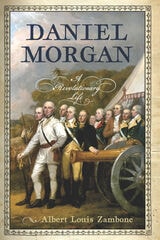
Daniel Morgan
A Revolutionary LifeAlbert Louis Zambone
Westholme Publishing, 2018
On January 17, 1781, at Cowpens, South Carolina, the notorious British cavalry officer Banastre Tarleton and his legion had been destroyed along with the cream of Lord Cornwallis’s troops. The man who planned and executed this stunning American victory was Daniel Morgan. Once a barely literate backcountry laborer, Morgan now stood at the pinnacle of American martial success. Born in New Jersey in 1736, he left home at seventeen and found himself in Virginia’s Shenandoah Valley. There he worked in mills and as a teamster, and was recruited for Braddock’s disastrous expedition to take Fort Duquesne from the French in 1755. When George Washington called for troops to join him at the siege of Boston in 1775, Morgan organized a select group of riflemen and headed north. From that moment on, Morgan’s presence made an immediate impact on the battlefield and on his superiors. Washington soon recognized Morgan’s leadership and tactical abilities. When Morgan’s troops blocked the British retreat at Saratoga in 1777, ensuring an American victory, he received accolades from across the colonies.
In Daniel Morgan: A Revolutionary Life, the first biography of this iconic figure in forty years, historian Albert Louis Zambone presents Morgan as the quintessential American everyman, who rose through his own dogged determination from poverty and obscurity to become one of the great battlefield commanders in American history. Using social history and other advances in the discipline that had not been available to earlier biographers, the author provides an engrossing portrait of this storied personality of America’s founding era—a common man in uncommon times.
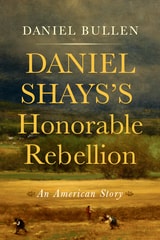
Daniel Shays's Honorable Rebellion
An American StoryDaniel Bullen
Westholme Publishing, 2024
Daniel Shays’s Honorable Rebellion: An American Story by Daniel Bullen tells the history of the crisis from the protesters’ perspective. Through five months of nonviolent protests, the farmers kept courts throughout Massachusetts from hearing foreclosures, facing down threats from the government, which escalated to the point that Governor James Bowdoin ultimately sent an army to arrest them. Even so, the people won reforms in an electoral landslide.
Thomas Jefferson called these protests an honorable rebellion, and hoped that Americans would never let twenty years pass without such a campaign, to rein in powerful interests. This riveting and meticulously researched narrative shows that Shays and his fellow protesters were hardly a dangerous rabble, but rather a proud people who banded together peaceably, risking their lives for justice in a quintessentially American story.
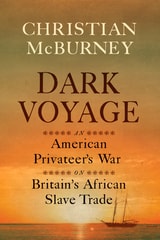
Dark Voyage
An American Privateer's War on Britain's African Slave TradeChristian M. McBurney
Westholme Publishing, 2026
One privateer was given an extraordinary task: to sail across the Atlantic to attack British slave trading posts and ships on the coast of West Africa. Based on a little-known contemporary primary source, The Journal of the Good Ship Marlborough, the story of this remarkable voyage is told here for the first time and will have a major impact on our understanding of the Atlantic slave trade and the American Revolution. The voyage of the Marlborough was the brainchild of John Brown, a prominent Rhode Island merchant—and an investor in two slave trading voyages himself. The motivation was not altruistic. The officers and crew of the Marlborough wanted to advance the cause of independence from Britain through harming Britain’s economy, but they also desired to enrich themselves by selling the plunder they captured—including enslaved Africans.
The work of the Marlborough and other American privateers was so disruptive that it led to an unintended consequence: virtually halting the British slave trade. British slave merchants, alarmed at losing money from their ships being captured, invested in many fewer slave voyages. As a result tens of thousands of Africans were not forced onto slave ships, transported to the New World, and consigned to a lifetime of slavery or an early death.
In Dark Voyage: An American Privateer’s War on Britain’s African Slave Trade, veteran researcher and writer Christian McBurney recreates the harrowing voyage of the Marlborough, while placing it in the context of Atlantic World slavery. In Africa, Marlborough’s officers come across an array of African and European slave traders willing to assist them in attacking the British. This book is also the first study to detail the many captures American privateers made of British slave ships during the Revolutionary War.
Dark and Bloody Ground
The American Revolution Along the Southern FrontierRichard D. Blackmon
Westholme Publishing, 2012
The American Revolution marked a dramatic change in the struggle for land along the southern frontier. In the colonial era, American Indian leaders and British offi cials attempted to accommodate the westward expansion of Anglo-Americans through land cessions designed to have the least impact on Indian societies. The region remained generally peaceful, but with the onset of the Revolution, the British no longer exercised sole authority to curb the settlements appearing within territory claimed by the Creeks, Shawnee, and most importantly, the Cherokee. Whether it was to escape the economic uncertainty of the east, the rigors of the confl ict, or the depredations of troops and militias on both sides, settlers fl ooded west. Under these conditions, the war in the south took on a savage character as Indians, Loyalists, and Whigs all desperately fought to defend their communities and maintain control of their own destinies. Taking advantage of the political turmoil in the east, the Cherokee Nation launched a coordinated offensive in 1776 against illegal frontier settlements. The Whigs responded with a series of expeditions from each of the Southern colonies that razed Cherokee towns and their food supplies. All the while, both British and Whig leaders walked a fi ne line: If the Indians attacked settlers without distinguishing between Loyalists and Whigs, those groups could unite and thwart both British and Indian interests; if the Indians attacked the western frontier with Loyalist and British support, the Whigs would face a two-front war—an event that ended up happening.
In Dark and Bloody Ground: The American Revolution Along the Southern Frontier, Richard Blackmon uses a wealth of primary source material to recount the confl ict between American Indians and Anglo-Americans in the colonial South during one of the most turbulent periods of North American history. He explains the complex points of contact in Georgia, Kentucky, North Carolina, South Carolina, Tennessee, and Virginia between native groups and settlers, while revealing the political gamesmanship between rival British and Whig traders and offi cials to secure Indian loyalty. The author also explains the critical role of the southern frontier to the American victory, a victory achieved long after the decision at Yorktown. Before the war, clashes between Cherokee and Shawnee hunters in Kentucky had become so commonplace that it was known as a “dark and bloody ground.” With the rise in Anglo-American settlements there, led by Daniel Boone and others, the dark and bloody ground became a metaphor for the entire struggle for the Southern frontier.
Decision at Brandywine
The Battle on Birmingham HillRobert Dunkerly
Westholme Publishing, 2025
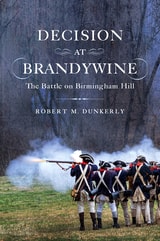
The Battle of Brandywine, fought on September 11, 1777, along its namesake creek in the bucolic Pennsylvania countryside, was one of the largest engagements of the Revolutionary War. To those who participated in this massive battle, spread out over ten square miles and lasting from late afternoon until dark, it was unforgettable. Soon after the action, Major Joseph Bloomfield of the 3rd New Jersey recorded that it was “the grandest scene I ever saw, a sight beyond description.” Brandywine was the first major battle for the recently reorganized Continental Army. Units had fought in small engagements, but not until Brandywine did the army fight as a whole against the British. As the two armies clashed, a ferocious and desperate action developed on a hill at the heart of the battlefield, and it was here where the battle’s outcome was determined.
Despite its size and significance—Brandywine was the third bloodiest engagement of the war, with 1,300 American and 581 British casualties—the battle has been the subject of very few studies. In Decision at Brandywine: The Battle on Birmingham Hill, historian Robert M. Dunkerly analyzes the fighting near the Birmingham Meeting House where the battle turned. By dissecting the struggle on Birmingham Hill in detail, he offers a case study in weapons, tactics, and terrain analysis critical to a holistic understanding of the entire battle and what it would mean for the future of the Continental Army. In the process he not only explains how the Continental Army’s lack of uniformed training and inexperience in large open-field battles played a major role in their defeat, but also provides important information about Revolutionary War combat in general.
Disestablishment and Religious Dissent
Church-State Relations in the New American States, 1776-1833Edited by Carl H. Esbeck and Jonathan J. Den Hartog
University of Missouri Press, 2026
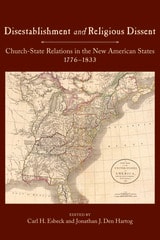
traditions of church-state relations rooted in the colony’s peoples, their country of origin, and religion.
This definitive volume, comprising twenty-one original essays by eminent historians and political scientists, is a comprehensive state-by-state account of disestablishment in the original thirteen states, as well as a look at similar events in the soon-to-be-admitted states of Vermont, Tennessee, and Kentucky. Also considered are disestablishment in Ohio (the first state admitted from the Northwest Territory), Louisiana and Missouri (the first states admitted from the Louisiana Purchase), and Florida (wrestled from Spain under U.S. pressure). The volume makes a unique scholarly contribution by recounting in detail the process of disestablishment in each of the colonies, as well as religion’s constitutional and legal place in the new states of the federal republic.
Disunion Among Ourselves
The Perilous Politics of the American RevolutionEli Merritt
University of Missouri Press, 2025
Winner of the 2024 Society of the Cincinnati Prize from the American Revolution Institute
Winner of the 2023 American Revolution Round Table of Philadelphia book award
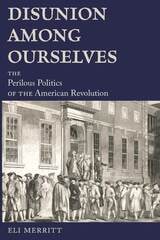
In this eye-opening account, Eli Merritt reveals the deep political divisions that almost tore the Union apart during the American Revolution. So fractious were the founders’ political fights that they feared the War of Independence might end in disunion and civil war.
Instead of disbanding into separate regional confederacies, the founders managed to unite for the sake of liberty and self-preservation. In so doing, they succeeded in holding the young nation together. To achieve this, they forged grueling compromises, including Declaration of Independence in 1776, the Mississippi-Fisheries Compromise of 1779, and the ratification of the Articles of Confederation in 1781.
In addition to bringing new insights to the history of the American Revolution, Disunion Among Ourselves has inevitable resonances with our present era of political hyperpolarization and serves as a touchstone for contemporary politics, reminding us that the founders overcame far tougher times than our own through commitment to ethical constitutional democracy and compromise.
Documentary History of the Ratification of the Constitution, Volume 23
Ratification of the Constitution by the States: New York, No. 5Edited by John P. Kaminski and Gaspare J. Saladino; Senior Associate Editor: Richard Leffler; Associate Editor: Charles H. Schoenleber; Assistant Editor: Margaret A. Hogan
Wisconsin Historical Society Press, 2009
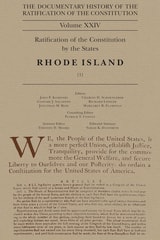
Documentary History of the Ratification of the Constitution, Volume 24
Ratification of the Constitution by the States: Rhode Island, No. 1Kaminski
Wisconsin Historical Society Press, 2011
This is the first of three volumes documenting Rhode Island's public and private debates about the Constitution. This documentary series is a research tool of remarkable power, an unrivaled reference work for historical and legal scholars, librarians, and students of the Constitution. The volumes are encyclopedic, consisting of manuscript and printed documents-contemporary newspapers, broadsides, and pamphlets-compiled from hundreds of sources, copiously annotated, thoroughly indexed, and often accompanied by microfiche supplements. Pulitzer Prize-winning historian Michael Kammen has noted that The Documentary History of the Ratification of the Constitution series "will be of enduring value centuries hence" and described it as "one of the most interesting documentary publications we have ever had." The American Bar Association Journal has stated, "Each new volume now fills another vital part of the mosaic of national history."
Dr. Benjamin Church, Spy
A Case of Espionage on the Eve of the American RevolutionJohn A. Nagy
Westholme Publishing, 2013
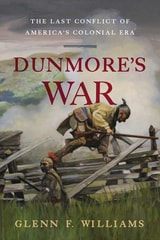
Dunmore's War
The Last Conflict of America's Colonial EraGlenn F. Williams
Westholme Publishing, 2017
Known to history as “Dunmore’s War,” the 1774 campaign against a Shawnee-led Indian confederacy in the Ohio Country marked the final time an American colonial militia took to the field in His Majesty’s service and under royal command. Led by John Murray, the fourth Earl of Dunmore and royal governor of Virginia, a force of colonials including George Rogers Clark, Daniel Morgan, Michael Cresap, Adam Stephen, and Andrew Lewis successfully enforced the western border established by treaties in parts of present-day West Virginia and Kentucky. The campaign is often neglected in histories, despite its major influence on the conduct of the Revolutionary War that followed. In Dunmore’s War: The Last Conflict of America’s Colonial Era, award-winning historian Glenn F. Williams describes the course and importance of this campaign. Supported by extensive primary source research, the author corrects much of the folklore concerning the war and frontier fighting in general, demonstrating that the Americans did not adopt Indian tactics for wilderness fighting as is often supposed, but rather used British methods developed for fighting irregulars in the woods of Europe, while incorporating certain techniques learned from the Indians and experience gained from earlier colonial wars.
As an immediate result of Dunmore’s War, the frontier remained quiet for two years, giving the colonies the critical time to debate and declare independence before Britain convinced its Indian allies to resume attacks on American settlements. Ironically, at the same time Virginia militiamen were fighting under command of a king’s officer, the colony was becoming one of the leaders in the move toward American independence. Although he was hailed as a hero at the end of the war, Lord Dunmore’s attempt to maintain royal authority put him in direct opposition to many of the subordinates who followed him on the frontier, and in 1776 he was driven from Virginia and returned to England.