Results by title
386 books match the query 'Russia' and 20 start with d
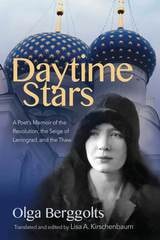
Daytime Stars
Olga Berggolts, translated by Lisa Kirschenbaum
University of Wisconsin Press, 2018
Berggolts wrote her memoir Daytime Stars in the spirit of the thaw after Stalin's death. In it, she celebrated the ideals of the revolution and the heroism of the Soviet people while also criticizing censorship of writers and recording her doubts and despair. This English translation by Lisa A. Kirschenbaum makes available a unique autobiographical work by an important author of the Soviet era. In her foreword, Katharine Hodgson comments on experiences of the Terror about which Berggolts was unable or unwilling to write.
De-Stalinisation Reconsidered
Persistence and Change in the Soviet UnionEdited by Thomas M. Bohn, Rayk Einax, and Michel Abeßer
Campus Verlag, 2014
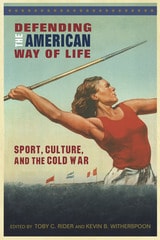
Defending the American Way of Life
Sport, Culture, and the Cold WarToby C. Rider
University of Arkansas Press, 2018
The Cold War was fought in every corner of society, including in the sport and entertainment industries. Recognizing the importance of culture in the battle for hearts and minds, the United States, like the Soviet Union, attempted to win the favor of citizens in nonaligned states through the soft power of sport. Athletes became de facto ambassadors of US interests, their wins and losses serving as emblems of broader efforts to shield American culture—both at home and abroad—against communism.
In Defending the American Way of Life, leading sport historians present new perspectives on high-profile issues in this era of sport history alongside research drawn from previously untapped archival sources to highlight the ways that sports influenced and were influenced by Cold War politics. Surveying the significance of sports in Cold War America through lenses of race, gender, diplomacy, cultural infiltration, anti-communist hysteria, doping, state intervention, and more, this collection illustrates how this conflict remains relevant to US sporting institutions, organizations, and ideologies today.
Defining Latvia
Recent Explorations in History, Culture, and PoliticsMatthew Kott
Central European University Press, 2022
In just over a century, Latvia has transitioned from imperial periphery to nation-state, then Soviet republic, and finally following the collapse of the Soviet Union to an independent republic. Defining Latvia brings together the latest research on the multiple social, political, and cultural contexts of Latvia throughout this turbulent period. Its ten chapters are written by leading political scientists, historians, and area studies specialists from across Europe and North America.
The volume moves beyond an exclusively political context to incorporate a variety of social and cultural perspectives, ranging from the experiences of Latvian mapmakers in the Russian Empire, to the participation of Latvians in the Wehrmacht and Red Army during World War II, Latvian national communism, and the development of extremist politics following Latvia’s accession to the European Union. Other chapters address developing trends in the fields of history and political science, including the history of antisemitism, memory, language politics, photography, and political extremism.
Based on the book’s temporal span from the nineteenth century to the present, the authors and editors of Defining Latvia understand the construction of Latvian identity as a continuous and interconnected process across significant political and ideological ruptures.
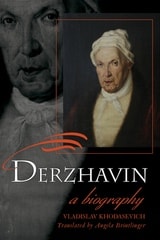
Derzhavin
A BiographyVladislav Khodasevich, Translated and with an introduction by Angela Brintlinger
University of Wisconsin Press, 2007
“Khodasevich’s light narrative touch (as translated by Brintlinger) lends a novelistic quality to the biography, making it a genuine tour de force. All students and scholars – of history, literature, poetry, biography – will find something of interest here.”—Choice

Developments in Russian Politics 10
Henry E. Hale, Juliet Johnson, and Tomila V. Lankina, editors
Duke University Press, 0
Developments in Russian Politics 7
Stephen White, Richard Sakwa, and Henry E. Hale, eds.
Duke University Press, 0
Contributors. Alfred B. Evans, Henry E. Hale, P. Hanson, Margot Light, N. Manning, J. Mathers, Michael McFaul, Sarah Oates, Thomas F. Remington, C. Ross, Richard Sakwa, Darrell Slider, G. Smith, Stephen White, John P. Willerton
Developments in Russian Politics 7
Stephen White, Richard Sakwa, and Henry E. Hale, eds.
Duke University Press, 0
Contributors. Alfred B. Evans, Henry E. Hale, P. Hanson, Margot Light, N. Manning, J. Mathers, Michael McFaul, Sarah Oates, Thomas F. Remington, C. Ross, Richard Sakwa, Darrell Slider, G. Smith, Stephen White, John P. Willerton
Diary of General Patrick Gordon of Auchleuchries 1635-1699
Volume 1: 1635-1659Dmitry Fedosov and Patrick Gordon
Aberdeen University Press, 2009
Diary of General Patrick Gordon of Auchleuchries 1635-1699
Volume 2: 1659-1667Dmitry Fedosov and Patrick Gordon
Aberdeen University Press, 2009
Diary of General Patrick Gordon of Auchleuchries 1635-1699
Volume 3: 1677-1678Dmitry Fedosov and Patrick Gordon
Aberdeen University Press, 2012
Diary of General Patrick Gordon of Auchleuchries 1635-1699
Volume 4: 1684-1689Dmitry Fedosov and Patrick Gordon
Aberdeen University Press, 2013
Diary of General Patrick Gordon of Auchleuchries 1635-1699
Volume 5: 1690-1695Dmitry Fedosov and Patrick Gordon
Aberdeen University Press, 2014
Diary of General Patrick Gordon of Auchleuchries 1635-1699
Volume 6: 1696-1699Dmitry Fedosov and Patrick Gordon
Aberdeen University Press, 2016
Dispatches from the Revolution
Russia 1916-1918Morgan Philips Price
Duke University Press, 1998
This collection includes Price’s pre-censored observations and comment, written for a range of British publications, as well as letters, postcards, and other writings. A foreword by Eric Hobsbawm and introductory material by Rose place Price’s observations in biographical and historical context. Dispatches from the Revolution offers an account of the Russian Revolution from an eyewitness whose political commitment, fluency in Russian, and extensive travel far beyond the cities permitted him to write, uniquely, not only of metropolitan news and politics, but also of the experiences and issues signficant to ordinary peasants, workers, and soldiers in remote areas of the Russian empire.
An important source to scholars of Russian history, this book will also appeal to general readers with interests in Russia, journalism, and world affairs.
Distance Manipulation
The Russian Modernist Search for a New DramaJoanna Kot
Northwestern University Press, 1999
Kot studies experimental dramas by Gippius, Sologub, Blok, and Ivanov, but the centerpiece of the book is Chekhov's Cherry Orchard his last and greatest play. Kot argues that it presents a subtle balance of distancing and emotive techniques.
An invaluable guide to the often bewildering nature of so-called "innovative" twentieth-century works, this book will appeal to anyone interested in modern theater.
Double Eagle and Rising Sun
The Russians and Japanese at Portsmouth in 1905Raymond A. Esthus
Duke University Press, 1988
The 1905 Portsmouth Conference, mediated by President Theodore Roosevelt, for which he received the Nobel Peace Prize, brought to an end a war in which Japan won spectacular victories on land and sea. Although the peace settlement fell far short of public expectations in Japan, she gained supremacy in Korea and a sphere of influence in South Manchuria as a consequence of the treaty. Nevertheless, the treaty reflected the military stalemate in Manchuria. Roosevelt wanted a balance of power to emerge from the war, and his hope was realized in the peace process.
Raymond Esthus, drawing on the records of six nations, provides a detailed and panoramic account of the 1905 conference from the perspectives of both the Russians and the Japanese participants, depicting the powerful personalities of Roosevelt and the Russian Sergei Witte, as well as Tsar Nicholas II and the Foreign Minister Komura Jutaro. It is a story of verbal duels, tests of will, and moments of high personal courage. If there was no clear-cut victor at the conference, Roosevelt emerged as a worldwide hero of the cause of peace.
Doubly Chosen
Jewish Identity, the Soviet Intelligentsia, and the Russian Orthodox ChurchJudith Deutsch Kornblatt
University of Wisconsin Press, 2004
Doubly Chosen provides the first detailed study of a unique cultural and religious phenomenon in post-Stalinist Russia—the conversion of thousands of Russian Jewish intellectuals to Orthodox Christianity, first in the 1960s and later in the 1980s. These time periods correspond to the decades before and after the great exodus of Jews from the Soviet Union. Judith Deutsch Kornblatt contends that the choice of baptism into the Church was an act of moral courage in the face of Soviet persecution, motivated by solidarity with the values espoused by Russian Christian dissidents and intellectuals. Oddly, as Kornblatt shows, these converts to Russian Orthodoxy began to experience their Jewishness in a new and positive way.
Working primarily from oral interviews conducted in Russia, Israel, and the United States, Kornblatt underscores the conditions of Soviet life that spurred these conversions: the virtual elimination of Judaism as a viable, widely practiced religion; the transformation of Jews from a religious community to an ethnic one; a longing for spiritual values; the role of the Russian Orthodox Church as a symbol of Russian national culture; and the forging of a new Jewish identity within the context of the Soviet dissident movement.
Doubt, Atheism, and the Nineteenth-Century Russian Intelligentsia
Victoria Frede
University of Wisconsin Press, 2011
The autocratic rule of both tsar and church in imperial Russia gave rise not only to a revolutionary movement in the nineteenth century but also to a crisis of meaning among members of the intelligentsia. Personal faith became the subject of intense scrutiny as individuals debated the existence of God and the immortality of the soul, debates reflected in the best-known novels of the day. Friendships were formed and broken in exchanges over the status of the eternal. The salvation of the entire country, not just of each individual, seemed to depend on the answers to questions about belief.
Victoria Frede looks at how and why atheism took on such importance among several generations of Russian intellectuals from the 1820s to the 1860s, drawing on meticulous and extensive research of both published and archival documents, including letters, poetry, philosophical tracts, police files, fiction, and literary criticism. She argues that young Russians were less concerned about theology and the Bible than they were about the moral, political, and social status of the individual person. They sought to maintain their integrity against the pressures exerted by an autocratic state and rigidly hierarchical society. As individuals sought to shape their own destinies and searched for truths that would give meaning to their lives, they came to question the legitimacy both of the tsar and of Russia’s highest authority, God.
Dreaming of a Mail-Order Husband
Russian-American Internet RomanceEricka Johnson
Duke University Press, 2007
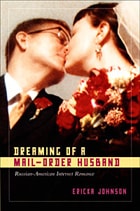
Each chapter presents one woman’s story and then links it to a discussion of gender roles, the mail-order bride industry, and the severe economic and social constraints of life in Russia. The transitional economy has often left people, after a month’s work, either unpaid or paid unexpectedly with a supply of sunflower oil or toilet paper. Women over twenty-three are considered virtually unmarriageable in Russian society. Russia has a large population of women who are single, divorced, or widowed, who would like to be married yet feel that they have no chance finding a Russian husband. Grim realities such as these motivate women to seek better lives abroad. For many of those seeking a mail-order husband, children or parents play significant roles in the search for better lives, and they play a role in Johnson’s account as well. In addition to her research in the former Soviet Union, Johnson conducted interviews in the United States, and she shares the insights—about dating, marriage, and cross-cultural communication—of a Russian-American married couple who met via the Internet.