479 books match the query 'Sources' and 12 start with d
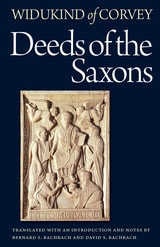
cover of Deeds of the Saxons

Deeds of the Saxons

Catholic University of America Press, 2014
PleWidukind, a monk at the prominent monastery of Corvey in Saxony during the middle third of the tenth century, is known to posterity through his Res gestae Saxonicae, an exceptionally rich account of the Saxon people and the reigns of the first two rulers of the Ottonian dynasty, Henry I (919-936) and Otto I (936-973). Widukind, likely of noble birth, received a thorough education in both biblical and classical texts. When writing the Gestae, Widukind also had available the extensive library at Corvey, with its large collection of ancient texts as well as numerous works from the eighth and ninth centuries. Widukind drew on these, and even more contemporary written sources to complement and inform orally transmitted information that he received from many sources including people closely associated with the Ottonian royal court. Widukind wrote the Res gestae from the 950s to the 970s, incorporating additional material as he obtained further information and as major new events took place in the German kingdom and beyond. After providing a historical background for the Saxon people Widukind devotes most of his attention to the political and military affairs of the German kingdom, concentrating heavily on affairs of the royal court. Widukind provides information that can be found in no other source. His close relationship with the royal court enabled him to provide an "insider's" view of the people and events that shaped the political and military history of the most powerful kingdom in Europe. As a consequence, the Res gestae is an indispensable account for the history of the German kingdom during the tenth century. Bernard S. Bachrach and David S. Bachrach provide an introduction to the text that contextualizes the author, his historical methods, and the information that he provides. They draw on a large number of other written sources of information, including both narrative works and the political, economic, social, and military affairs of the day, and provide an extensive apparatus of notes. ase fill in marketing copy
[more]
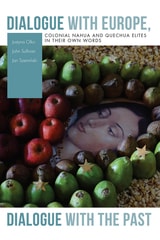
cover of Dialogue with Europe, Dialogue with the Past: Colonial Nahua and Quechua Elites in Their Own Words

Dialogue with Europe, Dialogue with the Past

Colonial Nahua and Quechua Elites in Their Own Words

Justyna Olko

University Press of Colorado, 2018

Dialogue with Europe, Dialogue with the Past is a critical, annotated anthology of indigenous-authored texts, including the Nahua, Quechua, and Spanish originals, through which native peoples and Spaniards were able to convey their own perspectives on Spanish colonial order. It is the first volume to bring together native testimonies from two different areas of Spanish expansion in the Americas to examine comparatively these geographically and culturally distant realities of indigenous elites in the colonial period.
 
In each chapter a particular document is transcribed exactly as it appears in the original manuscript or colonial printed document, with the editor placing it in historical context and considering the degree of European influence. These texts show the nobility through documents they themselves produced or caused to be produced—such as wills, land deeds, and petitions—and prioritize indigenous ways of expression, perspectives, and concepts. Together, the chapters demonstrate that native elites were independent actors as well as agents of social change and indigenous sustainability in colonial society. Additionally, the volume diversifies the commonly homogenous term “cacique” and recognizes the differences in elites throughout Mesoamerica and the Andes.
 
Showcasing important and varied colonial genres of indigenous writing, Dialogue with Europe, Dialogue with the Past reveals some of the realities, needs, strategies, behaviors, and attitudes associated with the lives of the elites. Each document and its accompanying commentary provide additional insight into how the nobility negotiated everyday life. The book will be of great interest to students and researchers of Mesoamerican and Andean history, as well as those interested in indigenous colonial societies in the Spanish Empire.
 
Contributors: Agnieszka Brylak, Maria Castañeda de la Paz, Katarzyna Granicka, Gregory Haimovich, Anastasia Kalyuta, Julia Madajczak, Patrycja Prządka-Giersz
 
[more]
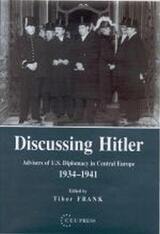
cover of Discussing Hitler: Advisers of U.S. Diplomacy in Central Europe, 1934-41

Discussing Hitler

Advisers of U.S. Diplomacy in Central Europe, 1934-41

Tibor Frank

Central European University Press, 2003

This book promises to illuminate the foreign policy of the Roosevelt administration during the rise of Hitler's Germany. It is based on the heretofore unpublished notes of J. F. Montgomery (1878-1954), U.S. ambassador ("Minister") to Hungary before World War II. In Budapest, Montgomery quickly made friends with nearly everyone who mattered in the critical years of Hitler's takeover and preparation for World War II. His circle included Admiral Horthy, the Regent of Hungary, subsequent prime ministers, foreign ministers, members of both houses of parliament, as well as fellow diplomats from all over Europe. In addition, as an avid player of golf and bridge, he had an active social life that was interconnected with a large circle of influential friends in the United States.
[more]
cover of Dispatches from the Revolution: Russia 1916-1918

Dispatches from the Revolution

Russia 1916-1918

Morgan Philips Price

Duke University Press, 1998

A special correspondent for the Manchester Guardian, Morgan Philips Price was one of the few Englishmen in Russia during all phases of the Revolution. Although his Bolshevik sympathies accorded him an insider’s perspective on much of the turmoil, his reports were often heavily revised or suppressed. In Dispatches from the Revolution, Tania Rose collects for the first time Price’s correspondence from Russia—official and unofficial, published and unpublished—to reveal a side of Russian life and politics that fell largely unreported in the years before, during, and after the Revolution.
This collection includes Price’s pre-censored observations and comment, written for a range of British publications, as well as letters, postcards, and other writings. A foreword by Eric Hobsbawm and introductory material by Rose place Price’s observations in biographical and historical context. Dispatches from the Revolution offers an account of the Russian Revolution from an eyewitness whose political commitment, fluency in Russian, and extensive travel far beyond the cities permitted him to write, uniquely, not only of metropolitan news and politics, but also of the experiences and issues signficant to ordinary peasants, workers, and soldiers in remote areas of the Russian empire.
An important source to scholars of Russian history, this book will also appeal to general readers with interests in Russia, journalism, and world affairs.
[more]
cover of Documenting Intimate Matters: Primary Sources for a History of Sexuality in America

Documenting Intimate Matters

Primary Sources for a History of Sexuality in America

Edited by Thomas A. Foster

University of Chicago Press, 2012
Over time, sexuality in America has changed dramatically. Frequently redefined and often subject to different systems of regulation, it has been used as a means of control; it has been a way to understand ourselves and others; and it has been at the center of fierce political storms, including some of the most crucial changes in civil rights in the last decade. Edited by Thomas A. Foster, Documenting Intimate Matters features seventy-two documents that collectively highlight the broad diversity inherent in the history of American sexuality.
 
Complementing the third edition of Intimate Matters, by John D’Emilio and Estelle B. Freedman—often hailed as the definitive survey of sexual history in America—the multiple narratives presented by these documents reveal the complexity of this subject in US history. The historical moments captured in this volume will show that, contrary to popular misconception, the history of sexuality is not a simple story of increased freedoms and sexual liberation, but an ongoing struggle between change and continuity.

[more]
cover of Documents from the Luciferians: In Defense of the Nicene Creed

Documents from the Luciferians

In Defense of the Nicene Creed

Colin M. Whiting

SBL Press, 2019

Six important documents for scholars of early church history

This volume includes English translations of several documents concerning the Luciferians, a group of fourth-century Christians whose name derives from the bishop Lucifer of Cagliari. Documents include a confession of faith written for Emperor Theodosius I and a theological treatise written for his wife by Luciferian clergyman Faustinus, the first English translation of a Luciferian petition to Theodosius that focuses on the persecution the community has suffered, Theodosius’s imperial law in response to the Luciferians, two letters composed by Luciferians that purport to represent correspondence from the bishop Athanasius of Alexandria to Lucifer, and the priest Jerome’s Dialogus adversus Luciferianos. These texts highlight connections between developments in Christian theology and local Christian communities in the course of the fourth century.

Features:

  • The first English translation of Faustinus’s Libellus precum
  • An overview of the development of late antique theology and Christianity
  • An introduction to Luciferian beliefs and the translated texts
[more]
cover of Documents in Medieval Latin

Documents in Medieval Latin

John Thorley

University of Michigan Press, 1998

This handbook of medieval Latin texts is designed for historians of the Middle Ages with some knowledge of Latin who wish to be able to read a wide range of original source material. It broadens the traditional scope of medieval Latin readers by including historical documents such as deeds and charters along with traditional literary samples. Within the context of a running narrative, Thorley starts with texts from the Anglo-Saxon period and then moves through subsequent centuries genre by genre. Each text is accompanied by a grammatical and historical commentary, both of which allow for independent study. In addition, all selections are translated at the back of the book.
Documents in Medieval Latin will be useful to students of medieval history, literature, and philosophy and those interested in reading more about the Middle Ages. Thorley's cheerful approach, the lively and representative selections of tests, and the documentary and epigraphic focus will prove valuable for those wishing to explore these vital original sources.
John Thorley teaches medieval Latin at Lancaster University.

[more]
cover of Documents on the Rape of Nanking

Documents on the Rape of Nanking

Timothy Brook, Editor

University of Michigan Press, 1999

The Japanese Army's invasion of China in 1937 was the first step toward a hemispheric war that would last until the atomic bombing of Hiroshima and Nagasaki in 1945. What ended in one atrocity began with another: the savage military takeover of China's capital city, which quickly became known as the Rape of Nanking. The Japanese Army's conduct from December 1937 to February 1938 constitutes one of the most barbarous events not just of the war but of the century. The violence was documented at the time and then redocumented during the war crimes trial in Tokyo after the war. This book brings together materials from both moments to provide the first comprehensive dossier of primary sources on the Rape.
Part 1, "The Records," includes two sources written as the Rape was underway. The first is a long set of documents produced by the International Committee for the Nanking Safety Zone, a group of foreigners who strove to protect the Chinese residents. The second is a series of letters that American surgeon Dr. Robert Wilson wrote for his family during the same period. These letters are published here for the first time.
The evidence compiled by the International Committee and its members would be decisive for the indictments against Japanese leaders at the International Military Tribunal for the Far East in Tokyo. Part 2, "The Judgments," reprints portions of the tribunal's 1948 judgment dealing with the Rape of Nanking, its judicial consequences, and sections of the dissenting judgment of Justice Radhabinod Pal.
These contemporary records and judgments create an intimate firsthand account of the Rape of Nanking. Together they are intended to stimulate deeper reflection than previously possible on how and why we assess and assign the burden of war guilt.
Timothy Brook is Professor of Chinese History and Associate Director of the Joint Centre for Asia Pacific Studies, University of Toronto, and is coeditor of Nation Work: Asian Elites and National Identities and Cultureand Economy: The Shaping of Capitalism in Eastern Asia, both published by the University of Michigan Press.
[more]
cover of Domestic Contradictions: Race and Gendered Citizenship from Reconstruction to Welfare Reform

Domestic Contradictions

Race and Gendered Citizenship from Reconstruction to Welfare Reform

Priya Kandaswamy

Duke University Press, 2021
In Domestic Contradictions, Priya Kandaswamy analyzes how race, class, gender, and sexuality shaped welfare practices in the United States alongside the conflicting demands that this system imposed upon Black women. She turns to an often-neglected moment in welfare history, the advent of the Freedmen's Bureau during Reconstruction, and highlights important parallels with welfare reform in the late twentieth century. Kandaswamy demonstrates continuity between the figures of the “vagrant” and “welfare queen” in these time periods, both of which targeted Black women. These constructs upheld gendered constructions of domesticity while defining Black women's citizenship in terms of an obligation to work rather than a right to public resources. Pushing back against this history, Kandaswamy illustrates how the Black female body came to represent a series of interconnected dangers—to white citizenship, heteropatriarchy, and capitalist ideals of productivity —and how a desire to curb these threats drove state policy. In challenging dominant feminist historiographies, Kandaswamy builds on Black feminist and queer of color critiques to situate the gendered afterlife of slavery as central to the historical development of the welfare state.
[more]
cover of Down in the Dumps: Place, Modernity, American Depression

Down in the Dumps

Place, Modernity, American Depression

Jani Scandura

Duke University Press, 2007

Mucking around in the messy terrain of American trash, Jani Scandura tells the story of the United States during the Great Depression through evocative and photo-rich portraits of four locales: Reno, Key West, Harlem, and Hollywood. In investigating these Depression-era “dumps,” places that she claims contained and reclaimed the cultural, ideological, and material refuse of modern America, Scandura introduces the concept of “depressive modernity,” an enduring affective component of American culture that exposes itself at those moments when the foundational myths of America and progressive modernity—capitalism, democracy, individualism, secularism, utopian aspiration—are thrown into question. Depressive modernity is modernity at a standstill. Such a modernity is not stagnant or fixed, nor immobile, but is constituted by an instantaneous unstaging of desire, territory, language, and memory that reveals itself in the shimmering of place.

An interpretive bricolage that draws on an unlikely archive of 1930s detritus—office memos, scribbled manuscripts, scrapbooks, ruined photographs, newspaper clippings, glass eyes, incinerated stage sets, pulp novels, and junk washed ashore—Down in the Dumps escorts its readers through Reno’s divorce factory of the 1930s, where couples from across the United States came to quickly dissolve matrimonial bonds; Key West’s multilingual salvage economy and its status as the island that became the center of an ideological tug-of-war between the American New Deal government and a politically fraught Caribbean; post-Renaissance Harlem, in the process of memorializing, remembering, grieving, and rewriting a modernity that had already passed; and Studio-era Hollywood, Nathanael West’s “dump of dreams,” in which the introduction of sound in film and shifts in art direction began to transform how Americans understood place-making and even being itself. A coda on Alcatraz and the Pentagon brings the book into the present, exploring how American Depression comes to bear on post-9/11 America.
[more]
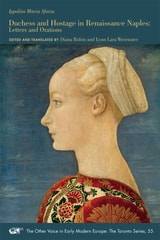
cover of Duchess and Hostage in Renaissance Naples: Letters and Orations

Duchess and Hostage in Renaissance Naples

Letters and Orations

Ippolita Maria Sforza

Iter Press, 2017

This volume presents in translation 100 previously unknown letters of Ippolita Maria Sforza (1445–1488), daughter of the Duke of Milan, who was sent at age twenty to marry the son of the infamously brutal King Ferrante of Naples. Sforza’s letters display the adroit diplomacy she used to strengthen the alliance between Milan and Naples, then the two most powerful states in Italy, amid such grave crises as her brother’s assassination in Milan and the Turkish invasion of Otranto. Still, Ippolita lived as a hostage at the Neapolitan court, subject not only to the threat of foreign invasion but also to her husband’s well-known sexual adventures and her father-in-law’s ruthlessness. Soon after Ippolita’s mysterious death in 1488, the fraught Naples-Milan alliance collapsed.
[more]
cover of Duchess of Palms: A Memoir

Duchess of Palms

A Memoir

By Nadine Eckhardt

University of Texas Press, 2009

A “fifties girl” tells the fascinating story of her marriages to novelist Billy Lee Brammer and Congressman Bob Eckhardt, and how these relationships propelled her into the multifaceted life she led on her own terms.

Child of the Great Depression, teenage "Duchess of Palms" beauty queen, wife of an acclaimed novelist and later of a brilliant U.S. congressman, and ultimately a successful single working woman and mother, Nadine Eckhardt has lived a fascinating life. In this unique, funny, and honest memoir, she recounts her journey from being a "fifties girl" who lived through the men in her life to becoming a woman in her own right, working toward her own goals.

Eckhardt's first marriage to writer Billy Lee Brammer gave her entrée to liberal political and literary circles in Austin and Washington, where she and Brammer both worked for Senator Lyndon B. Johnson. She describes the heady excitement of LBJ's world—a milieu that Brammer vividly captured in his novel The Gay Place. She next recalls her second marriage to Bob Eckhardt, whom she helped get elected to the U.S. House of Representatives, as well as her growing involvement with the counterculture of social protest, sexual revolution, and drug use. Eckhardt honestly recounts how the changing times changed her perception of herself, recalling that "I didn't know how to achieve for myself, only for others, and I felt ripped off and empty." This painful realization opened the door to a new life for Eckhardt. Her memoir concludes with a joyful description of her multifaceted later life as a restaurateur, assistant to Molly Ivins, writer, and center of a wide circle of friends.

[more]