260 books match the query 'Soviet Union' and 12 start with d

cover of Daniil Kharms: Writing and the Event

Daniil Kharms

Writing and the Event

By Branislav Jakovljevic

Northwestern University Press, 2009

The "texts" of Russian artist and thinker Daniil Kharms (1905-1942) were so many and varied and often unique (narrative, dramatic, philosophical, poetic, mathematical, pictographic, diagrammatic, musical, biographical) that they defied categorization—and, thus, thorough study or appreciation—through much of the twentieth century. This book, the first in English to view Kharms’s oeuvre in its entirety, is also the first to offer a complete, inclusive, and coherent understanding of the overall project of this artist and writer now considered a major figure in the modernist canon of Europe.

The book follows Kharms’s development as a creative thinker, inquiring into the nature of Kharmsian nonsense, the ontological status of the OBERIU object, writing as performance, Kharms’s gestural language, his "language machines," and his ideas of order, number, infinity, and chance. Reading every paper trace (as well as extant memories) of Kharms’s activities as part of a large project of world creation, Branislav Jakovljevic situates him in a twentieth-century effort—exemplified by Kafka, Beckett, Artaud, Malevich, and Khelbnikov, among others—to go beyond an interpretation of meaning circumscribed by rational and logical thought. Examining texts that could conceivably be called "literary" as well as sketches, diagrams, hieroglyphs, photographs, and unclassifiable others, Jakovljevic’s study is the first to provide a properly broad perspective on this creative thinker’s farranging, far-reaching, and finally comprehensive achievement.

[more]
cover of Daytime Stars

Daytime Stars

Olga Berggolts, translated by Lisa Kirschenbaum

University of Wisconsin Press, 2018

For 872 days during World War II, the city of Leningrad endured a crushing blockade at the hands of German forces. Close to one million civilians died, most from starvation. Amid the devastation, Olga Berggolts broadcast her poems on the one remaining radio station, urging listeners not to lose hope. When the siege had begun, the country had already endured decades of revolution, civil war, economic collapse, and Stalin's purges. Berggolts herself survived the deaths of two husbands and both of her children, her own arrest, and a stillborn birth after being beaten under interrogation.

Berggolts wrote her memoir Daytime Stars in the spirit of the thaw after Stalin's death. In it, she celebrated the ideals of the revolution and the heroism of the Soviet people while also criticizing censorship of writers and recording her doubts and despair. This English translation by Lisa A. Kirschenbaum makes available a unique autobiographical work by an important author of the Soviet era. In her foreword, Katharine Hodgson comments on experiences of the Terror about which Berggolts was unable or unwilling to write.
[more]
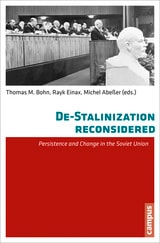
cover of De-Stalinisation Reconsidered: Persistence and Change in the Soviet Union

De-Stalinisation Reconsidered

Persistence and Change in the Soviet Union

Edited by Thomas M. Bohn, Rayk Einax, and Michel Abeßer

Campus Verlag, 2014
Joseph Stalin’s death was a defining event in Soviet history. In its aftermath, the state was forced to reconceive its political, economic, social, and cultural identity. This volume includes new contributions from an international collection of researchers that critically engage with this period of de-Stalinization in the Soviet Union. Together, they offer fresh perspectives not just on Stalinism, but also on questions of change and continuity in Soviet politics, modernization, and society more generally, moving broad-scale processes such as urbanization into the center of interpreting Soviet history.  And in so doing, De-Stalinisation Reconsidered makes clear that the Soviet history of the 1950s and ’60s is crucial for understanding not only glasnost and perestroika, but contemporary Russia, as well.
[more]
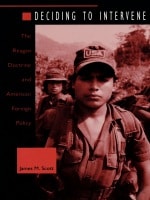
cover of Deciding to Intervene: The Reagan Doctrine and American Foreign Policy

Deciding to Intervene

The Reagan Doctrine and American Foreign Policy

James M. Scott

Duke University Press, 1996

Whether to intervene in conflicts in the developing world is a major and ongoing policy issue for the United States. In Deciding to Intervene, James M. Scott examines the Reagan Doctrine, a policy that provided aid to anti-Communist insurgents—or “Freedom Fighters” as President Reagan liked to call them—in an attempt to reverse Soviet advances in Africa, Asia, the Middle East, and Central America. Conceived early in the Reagan presidency as a means to win the Cold War, this policy was later singled out by Reagan and several of his advisors as one of the administration’s most significant efforts in the the Cold War’s final phase.
Using a comparative case study method, Scott examines the historical, intellectual, and ideological origins of the Reagan Doctrine as it was applied to Afghanistan, Angola, Cambodia, Nicaragua, Mozambique, and Ethiopia. Scott draws on many previously unavailable government documents and a wide range of primary material to show both how this policy in particular, and American foreign policy in general, emerges from the complex, shifting interactions between the White House, Congress, bureaucratic agencies, and groups and individuals from the private sector.
In evaluating the origins and consequences of the Reagan Doctrine, Deciding to Intervene synthesizes the lessons that can be learned from the Reagan administration’s policy and places them within the broad perspective of foreign policy-making today. Scott’s measured treatment of this sensitive and important topic will be welcomed by scholars in policy studies, international affairs, political science, and history, as well as by any reader with an interest in the formation of American foreign policy.
[more]
cover of Dehexing Sex: Russian Womanhood During and After Glasnost

Dehexing Sex

Russian Womanhood During and After Glasnost

Helena Goscilo

University of Michigan Press, 1996
Glasnost and the collapse of the Soviet Union revolutionized Russian society. What effects, however, did they have on the status, role, and image of women in Russian culture? Examining the past turbulent decade of transition to "democracy" and a market economy, Dehexing Sex traces the ways in which Russia's concept of womanhood both changed and remained the same, taking into account dominant ideologies and social philosophies, sociopolitical organizations, women's writings, literary criticism, film, and popular cultural forms such as pornography. The lively, engaging chapters of this book examine texts by contemporary women writers in the context of the political, social, economic, biological, psychological, and aesthetic transformations that helped define them. Goscilo reveals that the Russian cultural revolution has reshaped the female image in varied and often contradictory ways. While increased interaction with the West fostered gender awareness, it also introduced imported Western sexist practices--especially the exploitation of female bodies--formerly proscribed by a puritanical censorship. Popular magazines, newspapers, and television propagated the image of woman as mother, ornament, and sexual object, even as women's fiction conceived of womanhood in complex psychological terms that undermined the gender stereotypes which had ruled Soviet thinking for more than 70 years. With the aid of feminist and cultural theory, Dehexing Sex investigates the overt and internalized misogyny that combined with the genuinely liberalizing forces unleashed by Gorbachev's policy of glasnost and perestroika. It exposes Russia's repressive romance with womanhood as a metaphor for nationhood and explores Russian women's ironic recasting of national mythologies. "Impressive . . . an important contribution to Russian studies and to women's studies. The author is an outstanding scholar, an energetic and original thinker, and her writing sparkles with imagination and wit." --Stephanie Sandler, Amherst College Helena Goscilo is Associate Professor and Chair of Slavic Languages and Literatures, University of Pittsburgh.
[more]
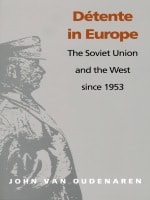
cover of Detente in Europe: The Soviet Union & The West Since 1953

Detente in Europe

The Soviet Union & The West Since 1953

John Van Oudenaren

Duke University Press, 1991

The monumental events in Eastern Europe and the Soviet Union must be understood, Jan Van Oudenaren argues, in the context of a process of East-West détente begun in 1953 in the aftermath of Stalin’s death. Van Oudenaren’s comprehensive and timely study examines the development of Soviet-Western détente from the death of Stalin to the unification of Germany.
In redefining détente as a process, rather than a code of conduct, Van Oudenaren looks to its origins in Soviet policy earlier than previously identified and analyzes both its history and character. His study explores the restoration of four-power negotiations in Germany and Austria in the mid-1950s, their subsequent breakdown in the Berlin crisis, their unexpected revival in 1990 in the form of “two plus four” talks on German unity, and the future of the Soviet Union as a European power.
Among the key elements of détente discussed are diplomacy, particularly the role of summit conferences; cooperation among parliaments, political parties, and trade unions; arms control; economic relations; and links among cultural institutions, churches, and peace movements.

[more]
cover of Dispatches from the Revolution: Russia 1916-1918

Dispatches from the Revolution

Russia 1916-1918

Morgan Philips Price

Duke University Press, 1998

A special correspondent for the Manchester Guardian, Morgan Philips Price was one of the few Englishmen in Russia during all phases of the Revolution. Although his Bolshevik sympathies accorded him an insider’s perspective on much of the turmoil, his reports were often heavily revised or suppressed. In Dispatches from the Revolution, Tania Rose collects for the first time Price’s correspondence from Russia—official and unofficial, published and unpublished—to reveal a side of Russian life and politics that fell largely unreported in the years before, during, and after the Revolution.
This collection includes Price’s pre-censored observations and comment, written for a range of British publications, as well as letters, postcards, and other writings. A foreword by Eric Hobsbawm and introductory material by Rose place Price’s observations in biographical and historical context. Dispatches from the Revolution offers an account of the Russian Revolution from an eyewitness whose political commitment, fluency in Russian, and extensive travel far beyond the cities permitted him to write, uniquely, not only of metropolitan news and politics, but also of the experiences and issues signficant to ordinary peasants, workers, and soldiers in remote areas of the Russian empire.
An important source to scholars of Russian history, this book will also appeal to general readers with interests in Russia, journalism, and world affairs.
[more]
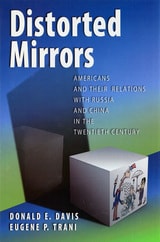
cover of Distorted Mirrors: Americans and Their Relations with Russia and China in the Twentieth Century

Distorted Mirrors

Americans and Their Relations with Russia and China in the Twentieth Century

Donald E. Davis & Eugene P. Trani

University of Missouri Press, 2009

As the United States enters the twenty-first century, it confronts two powers that loomed less large on the world stage a century before. Yet American policies toward Russia and China have been shaped by attitudes going back even further, as this new book relates.
Distorted Mirrors traces American prejudices toward the two countries by focusing on the views of influential writers and politicians over the course of the twentieth century. Donald Davis and Eugene Trani show where American images of Russia and China originated, how they evolved, and how they have often helped sustain foreign policies generally negative toward the former and positive toward the latter.
This wide-ranging survey draws on memoirs, archives, and interviews, much the material appearing in print for the first time, to show how influential individuals shaped these perceptions and policies based on what they saw—or thought they saw—in those two countries. Through a series of tableaux that traces America’s relations with Russia and China through the twentieth century, the authors show how personalities of certain players impacted interpretation of key situations and conflicts and how cultural attitudes toward Russia and China became ingrained and difficult to dislodge.
The book traces formative attitudes back to two late-nineteenth-century books, with George Kennan’s Siberia and the Exile System painting a grim picture of tsarist penal colonies and William Rockhill’s Land of the Lamas depicting China as an exotic Shangri-la. Davis and Trani show how these images were sustained over the years: for Russia, by Slavic expert Samuel Harper, State Department official Robert Kelley, journalist Eugene Lyons, ambassador William Bullitt, President Franklin D. Roosevelt, and policymakers George F. Kennan and Paul Nitze; and for China, by President Woodrow Wilson, philosopher John Dewey, journalist Edgar Snow, novelist Pearl S. Buck, ambassador Nelson T. Johnson, FDR, journalist Theodore White, and statesman Henry Kissinger. They also relate how Ronald Reagan and George H. W. Bush tried to replace these misconceptions with a policy of accommodation, and they assess the state of current U.S. attitudes and policies.
Distorted Mirrors marks a fresh approach to U.S. relations with these countries, emphasizing long-term attitudes that influenced policies rather than the reverse. It shows us that perceptions shaped over the course of the twentieth century are crucial for their bearing on the twenty-first, particularly if those unrestrained prejudices reemerge.
[more]
cover of Dominant Powers and Subordinate States: The United States in Latin America and the Soviet Union in Eastern Europe

Dominant Powers and Subordinate States

The United States in Latin America and the Soviet Union in Eastern Europe

Jan F. Triska, ed.

Duke University Press, 1986
In comparing how the two superpowers exercise their persuasive control over their respective spheres, this book presents collective evidence toward the startling conclusion that this dominance, as it has been practiced, is no longer in the national interest of either the United States or the USSR.
[more]
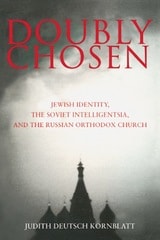
cover of Doubly Chosen: Jewish Identity, the Soviet Intelligentsia, and the Russian Orthodox Church

Doubly Chosen

Jewish Identity, the Soviet Intelligentsia, and the Russian Orthodox Church

Judith Deutsch Kornblatt

University of Wisconsin Press, 2004

    Doubly Chosen provides the first detailed study of a unique cultural and religious phenomenon in post-Stalinist Russia—the conversion of thousands of Russian Jewish intellectuals to Orthodox Christianity, first in the 1960s and later in the 1980s. These time periods correspond to the decades before and after the great exodus of Jews from the Soviet Union. Judith Deutsch Kornblatt contends that the choice of baptism into the Church was an act of moral courage in the face of Soviet persecution, motivated by solidarity with the values espoused by Russian Christian dissidents and intellectuals. Oddly, as Kornblatt shows, these converts to Russian Orthodoxy began to experience their Jewishness in a new and positive way.
    Working primarily from oral interviews conducted in Russia, Israel, and the United States, Kornblatt underscores the conditions of Soviet life that spurred these conversions: the virtual elimination of Judaism as a viable, widely practiced religion; the transformation of Jews from a religious community to an ethnic one; a longing for spiritual values; the role of the Russian Orthodox Church as a symbol of Russian national culture; and the forging of a new Jewish identity within the context of the Soviet dissident movement.
[more]
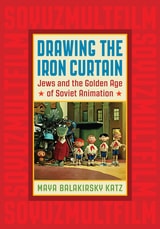
cover of Drawing the Iron Curtain: Jews and the Golden Age of Soviet Animation

Drawing the Iron Curtain

Jews and the Golden Age of Soviet Animation

Maya Balakirsky Katz

Rutgers University Press, 2016
In the American imagination, the Soviet Union was a drab cultural wasteland, a place where playful creative work and individualism was heavily regulated and censored. Yet despite state control, some cultural industries flourished in the Soviet era, including animation. Drawing the Iron Curtain tells the story of the golden age of Soviet animation and the Jewish artists who enabled it to thrive. 
 
Art historian Maya Balakirsky Katz reveals how the state-run animation studio Soyuzmultfilm brought together Jewish creative personnel from every corner of the Soviet Union and served as an unlikely haven for dissidents who were banned from working in other industries. Surveying a wide range of Soviet animation produced between 1919 and 1989, from cutting-edge art films like Tale of Tales to cartoons featuring “Soviet Mickey Mouse” Cheburashka, she finds that these works played a key role in articulating a cosmopolitan sensibility and a multicultural vision for the Soviet Union. Furthermore, she considers how Jewish filmmakers used animation to depict distinctive elements of their heritage and ethnic identity, whether producing films about the Holocaust or using fellow Jews as models for character drawings.  
 
Providing a copiously illustrated introduction to many of Soyuzmultfilm’s key artistic achievements, while revealing the tumultuous social and political conditions in which these films were produced, Drawing the Iron Curtain has something to offer animation fans and students of Cold War history alike. 
 
[more]
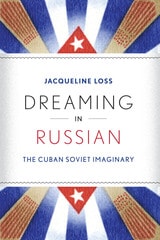
cover of Dreaming in Russian: The Cuban Soviet Imaginary

Dreaming in Russian

The Cuban Soviet Imaginary

By Jacqueline Loss

University of Texas Press, 2013

The specter of the Soviet Union lingers in Cuba, yet until now there has been no book-length work on the ways Cubans process their country’s relationship with the Soviet bloc. Dreaming in Russian at last brings into the light the reality that for nearly three decades, the Soviet Union subsidized the island economically, intervened in military matters, and exported distinct pedagogical and cultural models to Cuba. Drawing on interviews with Cuban artists and intellectuals, as well as treasures from cinematographic and bibliographic archives, Jacqueline Loss delivers the first book to show that Cuba remembers and retains many aspects of the Soviet era, far from shedding those cultural facets as relics of the Cold War.

Weaving together intriguing, seldom-seen images, Dreaming in Russian showcases the ways in which Cuba’s relationship to its Soviet benefactors lingered after the disintegration of the U.S.S.R. in 1991. Analyzing numerous literary texts and works of visual art, Loss also incorporates aspects of architecture, popular culture, the space race, and other strands to create a captivating new perspective on Cuban society. Among the luminaries featured are poet Reina María Rodríguez, writer Antonio José Ponte, visual artist Tonel, and novelist Wendy Guerra. A departure from traditional cultural history, Loss’s approach instead presents a kaleidoscopic series of facets, reflecting the hybrid nature of the self-images that emerged in the aftermath of the Soviet aegis. As speculations about Cuba’s future under Fidel Castro’s heir apparent continue, the portrait that emerges in Dreaming in Russian is both timely and mesmerizing.

[more]