Results by title
254 books match the query 'Sports' and 6 start with d
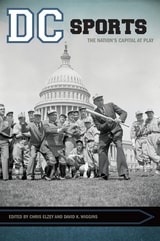
DC Sports
The Nation's Capital at PlayChris Elzey
University of Arkansas Press, 2015
Washington, DC, is best known for its politics and monuments, but sport has always been an integral part of the city, and Washingtonians are among the country’s most avid sports fans. DC Sports gathers seventeen essays examining the history of sport in the nation’s capital, from turn-of-the-century venues such as the White Lot, Griffith Stadium, and DC Memorial Stadium to Howard-Lincoln Thanksgiving Day football games of the roaring twenties; from the surprising season of the 1969 Washington Senators to the success of Georgetown basketball during the 1980s. This collection covers the field, including public recreation, high-school athletics, intercollegiate athletics, professional sports, sports journalism, and sports promotion.
A southern city at heart, Washington drew a strong color line in every facet of people’s lives. Race informed how sport was played, written about, and watched in the city. In 1962, the Redskins became the final National Football League team to integrate. That same year, a race riot marred the city’s high-school championship game in football. A generation later, race as an issue resurfaced after Georgetown’s African American head coach John Thompson Jr. led the Hoyas to national prominence in basketball.
DC Sports takes a hard look at how sports in one city has shaped culture and history, and how culture and history inform sports. This informative and engaging collection will appeal to fans and students of sports and those interested in the rich history of the nation’s capital.
[more]
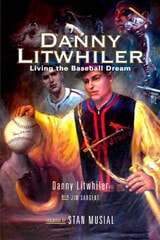
Danny Litwhiler
Living the Baseball DreamDaniel Litwhiler
Temple University Press, 2006
Danny Litwhiler is one of the lucky players in baseball to "live the dream" of playing in not one, but two World Series during his eleven and a half year career in the majors. In 1942, he set a record for 151 consecutive errorless games as an outfielder—rather ironic since he led the league in errors (15) the year before! Litwhiler's engaging memoir chronicles playing, teaching, and coaching baseball during eight decades, starting with his childhood in Ringtown, PA to playing for his favorite team, the Philadelphia Phillies. After his career in the majors, Litwhiler coached college baseball, and over 100 of his students, including Steve Garvey, Dick Howser, and Kirk Gibson, later signed professional contracts. Litwhiler spent his life loving what he does, and passing his knowledge and enthusiasm for baseball on to others. Danny Litwhiler: Living the Baseball Dream conveys Litwhiler's passion for the game as he fondly recalls playing with legends like Jackie Robinson and Enos Slaughter. But Danny Litwhiler was more than just a player and coach. He invented many devices used in the game today, such as the Jugs radar gun, which measures the velocity of pitches. And he was a goodwill ambassador for baseball—promoting it internationally, from Central and South America to Europe and Japan. He has lived a baseball life.
[more]
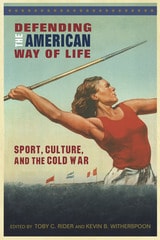
Defending the American Way of Life
Sport, Culture, and the Cold WarToby C. Rider
University of Arkansas Press, 2018
Winner, 2019 NASSH Book Award, Anthology.
The Cold War was fought in every corner of society, including in the sport and entertainment industries. Recognizing the importance of culture in the battle for hearts and minds, the United States, like the Soviet Union, attempted to win the favor of citizens in nonaligned states through the soft power of sport. Athletes became de facto ambassadors of US interests, their wins and losses serving as emblems of broader efforts to shield American culture—both at home and abroad—against communism.
In Defending the American Way of Life, leading sport historians present new perspectives on high-profile issues in this era of sport history alongside research drawn from previously untapped archival sources to highlight the ways that sports influenced and were influenced by Cold War politics. Surveying the significance of sports in Cold War America through lenses of race, gender, diplomacy, cultural infiltration, anti-communist hysteria, doping, state intervention, and more, this collection illustrates how this conflict remains relevant to US sporting institutions, organizations, and ideologies today.
[more]
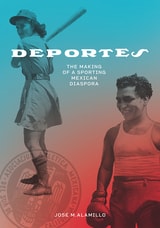
Deportes
The Making of a Sporting Mexican DiasporaJosé M Alamillo
Rutgers University Press, 2020
Spanning the first half of the twentieth century, Deportes uncovers the hidden experiences of Mexican male and female athletes, teams and leagues and their supporters who fought for a more level playing field on both sides of the border. Despite a widespread belief that Mexicans shunned physical exercise, teamwork or “good sportsmanship,” they proved that they could compete in a wide variety of sports at amateur, semiprofessional, Olympic and professional levels. Some even made their mark in the sports world by becoming the “first” Mexican athlete to reach the big leagues and win Olympic medals or world boxing and tennis titles.
These sporting achievements were not theirs alone, an entire cadre of supporters—families, friends, coaches, managers, promoters, sportswriters, and fans—rallied around them and celebrated their athletic success. The Mexican nation and community, at home or abroad, elevated Mexican athletes to sports hero status with a deep sense of cultural and national pride. Alamillo argues that Mexican-origin males and females in the United States used sports to empower themselves and their community by developing and sustaining transnational networks with Mexico. Ultimately, these athletes and their supporters created a “sporting Mexican diaspora” that overcame economic barriers, challenged racial and gender assumptions, forged sporting networks across borders, developed new hybrid identities and raised awareness about civil rights within and beyond the sporting world.
These sporting achievements were not theirs alone, an entire cadre of supporters—families, friends, coaches, managers, promoters, sportswriters, and fans—rallied around them and celebrated their athletic success. The Mexican nation and community, at home or abroad, elevated Mexican athletes to sports hero status with a deep sense of cultural and national pride. Alamillo argues that Mexican-origin males and females in the United States used sports to empower themselves and their community by developing and sustaining transnational networks with Mexico. Ultimately, these athletes and their supporters created a “sporting Mexican diaspora” that overcame economic barriers, challenged racial and gender assumptions, forged sporting networks across borders, developed new hybrid identities and raised awareness about civil rights within and beyond the sporting world.
[more]
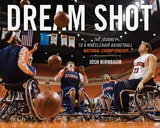
Dream Shot
The Journey to a Wheelchair Basketball National ChampionshipJosh Birnbaum
University of Illinois Press, 2017
In 2008, the men's wheelchair basketball team at the University of Illinois set out to achieve their sport's pinnacle: a college national championship. That lofty goal represented another stage of a journey begun in 1948 when Tim Nugent established the Gizz Kids wheelchair squad. Embedded with the team, Josh Birnbaum took photos that captured the life experiences of people in the Illinois wheelchair basketball program from 2005 through the 2008 championship season. Dream Shot follows the unique lives of the players and coaches on the court and the road, and in quiet moments at home and the classroom. Along the way, Birnbaum provides the definitive story of the 2008 team and the challenges it overcame to capture one of Illinois's record fifteen men's titles. Featuring more than 100 color photographs, Dream Shot memorializes a legendary team alongside the story of the university's dedication to the progress of disability rights.
[more]

Duffy Daugherty
A Man Ahead of His TimeDavid Claerbaut
Michigan State University Press, 2018
This is the story of Duffy Daugherty—humorist, trailblazer, raconteur, and Hall of Fame football coach—arguably the most famous figure in the storied history of Michigan State University football. Daugherty’s nineteen-year tenure at MSU was marked by great success. Between 1955 and 1966, eight Spartan teams finished in the Associated Press top ten college football teams. Daugherty was a character. With his zany wit putting him in demand as a public speaker, Daugherty became so well known for his winning teams and quotable comments that he adorned the cover of the October 8, 1956, issue of Time magazine. Daugherty was a major figure in bringing African American athletes into the mainstream of college sports. From his arrival at MSU, he worked to field integrated teams. His undefeated 1966 powerhouse squad—one that played Notre Dame to an unforgettable 10–10 tie in the season finale—included four black players selected among the first eight players taken in the NFL draft. MSU memorialized Daugherty by naming the football team’s practice facility the Duffy Daugherty Football Building in his honor.
[more]