Results by title
828 books match the query 'Study and teaching' and 25 start with d

Dangerous Supplements
Resistance and Renewal in JurisprudencePeter Fitzpatrick, ed.
Duke University Press, 1991
Taking as a point of departure H. L. A. Hart’s The Concept of the Law, Peter Fitzgerald shows how Hart adopted Wittgenstein’s linguistic theory to overthrow J. L. Austin’s “simple” conception of rules and habits in law, only to jettison this theory in order to locate the essence of law in its evolution from a “primal scene.” Other chapters examine the way in which the setting of English law above social relations has masked an imperial mission; how the philosophies of Hayek and Marx, as well as the discourses of liberalism, feminism, semiotics, and poststructuralism, have been assiduously marginalized and rendered inessential to jurisprudence.
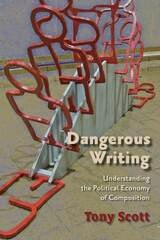
Dangerous Writing
Understanding the Political Economy of CompositionTony Scott
Utah State University Press, 2009
Since the 1980s and the “social turn” in composition studies and other disciplines, scholars in this field have conceived writing in college as explicitly embedded in socio-rhetorical situations beyond the classroom. From this conviction develops a commitment to teach writing with an emphasis on analyzing the social and political dimensions of rhetoric.
Ironically, though a leftist himself, Tony Scott’s analysis finds the academic left complicit with the forces in American culture that tend, in his view, to compromise education. By focusing on the structures of labor and of institutions that enforce those structures, Scott finds teachers and administrators are too easily swept along with the inertia of a hyper-commodified society in which students---especially working class students---are often positioned as commodities, themselves. Dangerous Writing, then, is a critique of the field as much as it is a critique of capitalism. Ultimately, Scott’s eye is on the institution and its structures, and it is these that he finds most in need of transformation.
Deaf Students and the Qualitative Similarity Hypothesis
Understanding Language and Literacy DevelopmentPeter V. Paul
Gallaudet University Press, 2013
The difficulty that deaf and hard of hearing students have in attaining language and literacy skills has led to postulations that attribute their struggle to a developmental deficit. Recent research reveals, however, that deaf students acquire language structures, produce errors, and employ strategies in the same fashion as younger hearing students, though at later ages. The ability of all students to learn language and literacy skills in a similar manner at different stages forms the foundation of the Qualitative Similarity Hypothesis (QSH).
This volume describes the theoretical underpinnings and research findings of the QSH. It presents the educational implications for deaf and hard of hearing children and offers reason-based practices for improving their English language and literacy development. This collection also stresses the critical importance of exposing educators to the larger fields of literacy and second-language learning. Providing this background information expands the possibility of differentiating instruction to meet the needs of deaf students. Deaf Students and the Qualitative Similarity Hypothesis includes commentary on the QSH for both first- and second-language English learners and reflects on how the QSH can effect a better future for all language students.

Dear Charles Dickens, Love, South LA
Literature, Place, and BelongingJacqueline Jean Barrios
University of Iowa Press, 2026
Jacqueline Jean Barrios confronts the cultural challenges that big canonical books pose to new generations of readers. Instead of erasing the differences between Dickens’s implied audiences and his current ones, Barrios demonstrates how youth can serve as the visionaries who bridge the gap. By placing literature in everyday surroundings, students at any school and in any location can learn from the embodied and the poetic and even question the universalism that masks unexamined reverence for the Western canon.
Dear Science and Other Stories
Katherine McKittrick
Duke University Press, 2021
Deliberate Conflict
Argument, Political Theory, and Composition ClassesPatricia Roberts-Miller
Southern Illinois University Press, 2004
In Deliberate Conflict: Argument, Political Theory, and Composition Classes, Patricia Roberts-Miller argues that much current discourse about argument pedagogy is hampered by fundamental unspoken disagreements over what democratic public discourse should look like. The book’s pivotal question is, In what kind of public discourse do we want our students to engage? To answer this, the text provides a taxonomy, discussion, and evaluation of political theories that underpin democratic discourse, highlighting the relationship between various models of the public sphere and rhetorical theory.
Deliberate Conflict cogently advocates reintegrating instruction in argumentation with the composition curriculum. By linking effective argumentation in the public sphere with the ability to effect social change, Roberts-Miller pushes compositionists beyond a simplistic Aristotelian conception of how argumentation works and offers a means by which to prepare students for active participation in public discourse.
Deliberative Pedagogy
Teaching and Learning for Democratic EngagementTimothy J. Shaffer
Michigan State University Press, 2017
Delivering Health
Midwifery and Development in MexicoLydia Z. Dixon
Vanderbilt University Press, 2020
Maternal health outcomes are a key focus of global health initiatives. In Delivering Health, author Lydia Z. Dixon uncovers the ways such outcomes have been shaped by broader historical, political, and social factors in Mexico, through the perspectives of those who are at the front lines fighting for change: midwives.
Midwives have long been marginalized in Mexico as remnants of the country's precolonial past, yet Dixon shows how they are now strategically positioning themselves as agents of modernity and development. Midwifery education programs have popped up across Mexico, each with their own critique of the health care system and vision for how midwifery can help. Delivering Health ethnographically examines three such schools with very different educational approaches and professional goals. From San Miguel de Allende to Oaxaca to Michoacán and points between, Dixon takes us into the classrooms, clinics, and conferences where questions of what it means to provide good reproductive health care are being taught, challenged, and implemented. Through interviews, observational data, and even student artwork, we are shown how underlying inequality manifests in poor care for many Mexican women. The midwives in this book argue that they can improve care while also addressing this inequality. Ultimately, Delivering Health asks us to consider the possibility that marginalized actors like midwives may hold the solution to widespread concerns in health.

Demarcating the Disciplines
Philosophy, Literature, ArtSamuel Weber, Henry Sussman, and Wlad Godzich, Editors
University of Minnesota Press, 1986
Demarcating the Disciplines was first published in 1986. Minnesota Archive Editions uses digital technology to make long-unavailable books once again accessible, and are published unaltered from the original University of Minnesota Press editions.
With publication of this volume, Glyph begins a new stage in its existence: the move from Johns Hopkins University Press to the University of Minnesota Press is accompanied by a change in focus. In its first incarnation Glyph provided a forum in which established notions of reading, writing, and criticism could be questioned and explored. Since then, the greater currency of such concerns has brought with it new problems and priorities. Setting aside the battles of the past, the new Glyph looks ahead - to confront historical issues and to address the institutional and pedagogical questions emerging from the contemporary critical landscape.
Each volume in the new Glyph series is organized around a specific issue. The essays in this first volume explore the relations between the practice of reading and writing and the operations of the institution. Though their approaches differ from one another, the authors of these essays all recognize that the questions of the institution - most notably the university - points toward a series of constraints that define, albeit negatively, the possibilities for change.
The contributors: Samuel Weber, Jacques Derrida, Tom Conley, Malcolm Evans, Ruth Salvaggio, Robert Young, Henry Sussman, Peter Middleton, David Punter, and Donald Preziosi.
Design and Discomfort
Teaching Shakespeare and RaceEdited by Laura B. Turchi
Arizona Center for Medieval and Renaissance Studies, 2025
Design and Discomfort confronts the complexities of teaching Shakespeare in today’s classrooms, where discussions of race, bias, and historical legacies can provoke discomfort—but also transformation. Edited by Laura B. Turchi, this collection brings together educators and teaching artists who share innovative strategies for rethinking Shakespeare’s role in education.
Rather than treating Shakespeare as an untouchable authority, the contributors explore how his works can be a springboard for broader conversations about identity and justice. They advocate for performance-based and student-driven approaches that help students see themselves—their communities, their families, and their lived experiences—in the complex and seemingly distant world of Shakespeare.
This open-access volume provides both conceptual essays and practical lesson designs for educators navigating the intersections of Shakespeare and race. By embracing discomfort as part of the learning process, Design and Discomfort reframes how Shakespeare should be taught in classrooms today.
Dialectical Rhetoric
Bruce Mccomiskey
Utah State University Press, 2015
In Dialectical Rhetoric, Bruce McComiskey argues that the historical conflict between rhetoric and dialectic can be overcome in ways useful to both composition theory and the composition classroom.
Historically, dialectic has taken two forms in relation to rhetoric. First, it has been the logical development of linear propositions leading to necessary conclusions, a one-dimensional form that was the counterpart of rhetorics in which philosophical, metaphysical, and scientific truths were conveyed with as little cognitive interference from language as possible. Second, dialectic has been the topical development of opposed arguments on controversial issues and the judgment of their relative strengths and weaknesses, usually in political and legal contexts, a two-dimensional form that was the counterpart of rhetorics in which verbal battles over competing probabilities in public institutions revealed distinct winners and losers.
The discipline of writing studies is on the brink of developing a new relationship between dialectic and rhetoric, one in which dialectics and rhetorics mediate and negotiate different arguments and orientations that are engaged in any rhetorical situation. This new relationship consists of a three-dimensional hybrid art called “dialectical rhetoric,” whose method is based on five topoi: deconstruction, dialogue, identification, critique, and juxtaposition. Three-dimensional dialectical rhetorics function effectively in a wide variety of discursive contexts, including digital environments, since they can invoke contrasts in stagnant contexts and promote associations in chaotic contexts. Dialectical Rhetoric focuses more attention on three-dimensional rhetorics from the rhetoric and composition community.
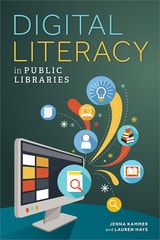
Digital Literacy in Public Libraries
Jenna Kammer and Lauren Hays
American Library Association, 2026
- delve into the concept of digital literacy, the ways in which it empowers individuals in digital systems of information, and how it fits in with other kinds of literacy;
- find ideas for effective digital literacy technical support, programming, services, spaces, collection development, outreach, and more;
- learn how to measure the impact of digital literacy initiatives, identify gaps within the community where the library can make an impact, and overcome challenges;
- discover guidance on building partnerships, both internal and external, and finding additional sources of funding to expand digital literacy opportunities within the scope of what is already available;
- receive practical advice from the "Ask the Expert" sidebars throughout the book, where practitioners share their knowledge and experience; and
- get adaptable tools such as sample language, an expenditure budget, an individual needs assessment, a digital literacy readiness checklist, survey instruments, and a lesson plan template that can be used for digital literacy programming.
Digital Pedagogy in Early Modern Studies
Method and PraxisEdited by Andie Silva and Scott Schofield
Iter Press, 2023
This collection of essays focuses on teaching at the intersection of early modern literature, book history, and digital media. It considers how teaching different fields and methods of study can be enhanced and facilitated by digital technologies. The volume provides a snapshot of current thinking on digital pedagogy as practiced by leading scholars in the field and offers a series of models that may be adapted, personalized, and repurposed by future teachers seeking to bring digital methodologies to their classrooms. Supplementary materials for this title are available on the Iter Press website (iterpress.org): see under Books/Supplementary Materials.
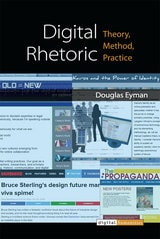
Digital Rhetoric
Theory, Method, PracticeDouglas Eyman
University of Michigan Press, 2015
Disciplinary Discourses, Michigan Classics Ed.
Social Interactions in Academic WritingKen Hyland
University of Michigan Press, 2004
As issues of linguistic and rhetorical expression of disciplinary conventions are becoming more central to teachers, students, and researchers, the careful analysis and straightforward style of Disciplinary Discourses make it a remarkable asset.
The Michigan Classics Edition features a new preface by the author and a new foreword by John M. Swales.

Discipline Of Architecture
Andrzej Piotrowski
University of Minnesota Press, 2001
In the vast literature on architectural theory and practice, the ways in which architectural knowledge is actually taught, debated, and understood are too often ignored. The essays collected in this groundbreaking volume address the current state of architecture as an academic and professional discipline. The issues considered range from the form and content of architectural education to the architect’s social and environmental obligations and the emergence of a new generation of architects. Often critical of the current paradigm, these essays offer a provocative challenge to accepted assumptions about the production, dissemination, and reception of architectural knowledge.
Contributors: Sherry Ahrentzen, U of Wisconsin-Milwaukee; Stanford Anderson, MIT; Carol Burns, Harvard U; Russell Ellis, UC Berkeley; Thomas Fisher, U of Minnesota; Linda Groat, U of Michigan; Kay Bea Jones, Ohio State U; David Leatherbarrow, U of Pennsylvania; A. G. Krishna Menon, TVB School of Habitat Studies, India; Garth Rockcastle, U of Minnesota; Michael Stanton, American U, Beirut; Sharon E. Sutton, U of Washington; David J. T. Vanderburgh, Université Catholique de Louvain, Belgium; and Donald Watson, Rensselaer Polytechnic Institute.
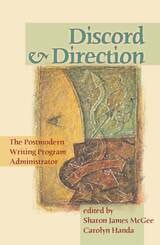
Discord And Direction
The Postmodern Writing Program Administratoredited by Sharon James McGee & Carolyn Handa
Utah State University Press, 2005
Postmodernism's central moves include questioning hierarchy, valuing paratactic associations, and rejecting grand narratives, and the work of a Writing Program Administrator, most days, includes those moves as well. The argument of this collection is that the cultural and intellectual legacies of postmodernism impinge, significantly and daily, on the practice of the Writing Program Administrator. WPAs work in spaces where they must assume responsibility for a multifaceted program, a diverse curriculum, instructors with varying pedagogies and technological expertise—and where they must position their program in relation to a university with its own conflicted mission, and a state with its unpredictable views of accountability and assessment.
The collection further argues that postmodernism offers a useful lens through which to understand the work of WPAs and to examine the discordant cultural and institutional issues that shape their work. Each chapter tackles a problem local to its author's writing program or experience as a WPA, and each responds to existing discord in creative ways that move toward rebuilding and redirection.
It is a given that accepting the role of WPA will land you squarely in the bind between modernism and postmodernism: while composition studies as a field arguably still reflects a modernist ethos, the WPA must grapple daily with postmodern habits of thought and ways of being. The effort to live in this role may or may not mean that a WPA will adopt a postmodern stance; it does mean, however, that being a WPA requires dealing with the postmodern.
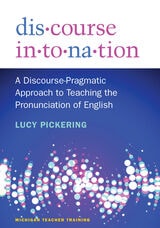
Discourse Intonation
A Discourse-Pragmatic Approach to Teaching the Pronunciation of EnglishLucy Pickering
University of Michigan Press, 2018
This textbook relies heavily on the Brazil model; chapters are organized around different parts of that model and how they can be most effectively taught. Readers will learn the conventions underlying, for example, how we group words in prosodic units, how we understand turn-taking cues in conversation, and how we assess whether someone is feeling angry or sad.
This text features Check Your Learning sections, discussion questions, and hands-on activities at the end of every chapter. Chapters 3-9 also include a section on pedagogical implications. Some of the example sentences that illustrate intonation have accompanying short audio (MP3) files, which can be found online at www.press.umich.edu/elt/compsite/DI.
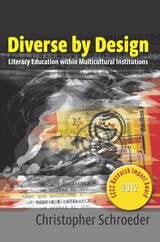
Diverse by Design
Literacy Education within Multicultural InstitutionsChristopher Schroeder
Utah State University Press, 2011
Diversity, despite what we say, disturbs us. In the U.S., we debate linguistic rights, the need for an official language, and educational policies for language minority students. On the one hand, we believe in the rights of individuals, including (at least in the academy) the right to one’s own language. On the other hand, we sponsor a single common language, monolingual and standard, for full participation and communication in both the academy and in U.S. society.
In Diverse by Design, Christopher Schroeder reports on an institutional case study conducted at an officially designated Hispanic-Serving Institution. He gives particular attention to a cohort of Latino students in a special admissions program, to document their experience of a program designed to help students surmount the “obstacle” that ethnolinguistic diversity is perceived to be.
Ultimately, Schroeder argues for reframing multilingualism and multiculturalism, not as obstacles, but as intellectual resources to exploit. While diversity might disturb us, we can overcome its challenges by a more expansive sense of social identity. In an increasingly globalized society, literacy ideologies are ever more critical to educational equity, and to human lives.
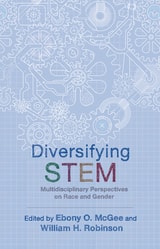
Diversifying STEM
Multidisciplinary Perspectives on Race and GenderEbony O. McGee
Rutgers University Press, 2020
Research frequently neglects the important ways that race and gender intersect within the complex structural dynamics of STEM. Diversifying STEM fills this void, bringing together a wide array of perspectives and the voices of a number of multidisciplinary scholars. The essays cover three main areas: the widely-held ideology that science and mathematics are “value-free,” which promotes pedagogies of colorblindness in the classroom as well as an avoidance of discussions around using mathematics and science to promote social justice; how male and female students of color experience the intersection of racist and sexist structures that lead to general underrepresentation and marginalization; and recognizing that although there are no quick fixes, there exists evidence-based research suggesting concrete ways of doing a better job of including individuals of color in STEM. As a whole this volume will allow practitioners, teachers, students, faculty, and professionals to reimagine STEM across a variety of educational paradigms, perspectives, and disciplines, which is critical in finding solutions that broaden the participation of historically underrepresented groups within the STEM disciplines.
Doing Honest Work in College, Third Edition
How to Prepare Citations, Avoid Plagiarism, and Achieve Real Academic SuccessCharles Lipson
University of Chicago Press, 2018
Doing Time, Writing Lives
Refiguring Literacy and Higher Education in PrisonPatrick W. Berry
Southern Illinois University Press, 2018
Doing Time, Writing Lives offers a much-needed analysis of the teaching of college writing in U.S. prisons, a racialized space that—despite housing more than 2 million people—remains nearly invisible to the general public. Through the examination of a college-in-prison program that promotes the belief that higher education in prison can reduce recidivism and improve life prospects for the incarcerated and their families, author Patrick W. Berry exposes not only incarcerated students’ hopes and dreams for their futures but also their anxieties about whether education will help them.
Combining case studies and interviews with the author’s own personal experience of teaching writing in prison, this book chronicles the attempts of incarcerated students to write themselves back into a society that has erased their lived histories. It challenges polarizing rhetoric often used to describe what literacy can and cannot deliver, suggesting more nuanced and ethical ways of understanding literacy and possibility in an age of mass incarceration.

Dr. Nurse
Science, Politics, and the Transformation of American NursingDominique A. Tobbell
University of Chicago Press, 2022
Nurses represent the largest segment of the U.S. health care workforce and spend significantly more time with patients than any other member of the health care team. Dr. Nurse probes their history to examine major changes that have taken place in American health care in the second half of the twentieth century. The book reveals how federal and state health and higher education policies shaped education within health professions after World War II.
Starting in the 1950s, academic nurses sought to construct a science of nursing—distinct from that of the related biomedical or behavioral sciences—that would provide the basis for nursing practice. Their efforts transformed nursing’s labor into a valuable site of knowledge production and proved how the application of their knowledge was integral to improving patient outcomes. Exploring the knowledge claims, strategies, and politics involved as academic nurses negotiated their roles and nursing’s future, Dr. Nurse highlights how state-supported health centers have profoundly shaped nursing education and health care delivery.
Drift and Mastery
An Attempt to Diagnose the Current UnrestWalter Lippmann, Introduction and notes by William E. Leuchtenburg, Foreword by Ganesh Sitaraman
University of Wisconsin Press, 2015
Lippman’s Drift and Mastery became one of the most important and influential documents of the Progressive Movement. It remains a valuable text for understanding the political thought of early twentieth-century America and a lucid exploration of timeless themes in American government and politics. Distinguished historian Walter Leuchtenberg’s 1986 introduction and notes are retained in this edition.

Drudgery Divine
On the Comparison of Early Christianities and the Religions of Late AntiquityJonathan Z. Smith
University of Chicago Press, 1990
"An important book, and certainly one of the most significant in the career of Jonathan Z. Smith, whom one may venture to call the greatest pathologist in the history of religions. As in many precedent cases, Smith follows a standard procedure: he carefully selects his victim, and then dissects with artistic finesse and unequaled acumen. The operation is always necessary, and a deconstructor of Smith's caliber is hard to find."—Ioan P. Coulianu, Journal of Religion