Results by title
454 books match the query 'Study and teaching (Higher)' and 22 start with d
Dangerous Writing
Understanding the Political Economy of CompositionTony Scott
Utah State University Press, 2009
Since the 1980s and the “social turn” in composition studies and other disciplines, scholars in this field have conceived writing in college as explicitly embedded in socio-rhetorical situations beyond the classroom. From this conviction develops a commitment to teach writing with an emphasis on analyzing the social and political dimensions of rhetoric.
Ironically, though a leftist himself, Tony Scott’s analysis finds the academic left complicit with the forces in American culture that tend, in his view, to compromise education. By focusing on the structures of labor and of institutions that enforce those structures, Scott finds teachers and administrators are too easily swept along with the inertia of a hyper-commodified society in which students---especially working class students---are often positioned as commodities, themselves. Dangerous Writing, then, is a critique of the field as much as it is a critique of capitalism. Ultimately, Scott’s eye is on the institution and its structures, and it is these that he finds most in need of transformation.
Data Literacy in Academic Libraries
Teaching Critical Thinking with NumbersJulia Bauder
American Library Association, 2021
We live in a data-driven world, much of it processed and served up by increasingly complex algorithms, and evaluating its quality requires its own skillset. As a component of information literacy, it's crucial that students learn how to think critically about statistics, data, and related visualizations. Here, Bauder and her fellow contributors show how librarians are helping students to access, interpret, critically assess, manage, handle, and ethically use data. Offering readers a roadmap for effectively teaching data literacy at the undergraduate level, this volume explores such topics as
- the potential for large-scale library/faculty partnerships to incorporate data literacy instruction across the undergraduate curriculum;
- how the principles of the ACRL Framework for Information Literacy for Higher Education can help to situate data literacy within a broader information literacy context;
- a report on the expectations of classroom faculty concerning their students’ data literacy skills;
- various ways that librarians can partner with faculty;
- case studies of two initiatives spearheaded by Purdue University Libraries and University of Houston Libraries that support faculty as they integrate more work with data into their courses;
- Barnard College’s Empirical Reasoning Center, which provides workshops and walk-in consultations to more than a thousand students annually;
- how a one-shot session using the PolicyMap data mapping tool can be used to teach students from many different disciplines;
- diving into quantitative data to determine the truth or falsity of potential “fake news” claims; and
- a for-credit, librarian-taught course on information dissemination and the ethical use of information.
Dead Subjects
Toward a Politics of Loss in Latino StudiesAntonio Viego
Duke University Press, 2007
Viego argues that the repeated themes of wholeness, completeness, and transparency with respect to ethnic and racialized subjectivity are fundamentally problematic as these themes ultimately lend themselves to the project of managing and controlling ethnic and racialized subjects by positing them as fully knowable, calculable sums: as dead subjects. He asserts that the refusal of critical race and ethnic studies scholars to read ethnic and racialized subjects in a Lacanian framework—as divided subjects, split in language—contributes to a racist discourse. Focusing on theoretical, historical, and literary work in Latino studies, he mines the implicit connection between Latino studies’ theory of the “border subject” and Lacan’s theory of the “barred subject” in language to argue that Latino studies is poised to craft a critical multiculturalist, anti-racist Lacanian account of subjectivity while adding historical texture and specificity to Lacanian theory.
Debates in the Digital Humanities
Matthew K. Gold
University of Minnesota Press, 2012
Encompassing new technologies, research methods, and opportunities for collaborative scholarship and open-source peer review, as well as innovative ways of sharing knowledge and teaching, the digital humanities promises to transform the liberal arts—and perhaps the university itself. Indeed, at a time when many academic institutions are facing austerity budgets, digital humanities programs have been able to hire new faculty, establish new centers and initiatives, and attract multimillion-dollar grants.
Clearly the digital humanities has reached a significant moment in its brief history. But what sort of moment is it? Debates in the Digital Humanities brings together leading figures in the field to explore its theories, methods, and practices and to clarify its multiple possibilities and tensions. From defining what a digital humanist is and determining whether the field has (or needs) theoretical grounding, to discussions of coding as scholarship and trends in data-driven research, this cutting-edge volume delineates the current state of the digital humanities and envisions potential futures and challenges. At the same time, several essays aim pointed critiques at the field for its lack of attention to race, gender, class, and sexuality; the inadequate level of diversity among its practitioners; its absence of political commitment; and its preference for research over teaching.
Together, the essays in Debates in the Digital Humanities—which will be published both as a printed book and later as an ongoing, open-access website—suggest that the digital humanities is uniquely positioned to contribute to the revival of the humanities and academic life.
Contributors: Bryan Alexander, National Institute for Technology in Liberal Education; Rafael Alvarado, U of Virginia; Jamie “Skye” Bianco, U of Pittsburgh; Ian Bogost, Georgia Institute of Technology; Stephen Brier, CUNY Graduate Center; Daniel J. Cohen, George Mason U; Cathy N. Davidson, Duke U; Rebecca Frost Davis, National Institute for Technology in Liberal Education; Johanna Drucker, U of California, Los Angeles; Amy E. Earhart, Texas A&M U; Charlie Edwards; Kathleen Fitzpatrick, Pomona College; Julia Flanders, Brown U; Neil Fraistat, U of Maryland; Paul Fyfe, Florida State U; Michael Gavin, Rice U; David Greetham, CUNY Graduate Center; Jim Groom, U of Mary Washington; Gary Hall, Coventry U, UK; Mills Kelly, George Mason U; Matthew Kirschenbaum, U of Maryland; Alan Liu, U of California, Santa Barbara; Elizabeth Losh, U of California, San Diego; Lev Manovich, U of California, San Diego; Willard McCarty, King’s College London; Tara McPherson, U of Southern California; Bethany Nowviskie, U of Virginia; Trevor Owens, Library of Congress; William Pannapacker, Hope College; Dave Parry, U of Texas at Dallas; Stephen Ramsay, U of Nebraska, Lincoln; Alexander Reid, SUNY at Buffalo; Geoffrey Rockwell, Canadian Institute for Research Computing in the Arts; Mark L. Sample, George Mason U; Tom Scheinfeldt, George Mason U; Kathleen Marie Smith; Lisa Spiro, National Institute for Technology in Liberal Education; Patrik Svensson, Umeå U; Luke Waltzer, Baruch College; Matthew Wilkens, U of Notre Dame; George H. Williams, U of South Carolina Upstate; Michael Witmore, Folger Shakespeare Library.
Decisions, Agency, and Advising
Key Issues in the Placement of Multilingual Writers into First-Year Composition CoursesTanita Saenkhum
Utah State University Press, 2016
Tanita Saenkhum follows eleven multilingual students who made their decisions about placement into first-year composition courses during one academic year at a large public university. She identifies the need for the process of making placement decisions to be understood more clearly, describes how to use that knowledge to improve placement practices for these students—particularly in advising—and offers hands-on recommendations for writing programs.
Decisions, Agency, and Advising is a significant contribution to the field and particularly valuable to writing program administrators, academic advisors, writing teachers, researchers investigating second language writing and writing program administration, composition and second language writing scholars, and graduate students.
Deliberate Conflict
Argument, Political Theory, and Composition ClassesPatricia Roberts-Miller
Southern Illinois University Press, 2004
In Deliberate Conflict: Argument, Political Theory, and Composition Classes, Patricia Roberts-Miller argues that much current discourse about argument pedagogy is hampered by fundamental unspoken disagreements over what democratic public discourse should look like. The book’s pivotal question is, In what kind of public discourse do we want our students to engage? To answer this, the text provides a taxonomy, discussion, and evaluation of political theories that underpin democratic discourse, highlighting the relationship between various models of the public sphere and rhetorical theory.
Deliberate Conflict cogently advocates reintegrating instruction in argumentation with the composition curriculum. By linking effective argumentation in the public sphere with the ability to effect social change, Roberts-Miller pushes compositionists beyond a simplistic Aristotelian conception of how argumentation works and offers a means by which to prepare students for active participation in public discourse.
Democracy's Education
Public Work, Citizenship, and the Future of Colleges and UniversitiesHarry C. Boyte
Vanderbilt University Press, 2015
Democracy's Education grows from the American Commonwealth Partnership, a year-long project to revitalize the democratic narrative of higher education that began with an invitation to Harry Boyte from the White House to put together a coalition aimed at strengthening higher education as a public good. The project was launched at the beginning of 2012 to mark the 150th anniversary of the Morrill Act, which created land grant colleges.
Beginning with an essay by Harry C. Boyte, "Reinventing Citizenship as Public Work," which challenges educators and their partners to claim their power to shape the story of higher education and the civic careers of students, the collection brings world-famous scholars, senior government officials, and university presidents together with faculty, students, staff, community organizers, and intellectuals from across the United States and South Africa and Japan. Contributors describe many constructive responses to change already taking place in different kinds of institutions, and present cutting-edge ideas like "civic science," "civic studies," "citizen professionalism," and "citizen alumni." Authors detail practical approaches to making change, from new faculty and student roles to changes in curriculum and student life and strategies for everyday citizen empowerment. Overall, the work develops a democratic story of education urgently needed to address today's challenges, from climate change to growing inequality.
Demystifying Online Instruction in Libraries
People, Process, and ToolsDominique Turnbow and Amanda Roth
American Library Association, 2019
The design of information literacy instruction and the building of it are two distinct skillsets and processes; yet all too often everything gets mashed together, creating needless confusion and stress. In this book Turnbow, an instructional designer, and Roth, an instructional technologist, suggest a better way to organize the work. They shed light on the people, processes, and resources required to create a sustainable portfolio of online instruction. With the goal of fostering conversations in your library about the most streamlined and effective ways to get the work done, they provide guidance on such topics as
- design and development processes, complete with “I.D. in Action” examples and sample design documents;
- thumbnail descriptions of ADDIE, SAM, and design thinking methods;
- creating learning objects;
- types of software tools and how to evaluate them;
- crafting the best documentation of your work for efficient maintenance and reuse;
- adapting assessment to your learning outcomes and purpose;
- when to design for performance support, an underutilized method in libraries; and
- starting points for those interested in developing instructional design and development skills.
Demystifying the instructional design and development process used to create online learning objects, this book will help you understand how instructional design principles and approaches can benefit your learners.
Developing Writers in Higher Education
A Longitudinal StudyAnne Ruggles Gere, editor
University of Michigan Press, 2019
This volume draws on an in-depth study of the writing and experiences of 169 University of Michigan undergraduates, using statistical analysis of 322 surveys, qualitative analysis of 131 interviews, use of corpus linguistics on 94 electronic portfolios and 2,406 pieces of student writing, and case studies of individual students to trace the multiple paths taken by student writers. Topics include student writers’ interaction with feedback; perceptions of genre; the role of disciplinary writing; generality and certainty in student writing; students’ concepts of voice and style; students’ understanding of multimodal and digital writing; high school’s influence on college writers; and writing development after college. The digital edition offers samples of student writing, electronic portfolios produced by student writers, transcripts of interviews with students, and explanations of some of the analysis conducted by the contributors.
This is an important book for researchers and graduate students in multiple fields. Those in writing studies get an overview of other longitudinal studies as well as key questions currently circulating. For linguists, it demonstrates how corpus linguistics can inform writing studies. Scholars in higher education will gain a new perspective on college student development. The book also adds to current understandings of sociocultural theories of literacy and offers prospective teachers insights into how students learn to write. Finally, for high school teachers, this volume will answer questions about college writing.
Companion Website
Click here to access the Developing Writers project and its findings at the interactive companion website.
Project Data
Access the data from the project through this tutorial.

Digital Humanities In The Library
Challenges AndAdrianne Hartsell-Gundy
Assoc of College & Research Libraries, 2015
Digital Humanities in the Library
Challenges and Opportunities for Subject SpecialistsArianne Hartsell-Gundy
Assoc of College & Research Libraries, 2015
Disciplinary Applications of Information Literacy Threshold Concepts
Samantha Godbey
Assoc of College & Research Libraries, 2017
Disciplinary Conquest
U.S. Scholars in South America, 1900–1945Ricardo D. Salvatore
Duke University Press, 2016
Discord And Direction
The Postmodern Writing Program Administratoredited by Sharon James McGee & Carolyn Handa
Utah State University Press, 2005
Postmodernism's central moves include questioning hierarchy, valuing paratactic associations, and rejecting grand narratives, and the work of a Writing Program Administrator, most days, includes those moves as well. The argument of this collection is that the cultural and intellectual legacies of postmodernism impinge, significantly and daily, on the practice of the Writing Program Administrator. WPAs work in spaces where they must assume responsibility for a multifaceted program, a diverse curriculum, instructors with varying pedagogies and technological expertise—and where they must position their program in relation to a university with its own conflicted mission, and a state with its unpredictable views of accountability and assessment.
The collection further argues that postmodernism offers a useful lens through which to understand the work of WPAs and to examine the discordant cultural and institutional issues that shape their work. Each chapter tackles a problem local to its author's writing program or experience as a WPA, and each responds to existing discord in creative ways that move toward rebuilding and redirection.
It is a given that accepting the role of WPA will land you squarely in the bind between modernism and postmodernism: while composition studies as a field arguably still reflects a modernist ethos, the WPA must grapple daily with postmodern habits of thought and ways of being. The effort to live in this role may or may not mean that a WPA will adopt a postmodern stance; it does mean, however, that being a WPA requires dealing with the postmodern.
Disrupting the Center
A Partnership Approach to Writing Across the UniversityRebecca Hallman Martini
Utah State University Press, 2021
Using on-site research and critical ethnographic study from one university writing center, Rebecca Hallman Martini establishes an innovative, cross-disciplinary partnership approach to writing instruction in which peer tutoring plays an integral curricular role. Case studies detail three partnerships that respond directly to existing or potential disruptive innovations in higher education and showcase important concepts: mapping mutual benefit and stakeholder engagement in an online studio/hybrid first-year writing program partnership in response to online education, creating negotiated space to work through ethical issues involved when working with a public-private partnership to develop a required extracurricular portfolio project in a business school, and building transformational partnerships through establishing a writing-in-the-professions curriculum in the College of Engineering in response to career readiness initiatives.
Disrupting the Center uses interviews, observations, focus groups, analysis of consultations, meetings, and shared documents such as annual reports, budgets, assessment data, assignments, and syllabi to generate a wide view of how systems work. Writing centers are flexible university-wide service spaces where students go for one-on-one and group writing support that can become dynamic spaces for writing pedagogy by disrupting, revitalizing, and reinventing the epistemic foundations of current rhetoric and composition landscapes and traditional approaches to writing.
Disruptive Stories
Amplifying Voices from the Writing Center MarginsElizabeth Kleinfeld
Utah State University Press, 2024
While US tenure-track writing center administrators (WCAs) do not make up the majority of those who hold WCA positions in writing centers, they are more likely to be the storytellers of the writing center grand narrative. They publish more, present more conference papers, edit more journals, and participate more in organizational leadership. This collection complicates that narrative by adding marginalized voices and experiences in three thematic categories: structural marginalization, globalization and marginalization, and embodied marginalization.
Disruptive Stories spurs further conversations about ways to improve the review process in writing center scholarship so that it more accurately reflects the growing diversity of its administrators and practitioners.
Distant Readings of Disciplinarity
Knowing and Doing in Composition/Rhetoric Dissertationsby Benjamin Miller
Utah State University Press, 2022
Writing studies has long been marked by a multitude of methods and interlocking purposes, partaking of not just humanities approaches but also social scientific ones, with data drawn from interviews and surveys alongside historical and philosophical arguments and with corpus analytics in large-scale collections jostling against small-scale case studies of individuals. These areas of study aren’t always cleanly separable; shifting modes mark the discipline as open and welcoming to many different angles of research. The field needs to embrace that vantage point and generate new degrees of familiarity with methods beyond those of any individual scholar.
Not only a training genre and not only a knowledge-making genre, the dissertation is also a discipline-producing genre. Illustrating what the field has been studying, and how, Distant Readings of Disciplinarity supports more fruitful collaborations within and across research areas and methods.
Diverse Approaches to Teaching, Learning, and Writing Across the Curriculum
IWAC at 25Lesley Erin Bartlett
University Press of Colorado, 2020
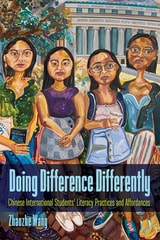
Doing Difference Differently
Chinese International Students’ Literacy Practices and AffordancesZhaozhe Wang
Utah State University Press, 2024
Doing Difference Differently provides an in-depth, nuanced understanding of the multifaceted literate lives of this often-marginalized cultural group, highlighting their diverse aspirations, personas, communities, challenges, and strategies. The book reconceptualizes the linguistic and cultural differences of Chinese international students as active processes of embracing, performing, resisting, negotiating, and redefining the identities that institutions impose on them through everyday literacy practices. Wang offers an analytical heuristic for researchers and educators to better understand these students’ backgrounds and to more effectively and ethically support and advocate for them. This case study critically engages broad and interconnected concepts that are essential to educators’ collective understanding of Generation Z students brought up in cultural and educational contexts outside of the European-American sphere.
This book appeals to scholars, researchers, teachers, and administrators working in North American higher education and English-speaking countries, particularly those in the fields of writing studies, second language studies, applied linguistics, multilingual education, literacy studies, and international education. Educators across disciplines seeking to better understand the growing population of Chinese international students in North America will likewise benefit.
Drilled to Write
Becoming a Cadet Writer at a Senior Military Collegeby J. Michael Rifenburg
Utah State University Press, 2022
Drilled to Write offers a rich account of US Army cadets navigating the unique demands of Army writing at a senior military college. In this longitudinal case study, J. Michael Rifenburg follows one cadet, Logan Blackwell, for four years and traces how he conceptualizes Army writing and Army genres through immersion in military science classes, tactical exercises in the Appalachian Mountains, and specialized programs like Airborne School.
Drawing from research on rhetorical genre studies, writing transfer, and materiality, Drilled to Write speaks to scholars in writing studies committed to capturing how students understand their own writing development. Collectively, these chapters articulate four ways Blackwell leveraged resources through ROTC to become a cadet writer at this military college. Each chapter is dedicated to one year of his undergraduate experience with focus on curricular writing for his business management major and military science classes as well as his extracurricular writing, like his Ballroom Dance Club bylaws and a three-thousand-word short story.
In Drilled to Write, Rifenburg invites readers to see how cadets are positioned between civilian and military life—a curiously liminal space where they develop as writers. Using Army ROTC as an entry into genre theory and larger conversations about the role higher education plays in developing Army officers, he shows how writing students develop genre awareness and flexibility while forging a personal identity.
Dual Enrollment Kaleidoscope
Reconfiguring Perceptions of First-Year Writing and Composition StudiesChristine Denecker
Utah State University Press, 2022
DE disrupts long-held beliefs of who should take and who should teach college writing. Giving higher education pause about the place of writing instruction within the academy, DE force those in the field to reflect upon the purposes and value of FYC and its pedagogical approaches. Featuring seventeen chapters written by a wide and diverse range of authors, this collection includes the voices of prominent scholars in rhetoric and composition at two- and four-year public and private institutions, as well as emerging scholars in the field. It also features a variety of methodologies, including archival research, quantitative and qualitative data collection, and autoethnography.
Few texts have been published on dual enrollment writing in rhetoric and composition studies. The Dual Enrollment Kaleidoscope should be mandatory reading for anyone interested in or tasked with doing the work of DE writing instruction, administration, mentoring, or assessment.
Contributors: Dominic Ashby, Anna Bogen, Tyler Branson, Melanie Burdick, Scott Campbell, Christine R. Farris, David Gehler, Leigh Graziano, Jane Greer, Jennifer Hadley, Jacquelyn Hoermann-Elliott, Joseph Jones, Nancy Knowles, Amy Lueck, Miles McCrimmon, Katie McWain, Annie S. Mendenhall, Keith Miller, Brice Nordquist, Cornelia Paraskevas, Jill Parrot, Shirley K Rose, Barbara Schneider, Erin Scott-Stewart
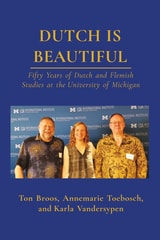
Dutch is Beautiful
Fifty Years of Dutch and Flemish Studies at the University of MichiganTon Broos, Annemarie Toebosch, and Karla Vandersypen
Michigan Publishing Services, 2019
Dutch is Beautiful tells the story of the fifty years of Dutch and Flemish Studies at the University of Michigan in Ann Arbor, Michigan, USA. It is an account of the efforts to promote Dutch and Flemish culture and language, as well as a description of how the teaching of Dutch language, literature, history and culture can be a tool to look at a world of diverse identities. It also offers a comprehensive overview of the beginnings of a successful program that included Dutch writers-in-residence, visiting Netherlands professors, cultural and educational events, arts, music, films, conferences and publications. Several alumni of the program look back at their college years with appreciation. Articles and essays on history, Anne Frank, and conversations on colonialism discuss critical and educational views on Dutch and Flemish Studies in past, present and future, when diversity, equity and inclusion are important goals and objectives, and public scholarship and academic activism will be a larger part of the curriculum. This book will inform, entertain, stimulate and impress everyone who is interested in the culture of the Low Countries. The title says it all!