Results by title
270 books match the query 'Technology' and 11 start with d

Decade of Disaster
Ann Larabee
University of Illinois Press, 2000
Decade of Disaster gives voice to a diverse cast of disaster participants, including Bhopal widows, people with AIDS, Chernobyl tourists, NASA administrators, international nuclear power authorities, and corporate spokespeople. Integrating sources ranging from official reports and scientific studies to news stories, movies, and science fiction novels, Larabee explores the fierce debates that followed these disasters, as government agencies, corporations, public interest groups, academics, and local communities fought to control their meaning. An incisive commentary at the intersection of cultural history and cultural studies, Decade of Disaster peels away layers and screens of rhetoric to expose the underlying process of cultural negotiation.

DeepAesthetics
Computational Experience in a Time of Machine LearningAnna Munster
Duke University Press, 2025

Designing Experimental Research in Archaeology
Examining Technology through Production and UseJeffrey R. Ferguson
University Press of Colorado, 2010
Each chapter addresses a particular classification of material culture-ceramics, stone tools, perishable materials, composite hunting technology, butchering practices and bone tools, and experimental zooarchaeology-detailing issues that must be considered in the development of experimental archaeology projects and discussing potential pitfalls. The experiments follow coherent and consistent research designs and procedures and are placed in a theoretical context, and contributors outline methods that will serve as a guide in future experiments. This degree of standardization is uncommon in traditional archaeological research but is essential to experimental archaeology.
The field has long been in need of a guide that focuses on methodology and design. This book fills that need not only for undergraduate and graduate students but for any archaeologist looking to begin an experimental research project.

Designing Multilingual Experiences in Technical Communication
Laura Gonzales
Utah State University Press, 2022
Through grounded case studies of multilingual technical communication projects in the US, Mexico, and Nepal, Laura Gonzales illustrates the multiple tensions at play in transnational research and demonstrates how technical communicators can leverage contemporary translation practices and methodologies to engage in research with multilingual communities that is justice-driven, participatory, and reciprocal.
Designing Multilingual Experiences in Technical Communication is of value to researchers and students across fields who are interested in designing projects alongside multilingual communities from historically marginalized backgrounds.
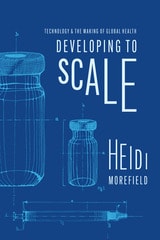
Developing to Scale
Technology and the Making of Global HealthHeidi Morefield
University of Chicago Press, 2023
In 1973, economist E. F. Schumacher published Small Is Beautiful, which introduced a mainstream audience to his theory of “appropriate technology”: the belief that international development projects in the Global South were most sustainable when they were small-scale, decentralized, and balanced between the traditional and the modern. His theory gained widespread appeal, as cuts to the foreign aid budget, the national interests of nations seeking greater independence, postcolonial activism, and the rise of the United States’ tech sector drove stakeholders across public and private institutions toward cheaper tools. In the ensuing decades, US foreign assistance shifted away from massive modernization projects, such as water treatment facilities, toward point-of-use technologies like village water pumps and oral rehydration salts. This transition toward the small scale had massive implications for the practice of global health.
Developing to Scale tells the history of appropriate technology in international health and development, relating the people, organizations, and events that shaped this consequential idea. Heidi Morefield examines how certain technologies have been defined as more or less “appropriate” for the Global South based on assumptions about gender, race, culture, and environment. Her study shows appropriate technology to be malleable, as different constituencies interpreted its ideas according to their own needs. She reveals how policymakers wielded this tool to both constrain aid to a scale that did not threaten Western interests and to scale the practice of global health through the development and distribution of technical interventions.
Developing to Scale
Technology and the Making of Global HealthHeidi Morefield
University of Chicago Press, 2023
The first critical book on “appropriate technology,” Developing to Scale shows how global health came to be understood as a problem to be solved with the right technical interventions.
In 1973, economist E. F. Schumacher published Small Is Beautiful, which introduced a mainstream audience to his theory of “appropriate technology”: the belief that international development projects in the Global South were most sustainable when they were small-scale, decentralized, and balanced between the traditional and the modern. His theory gained widespread appeal, as cuts to the foreign aid budget, the national interests of nations seeking greater independence, postcolonial activism, and the rise of the United States’ tech sector drove stakeholders across public and private institutions toward cheaper tools. In the ensuing decades, US foreign assistance shifted away from massive modernization projects, such as water treatment facilities, toward point-of-use technologies like village water pumps and oral rehydration salts. This transition toward the small scale had massive implications for the practice of global health.
Developing to Scale tells the history of appropriate technology in international health and development, relating the people, organizations, and events that shaped this consequential idea. Heidi Morefield examines how certain technologies have been defined as more or less “appropriate” for the Global South based on assumptions about gender, race, culture, and environment. Her study shows appropriate technology to be malleable, as different constituencies interpreted its ideas according to their own needs. She reveals how policymakers wielded this tool to both constrain aid to a scale that did not threaten Western interests and to scale the practice of global health through the development and distribution of technical interventions.

Diesel
Technology And Society In Industrial GermanyDonald E. Thomas Jr.
University of Alabama Press, 1987
The life of Rudolf Diesel, a man who achieved a power plant with the potential for revolutionizing industry and transportation. Diesel demonstrated that he possessed both the scientific insight and technical skill needed to create the diesel engine.

Digital Twins for 6G
Fundamental theory, technology and applicationsHamed Ahmadi
The Institution of Engineering and Technology, 2024

Disrupt This!
MOOCs and the Promises of TechnologyKaren J. Head
University Press of New England, 2017

Dorsality
Thinking Back through Technology and PoliticsDavid Wills
University of Minnesota Press, 2008
In this highly original book David Wills rethinks not only our nature before all technology but also what we understand to be technology. Rather than considering the human being as something natural that then develops technology, Wills argues, we should instead imagine an originary imbrication of nature and machine that begins with a dorsal turn-a turn that takes place behind our back, outside our field of vision.
With subtle and insightful readings, Wills pursues this sense of what lies behind our idea of the human by rescuing Heidegger’s thinking from a reductionist dismissal of technology, examining different angles on Lévinas’s face-to-face relation, and tracing a politics of friendship and sexuality in Derrida and Sade. He also analyzes versions of exile in Joyce’s rewriting of Homer and Broch’s rewriting of Virgil and discusses how Freud and Rimbaud exemplify the rhetoric of soil and blood that underlies every attempt to draw lines between nations and discriminate between peoples. In closing, Wills demonstrates the political force of rhetoric in a sophisticated analysis of Nietzsche’s oft-quoted declaration that “God is dead.”
Forward motion, Wills ultimately reveals, is an ideology through which we have favored the front-what can be seen-over the aspects of the human and technology that lie behind the back and in the spine-what can be sensed otherwise-and shows that this preference has had profound environmental, political, sexual, and ethical consequences.
David Wills is professor of French and English at the University of Albany (SUNY). He is the author of Prosthesis and Matchbook: Essays in Deconstruction as well as the translator of works by Jacques Derrida, including The Gift of Death.

Dream Lovers
The Gamification of RelationshipsAlfie Bown
Pluto Press, 2022
'An exciting, astute analysis of how our capacity for desire has been slotted into the grooves of digital capitalism, and made to work for profit - from porn to Pokémon' - Richard Seymour
We are in the middle of a 'desirevolution' - a fundamental and political transformation of the way we desire as human beings. Perhaps as always, new technologies - with their associated and inherited political biases - are organizing and mapping the future. What we don't seem to notice is that the primary way in which our lives are being transformed is through the manipulation and control of desire itself.
Our very impulses, drives and urges are 'gamified' to suit particular economic and political agendas, changing the way we relate to everything from lovers and friends to food and politicians. Digital technologies are transforming the subject at the deepest level of desire - re-mapping its libidinal economy - in ways never before imagined possible.
From sexbots to smart condoms, fitbits to VR simulators and AI to dating algorithms, the 'love industries' are at the heart of the future smart city and the social fabric of everyday life. This book considers these emergent technologies and what they mean for the future of love, desire, work and capitalism.