Results by title
527 books match the query 'Translations into English' and 21 start with d

Danzirly
Gloria Muñoz
University of Arizona Press, 2021
Danzirly does not shy away from confronting traditional gender roles, religion, and anxieties surrounding climate change and the digital age. Gloria Muñoz addresses Latinx stereotypes and powerfully dismantles them in poetic form, juxtaposing the promised wonders of a life in America with the harsh realities that immigrants face as they build their lives and raise their families here. Winner of the Academy of American Poets’ Ambroggio Prize, this collection of poems is an unforgettable reckoning of the grief and beauty that pulses through twenty-first-century America.
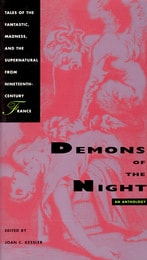
Demons of the Night
Tales of the Fantastic, Madness, and the Supernatural from Nineteenth-Century FranceEdited by Joan C. Kessler
University of Chicago Press, 1995
The anthology opens with "Smarra, or the Demons of the Night," Nodier's 1821 tale of nightmare, vampirism, and compulsion, acclaimed as the first work in French literature to explore in depth the realm of dream and the unconscious. Other stories include Balzac's "The Red Inn," in which a crime is committed by one person in thought and another in deed, and Mérimée's superbly crafted mystery, "The Venus of Ille," which dramatizes the demonic power of a vengeful goddess of love emerging out of the pagan past. Gautier's protagonist in "The Dead in Love" develops an obsessive passion for a woman who has returned from beyond the grave, while the narrator of Maupassant's "The Horla" imagines himself a victim of psychic vampirism.
Joan Kessler has prepared new translations of nine of the thirteen tales in the volume, including Gérard de Nerval's odyssey of madness, "Aurélia," as well as two tales that have never before appeared in English. Kessler's introduction sets the background of these tales—the impact of the French Revolution and the Terror, the Romantics' fascination with the subconscious, and the influence of contemporary psychological and spiritual currents. Her essay illuminates how each of the authors in this collection used the fantastic to articulate his own haunting obsessions as well as his broader vision of human experience.
Demosthenes, Speeches 18 and 19
Translated by Harvey Yunis
University of Texas Press, 2005
2006 — Soeurette Diehl Fraser Award for Best Translation of a Book, Texas Institute of Letters
This is the ninth volume in the Oratory of Classical Greece. This series presents all of the surviving speeches from the late fifth and fourth centuries BC in new translations prepared by classical scholars who are at the forefront of the discipline. These translations are especially designed for the needs and interests of today's undergraduates, Greekless scholars in other disciplines, and the general public.
Classical oratory is an invaluable resource for the study of ancient Greek life and culture. The speeches offer evidence on Greek moral views, social and economic conditions, political and social ideology, law and legal procedure, and other aspects of Athenian culture that have recently been attracting particular interest: women and family life, slavery, and religion, to name just a few.
Demosthenes is regarded as the greatest orator of classical antiquity. The two speeches translated here grew out of his longtime rivalry with the orator Aeschines. In Speech 19 (On the Dishonest Embassy) delivered in 343 BC, Demosthenes attacks Aeschines for corruption centered around an ultimately disastrous embassy to Philip of Macedon that both men took part in. This speech made Demosthenes the leading politician in Athens for a time. Speech 18 (On the Crown or De Corona), delivered in 330 BC, is Demosthenes' most famous and influential oration. It resulted not only in Demosthenes receiving one of Athens' highest political honors but also in the defeat and disgrace of Aeschines, who retired from public life and left Athens forever.
Demosthenes, Speeches 1–17
Translated by Jeremy Trevett
University of Texas Press, 2011
This is the fourteenth volume in the Oratory of Classical Greece. This series presents all of the surviving speeches from the late fifth and fourth centuries BC in new translations prepared by classical scholars who are at the forefront of the discipline. These translations are especially designed for the needs and interests of today's undergraduates, Greekless scholars in other disciplines, and the general public.
Classical oratory is an invaluable resource for the study of ancient Greek life and culture. The speeches offer evidence on Greek moral views, social and economic conditions, political and social ideology, law and legal procedure, and other aspects of Athenian culture that have recently been attracting particular interest: women and family life, slavery, and religion, to name just a few.
This volume contains translations of all the surviving deliberative speeches of Demosthenes (plus two that are almost certainly not his, although they have been passed down as part of his corpus), as well as the text of a letter from Philip of Macedon to the Athenians. All of the speeches were purportedly written to be delivered to the Athenian assembly and are in fact almost the only examples in Attic oratory of the genre of deliberative oratory. In the Olynthiac and Philippic speeches, Demosthenes identifies the Macedonian king Philip as a major threat to Athens and urges direct action against him. The Philippic speeches later inspired the Roman orator Cicero in his own attacks against Mark Antony, and became one of Demosthenes' claims to fame throughout history.
Demosthenes, Speeches 20-22
Translated by Edward M. Harris
University of Texas Press, 2008
This is the twelfth volume in the Oratory of Classical Greece. This series presents all of the surviving speeches from the late fifth and fourth centuries BC in new translations prepared by classical scholars who are at the forefront of the discipline. These translations are especially designed for the needs and interests of today's undergraduates, Greekless scholars in other disciplines, and the general public.
Classical oratory is an invaluable resource for the study of ancient Greek life and culture. The speeches offer evidence on Greek moral views, social and economic conditions, political and social ideology, law and legal procedure, and other aspects of Athenian culture that have recently been attracting particular interest: women and family life, slavery, and religion, to name just a few.
Demosthenes is regarded as the greatest orator of classical antiquity. This volume contains three important speeches from the earliest years of his political career: Against Leptines, a prosecution brought against a law repealing all exemptions from liturgies; Against Meidias, a prosecution for aggravated insult (hybris) brought against an influential politician; and Against Androtion, an indictment of a decree of honors for the Council of Athens. Edward M. Harris provides contemporary English translations of these speeches, two of which (Leptines and Androtion) have not been translated into English in over sixty years, along with introductions and extensive notes that take account of recent developments in Classical scholarship.
Demosthenes, Speeches 23-26
Translated by Edward M. Harris
University of Texas Press, 2018
This is the fifteenth volume in the Oratory of Classical Greece. This series presents all of the surviving speeches from the late fifth and fourth centuries BC in new translations prepared by classical scholars who are at the forefront of the discipline. These translations are especially designed for the needs and interests of today’s undergraduates, Greekless scholars in other disciplines, and the general public.
Classical oratory is an invaluable resource for the study of ancient Greek life and culture. The speeches offer evidence on Greek moral views, social and economic conditions, political and social ideology, law and legal procedure, and other aspects of Athenian culture that have recently been attracting particular interest: women and family life, slavery, and religion, to name just a few.
This volume provides introductions, translations, and notes for four speeches found in the Demosthenic corpus that have not been translated in recent times. Against Aristocrates deals with matters of foreign policy involving a mercenary general, Charidemus, and is a valuable source for Athenian homicide law. Against Timocrates involves domestic politics and provides important information about Athenian procedures for enacting legislation. In both speeches, the litigants stress the importance of the rule of law in Athenian democracy and emphasize key ideas, such as the monopoly of legitimate force by the state, the need for consistency in statutes, and the principle of no punishment without a written law. The remaining two speeches, Against Aristogeiton, are forgeries composed in the Hellenistic period, as Edward Harris demonstrates conclusively through a study of laws and legal procedures and an analysis of style and vocabulary.
Demosthenes, Speeches 27-38
Translated by Douglas M. MacDowell
University of Texas Press, 2004
This is the eighth volume in the Oratory of Classical Greece. This series presents all of the surviving speeches from the late fifth and fourth centuries BC in new translations prepared by classical scholars who are at the forefront of the discipline. These translations are especially designed for the needs and interests of today's undergraduates, Greekless scholars in other disciplines, and the general public.
Classical oratory is an invaluable resource for the study of ancient Greek life and culture. The speeches offer evidence on Greek moral views, social and economic conditions, political and social ideology, law and legal procedure, and other aspects of Athenian culture that have recently been attracting particular interest: women and family life, slavery, and religion, to name just a few.
Demosthenes is regarded as the greatest orator of classical antiquity. This volume contains five speeches written for lawsuits in which Demosthenes sought to recover his inheritance, which he claimed was fraudulently misappropriated and squandered by the trustees of the estate. These speeches shed light on Athenian systems of inheritance, marriage, and dowry. The volume also contains seven speeches illustrating the legal procedure known as paragraphe, or "counter-indictment." Four of these are for lawsuits involving commercial shipping, a vital aspect of the Athenian economy that was crucial to maintaining the city's imported food supply. Another concerns the famous Athenian silver mines.
Demosthenes, Speeches 39-49
Translated by Adele C. Scafuro
University of Texas Press, 2011
This is the thirteenth volume in the Oratory of Classical Greece. This series presents all of the surviving speeches from the late fifth and fourth centuries BC in new translations prepared by classical scholars who are at the forefront of the discipline. These translations are especially designed for the needs and interests of today's undergraduates, Greekless scholars in other disciplines, and the general public.
Classical oratory is an invaluable resource for the study of ancient Greek life and culture. The speeches offer evidence on Greek moral views, social and economic conditions, political and social ideology, law and legal procedure, and other aspects of Athenian culture that have recently been attracting particular interest: women and family life, slavery, and religion, to name just a few.
Demosthenes is regarded as the greatest orator of classical antiquity. This volume contains eleven law court speeches ascribed to Demosthenes, though modern scholars believe that only two or three of them are actually his. Most of the speeches here concern inheriting an estate, recovering debts owed to an estate, or exchanging someone else's estate for one's own. Adele Scafuro's supplementary material allows even non-specialists to follow the ins and outs of the legal arguments as she details what we know about the matters involved in each case, including marriage laws, adoptions, inheritances, and the financial obligations of the rich. While Athenian laws and family institutions (e.g., the marriages of heiresses) differ from ours in quite interesting ways, nevertheless the motives and strategies of the litigants often have a contemporary resonance.
Demosthenes, Speeches 50-59
Translated by Victor Bers
University of Texas Press, 2003
This is the sixth volume in the Oratory of Classical Greece. This series presents all of the surviving speeches from the late fifth and fourth centuries BC in new translations prepared by classical scholars who are at the forefront of the discipline. These translations are especially designed for the needs and interests of today's undergraduates, Greekless scholars in other disciplines, and the general public.
Classical oratory is an invaluable resource for the study of ancient Greek life and culture. The speeches offer evidence on Greek moral views, social and economic conditions, political and social ideology, law and legal procedure, and other aspects of Athenian culture that have been largely ignored: women and family life, slavery, and religion, to name just a few.
Demosthenes is regarded as the greatest orator of classical antiquity; indeed, his very eminence may be responsible for the inclusion under his name of a number of speeches he almost certainly did not write. This volume contains four speeches that are most probably the work of Apollodorus, who is often known as "the Eleventh Attic Orator." Regardless of their authorship, however, this set of ten law court speeches gives a vivid sense of public and private life in fourth-century BC Athens. They tell of the friendships and quarrels of rural neighbors, of young men joined in raucous, intentionally shocking behavior, of families enduring great poverty, and of the intricate involvement of prostitutes in the lives of citizens. They also deal with the outfitting of warships, the grain trade, challenges to citizenship, and restrictions on the civic role of men in debt to the state.
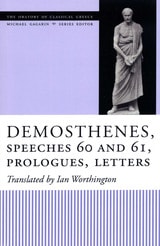
Demosthenes, Speeches 60 and 61, Prologues, Letters
Translated by Ian Worthington
University of Texas Press, 2006
This is the tenth volume in the Oratory of Classical Greece. This series presents all of the surviving speeches from the late fifth and fourth centuries BC in new translations prepared by classical scholars who are at the forefront of the discipline. These translations are especially designed for the needs and interests of today's undergraduates, Greekless scholars in other disciplines, and the general public.
Classical oratory is an invaluable resource for the study of ancient Greek life and culture. The speeches offer evidence on Greek moral views, social and economic conditions, political and social ideology, law and legal procedure, and other aspects of Athenian culture that have recently been attracting particular interest: women and family life, slavery, and religion, to name just a few.
Demosthenes is regarded as the greatest orator of classical antiquity. This volume contains his Funeral Oration (Speech 60) for those who died in the Battle of Chaeronea in 338 BC, in which Philip of Macedonia secured his dominance over Greece, as well as the so-called Erotic Essay (Speech 61), a rhetorical exercise in which the speaker eulogizes the youth Epicrates for his looks and physical prowess and encourages him to study philosophy in order to become a virtuous and morally upright citizen. The volume also includes fifty-six prologues (the openings to political speeches to the Athenian Assembly) and six letters apparently written during the orator's exile from Athens. Because so little literature survives from the 330s and 320s BC, these works provide valuable insights into Athenian culture and politics of that era.
Dialogues in Paradise
Can Xue
Northwestern University Press, 1989
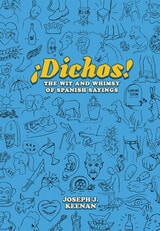
Dichos! The Wit and Whimsy of Spanish Sayings
By Joseph J. Keenan
University of Texas Press, 2019
One of the most challenging—and entertaining—aspects of learning another language is the idiom. Those quirky phrases, steeped in metaphor and colorful cultural references, enliven conversation and make your cross-cultural communication familiar, fun, and meaningful. ¡Dichos! (Sayings) brings us a vibrant compendium of both age-old and brand-new expressions from across Latin America, compiled by the language enthusiast whose Breaking Out of Beginner’s Spanish transformed thousands of readers’ interactions with the Spanish language.
¡Dichos! is divided into thematic sections covering topics ranging from games and relaxation to politics, macho men, and Mondays. Spanish speakers can also use the book to identify the spot-on/best slangy English equivalent for a Spanish-language idiom. Packed with gems like La barba me huele a tigre, y yo mismo me tengo miedo (My beard smells of tiger, and I’m even afraid of myself) and Para todo mal, mezcal; para todo bien, también (For everything bad, mezcal; for everything good, likewise), this book is the ultimate tool for taking your language skills to the next level as you navigate nuance with humor and linguistic agility.
Dichos! The Wit and Whimsy of Spanish Sayings
By Joseph J. Keenan
University of Texas Press, 2019
One of the most challenging—and entertaining—aspects of learning another language is the idiom. Those quirky phrases, steeped in metaphor and colorful cultural references, enliven conversation and make your cross-cultural communication familiar, fun, and meaningful. ¡Dichos! (Sayings) brings us a vibrant compendium of both age-old and brand-new expressions from across Latin America, compiled by the language enthusiast whose Breaking Out of Beginner’s Spanish transformed thousands of readers’ interactions with the Spanish language.
¡Dichos! is divided into thematic sections covering topics ranging from games and relaxation to politics, macho men, and Mondays. Spanish speakers can also use the book to identify the spot-on/best slangy English equivalent for a Spanish-language idiom. Packed with gems like La barba me huele a tigre, y yo mismo me tengo miedo (My beard smells of tiger, and I’m even afraid of myself) and Para todo mal, mezcal; para todo bien, también (For everything bad, mezcal; for everything good, likewise), this book is the ultimate tool for taking your language skills to the next level as you navigate nuance with humor and linguistic agility.
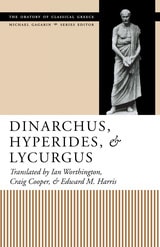
Dinarchus, Hyperides, and Lycurgus
Translated by Ian Worthington, Craig Cooper, and Edward M. Harris
University of Texas Press, 2001
This is the fifth volume in the Oratory of Classical Greece. This series presents all of the surviving speeches from the late fifth and fourth centuries B.C. in new translations prepared by classical scholars who are at the forefront of the discipline. These translations are especially designed for the needs and interests of today's undergraduates, Greekless scholars in other disciplines, and the general public.
Classical oratory is an invaluable resource for the study of ancient Greek life and culture. The speeches offer evidence on Greek moral views, social and economic conditions, political and social ideology, law and legal procedure, and other aspects of Athenian culture that have been largely ignored: women and family life, slavery, and religion, to name just a few.
This volume combines the surviving speeches of three orators who stand at the end of the classical period. Dinarchus was not an Athenian, but he was called on to write speeches in connection with a corruption scandal (the Harpalus affair) that put an end to the career of Demosthenes. His speeches thus raise many of the vital issues surrounding the Macedonian conquest of Athens and the final years of Athenian democracy. Hyperides was an important public figure who was involved in many of the events described by Dinarchus and Lycurgus. His speeches open a window into many interesting facets of Athenian life. Lycurgus was one of the leading politicians in Athens during the reign of Alexander the Great and put Athenian public finances on a more secure footing. He was also a deeply religious man, who tried to revive Athenian patriotism after the crushing defeat at Chaeronea.

Discourse on the Sciences and Arts (First Discourse) and Polemics
Jean-Jacques Rousseau
Dartmouth College Press, 1992
Discourses against Judaizing Christians
Saint John Chrysostom
Catholic University of America Press, 1979
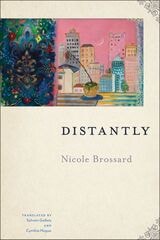
Distantly
Nicole Brossard
Omnidawn, 2022
This bilingual edition of Nicole Brossard’s lyrical poetry is a sequence of lush, taut cityscapes. Known for her elliptical and materially grounded poetics, Brossard creates an intimate series of poems drawn loosely from urban experience. The poems comprise an evocative distillation of postmodern urban life with a sharp sense of cultural and gendered histories of violence and beauty and struggles for survival and intimacy. The poems capture the emotional and ecological surroundings of each city and its people. The cities in Brossard’s poems feel surreal and in them dwell survivors of “misfortunes,” living in urban landscapes with their “gleaming debris” and “bridges, ghats, / rivers in a time of peace and torture.” These poems gesture toward a transmuted social context and toward a quest “to meet the horizon the day after the horizon.”
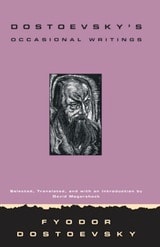
Dostoevsky's Occasional Writings
Fyodor Dostoevsky
Northwestern University Press, 1997
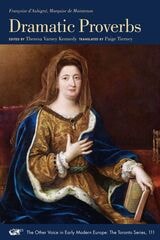
Dramatic Proverbs
Françoise d’Aubigné, Marquise de Maintenon
Iter Press, 2025
Madame de Maintenon’s Dramatic Proverbs provides unprecedented access to an important transitional marker between the society games of the salon and the education theater of the eighteenth century. Composed for the impoverished female pupils at the boarding school she and King Louis XIV founded at Saint-Cyr, Maintenon’s dramatic proverbs crucially reveal the values emphasized in female education at the end of the seventeenth century—a period plagued by economic crisis and growing aristocratic poverty. Some of the first to exclusively express a woman’s point of view, Maintenon’s dramatic proverbs challenged traditional female education and promoted improved conditions for women. The proverbs contributed uniquely to improvisational educational theater, inaugurating a tradition that continued well into the eighteenth century.
This edition of the plays aims to privilege accessibility and accuracy so that twenty-first-century students can act out, interpret, and discuss these historical texts.
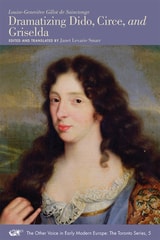
Dramatizing Dido, Circe, and Griselda
Louise-Geneviève Gillot de Sainctonge
Iter Press, 2010
—Perry Gethner
Norris Professor of French, Oklahoma State University
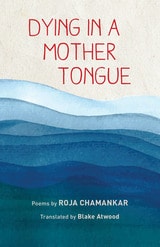
Dying in a Mother Tongue
By Roja Chamankar, Translated by Blake Atwood
University of Texas Press, 2018
This collection of poetry by the celebrated southern Iranian poet and filmmaker Roja Chamankar (b. 1981) introduces English-speaking readers to one of the most accomplished and well-loved poets of her generation. Chamankar’s work blends surrealism and the southern coastal landscape of the poet’s upbringing with everyday experiences in rapidly urbanizing Tehran. While locating herself in the modernist tradition of Iranian poets like Forugh Farrokhzad and Ahmad Shamlu through form and imagery, Chamankar infuses this tradition with concerns unique to a generation that grew up in post-revolutionary Iran and endured the effects of the Iran-Iraq war. Seascapes, love and eroticism, the disconnection of modern life, and myths and fairytales figure prominently in these vivid, lyrical poems.
In the rich miniature worlds of Chamankar’s poetry, readers become privy to a range of experiences, from desire and pain to rage and humor. Sometimes abstract, other times surreal—Chamankar’s unique poetic voice, like the sea she returns to again and again, combines and sweeps these experiences to shore with assurance, strength, and beauty.