Results by title
1185 books match the query 'Travel' and 41 start with d
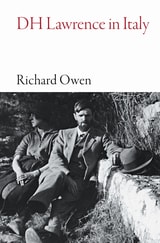
DH Lawrence in Italy
Richard Owen
Haus Publishing, 2014
In DH Lawrence in Italy, Owen reconstructs the drama leading up to the creation of one of the most controversial novels of all time by drawing on the unpublished letters and diaries of Rina Secker, the Anglo-Italian wife of Lawrence’s publisher. In addition to telling the story of the origins of Lady Chatterley, DH Lawrence in Italy explores Lawrence’s passion for all things Italian, tracking his path to the Riviera from Lake Garda to Lerici, Abruzzo, Capri, Sicily, and Sardinia.
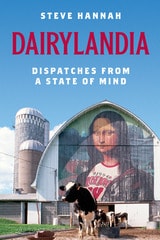
Dairylandia
Dispatches from a State of MindSteve Hannah
University of Wisconsin Press, 2022
Dairylandia recounts Steve Hannah’s burgeoning love for his adopted state through the writings of his long-lived column, “State of Mind.” He profiles the lives of the seemingly ordinary, yet quite (and quietly) extraordinary folks he met and befriended on his travels. From Norwegian farmers to rattlesnake hunters to a woman who kept her favorite dead bird in the freezer, Hannah was charmed and fascinated by practically everyone he met. These captivating vignettes are by turns humorous, tragic, and remarkable—and remind us of our shared humanity.
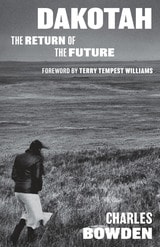
Dakotah
The Return of the FutureBy Charles Bowden; foreword by Terry Tempest Williams
University of Texas Press, 2019
“[Dakotah] is about hope, disappointment, impermanence and erasure. . . . This is a meditation Bowden fans will not want to miss.”—Arizona Daily Star
“Bowden’s prose—bleak, fierce, surreal like a swirling sandstorm, like an endlessly ramifying arroyo—provided for me, in its rejection of facile theses and clear-cut answers, an honest mapping of our contemporary predicament.”—Leath Tonino, Lit Hub
The fourth installment in Charles Bowden's acclaimed “Unnatural History of America,” Dakotah uses America’s Great Plains as a lens—sometimes sullied, sometimes shattered, but always sharp—for observing pivotal moments in the lives of anguished figures, including himself.
In scenes that are by turns wrenching and poetic, Bowden describes the Sioux’s forced migrations and rebellions alongside his own ancestors’ migrations from Europe to Midwestern acres beset by unforgiving winters. He meditates on the life of his resourceful mother and his philosophical father, who rambled between farm communities and city life. Interspersed with these images are clear-eyed, textbook-defying anecdotes about Lewis and Clark, Daniel Boone, and, with equal verve, twentieth-century entertainers “Pee Wee” Russell, Peggy Lee, and other musicians. The result is a kaleidoscopic journey that penetrates the senses and redefines the notion of heartland. Dakotah is a powerful ode to loss from one of our most fiercely independent writers.
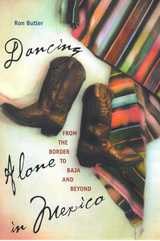
Dancing Alone in Mexico
From the Border to Baja and BeyondRon Butler
University of Arizona Press, 2000
Can a man have a love affair with a foreign land? Ron Butler never dreamed Mexico would capture his heart and his soul. But when his ex-wife moved to Guadalajara with their children in the wake of divorce, he found himself crisscrossing the country, seduced by its charms and moved by its rhythms and its melodies.
Like the diver of an old Mexican legend who lives beneath the sea seeking the best pearl, Butler lost himself in Mexico and found the hidden treasures of every tiny hamlet and big metropolis. He writes about the endangered monarch butterflies of El Rosario, the street bands of Zacatecas, and the mummies of Guanajuato. He takes a magical night ferry ride from Mazatlán and a train excursion into Copper Canyon—a chasm four times larger than the Grand Canyon—in Mexico's most mysterious mountains. He goes off the beaten path in such tourist havens as Acapulco and Cancún. And he walks in the footsteps of movie stars and artists who too have been enamored of Mexico.
Poking into the nooks and crannies of Mexico, Butler indulges in tasty Mexican specialties at both the finest restaurants and out-of-the-way street stands. He finds the best tequila in the town named Tequila, the world's most delicious cup of coffee in Veracruz, the sweetest dulce in Morelia, and the best mole—a Mayan chile and chocolate sauce embellished by nuns anxious to please a visiting Spanish viceroy—in Puebla. Sharing his considerable knowledge of art, Butler also uncovers the best of Mexico's museums and advises shoppers about folk crafts.
Informative and helpful as the best travel guide, Dancing Alone in Mexico will help even seasoned travelers to get the most out of their trips to Mexico. Casual and lively as the best travel memoir, the book will also delight the armchair traveler with south-of-the-border stories and adventures that come only to those who dance not alone but with an entire land.
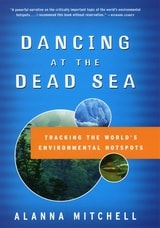
Dancing at the Dead Sea
Tracking the World's Environmental HotspotsAlanna Mitchell
University of Chicago Press, 2005
Combining scientific curiosity with travel and adventure, Dancing at the Dead Sea takes the reader on an intimate tour through the world's environmental hotspots. Readers join Mitchell as she tracks the spectacular biodiversity of regions as extraordinary as the island of Madagascar, the rain forests of Suriname, the parched oases of Jordan, the Arctic desert of Banks Island, the volcanic crests of Iceland, and, ultimately, the Galapagos archipelago, where Darwin conducted his famous research. Along the way, Mitchell introduces us to the numerous scientists and conservationists who are working to protect these endangered places. She also chronicles the courageous efforts of everyday men and women in these regions as they try to convince governments to turn the world's hotspots into environmentally protected areas.
Ultimately, Mitchell's travels around the world compel her to ponder our shelf life as a species in the grand evolutionary scheme of the planet. She wonders what Darwin would make of the profound ecological destruction she witnesses. Is the human race suicidal? What can help our species avert extinction? Posing tough and cutting questions such as these, Dancing at the Dead Sea is a must-read for aficionados of good science writing and travel literature alike.
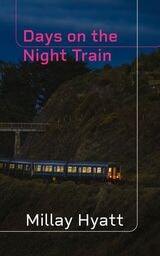
Days on the Night Train
Millay Hyatt
Haus Publishing, 2026
A paean to traveling by train, to the variety of Europe’s landscape, and to an immersive way of approaching and seeing the world.
For Millay Hyatt, it is the charm of “uncushioned encounters with the world” that makes her, whenever possible, choose to travel by train.
Days on the Night Train is a story of serendipities and missed connections, of sluggish border crossings, of embracing unpredictability and shunning the stifling regimentation of contemporary travel. In her accounts of her journeys across Europe and beyond, ranging from Edinburgh to Tunis, from Valencia to Tbilisi, Hyatt shows us that it is in movement that our perspective changes, and that this is never truer than when traveling by train, at half speed, with wide carriage windows framing a slowly shifting world. Inside, surrounded by strangers, she becomes intrigued by the intimate habits of her fellow passengers, listens in on arguing couples and bantering teenagers, and gives her imagination free rein to speculate about their lives. Later, in a couchette, even sleep takes on an unfamiliar quality, echoing Proust’s comment that people on trains sleep like fish in the sea, gently rocked by the waves and currents.
Traveling by rail brings Hyatt into contact with the world in a way that disturbs and upends her certainties. Perception slows and widens. Experiencing the excitement of departure and arrival—and in between the bittersweet joy of being in limbo, of looking inward—she notices how long train journeys, like books, can still alter us in a way jet travel has all but extinguished. Days on the Night Train is itself a journey, abundant with reflection, poetic observation, revealing encounter, and literary excursions.
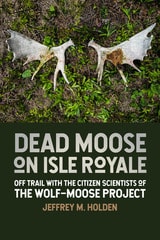
Dead Moose on Isle Royale
Off Trail with the Citizen Scientists of the Wolf-Moose ProjectJeffrey M Holden
Michigan State University Press, 2025
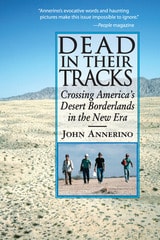
Dead in Their Tracks
Crossing America’s Desert Borderlands in the New EraJohn Annerino
University of Arizona Press, 2009
During the Sonoran Desert’s glorious and brutal summer season Annerino, a photojournalist, author, and explorer, watched four border crossers step off a bus and nonchalantly head into the American no-man’s land. On assignment for Newsweek, Annerino did more than just watch on that blistering August day. He joined them on their ultramarathon, life-or-death quest to find work to feed their families, amid temperatures so hot your parched throat burns from breathing and drinking water is the ultimate treasure.
As their water dwindled and the heat punished them, Annerino and the desperate men continued marching fifty miles in twenty-four hours and managed to survive their harrowing journey across the deadliest migrant trail in North America, El Camino del Diablo, “The Road of the Devil.” Driven by the mounting death toll, John returned again and again to the sun-scorched despoblado (uninhabited lands)—where hidden bighorn sheep water tanks glowed like diamonds—to document the lives, struggles, and heartbreaking remains of those who continue to disappear and perish in a region that’s claimed the lives of more than 9,700 men, women, and children.
Following the historic paths of indigenous Hia Ced O’odham (People of the Sand), Spanish missionary explorer Padre Eusebio Francisco Kino, and California-bound Forty-Niners, Annerino’s journeys on foot, crisscrossed the alluring yet treacherous desert trails of the El Camino del Diablo, Hohokam shell trail, and O’odham salt trails where hundreds of gambusinos (Mexican miners) and Euro-American pioneers succumbed during the 1850s.
As the migrants kept coming, the deaths kept mounting, and Annerino kept returning. He crossed celebrated Sonoran Desert sanctuaries—Organ Pipe Cactus National Monument, a UNESCO Biosphere Reserve, Cabeza Prieta National Wildlife Refuge, Barry M. Goldwater Range, sacred ancestral lands of the Tohono O’odham—that had become lost horizons, killing grounds, graveyards, and deadly smuggling corridors that also claimed the lives of National Park rangers and Border Patrol agents. John Annerino’s mission was to save someone, anyone, everyone—when he could find them.
Dead in Their Tracks is the saga of a merciless despoblado in the Great Southwest, of desperate yet hopeful migrants and refugees who keep staggering north. It is the story of ranchers, locals, and Border Patrol trackers who’ve saved countless lives, and heavily armed smugglers who haunt an inhospitable, if beautiful, wilderness that remains off the radar for journalists and news organizations that dare not set foot in the American desert waiting to welcome them on its terms.
Death Tourism
Disaster Sites as Recreational LandscapeEdited by Brigitte Sion
Seagull Books, 2014
Death Valley National Park
A HistoryHal Rothman
University of Nevada Press, 2013
This history begins with a discussion of the physical setting, its geography and geology, and descriptions of the Timbisha, the first peoples to inhabit this tough and dangerous landscape. In the 19th-century and early 20th century, new arrivals came to exploit the mineral resources in the region and develop permanent agricultural and resort settlements. Although Death Valley was established as a National Monument in 1933, fear of the harsh desert precluded widespread acceptance by both the visiting public and its own administrative agency. As a result, Death Valley lacked both support and resources. This volume details the many debates over the park’s size, conflicts between miners, farmers, the military, and wilderness advocates, the treatment of the Timbisha, and the impact of tourists on its cultural and natural resources.
In time, Death Valley came to be seen as one of the great natural wonders of the United States, and was elevated to full national park status in 1994. The history of Death Valley National Park embodies the many tensions confronting American environmentalism.
Deckhand
Life on Freighters of the Great LakesNelson "Mickey" Haydamacker with Alan D. Millar
University of Michigan Press, 2009
Long before popular television shows such as Dirty Jobs and The Deadliest Catch, everyday men and women---the unsung heroes of the job world---toiled in important but mostly anonymous jobs. One of those jobs was deckhand on the ore boats.
With numerous photographs and engaging stories, Deckhand offers an insider's view of both the mundane and the intriguing duties performed by deckhands on these gritty cargo vessels. Boisterous port saloons, monster ice jams, near drownings, and the daily drudgery of soogeying---cleaning dirt and grime off the ships---are just a few of the experiences Mickey Haydamacker had as a young deckhand working on freighters of the Great Lakes in the early 1960s. Haydamacker sailed five Interlake Steamship Company boats, from the modern Elton Hoyt 2nd to the ancient coal-powered Colonel James Pickands with its backbreaking tarp-covered hatches.
Deckhand will appeal to shipping buffs and to anyone interested in Great Lakes shipping and maritime history as it chronicles the adventures of living on the lakes from the seldom-seen view of a deckhand.
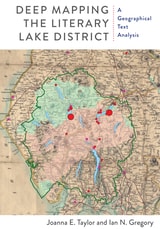
Deep Mapping the Literary Lake District
A Geographical Text AnalysisJoanna E. Taylor
Bucknell University Press, 2022
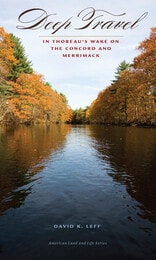
Deep Travel
In Thoreau's Wake on the Concord and MerrimackDavid K. Leff
University of Iowa Press, 2009
How we see depends on where we are in our lives and with whom we travel. Leff chose his companions wisely. In consecutive journeys his neighbor and friend Alan, a veteran city planner; his son Josh, an energetic eleven-year-old; and his sweetheart Pamela, a compassionate professional caregiver, added their perspectives to Leff’s own experiences as a government official in natural resources policy. Not so much sight seeing as sight seeking, together they explored a geography of the imagination as well as the rich natural and human histories of the rivers and their communities.
The heightened awareness of deep travel demands that we immerse ourselves fully in places and realize that they exist in time as well as space. Its mindfulness enriches the experience and makes the voyager worthy of the journey. Leff’s intriguing, contemplative deep travel along these historic rivers presents a methodology for exploration that will enrich any trip.

Democracy is the Answer
Egypt's Years of RevolutionAlaa Al Aswany
Gingko, 2014
This book presents, for the first time in English, all of Al-Aswany’s columns from the period, a comprehensive account of the turmoil of the post-revolutionary years, and a portrait of a country and a people in flux. Each column is presented along with a context-setting introduction, as well as notes and a glossary, all designed to give non-Egyptian readers the background they need to understand the events and figures that Al-Aswany chronicles. The result is a definitive portrait of Egypt today—how it got here, and where it might be headed.
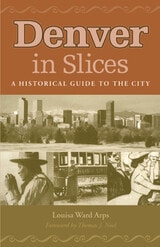
Denver In Slices
A Historical Guide to the CityLouisa Ward Arps
Ohio University Press, 1983
The Old West has been viewed from many perspectives, from the scornful to the uncritically romantic. But seldom has it been treated with the honest nostalgia of the wonderful accounts and pictures gathered in Denver in Slices.
Ohio University Press/Swallow Press is proud to reissue this Western classic, which includes a brief survey of all Denver history, some slices depicting the most fascinating places and characters. The City Ditch, Cherry Creek, River Front Park, the Denver Mint, the Tabors, the Windsor Hotel, the Baron of Montclair, Overland Park, Buffalo Bill, Elitch's Gardens, and Eugene Field—they're all here. Illustrating these stories is an array of nearly one hundred pictures of the people, buildings, and street scenes: a fascinating panorama of the gold rush camp that became the Rocky Mountain metropolis.
With a new foreword by renowned Denver historian Thomas J. Noel, this classic will once again help preserve Denver's lively past.
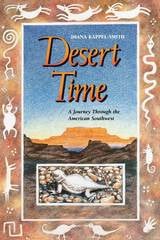
Desert Time
Diana Kappel-Smith
University of Arizona Press, 1992
"You come to trust her company and to savor her observations: she is the sort of guide who gestures at what you would otherwise step across—or on—without noticing. She calls her collection 'an introduction to particulars.' These she infuses with radiance." —Los Angeles Times Book Review
"With prose that is both lyrical and down-to-earth, Kappel-Smith makes readers aware of the fragility of the desert and the necessity to preserve these wonderful, alien and mysterious places." —San Francisco Chronicle
"We glimpse moments of experience, rendered both in words and in conscientious line drawings. The book has a gentle, meandering tone. It consciously refuses to manufacture dramatic events." —Christian Science Monitor
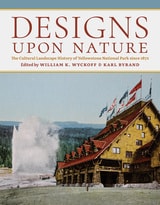
Designs upon Nature
The Cultural Landscape History of Yellowstone National Park since 1872William K. Wyckoff
University of Wyoming Press, 2025
Chapters in the book follow the park’s traditional “Grand Tour,” which often began for visitors at park headquarters at Mammoth Hot Springs and then moved on to Old Faithful and the Upper Geyser Basin, the glistening waters of Yellowstone Lake, the unforgettable waterfalls of the Yellowstone River’s Grand Canyon, and the western hospitality found at Roosevelt Lodge near Tower Falls. Authors consider how visitor experiences and cultural landscapes within the park have changed dramatically since 1872. Early horseback trips were replaced by an era of railroad tourism and grand hotels. The later arrival of automobiles invited a more casual visitor experience among rustic lodges and campgrounds. Travel accommodations for the twenty-first-century visitor continue to affect cultural landscapes through larger parking lots and further road improvements. The result is indeed a “design upon nature,” an engineered imprint upon a wild place that has forever shaped and changed its character.
Designs upon Nature is a rich and nuanced narrative that encourages us to see the park in a way we never have before. It is a significant addition to our understanding of Yellowstone and the evolution of the national park idea as seen there—how experiencing wild nature is made possible by human designs upon the land.
Destination Heartland
A Guide to Discovering the Midwest's Remarkable PastCynthia Clampitt
University of Illinois Press, 2022
An informative handbook and introduction to the Midwest's colorful past, Destination Heartland provides travelers with a knowledgeable companion on the highways and backroads of history.
States covered in the book: Illinois, Indiana, Iowa, Kansas, Michigan, Minnesota, Missouri, Nebraska, North Dakota, Ohio, South Dakota, and Wisconsin.
Destruction and Sorrow beneath the Heavens
ReportageLászló Krasznahorkai
Seagull Books, 2016
Known for his brilliantly dark fictional visions, László Krasznahorkai is one of the most respected European writers of his generation and the winner of the 2015 Man Booker International Prize. Here, he brings us on a journey through China at the dawn of the new millennium. On the precipice of its emergence as a global power, China is experiencing cataclysms of modernity as its harsh Maoist strictures meet the chaotic flux of globalism. What remains of the Middle Kingdom’s ancient cultural riches? And can a Westerner truly understand China’s past and present—or the murky waters where the two meet?
Destruction and Sorrow beneath the Heavens is both a travel memoir and the chronicle of a distinct intellectual shift as one of the most captivating contemporary writers and thinkers begins to engage with the cultures of Asia and the legacies of its interactions with Europe in a newly globalized society. Rendered in English by award-winning translator Ottilie Mulzet, Destruction and Sorrow beneath the Heavens is an important work, marking the emergence of Krasznahorkai as a truly global novelist.
Praise for Krasznahorkai
“The contemporary Hungarian master of the apocalypse.”—Susan Sontag
“Krasznahorkai delights in unorthodox description; no object is too insignificant for his worrying gaze. . . . He offers us stories that are relentlessly generative and defiantly irresolvable. They are haunting, pleasantly weird, and ultimately, bigger than the worlds they inhabit.”—New York Times
“Krasznahorkai is an expert with the complexity of human obsessions. Each of his books feel like an event, a revelation.”—Daily Beast
Detours
A Decolonial Guide to Hawai'iHokulani K. Aikau and Vernadetta Vicuña Gonzalez, editors
Duke University Press, 2019
Contributors. Hōkūlani K. Aikau, Malia Akutagawa, Adele Balderston, Kamanamaikalani Beamer, Ellen-Rae Cachola, Emily Cadiz, Iokepa Casumbal-Salazar, David A. Chang, Lianne Marie Leda Charlie, Greg Chun, Joy Lehuanani Enomoto, S. Joe Estores, Nicholas Kawelakai Farrant, Jessica Ka‘ui Fu, Candace Fujikane, Linda H. L. Furuto, Sonny Ganaden, Cheryl Geslani, Vernadette Vicuña Gonzalez, Noelani Goodyear-Ka‘ōpua, Tina Grandinetti, Craig Howes, Aurora Kagawa-Viviani, Noelle M. K. Y. Kahanu, Haley Kailiehu, Kyle Kajihiro, Halena Kapuni-Reynolds, Terrilee N. Kekoolani-Raymond, Kekuewa Kikiloi, William Kinney, Francesca Koethe, Karen K. Kosasa, N. Trisha Lagaso Goldberg, Kapulani Landgraf, Laura E. Lyons, David Uahikeaikalei‘ohu Maile, Brandy Nālani McDougall, Davianna Pōmaika‘i McGregor, Laurel Mei-Singh, P. Kalawai‘a Moore, Summer Kaimalia Mullins-Ibrahim, Jordan Muratsuchi, Hanohano Naehu, Malia Nobrega-Olivera, Katrina-Ann R. Kapā‘anaokalāokeola Nākoa Oliveira, Jamaica Heolimelekalani Osorio, No‘eau Peralto, No‘u Revilla, Kalaniua Ritte, Maya L. Kawailanaokeawaiki Saffery, Dean Itsuji Saranillio, Noenoe K. Silva, Ty P. Kāwika Tengan, Stephanie Nohelani Teves, Stan Tomita, Mehana Blaich Vaughan, Wendy Mapuana Waipā, Julie Warech
Detours
Travel and the Ethics of Research in the Global SouthEdited by M. Bianet Castellanos
University of Arizona Press, 2019
Influenced by the works of anthropologists Ruth Behar and Renato Rosaldo, the scholars and journalists in this volume consider how first encounters—those initial, awkward attempts to learn about a culture and a people—evolved into enduring and critical engagements. Contemplating the ethics and racial politics of traveling and doing research abroad, they call attention to the power and privilege that permit researchers to enter people’s lives, ask intimate questions, and publish those disclosures. Focusing on Latin America and the Caribbean, they ask, Why this place? What keeps us coming back? And what role do we play in producing narratives of inequality, uneven development, and global spectacle?
The book examines the “politics of return”—the experiences made possible by revisiting a field site over extended periods of time—of scholars and journalists who have spent decades working in and writing about Latin America and the Caribbean. Contributors aren’t telling a story of enlightenment and goodwill; they focus instead on the slippages and conundrums that marked them and raised questions of their own intentions and intellectual commitments.
Speaking from the intersection of race, class, and gender, the contributors explore the hubris and nostalgia that motivate returning again and again to a particular place. Through personal stories, they examine their changing ideas of Latin America and the Caribbean and how those places have shaped the people they’ve become, as writers, as teachers, and as activists.
Diary of Almon Harris Thompson
Explorations of the Colorado River of the West and Its Tributaries, 1871-1875Herbert E Gregory
University of Utah Press, 2009
Originally published in 1939 as volume seven of the Utah Historical Quarterly, Thompson’s journal is reprinted here for the first time in seventy years. Co-published with the Utah State Historical Society.
Dickens and Massachusetts
The Lasting Legacy of the Commonwealth VisitsDiana C. Archibald
University of Massachusetts Press, 2015
Charles Dickens traveled to North America twice, in 1842 and twenty-five years later in 1867–68, and on both trips Massachusetts was part of his itinerary. Although many aspects of his U.S. travels disappointed him, Massachusetts was the one state that met and even exceeded Dickens's expectations for “the republic of [his] imagination.” From the mills of Lowell to the Perkins School for the Blind, it offered an alternate vision of America that influenced his future writings, while the deep and lasting friendships he formed with Bostonians gave him enduring ties to the commonwealth.
This volume provides insight from leading scholars who have begun to reassess the significance of Massachusetts in the author's life and work. The collection begins with a broad biographical and historical overview taken from the full-length narrative of the award-winning exhibition Dickens and Massachusetts: A Tale of Power and Transformation, which attracted thousands of visitors while on display in Lowell. Abundant images from the exhibition, many of them difficult to find elsewhere, enhance the story of Dickens's relationship with the vibrant cultural and intellectual life of Massachusetts. The second section includes essays that consider the importance of Dickens's many connections to the commonwealth.
In addition to the volume editors, contributors include Chelsea Bray, Iain Crawford, Andre DeCuir, Natalie McKnight, Lillian Nayder, and Kit Polga.

Dickens's Kent
Peter Clark
Haus Publishing, 2024
Few novelists have written so intimately about a city as Charles Dickens wrote about London, but he was intimately connected to Kent more than any other part of Britain. Perhaps Kent meant more to him than the capital. He had an idyllic childhood in Chatham and Kent features in his first works of fiction, Sketches by Boz and The Pickwick Papers, and in his favorite novel, David Copperfield. In his last ten years, he wrote two novels with strong Kentish themes, Great Expectations and The Mystery of Edwin Drood. He had his honeymoon outside Gravesend and often spent the summer months in Broadstairs. In 1856, he bought Gad’s Hill Place, near Rochester, and died there in 1870.
Dickens’s Kent begins with the description of a walk from London to Dickens's main residence, Gad’s Hill Place, before taking the reader to areas in Kent most closely associated with his life and work: the Medway Towns and their surroundings, Thanet and East Kent, and finally Staplehurst, the scene of the railway accident that nearly killed him.

Dickens's London
Peter Clark
Haus Publishing, 2012
In five walks through central London, Peter Clark explores “The First Suburbs”—Camden Town, Chelsea, Greenwich, Hampstead, Highgate and Limehouse—as they feature in Dickens’s writing and illuminates the settings of Dickens’s life and his greatest works of journalism and fiction. Describing these storied spaces of today’s central London in intimate detail, Clark invites us to experience the city as it was known to Dickens and his characters. These walks take us through the locations and buildings that he interacted with and wrote about, creating an imaginative reconstruction of the Dickensian world that has been lost to time.

Digestible Governance
Gastrocracy and Spanish FoodwaysEdited by Eugenia Afinoguénova, Lara Anderson, and Rebecca Ingram
Vanderbilt University Press, 2024
Eliciting wide public participation, co-opted for political purposes, regarded as a factor of economic development on any scale, and integrated into every so-called banal nationalism, the production, distribution, and consumption of food are highly relevant for historical analysis. Seeking to encourage a broader discussion about Peninsular gastrocracies, this book brings together an interdisciplinary group of scholars from different sides of the Atlantic and the Pacific who have spearheaded research on gastronomy and governance in Spain.
Dinosaur
Four Seasons on the Green and Yampa RiversHal Crimmel
University of Arizona Press, 2007
Gaffney’s reflective photographs emphasize the rough perfection of the landscape; Crimmel’s pensive meditations and his river expertise combine to create a rare point of view, one that ventures into places the guidebooks don’t go. But this narrative is more than tribute—it is a reminder of the fragile nature of desert places. Crimmel lyrically combines his descriptions with an examination of the complex issues relevant to managing public lands—invasive species, tourism, dams, endangered flora and fauna—to address the contradictions inherent in “managed wilderness.” Over four seasons and multiple trips, Crimmel and Gaffney have captured the rivers’ sense of place, creating a portrait of a dazzling high desert landscape that needs to be appreciated and protected.
Discover the Hidden New Jersey
Roberts, Russell
Rutgers University Press, 1995
Did you know—
—that a New Jerseyan was the first president of the United States?
—that New Jersey was the site of the first organized college football game?
—that New Jersey was the location of one of the most devastating espionage attacks of World War I?
—that the heroics of a New Jersey woman saved thousands of people from dying of yellow fever?
These and other fascinating stores can be found in Discover the Hidden New Jersey, a treasury of New Jersey stories that celebrate the unique heritage and importance of the Garden State. Russell Roberts has scoured New Jersey, from High Point to Cape May, to bring readers a delightful potpourri of facts, essays, lists, photos, stories, and legends about New Jersey. Readers will learn how New Jersey used to be the center of the motion picture universe, the origin of the Jersey Devil and other popular tall tales, where Norman Mailer and Abbot & Costello were born, where Aaron Burr and Leo, the M-G-M lion, lie buried, and much more. Learn about the geology of New Jersey, find out about the state’s ever-changing weather, and hear about some of the best places to go for the day. All this and more is in Discover the Hidden New Jersey, the ultimate New Jersey book.
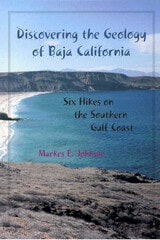
Discovering the Geology of Baja California
Six Hikes on the Southern Gulf CoastMarkes E. Johnson
University of Arizona Press, 2009
For those who wish to unlock the mysteries of Baja California, geologist Markes Johnson offers the key. He has taken a body of technical research on the geology and paleontology of the region and made it accessible in plain language for anyone who visits the peninsula, whether for study or recreation. His book teaches general concepts in coastal geomorphology and tectonics, as well as the basic geological and natural history of the Gulf of California, in a conversive, intellectually stimulating fashion.
Johnson's guide takes the form of six day-long hikes in the area of Punta Chivato on the east coast of the southern Baja California peninsula. Punta Chivato is presented as a microcosm of the entire region; it can enable visitors to better understand major themes in the natural history of the Gulf of California and its geological past. All of the hikes begin at the southeast corner of the Punta Chivato promontory and loop out in different directions. Each circuit is designed to minimize overlap with adjacent hikes and to maximize the visitor's exposure to instructive variations in the landscape. Each chapter features additional reflections on a geologist of another time and place who has advanced the field in a way that elucidates the material covered in that chapter. Through these asides, readers will learn the basic lessons about how geologists read the secrets hidden in landscapes.
Discovering the Geology of Baja California invites visitors to these shores to explore not only rocks and fossils but also the continuum of past ecosystems with the ecology of the present. It offers both an unparalleled guide to a remote area and a new understanding of life caught in an endless cycle of change.
Dispatches from Dystopia
Histories of Places Not Yet ForgottenKate Brown
University of Chicago Press, 2015
In Dispatches from Dystopia, Brown wanders the Chernobyl Zone of Alienation, first on the Internet and then in person, to figure out which version—the real or the virtual—is the actual forgery. She also takes us to the basement of a hotel in Seattle to examine the personal possessions left in storage by Japanese-Americans on their way to internment camps in 1942. In Uman, Ukraine, we hide with Brown in a tree in order to witness the annual male-only Rosh Hashanah celebration of Hasidic Jews. In the Russian southern Urals, she speaks with the citizens of the small city of Kyshtym, where invisible radioactive pollutants have mysteriously blighted lives. Finally, Brown returns home to Elgin, Illinois, in the midwestern industrial rust belt to investigate the rise of “rustalgia” and the ways her formative experiences have inspired her obsession with modernist wastelands.
Dispatches from Dystopia powerfully and movingly narrates the histories of locales that have been silenced, broken, or contaminated. In telling these previously unknown stories, Brown examines the making and unmaking of place, and the lives of the people who remain in the fragile landscapes that are left behind.
Disruptive Situations
Fractal Orientalism and Queer Strategies in BeirutGhassan Moussawi
Temple University Press, 2020
Disruptive Situations challenges representations of contemporary Beirut as an exceptional space for LGBTQ people by highlighting everyday life in a city where violence is the norm. Ghassan Moussawi, a Beirut native, seeks to uncover the underlying processes of what he calls “fractal orientalism,” a relational understanding of modernity and cosmopolitanism that illustrates how transnational discourses of national and sexual exceptionalism operate on multiple scales in the Arab world.
Moussawi’s intrepid ethnography features the voices of women, gay men and genderqueers in Beirut to examine how queer individuals negotiate life in this uncertain region. He examines “al-wad’,” or “the situation,” to understand the practices that form these strategies and to raise questions about queer-friendly spaces in and beyond Beirut.
Disruptive Situations alsoshows how LGBTQ Beirutis resist reconciliation narratives and position their identities and visibility at different times as ways of simultaneously managing their multiple positionalities and al-wad’. Moussawi argues that the daily survival strategies in Beirut are queer—and not only enacted by LGBTQ people—since Beirutis are living amidst an already queer situation of ongoing precarity.

Distant Melodies
Music in Search of HomeEdward Dusinberre
University of Chicago Press, 2022
How does music played and heard over many years inform one’s sense of home? Writing during the COVID-19 pandemic, when travel is forbidden and distance felt anew, Edward Dusinberre, first violinist of the world-renowned Takács Quartet, searches for answers in the music of composers whose relationships to home shaped the pursuit of their craft—Antonín Dvořák, Edward Elgar, Béla Bartók, and Benjamin Britten.
Dusinberre has lived abroad for three decades. At the age of 21, he left his native England to pursue music studies at the Juilliard School in New York. Three years later he moved to Boulder, Colorado. Drawn to the stories of Dvořák’s, Bartók’s, and Britten’s American sojourns as they tried to reconcile their new surroundings with nostalgia for their homelands, Dusinberre reflects on his own evolving relationship to England and the idea of home. As he visits and imagines some of the places crucial to these composers’ creative inspiration, Dusinberre also reflects on Elgar’s unusual Piano Quintet and the landscapes that inspired it.
Combining travel writing with revealing insights into the working lives of string quartet musicians, Distant Melodies is a moving and humorous meditation on the relationship between music and home.
Doing Development in West Africa
A Reader by and for UndergraduatesCharles Piot
Duke University Press, 2016
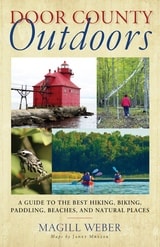
Door County Outdoors
A Guide to the Best Hiking, Biking, Paddling, Beaches, and Natural PlacesMagill Weber
University of Wisconsin Press, 2011
A picturesque peninsula with 298 miles of Lake Michigan shoreline, state parks, forests, and cozy inns, Door County is one of the Midwest’s prime tourist attractions. Magill Weber explores the many recreational opportunities available to visitors, including secret spots known only to locals and longtime seasonal residents. Wisconsin native Janet Mrazek contributes 125 detailed and easy-to-follow maps. With suggestions of more than 150 scenic hikes, biking and paddling routes, end-of-the-road beaches, lighthouses, and wildlife-watching sites, and descriptions of the local flora and fauna, Door County Outdoors is the ultimate guide for active travelers and nature enthusiasts.
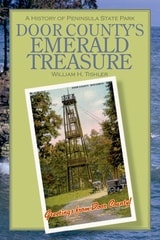
Door County's Emerald Treasure
A History of Peninsula State ParkWilliam H. Tishler
University of Wisconsin Press, 2006
With its magnificent forests, bluffs, and shoreline and its breathtaking views of Green Bay and Lake Michigan, Door County’s Peninsula State Park is one of the Midwest’s most popular attractions. Established in 1909, it was Wisconsin’s second state park and a key to pioneering efforts to build a state park system that would be the envy of the nation.
Door County’s Emerald Treasure explores the rich history of the park land, from its importance to Native Americans and early European settlers through the twentieth century. Bill Tishler engagingly relates the role of conservationists and progressives in establishing the state park, its growing popularity for tourism and recreation, and efforts to protect the park’s resources from a variety of threats. Tishler also tells a larger story of Americans’ intimate relationship with the land around them and the challenge to create accessible public spaces that preserve the natural environment.
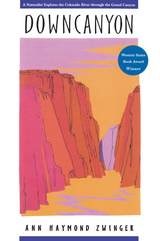
Downcanyon
A Naturalist Explores the Colorado River through the Grand CanyonAnn Haymond Zwinger
University of Arizona Press, 1995
Teamed with scientists and other volunteer naturalists, Zwinger was part of an ongoing study of change along the Colorado. In all seasons and all weathers, in almost every kind of craft that goes down the waves, she returned to the Grand Canyon again and again to explore, look, and listen. From the thrill of running the rapids to the wonder in a grain of sand, her words take the reader down 280 miles of the "ever-flowing, energetic, whooping and hollering, galloping" river.
Zwinger's book begins with a bald eagle count at Nankoweap Creek in January and ends with a subzero, snowy walk out of the canyon at winter solstice. Between are the delights of spring in side canyons, the benediction of rain on a summer beach, and the chill that comes off limestone walls in November.
Her eye for detail catches the enchantment of small things played against the immensity of the river: the gatling-gun love song of tree frogs; the fragile beauty of an evening primrose; ravens "always in close attendance, like lugubrious, sharp-eyed, nineteenth-century undertakers"; and a golden eagle chasing a trout "with wings akimbo like a cleaning lady after a cockroach."
As she travels downstream, Zwinger follows others in history who have risked—and occasionally lost—their lives on the Colorado. Hiking in narrow canyons, she finds cliff dwellings and broken pottery of prehistoric Indians. Rounding a bend or running a rapid, she remembers the triumphs and tragedies of early explorers and pioneers. She describes the changes that have come with putting a big dam on a big river and how the dam has affected the riverine flora and fauna as well as the rapids and their future.
Science in the hands of a poet, this captivating book is for armchair travelers who may never see the grandiose Colorado and for those who have run it wisely and well. Like the author, readers will find themselves bewitched by the color and flow of the river, and enticed by what's around the next bend. With her, they will find its rhythms still in the mind, long after the splash and spray and pound are gone.
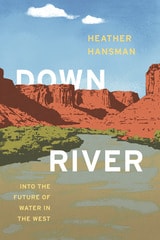
Downriver
Into the Future of Water in the WestHeather Hansman
University of Chicago Press, 2019
The Green River, the most significant tributary of the Colorado River, runs 730 miles from the glaciers of Wyoming to the desert canyons of Utah. Over its course, it meanders through ranches, cities, national parks, endangered fish habitats, and some of the most significant natural gas fields in the country, as it provides water for 33 million people. Stopped up by dams, slaked off by irrigation, and dried up by cities, the Green is crucial, overused, and at-risk, now more than ever.
Fights over the river’s water, and what’s going to happen to it in the future, are longstanding, intractable, and only getting worse as the West gets hotter and drier and more people depend on the river with each passing year. As a former raft guide and an environmental reporter, Heather Hansman knew these fights were happening, but she felt driven to see them from a different perspective—from the river itself. So she set out on a journey, in a one-person inflatable pack raft, to paddle the river from source to confluence and see what the experience might teach her. Mixing lyrical accounts of quiet paddling through breathtaking beauty with nights spent camping solo and lively discussions with farmers, city officials, and other people met along the way, Downriver is the story of that journey, a foray into the present—and future—of water in the West.
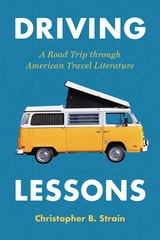
Driving Lessons
A Road Trip through American Travel LiteratureChristopher B. Strain
University of Alabama Press, 2025
Weaves the author’s own four-month cross-country sojourn in a VW van with thoughts on travel narratives across the history of American literature
In Driving Lessons, Christopher B. Strain sets out on a quintessential American road trip, exploring not just the roads and byways of the country but the road trip’s place in American culture. Strain dives into the well of American travel writing, illuminating fascinating aspects of the road trip, such as how race, class, and gender shape the experiences of road trippers.
In the summer of 1998, amid a professional crisis of confidence, Strain settled on a plan to reconnect with both himself and the country he studies. He purchased a 1972 Volkswagen Westfalia van and set off on his own cross-country odyssey. In the weeks that followed, he ruminated on his own ongoing journey alongside great journeys from the past and how they reveal the heart of the traveler as well as the landscape of the nation.
Visiting archives and landmarks across the United States, Strain's journey became a parallel to the stories he studied—an opportunity to see and experience the cities, national parks, and monuments that define US history. Driving Lessons is a compelling blend of literary analysis and memoir, offering readers an insightful and heartfelt reflection on the enduring power of the American road trip.
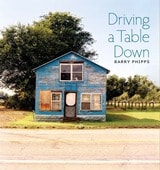
Driving a Table Down
Barry Phipps
University of Iowa Press, 2020
Phipps presents the 104 color photographs in Driving a Table Down—selected from more than 2,000 photographs taken over the twelve-day trip—in sequential order to show, in his words, “what does and does not change as one travels through shifting cultural and geographic regions.” By capturing the present moment while referencing the past with faded signs, almost obliterated murals, closed businesses in quiet towns, forgotten tourist attractions, and many other layers of historical accumulations, the photographs illustrate the stark fact that the present is never entirely present tense. Phipps’s attention to the real-time details of rural regions of the Midwest and the South, juxtaposed with personal photographs of his family, gives us a momentary definition of America in a state of flux, an America that looks to the past in a time of an uncertain future.
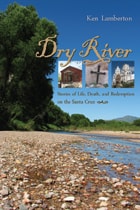
Dry River
Stories of Life, Death, and Redemption on the Santa CruzKen Lamberton
University of Arizona Press, 2011
Here, Ken Lamberton finds his way through a lifetime of exploring southern Arizona’s Santa Cruz River. This river—dry, still, and silent one moment, a thundering torrent of mud the next—serves as a reflection of the desert around it: a hint of water on parched sand, a path to redemption across a thirsty landscape.
With his latest book, Lamberton takes us on a trek across the land of three nations—the United States, Mexico, and the Tohono O’odham Nation—as he hikes the river’s path from its source and introduces us to people who draw identity from the river—dedicated professionals, hardworking locals, and the author’s own family. These people each have their own stories of the river and its effect on their lives, and their narratives add immeasurable richness and depth to Lamberton’s own astute observations and picturesque descriptions.
Unlike books that detail only the Santa Cruz’s decline, Dry River offers a more balanced, at times even optimistic, view of the river that ignites hope for reclamation and offers a call to action rather than indulging in despair and resignation. At once a fascinating cultural history lesson and an important reminder that learning from the past can help us fix what we have damaged, Dry River is both a story about the amazing complexity of this troubled desert waterway and a celebration of one man’s lifelong journey with the people and places touched by it.

Dune Country
A Hiker's Guide to the Indiana DunesGlenda L. Daniel
Ohio University Press, 1984