Results by title
644 books match the query 'Wars & Conflicts' and 20 start with d
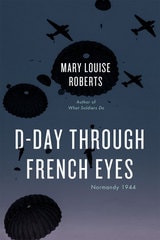
D-Day Through French Eyes
Normandy 1944Mary Louise Roberts
University of Chicago Press, 2014
Silent parachutes dotting the night sky—that’s how one woman in Normandy in June 1944 learned that the D-Day invasion was underway. Though they yearned for liberation, the people of Normandy steeled themselves for further warfare, knowing that their homes, land, and fellow citizens would have to bear the brunt of the attack. In D-Day through French Eyes, Mary Louise Roberts resets our view of the usual stories of that momentous operation, taking readers across the Channel to view the invasion anew. Roberts builds her history from an impressive range of gripping first-person accounts from French citizens, reinvigorating a story we thought we knew. The result is a fresh perspective on the heroism, sacrifice, and achievement of D-Day.
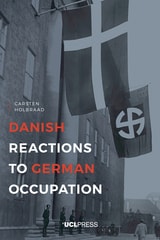
Danish Reactions to German Occupation
History and HistoriographyCarsten Holbraad
University College London, 2017
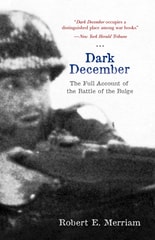
Dark December
The Full Account of the Battle of the BulgeRobert E. Merriam
Westholme Publishing, 2011
One of the Most Important Histories of the Greatest Battle on the Western Front in World War II
“Dark December occupies a distinguished place among war books. Every paragraph is based upon evidence, not flimsy wartime rumors. Technical enough for the professional, accurate enough for the historian (in fact, it is history of the best), it is lucid and understandable for the general reader.”—New York Herald Tribune
“If other veterans of the Army’s historical division can maintain Mr. Merriam’s high standard of stimulating, critical and painstaking work, we will be fortunate. Dark December can be heartily recommended to anyone faintly interested in the war.”—New York Times
“The book explodes a number of myths which have been winning their improper way into general belief.” —Arthur Schlesinger, Jr., Booklist
The massive German counteroffensive through Belgium’s Ardennes forest in December 1944 took the American and British armies by surprise and changed the outcome of the war. With whole divisions destroyed and decimated, the American army scrambled to contain the German threat, while also trying to determine how such an attack had gone undetected. The Americans succeeded in winning the month-long battle, commonly known as the Battle of the Bulge, through the tenacity of several pockets of troops, notably those in the Belgian town of Bastogne, and the remarkable rapid movement of Patton’s Third Army to seal the breech in the American lines. The battle stalled the British and American advances and lengthened the war with the result that the Soviet Union was able to make greater gains in Europe than previously anticipated. Dark December is a thorough and engrossing examination of the Battle of the Bulge by a historian who had the opportunity to prepare notes as the battle was occurring and consult classified American as well as German records. Notably, the book contains unique and critical information, including details gleaned from interviews conducted by the author with commanding officers on both sides, some of which are the only reports gathered from these sources. Originally published in 1947, this the first paperback edition with the complete original text and maps.
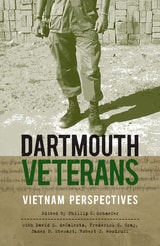
Dartmouth Veterans
Vietnam PerspectivesEdited by Phillip C. Schaefer
Brandeis University Press, 2014
David Lloyd George
Great BritainAlan Sharp
Haus Publishing, 2010
Degrees of Allegiance
Harassment and Loyalty in Missouri’s German-American Community during World War IPetra DeWitt
Ohio University Press, 2012
Historians have long argued that the Great War eradicated German culture from American soil. Degrees of Allegiance examines the experiences of German-Americans living in Missouri during the First World War, evaluating the personal relationships at the local level that shaped their lives and the way that they were affected by national war effort guidelines. Spared from widespread hate crimes, German-Americans in Missouri did not have the same bleak experiences as other German-Americans in the Midwest or across America. But they were still subject to regular charges of disloyalty, sometimes because of conflicts within the German-American community itself.
Degrees of Allegiance updates traditional thinking about the German-American experience during the Great War, taking into account not just the war years but also the history of German settlement and the war’s impact on German-American culture.
Destructive Sublime
World War II in American Film and MediaAllison, Tanine
Rutgers University Press, 2018
Destructive Sublime traces a new aesthetic history of the World War II combat genre by looking back at it through the lens of contemporary video games like Call of Duty. Allison locates some of video games’ glorification of violence, disruptive audiovisual style, and bodily sensation in even the most canonical and seemingly conservative films of the genre. In a series of case studies spanning more than seventy years—from wartime documentaries like The Battle of San Pietro to fictional reenactments like The Longest Day and Saving Private Ryan to combat video games like Medal of Honor—this book reveals how the genre’s aesthetic forms reflect (and influence) how American culture conceives of war, nation, and representation itself.
Dick Cole’s War
Doolittle Raider, Hump Pilot, Air CommandoDennis R. Okerstrom
University of Missouri Press, 2026
With the 100th anniversary of his birth on September 7, 2015 Dick Cole has long stood in the powerful spotlight of fame that has followed him since his B-25 was launched from a Navy carrier and flown toward Japan just four months after the attack on Pearl Harbor. In recognition the tremendous boost Doolittle’s Raid gave American morale, members of The Tokyo Doolittle Raiders were awarded the Congressional Gold Medal in May 2014.
Doolittle’s Raid was only the opening act of Cole’s flying career during the war. When that mission was complete and all of the 16 aircraft had crash-landed in China, many of the survivors were assigned to combat units in Europe. Cole remained in India after their rescue and was assigned to Ferrying Command, flying the Hump of the Himalayas for a year in the world’s worst weather, with inadequate aircraft, few aids to navigation, and inaccurate maps. More than 600 aircraft with their crews were lost during this monumental effort to keep China in the war, but Cole survived and rotated home in 1943. He was home just a few months when he was recruited for the First Air Commandos and he returned to India to participate in Project 9, the aerial invasion of Burma.
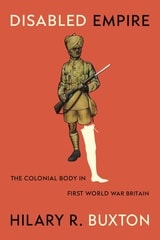
Disabled Empire
The Colonial Body in First World War BritainHilary R. Buxton
University of Chicago Press, 2026
Disabled Empire examines how imperial precedents and racial ideologies shaped the medical treatments that the British state offered to several million Black and brown servicemen during World War I. In recovering the voices and experiences of these soldiers, Hilary R. Buxton illustrates how they navigated the institutional culture of the imperial military and how they helped to shape health and welfare systems well beyond the interwar period.
The Great War was the first time that troops and volunteers from nearly all reaches of the Empire participated in the war effort side-by-side. Despite official attempts at segregation, colonial troops met in trenches, mobile camps, casualty clearing stations, hospital ships, and convalescent homes. Just as importantly, those organizing treatment encountered men of different ethnicities, religions, and cultures from across and beyond the British Empire. For British officials, this moment offered an opportunity to remake colonial efficiency and medical knowledge. Yet, as Buxton shows, colonial servicemen were not passive subjects in a wartime laboratory: they were vocal participants who demanded a say in the therapies prescribed to them, the rations they required, the psychiatric care they received, and the prosthetics with which they were fitted. Together, these encounters profoundly remade colonial relations, reshaping imperial science, administration, and colonial understandings of subjecthood.
Disabled Empire pushes literature on the war and medicine outside its national, Eurocentric focus to confront the colonial logic of global health inequity.
Discussing Hitler
Advisers of U.S. Diplomacy in Central Europe, 1934-41Tibor Frank
Central European University Press, 2003

Dismembering the Male
Men's Bodies, Britain, and the Great WarJoanna Bourke
University of Chicago Press, 1996
Each chapter explores a different facet of the war and masculinity in depth. Joanna Bourke discovers that those who were dismembered and disabled by the war were not viewed as passive or weak, like their civilian counterparts, but were the focus of much government and public sentiment. Those suffering from disease were viewed differently, often finding themselves accused of malingering.
Joanna Bourke argues convincingly that military experiences led to a greater sharing of gender identities between men of different classes and ages. Dismembering the Male concludes that ultimately, attempts to reconstruct a new type of masculinity failed as the threat of another war, and with it the sacrifice of a new generation of men, intensified.
Dissensual Subjects
Memory, Human Rights, and Postdictatorship in Argentina, Brazil, and UruguayAndrew C. Rajca
Northwestern University Press, 2018
Through an engaging exploration of the concept of “never again” (nunca más/nunca mais) and close analysis of photography exhibits, audiovisual installations, and other art forms in spaces of cultural memory, the book explores how aesthetic interventions can suggest alternative ways of framing human rights subjectivity beyond the rhetoric of liberal humanitarianism. The book visits sites of memory, two of which functioned as detention and torture centers during dictatorships, to highlight the tensions between the testimonial tenor of permanent exhibits and the aesthetic interventions of temporary installations there. Rajca thus introduces perspectives that both undo common understandings of authoritarian violence and its effects as well as reconfigure who or what are made visible as subjects of memory and human rights in postdictatorship countries.
Dissensual Subjects offers much to those concerned with numerous interlocking fields: memory, human rights, political subjectivity, aesthetics, cultural studies, visual culture, Southern Cone studies, postdictatorship studies, and sites of memory.
Dissonant Heritage in Tourism
Confronting Difficult Pasts in Italy and BeyondMaria Paola Pasini
Central European University Press, 2026
Disturbing Practices
History, Sexuality, and Women's Experience of Modern WarLaura Doan
University of Chicago Press, 2013
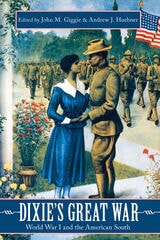
Dixie's Great War
World War I and the American SouthEdited by John M. Giggie and Andrew J. Huebner
University of Alabama Press, 2021
Examining the First World War through the lens of the American South
How did World War I affect the American South? Did southerners experience the war in a particular way? How did regional considerations and, more generally, southern values and culture impact the wider war effort? Was there a distinctive southern experience of WWI?
Scholars considered these questions during “Dixie’s Great War,” a symposium held at the University of Alabama in October 2017 to commemorate the centenary of the American intervention in the war. With the explicit intent of exploring iterations of the Great War as experienced in the American South and by its people, organizers John M. Giggie and Andrew J. Huebner also sought to use historical discourse as a form of civic engagement designed to facilitate a community conversation about the meanings of the war.
Giggie and Huebner structured the panels thematically around military, social, and political approaches to the war to encourage discussion and exchanges between panelists and the public alike. Drawn from transcriptions of the day’s discussions and lightly edited to preserve the conversational tone and mix of professional and public voices, Dixie’s Great War: World War I and the American South captures the process of historians at work with the public, pushing and probing general understandings of the past, uncovering and reflecting on the deeper truths and lessons of the Great War—this time, through the lens of the South.
This volume also includes an introduction featuring a survey of recent literature dealing with regional aspects of WWI and a discussion of the centenary commemorations of the war. An afterword by noted historian Jay Winter places “Dixie’s Great War”—the symposium and this book—within the larger framework of commemoration, emphasizing the vital role such forums perform in creating space and opportunity for scholars and the public alike to assess and understand the shifting ground between cultural memory and the historical record.
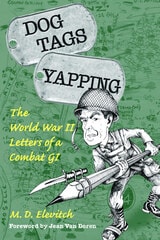
Dog Tags Yapping
The World War II Letters of a Combat GIM.D. Elevitch. Foreword by Jean Van Doren
Southern Illinois University Press, 2003
A chronicle of war infused with uncommon cheer, Dog Tags Yapping: The World War II Letters of a Combat GI is a young man’s education in life and death and a narrative of war told completely in letters.
During World War II, thousands of high school graduates were drafted into the army to be trained in colleges as engineers or other technicians but instead were assigned to fighting units and joined the great assault in Europe after D-Day. One of those reprogrammed combat infantrymen was Morton Elevitch from Duluth, Minnesota. Elevitch’s cartoons, drawings, and extremely unconventional letters home—rescued from box-in-the-basement oblivion after a more than fifty-year dormancy—recover the story of one rerouted GI in a voice that is compelling and new. Embellished with a boyish flair, the quirky and playful documents collected here impart a distinctly personal and uncalculated record of war, family, and coming of age. “It’s much easier to wield a melancholy pen than to sit down and cry,” Elevitch declares to his father.
Sparkling with a patina of wit and the bittersweet allure of lost innocence, the words and letters of “Privitch Elevate” offer the immediacy of the events as they unfolded. With the ease and expertise expected of a more seasoned storyteller, the young Elevitch escorts readers through his basic training and departure for Europe, duty in Brittany with the 94th Division and departure for Germany, combat under Patton’s command, wounding by mortar fragments, convalescence in England, and his return to France with the Signal Corps to guard prisoners and await demobilization. But along with these letters are the stories of his relationships with his parents, his brother, the men of his company and even the prisoners of war. The author’s perspectives on the war radically change. Both comic and tragic in its treatment of war’s chaos and tedium, this sensitive personal history covers experiences from the adjustment to military life and the temptations of flesh to the pain of wounds and recovery and the exposure to foreign countries and cultures.
Presaging his career as a novelist and editor, Elevitch’s words and drawings sketch an audacious and highly imaginative portrait of a young man during an exceptional time in world history. Evocative of life lived and nearly lost, his jarring accounts of combat reveal a soldier who was wounded not only in body but also in soul, in a war that changed him forever—just as it changed everyone it touched. Reproduced here as they were originally written, alongside a gallery of photos and hand-drawn battle maps, Elevitch’s cartoons and letters were initially intended for only three persons. But with their unique historical value and affecting exploration of the human spirit, they resurface in Dog Tags Yapping and result in an exhilarating ride for all readers through his “wild bivouac of the mind.”
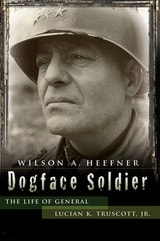
Dogface Soldier
The Life of General Lucian K. Truscott, Jr.Wilson A. Heefner
University of Missouri Press, 2026
Yet no definitive history of his life has been compiled. Wilson Heefner corrects that with the first authoritative biography of this distinguished American military leader. Heefner has undertaken impressive research in primary sources—as well as interviews with family members and former associates—to shed new light on this overlooked hero. He presents Truscott as a soldier who was shaped by his upbringing, civilian and military education, family life, friendships, and evolving experiences as a commander both in and out of combat.
Heefner’s brisk narrative explores Truscott’s career through his three decades in the Army and defines his roles in key operations. It also examines Truscott’s postwar role as military governor of Bavaria, particularly in improving living conditions for Jewish displaced persons, removing Nazis from civil government, and assisting in the trials of German war criminals. And it offers the first comprehensive examination of his subsequent career in the Central Intelligence Agency, where he served as senior CIA representative in West Germany during the early days of the Cold War, and later as CIA Director Allen Dulles’s deputy director for coordination in Washington.
Dogface Soldier is a portrait of a man who earned a reputation for being honest, forthright, fearless, and aggressive, both as a military officer and in his personal life—a man who, at the dedication ceremony for the Anzio-Nettuno American cemetery in 1945, turned away from the crowd and to the thousands of crosses stretching before him to address those buried there. Heefner has written a definitive biography of a great soldier and patriot.

Done in a Day
Telex from the Fall of SaigonElisa Tamarkin
University of Chicago Press, 2026
Named one of Lit Hub's most anticipated books of the year.
A searing reflection on the last day of the Vietnam War and the beginning of the end of foreign reporting in the nation’s daily newspapers.
Done in a Day turns on a single event: the April 30, 1975, departure of the last helicopter evacuating civilians from the rooftop of the US embassy in Saigon. Elisa Tamarkin’s interest in that helicopter begins with the fact that her stepfather, the Saigon bureau chief for the Chicago Daily News, was on it—the last American correspondent to leave Saigon as it fell. His report was filed from a naval ship on the South China Sea at a time when no other telexes were going through.
Now, more than fifty years later, Tamarkin offers a social and cultural autopsy of that moment, based in personal history but vividly unfolding amid the vast documentation of America’s obvious defeat, which never seemed to register even as it got out, in the writings of journalists and essayists, in the backchannel cables between US ambassador Graham Martin and Henry Kissinger, in congressional hearings, and in photographs of the war’s end. The story is also set against the imminent disappearance of war coverage in city newspapers—and of the newspapers themselves—once proud, in the words of the Chicago Daily News, of bringing readers the “literature of the day” that was “done in a day.”
Done in a Day braids history, criticism, and memoir to tell the paired stories of Saigon’s liberation and the demise of the news. The result is a haunting essay about all that ended in a day—and about what it means to recognize and to write about endings even as we live through them.
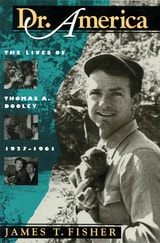
Dr. America
The Lives of Thomas A. Dooley, 1927-1961James T. Fisher
University of Massachusetts Press, 1997
This book chronicles the life of Tom Dooley, the American doctor whose much-publicized exploits in Vietnam and Laos during the 1950s helped lay the ideological groundwork for the U.S. military intervention a decade later. The scion of an upper-middle-class St. Louis family, Dooley was an enormously complex and fascinating individual. He was a devoutly religious Roman Catholic as well as a self-styled playboy socialite, a devoted physician to the poor and a tireless propagandist for the “Vietnam Lobby,” a shameless self-promoter and a closeted homosexual, a victim of Navy persecution and a beneficiary of CIA support. Dooley first gained notoriety as a young Navy doctor charged with overseeing the evacuation of Catholic refugees from North Vietnam in the wake of the 1954 Geneva Accords. His celebrity grew after his book Deliver Us from Evil, a fervently anticommunist account of his experiences, was serialized in Reader's Digest. By the end of the decade, as his name became associated (albeit mistakenly) with a ballad popularized by the Kingston Trio, he had achieved the status of “America's first pop star saint.” In addition to exposing the roots of the Vietnam War, Dooley's story illuminates a broad range of developments in post-World War II United States culture—from the “Americanization” of Catholicism to the rise of the mass media.
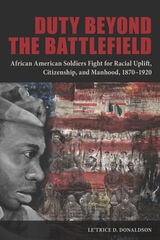
Duty beyond the Battlefield
African American Soldiers Fight for Racial Uplift, Citizenship, and Manhood, 1870–1920Le'Trice D. Donaldson
Southern Illinois University Press, 2020
Through extensive research, Donaldson not only illuminates this evolution but also interrogates the association between masculinity and citizenship and the ways in which performing manhood through military service influenced how these men struggled for racial uplift. Following the Buffalo soldier units and two regular army infantry units from the frontier and the Mexican border to Mexico, Cuba, and the Philippines, Donaldson investigates how these locations and the wars therein provide windows into how the soldiers’ struggles influenced black life and status within the United States.
Continuing to probe the idea of what it meant to be a military race man—a man concerned with the uplift of the black race who followed the philosophy of progress—Donaldson contrasts the histories of officers Henry Flipper and Charles Young, two soldiers who saw their roles and responsibilities as black military officers very differently.
Duty beyond the Battlefield demonstrates that from the 1870s to 1920s military race men laid the foundation for the “New Negro” movement and the rise of Black Nationalism that influenced the future leaders of the twentieth century Civil Rights movement.