Results by title
301 books match the query 'West (U.S.)' and 16 start with d

Dale L. Morgan
Mormon and Western Histories in TransitionRichard L. Saunders
University of Utah Press, 2023
This is the first biography of Dale L. Morgan, preeminent Western historian of the fur trade, historic trails, and the Latter Day Saint movement. The book explores how, despite personal struggles, Morgan committed his life to tracking down sources and interpreting the past on the strength of documentary evidence. Connecting Morgan’s life with some of the broad cultural changes that shaped his experiences, this book engages with methodological shifts in the historical profession, the mid-twentieth-century collision of interpretations within Latter Day Saint history, and the development of a descriptive, scholarly approach to that history.
Morgan’s body of work and commitment to serious scholarship signaled the start of new ways of understanding, studying, and retelling history, and he motivated a generation of historians from the 1930s to the 1970s to transform their historical approaches. Sounding board, mentor, and close friend to Nels Anderson, Fawn Brodie, Juanita Brooks, Bernard DeVoto, Wallace Stegner, and Leonard Arrington, Dale Morgan is the common factor linking this influential generation of mid-twentieth-century historians of western America.
DeVoto’s West
History, Conservation, and the Public GoodBernard DeVoto
Ohio University Press, 2005

Death of a Gunfighter
The Quest for Jack Slade, the West's Most Elusive LegendDan Rottenberg
Westholme Publishing, 2008
The True Story of One of America’s Most Enigmatic and Tragic Heroes
Awarded Best Western History Book of 2008 by the Wild West History Association
"A superb biography"—Foreword Reviews
"An ambitious, well-written effort to restore a Wild West desperado to history.... Readers will surely remember Jack Slade from henceforth. A treat for Western history buffs and fans of true crime."—Kirkus Reviews
"An enjoyable read, and it is also a heroic effort."—Wall Street Journal
"Every bit the page-turner as Roughing It, with one added advantage—Rottenberg's book approaches the truth."—Wild West magazine
"Now and then a book of Western history comes along that captures an era and clears up many a mystery; Death of a Gunfighter is such a book."—Colorado Central magazine
In 1859, as the United States careened toward civil war, Washington's only northern link with America's richest state, California, was a stagecoach line operating between Missouri and the Pacific. Yet the stage line was plagued by graft, outlaws, and hostile Indians. At this critical moment, the company enlisted a former wagon train captain and Mexican War veteran to clean up its most dangerous division. Over the next three years, Joseph Alfred "Jack" Slade exceeded his employers' wildest dreams, capturing bandits and horse thieves and driving away gangs; he even shot to death a disruptive employee. He kept the stagecoaches and the U.S. Mail running, and helped launch the Pony Express, all of which kept California in the Union—and without California's gold, the Union would have failed to finance its cause. Across the Great Plains he became known as "The Law West of Kearny."
Slade's legend grew when he was shot multiple times and left for dead, only to survive and exact revenge on his would-be killer. But once Slade had restored the peace, leaving him without challenges, his life descended into an alcoholic Dr. Jekyll and Mr. Hyde nightmare, transforming him from a courageous leader, charming gentleman, and devoted husband into a vicious, quick-triggered ruffian—a purported outlaw —who finally lost his life at the hands of vigilantes.
Since Slade's death in 1864, persistent myths and stories have defied the efforts of writers and historians, including Mark Twain, to capture the real Jack Slade. Despite his notoriety, the pieces of Slade's fascinating life—including his marriage to the beautiful Maria Virginia—have remained scattered and hidden. He was never photographed and left almost no personal writings, not even a letter. In Death of a Gunfighter: The Quest for Jack Slade, the West's Most Elusive Legend, journalist Dan Rottenberg assembles years of research to reveal the true story of Jack Slade, one of America's greatest tragic heroes.

Democratic Dilemmas in the Age of Ecology
Trees and Toxics in the American WestDaniel Press
Duke University Press, 1994
Press introduces the primary debate in this confrontation as a choice between political centralization and decentralization. Do citizens faced with environmental crises tend to look first to a centralized leadership for solutions or do they tend to respond at a more local and grassroots level? What is the role of technical expertise in this process and how does it effect public participation in these matters? Do confrontations over environmental issues increase support for a more fully democratic decisionmaking process? Representing social, political, and economic challenges to democracy, these and other questions are then investigated empirically through analyses of case studies. Focusing on two recent controversies in the western United States, ancient-forest logging in Oregon and California and hazardous waste management in California, and drawing on in-depth interviews with individuals involved, Press clarifies the relationship between environmentalism and democracy and explores the characteristics of "new" democratic forms of environmental policymaking.
Revealing a need for a more decentralized process and increased individual and collective action in response to environmental crises, Democratic Dilemmas in the Age of Ecology will be of interest to a wide range of audiences, from scholars concerned with applications of democratic theory, to activists and policymakers seeking to change or implement environmental policy.

Diaries of John Gregory Bourke Volume 1
November 20, 1872--July 28, 1876Charles M. Robinson III
University of North Texas Press, 2003
Diaries of John Gregory Bourke Volume 2
July 29, 1876--April 7, 1878Charles M. Robinson III
University of North Texas Press, 2003

Diaries of John Gregory Bourke Volume 3
June 1, 1878--June 22, 1880Charles M. Robinson III
University of North Texas Press, 2003

Diaries of John Gregory Bourke Volume 4
July 3, 1880--May 22, 1881Charles M. Robinson III
University of North Texas Press, 2003
Disease And Medical Care In The Mountain West
Essays On Region, History, And PracticeMartha L. Hildreth
University of Nevada Press, 1998
This collection of eight essays examines the health, disease, and medical care of the American West—an area flanked by the Rocky Mountains, Sierra Nevada, and Cascade Mountains. Topics include Mormons and the Thomsonian Movement in the nineteenth century, the silicosis epidemic in hardrock mining, Native American health, frontier nursing, and Chinese medicine.

Dolly and Zane Grey
Letters from a MarriageCandace C. Kant
University of Nevada Press, 2011
Popular western writer Zane Grey was a literary celebrity during his lifetime and the center of a huge enterprise based on his writing, which included books, magazine serials, film and stage versions of his stories, even comic strips. His wife, Dolly, closely guided Grey's career almost from its beginning, editing and sometimes revising his work, negotiating with publishers and movie studios, and skillfully managing the considerable fortune derived from these activities.
Dolly maintained the facade of a conventional married life that was essential to Grey's public image and the traditional middle-class values his work reflected. This facade was constantly threatened by Grey's numerous affairs with other women. The stress of hiding these dalliances placed a huge strain on their relationship, and much of Zane and Dolly's union was sustained largely by correspondence. Their letters--thousands of them--reveal the true nature of this complex partnership. As edited by Candace Kant, the letters offer an engrossing portrait of an extremely unorthodox marriage and its times.
Doubters and Dreamers
Janice Gould
University of Arizona Press, 2011
In the first half of the book, “Tribal History,” Gould ingeniously repurposes the sonnet form to preserve the stories of her mother and aunt, who grew up when “muleback was the customary mode / of transport” and the “spirit world was present”—stories of “old ways” and places claimed in memory but lost in time. Elsewhere, she remembers her mother’s “ferocious, upright anger” and her unexpected tenderness (“Like a miracle, I was still her child”), culminating in the profound expression of loss that is the poem “Our Mother’s Death.”
In the second half of the book, “It Was Raining,” Gould tells of the years of lonely self-making and “unfulfilled dreams” as she comes to terms with what she has been told are her “crazy longings” as a lesbian: “It’s been hammered into me / that I’ll be spurned / by a ‘real woman,’ / the only kind I like.” The writing here commemorates old loves and relationships in language that mingles hope and despair, doubt and devotion, veering at times into dreamlike moments of consciousness. One poem and vignette at a time, Doubters and Dreamers explores what it means to be a mixed-blood Native American who grew up urban, lesbian, and middle class in the West.

Down By The Lemonade Springs
Essays On Wallace StegnerJackson J. Benson
University of Nevada Press, 2001
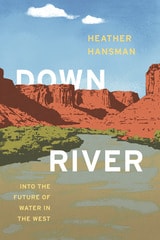
Downriver
Into the Future of Water in the WestHeather Hansman
University of Chicago Press, 2019
The Green River, the most significant tributary of the Colorado River, runs 730 miles from the glaciers of Wyoming to the desert canyons of Utah. Over its course, it meanders through ranches, cities, national parks, endangered fish habitats, and some of the most significant natural gas fields in the country, as it provides water for 33 million people. Stopped up by dams, slaked off by irrigation, and dried up by cities, the Green is crucial, overused, and at-risk, now more than ever.
Fights over the river’s water, and what’s going to happen to it in the future, are longstanding, intractable, and only getting worse as the West gets hotter and drier and more people depend on the river with each passing year. As a former raft guide and an environmental reporter, Heather Hansman knew these fights were happening, but she felt driven to see them from a different perspective—from the river itself. So she set out on a journey, in a one-person inflatable pack raft, to paddle the river from source to confluence and see what the experience might teach her. Mixing lyrical accounts of quiet paddling through breathtaking beauty with nights spent camping solo and lively discussions with farmers, city officials, and other people met along the way, Downriver is the story of that journey, a foray into the present—and future—of water in the West.
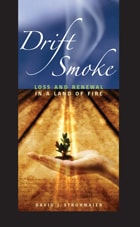
Drift Smoke
Loss and Renewal in a Land of FireDavid J. Strohmaier
University of Nevada Press, 2009
David Strohmaier’s long career as a firefighter has given him intimate knowledge of wildfire and its complex role in the natural world of the American West. It has also given him rare understanding of the painful losses that are a consequence of fire. Strohmaier addresses our ambivalence about fire and the realities of loss to it—of life, human and animal, of livelihoods, of beloved places. He also examines the process of renewal that is yet another consequence of fire, from the infusion of essential nutrients into the soil, to the sprouting of seeds that depend on fire for germination, to the renewal of species as the land restores itself. Ultimately, according to Strohmaier, living with fire is a matter of choices, of “seeing the connection between loss on a personal scale and loss on a landscape scale: in relationship with persons, and in relationship to and with the land.” We must cultivate a longer perspective, he says, accepting that loss is a part of life and that “humility and empathy and care are not only core virtues between humans but are also essential virtues in our attitudes and actions toward the earth.” Drift Smoke is a powerful and moving meditation on wildfire by someone who has seen it in all its terror and beauty, who has lost colleagues and beloved terrain to its ferocity, and who has also seen the miracle of new life sprouting in the ashes. The debate over the role and control of fire in the West will not soon end, but Strohmaier’s contribution to the debate will help all of us better appreciate both the complexity of the issues and the possibilities of hitherto unconsidered solutions that will allow us to inhabit a place where fire is a natural, and needed, part of life.
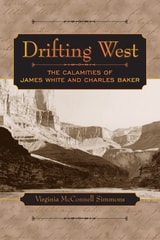
Drifting West
V Simmons
University Press of Colorado, 2007
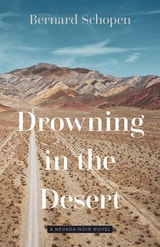
Drowning in the Desert
A Nevada Noir NovelBernard Schopen
University of Nevada Press, 2023
Norman “Fats” Rangle, an ex–deputy sheriff, operates a horse stabling and excursion business with his brother and sister-in-law on their family ranch in the small rural community of Blue Lake, a few hours outside of Las Vegas. But fate has other plans for him when, high on a southern Nevada mountain range, Fats discovers the wreckage of a plane that crashed two years earlier. Although he reports his find to the sheriff, he does not disclose that someone had already been to the crash site—evidence that Fats deliberately destroyed.
Soon, Fats is tracking back and forth between Las Vegas and Blue Lake in a search for a missing cousin, a briefcase full of cash, and, finally, for a killer. Along the way, Fats also begins to understand that he’s searching for himself and his place in a rapidly changing West.
Angry and alienated, Fats distrusts everyone he meets, from sleaze-merchants and political power brokers to two women: one he wants to believe in, a retired judge; and the other, a police sergeant, he can’t quite believe isn’t deceiving him. After all, in this Nevada, corruption is a given. Everybody lies. Much is uncertain—motives, loyalties, affections. But in Drowning in the Desert, one thing is certain: water is a precious resource that can both kill and be killed for.