Results by title
130 books match the query 'Women's rights' and 3 start with d

Daring To Be Bad
Radical Feminism in America 1967-1975Alice Echols
University of Minnesota Press, 1989

Debating Women's Equality
Toward a Feminist Theory of Law from a European PerspectiveGerhard, Ute
Rutgers University Press, 2001
Ute Gerhard places women's rights at the center of legal philosophy and sees the struggle for equality as a driving force in the history of law. Focusing on Europe and taking the course of German feminism and law as primary examples, she incorporates the various social contexts in which questions of equality and gender difference have been raised into an analysis that challenges misconceptions about the principle of equality itself.
Gerhard reviews the history of women's movements in the nineteenth and twentieth centuries and traces the historical development of claims to gender equality as well as obstacles to these claims. Critically exploring the influence of philosophers such as Rousseau, Fichte, and Kant, Gerhard concludes that women need to be recognized as both equal and different-that claims to equality do not simply eliminate difference, but also articulate it. Mindful of the social and political contexts surrounding equality arguments, Gerhard probes three legal issues: women's rights in the public sphere, especially the right to vote; women's legal capacities in private law, or the legal doctrine of so-called gender tutelage; and women's human rights, a prominent concern in the current international women's movement.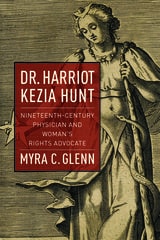
Dr. Harriot Kezia Hunt
Nineteenth-Century Physician and Woman’s Rights AdvocateMyra C. Glenn
University of Massachusetts Press, 2018
Harriot Kezia Hunt was a pioneer in a number of ways. The first woman to establish a successful medical practice in the United States, she began seeing patients in Boston in 1835 and promoted a new method of treatment by listening to women's troubles or their “heart histories.” Her unsuccessful efforts to attend lectures at Harvard's Medical School galvanized her activism in the woman's rights movement. During the 1850s she played a prominent role in the annual woman's rights conventions and was the first woman in Massachusetts to publicly protest the injustice of taxing propertied women while denying them the franchise.
In this first comprehensive, full-length biography of Hunt, Myra C. Glenn shows how this single woman from a working-class Boston home became a successful physician and noted reformer, illuminating the struggle for woman's rights and the fractious and gendered nature of medicine in antebellum America.