Results by title
173 books match the query 'Women in literature' and 5 start with d
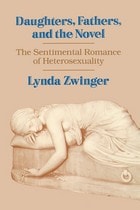
Daughters, Fathers, and the Novel
The Sentimental Romance of HeterosexualityLynda Zwinger
University of Wisconsin Press, 1991
Daughters, Fathers, and the Novel is a provocative study of the father-daughter story—a neglected dimension of the family romance. It has important implications for the history of the novel, for our understanding of key texts in that history, and for theories concerning the representation of gender, family relations, and heterosexuality in Western culture.
In the English and American novel, argues Lynda Zwinger, “the good woman” . . . is a father’s daughter, . . . constructed to the very particular specifications of an omnipresent and unvoiced paternal desire.” Zwinger supports her case with an analysis of both “high-brow” and “low-brow” novels and with ingenious textual analyses of five novels: Clarissa Harlowe, Dombey and Son, Little Women, The Golden Bowl, and The Story of O.
In the dominant discourse of Anglo-American culture, the father’s daughter provides the cornerstone for the patriarchal edifice of domesticity and the alibi for patriarchal desire. Zwinger’s analysis of the sexual politics embodied in the figure of this sentimental daughter raises compelling critical and cultural issues. Zwinger shows how different readings of Clarissa’s story form a sentimental composite that makes her available in perpetuity to heterosexual desire. Dombey and Son illuminates the erotic dimension of the sentimental, the titillation always inherent in the spectacle of virtue in distress. Zwinger’s analysis of Little Women in the context of Louisa May Alcott’s own life-text focuses upon the problems of a daughter trying to write the filial romance. The Golden Bowl deploys the daughter of sentiment as a “cover story” for a feminine version of the Oedipal story, founded on the daughter who can’t say yes, but doesn’t say no. The Story of O reveals the pornographic dimension in romantic and sentimental love.
In her conclusion, Zwinger offers an overview of the nineteenth-century novel, asking what difference it makes when the writer is a daughter. She shows how the daughter’s family romance pictures the father as inadequate, ironically requiring the sentimental daughter as a patriarchal prop. She develops a useful concept of hysteria and argues that generic “disorder” and hysterical “intrusions” mark the family romance novels of Jane Austen, Emily and Charlotte Brontë, and George Eliot. And finally, she makes the case that the daughter’s choice to stay home is not necessarily an act of simple complicity, for by staying home she comes as close as she can to disrupting the father-daughter romance.
Decolonial Witnessing
Cold War Afterlives in Latin American and Latinx TestimoniosGuadalupe Escobar
University of Texas Press, 2026
Examining the power of testimonios in illuminating political injustice in Latin America from the Cold War to the present.
During the Cold War, testimonio emerged as a powerful genre of political nonfiction in Latin America. Artists created first-person narratives of censorship and state violence, highlighting broader circumstances of oppression carried out by local right-wing oligarchies in collusion with the US empire. Decolonial Witnessing explores the continuing vitality of testimonio in the twenty-first century, as it has evolved into narratives contesting neoliberal dispossession and disposability.
Considering the cultural work of Ana Castillo, Regina José Galindo, Jayro Bustamante, Alberto Ledesma, Javier Zamora, Lila Downs, and others, Guadalupe Escobar shows how artists, authors, musicians, and filmmakers are using testimonial narratives to identify and resist the architecture of post–Cold War militarized democracy. Contemporary testimonios center migrant children, torture abolitionists, Indigenous land defenders—figures whose perspectives and, indeed, presence disrupt dominant paradigms of citizenship. Cast against the law, their stories—their memories—constitute a critical optic on the construction of belonging. In these acts of bearing witness, Escobar locates the possibility of a new, counterhegemonic political imagination.
Dehexing Sex
Russian Womanhood During and After GlasnostHelena Goscilo
University of Michigan Press, 1996
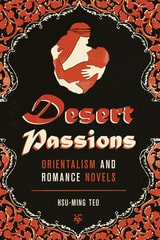
Desert Passions
Orientalism and Romance NovelsBy Hsu-Ming Teo
University of Texas Press, 2012
The Sheik—E. M. Hull’s best-selling novel that became a wildly popular film starring Rudolph Valentino—kindled “sheik fever” across the Western world in the 1920s. A craze for all things romantically “Oriental” swept through fashion, film, and literature, spawning imitations and parodies without number. While that fervor has largely subsided, tales of passion between Western women and Arab men continue to enthrall readers of today’s mass-market romance novels. In this groundbreaking cultural history, Hsu-Ming Teo traces the literary lineage of these desert romances and historical bodice rippers from the twelfth to the twenty-first century and explores the gendered cultural and political purposes that they have served at various historical moments.
Drawing on “high” literature, erotica, and popular romance fiction and films, Teo examines the changing meanings of Orientalist tropes such as crusades and conversion, abduction by Barbary pirates, sexual slavery, the fear of renegades, the Oriental despot and his harem, the figure of the powerful Western concubine, and fantasies of escape from the harem. She analyzes the impact of imperialism, decolonization, sexual liberation, feminism, and American involvement in the Middle East on women’s Orientalist fiction. Teo suggests that the rise of female-authored romance novels dramatically transformed the nature of Orientalism because it feminized the discourse; made white women central as producers, consumers, and imagined actors; and revised, reversed, or collapsed the binaries inherent in traditional analyses of Orientalism.

Dialogics of the Oppressed
Peter Hitchcock
University of Minnesota Press, 1992
Dialogics of the Oppressed was first published in 1992. Minnesota Archive Editions uses digital technology to make long-unavailable books once again accessible, and are published unaltered from the original University of Minnesota Press editions.
Formulated within and against the context of Russian formalism that became the backbone of semiotics, Mikhail Bakhtin's work has enabled contemporary critical theories to return to specific sociopolitical and historical moments that had been closed off by formalist abstractions. In Dialogics of the Oppressed, Peter Hitchcock looks through the lens of Bakhtin's theory of dialogism for an analysis of subaltern writing. Rather than assume an integral "subaltern subject" as the object of analysis, Hitchcock - in case studies of four global feminists, Nawal el Saadawi, Pat Barker, Zhang Jie, and Agnes Smedley - emphasizes the cultural agency of the subaltern and shows the political implications this agency might have for literary analysis in general and cultural studies in particular.
"Presents a provocative set of readings-through the Bakhtinian model of dialogism-of texts by four women writers of the twentieth century. . . instructive and compelling." Barbara Harlow, University of Texas
Dialogics of the Oppressed argues from an internationalistic perspective to underline that the heterogeneity of dialogic feminism itself constitutes a significant array of discursive resistance to the hegemony of disciplines and so-called area studies operative in the metropolitan First World academy. Hitchcock demonstrates through dialogic analyses of the writings of these four feminists that a form of multicultural materialism can itself disrupt the restrictive logics and practices of literary studies in the Western academy, and that indeed, there is a counterlogic in the culture of the subaltern. Hitchcock's underlying objective is the development of a powerful critique of the epistemological bases of the academy that marginalize and devalorize certain cultural productions and subjects, as well as a cognitive mapping of the politics of pedagogy in current transformations of disciplinarity.
Peter Hitchcock is professor of English at Baruch College of the City University of New York. He is the author of Working-Class Fiction in Theory and Practice and has published essays on radical writing, multiculturalism, film, and Third World fiction.