Results by title
71 books match the query 'Writing centers' and 6 start with d
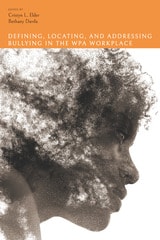
Defining, Locating, and Addressing Bullying in the WPA Workplace
Cristyn L. Elder
Utah State University Press, 2018
Contributors of varying status in different types of programs across many kinds of institutions describe various forms of bullying, including microaggressions, incivility, mobbing, and emotional abuse. They define bullying as institutional racism, “academic systemic incivility,” a crisis of insularity, and faculty fundamentalism. They locate bullying in institutional contexts, including research institutions, small liberal arts colleges, community colleges, and writing programs and writing centers. These locations are used as points of departure to further theorize bullying and to provide clear advice about agentive responses.
A culture of silence discourages discussions of this behavior, making it difficult to address abuse. This silence also normalizes patterns and cultivates the perception that bullying arises naturally. Defining, Locating, and Addressing Bullying in the WPA Workplace helps the field to name these patterns of behaviors as bullying and resist ideologies of normalcy, encouraging and empowering readers to take an active role in defining, locating, and addressing bullying in their own workplaces.
Contributors: Sarah Allen, Andrea Dardello, Harry Denny, Dawn Fels, Bre Garrett, W. Gary Griswold, Amy C. Heckathorn, Aurora Matzke, Staci Perryman-Clark, Sherry Rankins-Robertson, Erec Smith
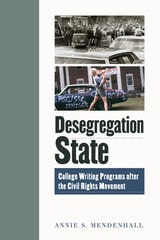
Desegregation State
College Writing Programs after the Civil Rights MovementAnnie S. Mendenhall
Utah State University Press, 2021
Formerly segregated state university systems crafted desegregation plans that gave them more control over policies for admissions, remediation, and retention. These plans created literacy requirements—admissions and graduation tests, remedial classes, and even writing centers and writing across the curriculum programs—that reshaped the landscape of college writing instruction and denied the demands of Black students, civil rights activists, and historically Black colleges and universities for major changes to university systems. This history details the profound influence of desegregation—and resistance to desegregation—on the ways that writing is taught and assessed in colleges today.
Desegregation State provides WPAs and writing teachers with a disciplinary history for understanding racism in writing assessment and writing programs. Mendenhall brings emerging scholarship on the racialization of institutions into the field, showing why writing studies must pay more attention to how writing programs have institutionalized racist literacy ideologies through arguments about student placement, individualized writing instruction, and writing assessment.
Developing Writers in Higher Education
A Longitudinal StudyAnne Ruggles Gere, editor
University of Michigan Press, 2019
This volume draws on an in-depth study of the writing and experiences of 169 University of Michigan undergraduates, using statistical analysis of 322 surveys, qualitative analysis of 131 interviews, use of corpus linguistics on 94 electronic portfolios and 2,406 pieces of student writing, and case studies of individual students to trace the multiple paths taken by student writers. Topics include student writers’ interaction with feedback; perceptions of genre; the role of disciplinary writing; generality and certainty in student writing; students’ concepts of voice and style; students’ understanding of multimodal and digital writing; high school’s influence on college writers; and writing development after college. The digital edition offers samples of student writing, electronic portfolios produced by student writers, transcripts of interviews with students, and explanations of some of the analysis conducted by the contributors.
This is an important book for researchers and graduate students in multiple fields. Those in writing studies get an overview of other longitudinal studies as well as key questions currently circulating. For linguists, it demonstrates how corpus linguistics can inform writing studies. Scholars in higher education will gain a new perspective on college student development. The book also adds to current understandings of sociocultural theories of literacy and offers prospective teachers insights into how students learn to write. Finally, for high school teachers, this volume will answer questions about college writing.
Companion Website
Click here to access the Developing Writers project and its findings at the interactive companion website.
Project Data
Access the data from the project through this tutorial.
Discord And Direction
The Postmodern Writing Program Administratoredited by Sharon James McGee & Carolyn Handa
Utah State University Press, 2005
Postmodernism's central moves include questioning hierarchy, valuing paratactic associations, and rejecting grand narratives, and the work of a Writing Program Administrator, most days, includes those moves as well. The argument of this collection is that the cultural and intellectual legacies of postmodernism impinge, significantly and daily, on the practice of the Writing Program Administrator. WPAs work in spaces where they must assume responsibility for a multifaceted program, a diverse curriculum, instructors with varying pedagogies and technological expertise—and where they must position their program in relation to a university with its own conflicted mission, and a state with its unpredictable views of accountability and assessment.
The collection further argues that postmodernism offers a useful lens through which to understand the work of WPAs and to examine the discordant cultural and institutional issues that shape their work. Each chapter tackles a problem local to its author's writing program or experience as a WPA, and each responds to existing discord in creative ways that move toward rebuilding and redirection.
It is a given that accepting the role of WPA will land you squarely in the bind between modernism and postmodernism: while composition studies as a field arguably still reflects a modernist ethos, the WPA must grapple daily with postmodern habits of thought and ways of being. The effort to live in this role may or may not mean that a WPA will adopt a postmodern stance; it does mean, however, that being a WPA requires dealing with the postmodern.
Disrupting the Center
A Partnership Approach to Writing Across the UniversityRebecca Hallman Martini
Utah State University Press, 2021
Using on-site research and critical ethnographic study from one university writing center, Rebecca Hallman Martini establishes an innovative, cross-disciplinary partnership approach to writing instruction in which peer tutoring plays an integral curricular role. Case studies detail three partnerships that respond directly to existing or potential disruptive innovations in higher education and showcase important concepts: mapping mutual benefit and stakeholder engagement in an online studio/hybrid first-year writing program partnership in response to online education, creating negotiated space to work through ethical issues involved when working with a public-private partnership to develop a required extracurricular portfolio project in a business school, and building transformational partnerships through establishing a writing-in-the-professions curriculum in the College of Engineering in response to career readiness initiatives.
Disrupting the Center uses interviews, observations, focus groups, analysis of consultations, meetings, and shared documents such as annual reports, budgets, assessment data, assignments, and syllabi to generate a wide view of how systems work. Writing centers are flexible university-wide service spaces where students go for one-on-one and group writing support that can become dynamic spaces for writing pedagogy by disrupting, revitalizing, and reinventing the epistemic foundations of current rhetoric and composition landscapes and traditional approaches to writing.
Disruptive Stories
Amplifying Voices from the Writing Center MarginsElizabeth Kleinfeld
Utah State University Press, 2024
While US tenure-track writing center administrators (WCAs) do not make up the majority of those who hold WCA positions in writing centers, they are more likely to be the storytellers of the writing center grand narrative. They publish more, present more conference papers, edit more journals, and participate more in organizational leadership. This collection complicates that narrative by adding marginalized voices and experiences in three thematic categories: structural marginalization, globalization and marginalization, and embodied marginalization.
Disruptive Stories spurs further conversations about ways to improve the review process in writing center scholarship so that it more accurately reflects the growing diversity of its administrators and practitioners.