Results by title
28164 books match the query 'History' and 908 start with d
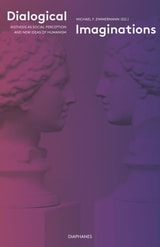
Dialogical Imaginations
Aisthesis as Social Perception and New Ideas of HumanismEdited by Michael F. Zimmermann with Gernot Müller, Christian Sauer, Kerstin Schmidt, Robert Schmidt, and Fosca Mariani Zini
Diaphanes, 0
“Aisthesis” means perception, but, in this volume, as the cover illustration the artist Giulio Paolini made for us demonstrates, it is treated as inscribed into dialogue. Furthermore, the range of its meaning is extended to include societies’ capacities to perceive their own conditions and dispositions—those concerning their inner structures and their external, cultural, and natural contexts. The essays present a wide variety of cultural manifestations of social perception—from the documentary to the fictional. Philosophers and sociologists, literary and art historians, media and film analysts deal with figurations, topoi, and stereotypes as created in various communal spheres and as resulting from media and epistemological practices.
Many of the debates turn around dialogical humanism, but this is certainly not aimed at returning to normative models more regulating than describing the human. Our period has been marked by debates around the post-human, biopolitics, and an increasing awareness of crisis and of global interdependence. Previously, the concept of humanism had been criticized, for good reasons, by Foucault and by philosophers such as Judith Butler. If the editors propose to discuss humanism again, a reevaluation of the dialogical character of humanism—and a reconstruction of its history as marked by dialogical strategies—is the starting point. In dialogical humanism, man, instead of being defined by a system of norms, is and remains an argument—even if, in the final instance, inscrutable, inexhaustible.
Dialogue on the Infinity of Love
Tullia d'Aragona
University of Chicago Press, 1997
Sexually liberated and financially independent, Tullia d'Aragona dared to argue that the only moral form of love between woman and man is one that recognizes both the sensual and the spiritual needs of humankind. Declaring sexual drives to be fundamentally irrepressible and blameless, she challenged the Platonic and religious orthodoxy of her time, which condemned all forms of sensual experience, denied the rationality of women, and relegated femininity to the realm of physicality and sin. Human beings, she argued, consist of body and soul, sense and intellect, and honorable love must be based on this real nature.
By exposing the intrinsic misogyny of prevailing theories of love, Aragona vindicates all women, proposing a morality of love that restores them to intellectual and sexual parity with men. Through Aragona's sharp reasoning, her sense of irony and humor, and her renowned linguistic skill, a rare picture unfolds of an intelligent and thoughtful woman fighting sixteenth-century stereotypes of women and sexuality.
Dialogue with Death
The Journal of a Prisoner of the Fascists in the Spanish Civil WarArthur Koestler
University of Chicago Press, 2011
In 1937 during the Spanish Civil War, Arthur Koestler, a German exile writing for a British newspaper, was arrested by Nationalist forces in Málaga. He was then sentenced to execution and spent every day awaiting death—only to be released three months later under pressure from the British government. Out of this experience, Koestler wrote Darkness at Noon, his most acclaimed work in the United States, about a man arrested and executed in a Communist prison.
Dialogue with Death is Koestler’s riveting account of the fall of Málaga to rebel forces, his surreal arrest, and his three months facing death from a prison cell. Despite the harrowing circumstances, Koestler manages to convey the stress of uncertainty, fear, and deprivation of human contact with the keen eye of a reporter.
Dialogue with Europe, Dialogue with the Past
Colonial Nahua and Quechua Elites in Their Own WordsJustyna Olko
University Press of Colorado, 2018
In each chapter a particular document is transcribed exactly as it appears in the original manuscript or colonial printed document, with the editor placing it in historical context and considering the degree of European influence. These texts show the nobility through documents they themselves produced or caused to be produced—such as wills, land deeds, and petitions—and prioritize indigenous ways of expression, perspectives, and concepts. Together, the chapters demonstrate that native elites were independent actors as well as agents of social change and indigenous sustainability in colonial society. Additionally, the volume diversifies the commonly homogenous term “cacique” and recognizes the differences in elites throughout Mesoamerica and the Andes.
Showcasing important and varied colonial genres of indigenous writing, Dialogue with Europe, Dialogue with the Past reveals some of the realities, needs, strategies, behaviors, and attitudes associated with the lives of the elites. Each document and its accompanying commentary provide additional insight into how the nobility negotiated everyday life. The book will be of great interest to students and researchers of Mesoamerican and Andean history, as well as those interested in indigenous colonial societies in the Spanish Empire.
Contributors: Agnieszka Brylak, Maria Castañeda de la Paz, Katarzyna Granicka, Gregory Haimovich, Anastasia Kalyuta, Julia Madajczak, Patrycja Prządka-Giersz
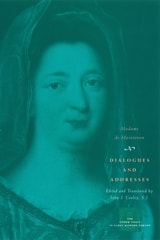
Dialogues and Addresses
Madame de Maintenon
University of Chicago Press, 2004
Denounced by her contemporaries as a political schemer and religious fanatic, Maintenon has long been criticized as an opponent of gender equality. The writings in this volume faithfully reflect Maintenon's respect for social hierarchy and her stoic call for women to accept the duties of their state in life. But the writings also echo Maintenon's more feminist concerns: the need to redefine the virtues in the light of women's experience, the importance of naming the constraints on women's freedom, and the urgent need to remedy the scandalous neglect of the education of women.
In her writings as well as in her own model school at Saint-Cyr, Maintenon embodies the demand for educational reform as the key to the empowerment of women at the dawn of modernity.
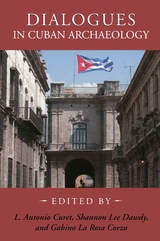
Dialogues in Cuban Archaeology
Edited by L. Antonio Curet, Shannon Lee Dawdy, and Gabino La Rosa Corzo
University of Alabama Press, 2005
A critical, dialogic examination of Cuban and Caribbean archaeology, advancing contemporary interpretations of heritage and identity.
Many Americans are aware of the political, economic, and personal impacts of the U.S. embargo on Cuba. But the communication blockade between scholars has also affected the historical course of academic disciplines and research in general. With the easing of restrictions in the 1990s, academics are now freer to conduct research in Cuba, and the Cuban government has been more receptive to collaborative projects.
This volume provides a forum for the principal Cuban and American archaeologists to update the current state of Cuban archaeological research--from rock art and potsherds to mortuary practices and historical renovation--thereby filling in the information gap created by the political separation. Each group of researchers brings significant new resources to the effort, including strong conservation regulations, innovative studies of lithic and shell assemblages, and transculturation theories. Cuban research on the hacienda system, slavery, and urban processes has in many ways anticipated developments in North American archaeology by a decade or more. Of special interest are the recent renovation projects in Old Havana that fully integrate the work of historians, architects, and archaeologists--a model project conducted by agreement between the Cuban government and UNESCO.
The selection of papers for this collection is based on a desire to answer pressing research questions of interest for North American Caribbeanists and to present a cross-section of Cuban archaeological work. With this volume, then, the principal players present results of recent collaborations and begin a renewed conversation, a dialogue, that can provide a foundation for future coordinated efforts.
Dialogues/Dialogi
Literary and Cultural Exchanges Between (Ex)Soviet and American WomenSusan Hardy Aiken, Adele Barker, Maya Koreneva, and Ekaterina Stetsenko
Duke University Press, 1993
Dialogues/Dialogi pairs stories by Tillie Olsen, Toni Cade Bambara, Jayne Anne Phillips, and Leslie Marmon Silko (reprinted here in full) with Russian stories by I. Grekova, Liudmila Petrushevskaya, Elena Makarova, and Anna Nerkagi, many of them appearing here for the first time in English. Exquisite in their stylistic and thematic variety, suggestive of the range of women's experience and fiction in both countries, each story is the subject of paired interpretive essays by an American and an (ex)Soviet critic from among the book's authors.
A colloquy of diverse voices speaking together in multiple, mutually illuminating exchanges, Dialogues/Dialogi testifies to the possibility of evolving relationships among women across borders once considered impassable.
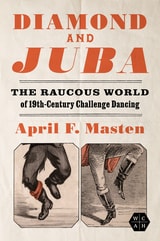
Diamond and Juba
The Raucous World of 19th-Century Challenge DancingApril F. Masten
University of Illinois Press, 2025
Diamonds in the Rough
A History of Alabama's Cahaba Coal FieldJames Sanders Day
University of Alabama Press, 2013
Winner of the 2014 Clinton Jackson Coley Award for Best Work on Alabama Local History from the Alabama Historical Association
Diamonds in the Rough
Corporate Paternalism and African Professionalism on the Mines of Colonial Angola, 1917–1975Todd Cleveland
Ohio University Press, 2015
Diamonds in the Rough explores the lives of African laborers on Angola’s diamond mines from the commencement of operations in 1917 to the colony’s independence from Portugal in 1975. The mines were owned and operated by the Diamond Company of Angola, or Diamang, which enjoyed exclusive mining and labor concessions granted by the colonial government. Through these monopolies, the company became the most profitable enterprise in Portugal’s African empire. After a tumultuous initial period, the company’s mines and mining encampments experienced a remarkable degree of stability, in striking contrast to the labor unrest and ethnic conflicts that flared in other regions. Even during the Angolan war for independence (1961–75), Diamang’s zone of influence remained comparatively untroubled.
Todd Cleveland explains that this unparalleled level of quietude was a product of three factors: African workers’ high levels of social and occupational commitment, or “professionalism”; the extreme isolation of the mining installations; and efforts by Diamang to attract and retain scarce laborers through a calculated paternalism. The company’s offer of decent accommodations and recreational activities, as well as the presence of women and children, induced reciprocal behavior on the part of the miners, a professionalism that pervaded both the social and the workplace environments. This disparity between the harshness of the colonial labor regime elsewhere and the relatively agreeable conditions and attendant professionalism of employees at Diamang opens up new ways of thinking about how Africans in colonial contexts engaged with forced labor, mining capital, and ultimately, each other.
Diana and Beyond
White Femininity, National Identity, and Contemporary Media CultureRaka Shome
University of Illinois Press, 2014
Raka Shome investigates the factors that led to this defining cultural/political moment and unravels just what the Diana phenomenon represented for comprehending the relation between white femininity and the nation in postcolonial Britain and its connection to other white female celebrity figures in the millennium. Digging into the media and cultural artifacts that circulated in the wake of Diana's death, Shome investigates a range of theoretical issues surrounding motherhood and the production of national masculinities, global humanitarianism, transnational masculinities, the intersection of fashion and white femininity, and spirituality and national modernity. Her analysis explores how images of white femininity in popular culture intersect with issues of race, gender, class, sexuality, and transnationality in the performance of Anglo national modernities.
Moving from ideas on the positioning of privileged white women in global neoliberalism to the emergence of new formations of white femininity in the millennium , Diana and Beyond fearlessly explains the late princess's never-ending renaissance and ongoing cultural relevance.

Diaries by Jewish and Christian Adolescents
Reconstructing the Social Reality of Pre- and Post-Holocaust HungaryGergely Kunt
Central European University Press, 2027
Diaries by Jewish and Christian Adolescents
Reconstructing the Social Reality of Pre- and Post-Holocaust HungaryGergely Kunt
Central European University Press, 2027
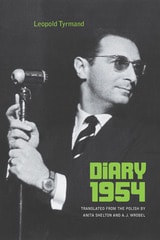
Diary 1954
Leopold Tyrmand
Northwestern University Press, 2014
Leopold Tyrmand, a Polish Jew who survived World War II by working in Germany under a false identity, would go on to live and write under Poland’s Communist regime for twenty years before emigrating to the West, where he continued to express his deeply felt anti-Communist views. Diary 1954—written after the independent weekly paper that employed him was closed for refusing to mourn Stalin’s death—is an account of daily life in Communist Poland. Like Czesław Miłosz, Václav Havel, and other dissidents who described the absurdities of Soviet-backed regimes, Tyrmand exposes the lies—big and small—that the regimes employed to stay in power. Witty and insightful, Tyrmand’s diary is the chronicle of a man who uses seemingly minor modes of resistance—as a provocative journalist, a Warsaw intellectual, the "spiritual father" of Polish hipsters, and a promoter of jazz in Poland—to maintain his freedom of thought.
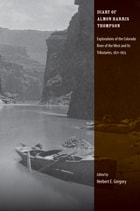
Diary of Almon Harris Thompson
Explorations of the Colorado River of the West and Its Tributaries, 1871-1875Herbert E Gregory
University of Utah Press, 2009
Originally published in 1939 as volume seven of the Utah Historical Quarterly, Thompson’s journal is reprinted here for the first time in seventy years. Co-published with the Utah State Historical Society.
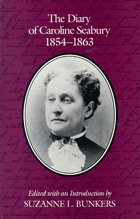
Diary of Caroline Seabury
Caroline Seabury
University of Wisconsin Press, 1991
In 1854 Caroline Seabury of Brooklyn, New York, set out for Columbus, Mississippi, to teach French at its Institute for Young Ladies. She lived in Columbus until 1863, through the years of mounting sectional bitterness that preceded the Civil War and through the turmoil and hardships of the war itself. During that time, her most intimate confidant was her diary. Discovered in the archives of the Minnesota State Historical Society, it is published here for the first time.
The diary is an illuminating account of southern plantation society and the “peculiar institution” of slavery on the eve of its destruction. Seabury also records her uneasy attempts to come to terms with her position as an unmarried, white, Northern woman whose job was to educate wealthy, white, Southern girls in a setting seemingly oblivious to the horrors of slavery. The diary is not simply a chronicle of daily happenings; Seabury concentrates on remarkable events and the memorable feelings and ideas they generate, shaping them into entries that reveal her as an accomplished writer. She frames her narrative with her journey south in 1854 and the hazardous and exhausting return north through battle lines in 1863.
Disapproving of slavery, yet deeply attached to friends and her life in Columbus and also painfully conscious of the fragility of her own economic and social position, Seabury condemned privately in her diary the evils that she endured silently in public. There are striking scenes of plantation life that depict the brutalities of slavery and benumbed responses to them. Seabury also successfully captures the mood of Mississippi as it changed from a fire-eating appetite to fight the Yankees to a grim apprehension of inexorable defeat. Most impressive of all is Seabury’s poignantly honest presentation of herself, caught in the middle.
Diary of General Patrick Gordon of Auchleuchries 1635-1699
Volume 1: 1635-1659Dmitry Fedosov and Patrick Gordon
Aberdeen University Press, 2009
Diary of General Patrick Gordon of Auchleuchries 1635-1699
Volume 2: 1659-1667Dmitry Fedosov and Patrick Gordon
Aberdeen University Press, 2009
Diary of General Patrick Gordon of Auchleuchries 1635-1699
Volume 3: 1677-1678Dmitry Fedosov and Patrick Gordon
Aberdeen University Press, 2012
Diary of General Patrick Gordon of Auchleuchries 1635-1699
Volume 4: 1684-1689Dmitry Fedosov and Patrick Gordon
Aberdeen University Press, 2013
Diary of General Patrick Gordon of Auchleuchries 1635-1699
Volume 5: 1690-1695Dmitry Fedosov and Patrick Gordon
Aberdeen University Press, 2014
Diary of General Patrick Gordon of Auchleuchries 1635-1699
Volume 6: 1696-1699Dmitry Fedosov and Patrick Gordon
Aberdeen University Press, 2016
Diaspora Identities
Exile, Nationalism and Cosmopolitanism in Past and PresentEdited by Susanne Lachenicht and Kirsten Heinsohn
Campus Verlag, 2009
Historical work on the late nineteenth and early twentieth centuries suggests that as nation-states were solidifying throughout Western Europe, exiled groups tended to develop rival national identities—an occurrence that had been fairly uncommon in the two preceding centuries. Diaspora Identities draws on eight case studies, ranging from the early modern period through the twentieth century, to explore the interconnectedness of exile, nationalism, and cosmopolitanism as concepts, ideals, attitudes, and strategies among diasporic groups.
Diaspora and Trust
Cuba, Mexico, and the Rise of ChinaAdrian H. Hearn
Duke University Press, 2016
Diaspora's Homeland
Modern China in the Age of Global MigrationShelly Chan
Duke University Press, 2018
Diasporic Intimacies
Queer Filipinos and Canadian ImaginariesEdited by Robert Diaz, Marissa Largo, and Fritz Pino
Northwestern University Press, 2018
Addressing a wide range of issues beyond the academy, the authors present a rich and under-studied archive of personal reflections, in-depth interviews, creative works, and scholarly essays. Their trandsdisciplinary approach highlights the need for queer, transgressive, and utopian practices that render visible histories of migration, empire building, settler colonialism, and globalization.
Timely, urgent, and fascinating, Diasporic Intimacies offers an accessible entry point for readers who seek to pursue critically engaged community work, arts education, curatorial practice, and socially inflected research on sexuality, gender, and race in this ever-changing world.

Dick Cole’s War
Doolittle Raider, Hump Pilot, Air CommandoDennis R. Okerstrom
University of Missouri Press, 2026
With the 100th anniversary of his birth on September 7, 2015 Dick Cole has long stood in the powerful spotlight of fame that has followed him since his B-25 was launched from a Navy carrier and flown toward Japan just four months after the attack on Pearl Harbor. In recognition the tremendous boost Doolittle’s Raid gave American morale, members of The Tokyo Doolittle Raiders were awarded the Congressional Gold Medal in May 2014.
Doolittle’s Raid was only the opening act of Cole’s flying career during the war. When that mission was complete and all of the 16 aircraft had crash-landed in China, many of the survivors were assigned to combat units in Europe. Cole remained in India after their rescue and was assigned to Ferrying Command, flying the Hump of the Himalayas for a year in the world’s worst weather, with inadequate aircraft, few aids to navigation, and inaccurate maps. More than 600 aircraft with their crews were lost during this monumental effort to keep China in the war, but Cole survived and rotated home in 1943. He was home just a few months when he was recruited for the First Air Commandos and he returned to India to participate in Project 9, the aerial invasion of Burma.
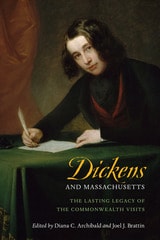
Dickens and Massachusetts
The Lasting Legacy of the Commonwealth VisitsDiana C. Archibald
University of Massachusetts Press, 2015
Charles Dickens traveled to North America twice, in 1842 and twenty-five years later in 1867–68, and on both trips Massachusetts was part of his itinerary. Although many aspects of his U.S. travels disappointed him, Massachusetts was the one state that met and even exceeded Dickens's expectations for “the republic of [his] imagination.” From the mills of Lowell to the Perkins School for the Blind, it offered an alternate vision of America that influenced his future writings, while the deep and lasting friendships he formed with Bostonians gave him enduring ties to the commonwealth.
This volume provides insight from leading scholars who have begun to reassess the significance of Massachusetts in the author's life and work. The collection begins with a broad biographical and historical overview taken from the full-length narrative of the award-winning exhibition Dickens and Massachusetts: A Tale of Power and Transformation, which attracted thousands of visitors while on display in Lowell. Abundant images from the exhibition, many of them difficult to find elsewhere, enhance the story of Dickens's relationship with the vibrant cultural and intellectual life of Massachusetts. The second section includes essays that consider the importance of Dickens's many connections to the commonwealth.
In addition to the volume editors, contributors include Chelsea Bray, Iain Crawford, Andre DeCuir, Natalie McKnight, Lillian Nayder, and Kit Polga.

Dickey Chapelle Under Fire
Photographs by the First American Female War Correspondent Killed in ActionJohn Garofolo
Wisconsin Historical Society Press, 2026
Striking photographs and stories from more than two decades on the frontlines by a groundbreaking photojournalist—and the first female American war correspondent to be killed in action.
In 1941, twenty-two-year-old Georgette "Dickey" Chapelle sold her first photo essay to Look magazine. A year later, with World War II underway, she was photographing American soldiers in combat training in Panama. By the end of the war, she had captured the devastation at Iwo Jima and Okinawa, and in the ensuing decades, Dickey and her camera were on the scene at many of the world’s hotspots—from Cuba and the Dominican Republic to Algeria and Lebanon to Vietnam and Laos. Dickey Chapelle Under Fire exposes her remarkable story and shares over 150 stunning images from her extraordinary career as a photojournalist.
In the male-dominated world of war journalism, Chapelle fought to be taken seriously. She eventually earned the respect of many of her male colleagues and broke down barriers for future generations of female journalists. She embedded herself with military units on frontlines around the globe, capturing not only the horrors of war but also the camaraderie and everyday routines of service men and women.
Always one to follow the action, Chapelle traveled with Algerian rebels across the North African desert and with Fidel Castro through the jungles of Cuba. She spent two months in a Hungarian prison after being caught smuggling aid to refugees fleeing a Soviet invasion. Beginning in 1961, Chapelle set her lens and viewfinder on Southeast Asia, capturing the growing conflict there, until she was killed while on patrol with marines in Vietnam in April 1965—making her the first female American war correspondent to be killed in action.
For twenty-five years, Chapelle's photographs graced the pages of National Geographic, the National Observer, Life, and other major publications. Despite her tragic end, Chapelle’s tenacity, courage, and compassion shine throughout her work, highlighting the human impact of war while revealing the larger stories beyond the battlefield. Her legacy lives on through this powerful collection.

Dickinson and the Boundaries of Feminist Theory
Mary Loeffelholz
University of Illinois Press, 1991
"Mary Loeffelholz has written a book that actually performs what it promises. . . . It illuminates our understanding of Emily Dickinson with readings both elegant and useful, and as importantly suggests modified direction for feminist-psychoanalytic theory."
-- Diana Hume George, author of Oedipus Anne: The Poetry of Anne Sexton
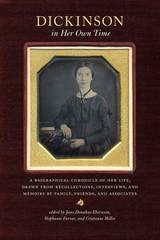
Dickinson in Her Own Time
A Biographical Chronicle of Her Life, Drawn from Recollections, Interviews, and Memoirs by Family, Friends, and AssociatesJane Donahue Eberwein, Stephanie Farrar, and Cristanne Miller
University of Iowa Press, 2015
In addition, promotional items, reviews, and correspondence relating to early publications are included, as well as some later documents that reveal the changing assessments of Dickinson’s poetry in response to evolving critical standards. These documents provide evidence that counters many popular conceptions of her life and reception, such as the belief that the writer best known for poems focused on loss, death, and immortality was herself a morose soul. In fact, those who knew her found her humorous, playful, and interested in other people.
Dickinson maintained literary and personal correspondence with major representatives of the national literary scene, developing a reputation as a remarkable writer even as she maintained extreme levels of privacy. Evidence compiled here also demonstrates that she herself made considerable provision for the survival of her poems and laid the groundwork for their eventual publication. Dickinson in Her Own Time reveals the poet as her contemporaries knew her, before her legend took hold.
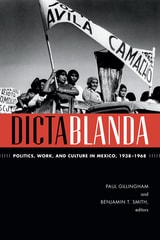
Dictablanda
Politics, Work, and Culture in Mexico, 1938–1968Paul Gillingham and Benjamin T. Smith, eds.
Duke University Press, 2014
This deliberately heterodox volume brings together social historians, anthropologists, sociologists, and political scientists to offer a radical new understanding of the emergence and persistence of the modern Mexican state. It also proposes bold, multidisciplinary approaches to critical problems in contemporary politics. With its blend of contested elections, authoritarianism, and resistance, Mexico foreshadowed the hybrid regimes that have spread across much of the globe. Dictablanda suggests how they may endure.
Contributors. Roberto Blancarte, Christopher R. Boyer, Guillermo de la Peña, María Teresa Fernández Aceves, Paul Gillingham, Rogelio Hernández Rodríguez, Alan Knight, Gladys McCormick, Tanalís Padilla, Wil G. Pansters, Andrew Paxman, Jaime Pensado, Pablo Piccato, Thomas Rath, Jeffrey W. Rubin, Benjamin T. Smith, Michael Snodgrass
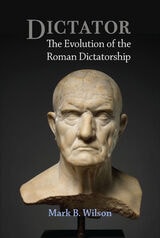
Dictator
The Evolution of the Roman DictatorshipMark B. Wilson
University of Michigan Press, 2021
Roman consuls were routinely trained by background and experience to handle the usual problems of a twelve-month turn in office. But what if a crisis arose that wasn’t best met by whoever happened to be in office that year? The Romans had a mechanism for that: the dictatorship, an alternative emergency executive post that granted total, unanswerable power to that man who was best suited to resolve the crisis and then stand down, restoring normality. This office was so useful and effective that it was invoked at least 85 times across three centuries against every kind of serious problem, from conspiracies and insurgencies to the repelling of invaders to propitiation of the gods.
In Dictator: The Evolution of the Roman Dictatorship, Mark B. Wilson makes the first detailed and comprehensive examination of the role and evolution of the dictatorship as an integral element of the Roman Republic. Each stage of a dictatorship—need, call, choice, invocation, mandate, imperium, answerability, colleague, and renunciation—is explored, with examples and case studies illustrating the dictators’ rigorous adherence to a set of core principles, or, in rare cases of deviation, showing how exceptions tended to demonstrate the rule as vividly as instances. Wilson also charts the flexibility of the dictatorship as it adapted to the needs of the Republic, reshaping its role in relation to the consuls, the senate, and the people.
The routine use of the dictatorship is only part of the story. The abandonment and disuse of the dictatorship for 120 years, its revival under Sulla, and its appropriation and transformation under Caesar are all examined in detail, with attention paid to what the dictatorship meant to the Romans of the late Republic, alternative means of crisis resolution in contrast with the dictatorship, and the groundwork laid in those last two centuries for that which was to come. Dictator provides a new basis for discussion and debate relating to the Roman dictatorship, Roman crisis management, and the systems and institutions of the Roman Republic.
Dictionary of Manitoba Biography
J.M. Bumsted
University of Manitoba Press, 1999
Did the Greeks Believe in Their Myths?
An Essay on the Constitutive ImaginationPaul Veyne
University of Chicago Press, 1988
A groundbreaking, innovative exploration of what the ancient Greeks really believed
Did the Greeks believe in their mythology? This question implies other difficult ones concerning the meaning of belief. While knowing that Theseus never slew the Minotaur, the Greeks were still capable of believing in the existence of Theseus, of crafting a genealogy for him and assigning him a place in history. This apparently contradictory process, the application of reason to myth, prompts legendary archaeologist Paul Veyne’s meditation on the nature of “truth.” Beginning with the example of the Greeks’ attitude toward their myths, Veyne argues that truth is not found, but created, as is history. His discussion reveals the historical quality of the imagination and its role in the constitution of a cultural tradition.
Dido's Daughters
Literacy, Gender, and Empire in Early Modern England and FranceMargaret W. Ferguson
University of Chicago Press, 2003
Our common definition of literacy is the ability to read and write in one language. But as Margaret Ferguson reveals in Dido's Daughters, this description is inadequate, because it fails to help us understand heated conflicts over literacy during the emergence of print culture. The fifteenth through seventeenth centuries, she shows, were a contentious era of transition from Latin and other clerical modes of literacy toward more vernacular forms of speech and writing.
Fegurson's aim in this long-awaited work is twofold: to show that what counted as more valuable among these competing literacies had much to do with notions of gender, and to demonstrate how debates about female literacy were critical to the emergence of imperial nations. Looking at writers whom she dubs the figurative daughters of the mythological figure Dido—builder of an empire that threatened to rival Rome—Ferguson traces debates about literacy and empire in the works of Marguerite de Navarre, Christine de Pizan, Elizabeth Cary, and Aphra Behn, as well as male writers such as Shakespeare, Rabelais, and Wyatt. The result is a study that sheds new light on the crucial roles that gender and women played in the modernization of England and France.
Didymus the Blind and His Circle in Late-Antique Alexandria
Virtue and Narrative in Biblical ScholarshipRichard A. Layton
University of Illinois Press, 2004
The writings of Didymus were censored and destroyed due to his posthumous condemnation for heresy. This study recovers the uncensored voice of Didymus through the commentaries among the Tura papyri, a massive set of documents discovered in an Egyptian quarry in 1941.
This neglected corpus offers an unprecedented glimpse into the internal workings of a Christian philosophical academy in the most vibrant and tumultuous cultural center of late antiquity. By exploring the social context of Christian instruction in the competitive environment of fourth-century Alexandria, Richard A. Layton elucidates the political implications of biblical interpretation.
Through detailed analysis of the commentaries on Psalms, Job, and Genesis, the author charts a profound tectonic shift in moral imagination as classical ethical vocabulary becomes indissolubly bound to biblical narrative. Attending to the complex interactions of political competition and intellectual inquiry, this study makes a unique contribution to the cultural history of late antiquity.
Didymus the Blind and the Alexandrian Christian Reception of Philo
Justin M. Rogers
SBL Press, 2017
Explore the Jewish traditions preserved in the commentaries of a largely neglected Alexandrian Christian exegete
Justin M. Rogers surveys commentaries on Genesis, Job, Psalms, Ecclesiastes, and Zechariah by Didymus the Blind (ca. 313–398 CE), who was regarded by his students as one of the greatest Christian exegetes of the fourth century. Rogers highlights Didymus’s Jewish sources, zeroing in on traditions of Philo of Alexandria, whose treatises were directly accessible to Didymus while he was authoring his exegetical works. Philonic material in Didymus is covered by extensive commentary, demonstrating that Philo was among the principle sources for the exegetical works of Didymus the Blind. Rogers also explores the mediating influence of the Alexandrian Christian tradition, focusing especially on the roles of Clement and Origen.
Features
- Fresh insights into the Alexandrian Christian reception of Philo
- A thorough discussion of Didymus’s exegetical method, particularly in the Commentary on Genesis
- Examination of the use and importance of Jewish and Christian sources in Late Antique Christian commentaries

Diesel
Technology And Society In Industrial GermanyDonald E. Thomas Jr.
University of Alabama Press, 1987
The life of Rudolf Diesel, a man who achieved a power plant with the potential for revolutionizing industry and transportation. Diesel demonstrated that he possessed both the scientific insight and technical skill needed to create the diesel engine.
Diet and the Disease of Civilization
Adrienne Rose Bitar
Rutgers University Press, 2017
Diet books contribute to a $60-billion industry as they speak to the 45 million Americans who diet every year. Yet these books don’t just tell readers what to eat: they offer complete philosophies about who Americans are and how we should live. Diet and the Disease of Civilization interrupts the predictable debate about eating right to ask a hard question: what if it’s not calories—but concepts—that should be counted?
Cultural critic Adrienne Rose Bitar reveals how four popular diets retell the “Fall of Man” as the narrative backbone for our national consciousness. Intensifying the moral panic of the obesity epidemic, they depict civilization itself as a disease and offer diet as the one true cure.
Bitar reads each diet—the Paleo Diet, the Garden of Eden Diet, the Pacific Island Diet, the detoxification or detox diet—as both myth and manual, a story with side effects shaping social movements, driving industry, and constructing fundamental ideas about sickness and health. Diet and the Disease of Civilization unearths the ways in which diet books are actually utopian manifestos not just for better bodies, but also for a healthier society and a more perfect world.

Diet for a Large Planet
Industrial Britain, Food Systems, and World EcologyChris Otter
University of Chicago Press, 2020
We are facing a world food crisis of unparalleled proportions. Our reliance on unsustainable dietary choices and agricultural systems is causing problems both for human health and the health of our planet. Solutions from lab-grown food to vegan diets to strictly local food consumption are often discussed, but a central question remains: how did we get to this point?
In Diet for a Large Planet, Chris Otter goes back to the late eighteenth century in Britain, where the diet heavy in meat, wheat, and sugar was developing. As Britain underwent steady growth, urbanization, industrialization, and economic expansion, the nation altered its food choices, shifting away from locally produced plant-based nutrition. This new diet, rich in animal proteins and refined carbohydrates, made people taller and stronger, but it led to new types of health problems. Its production also relied on far greater acreage than Britain itself, forcing the nation to become more dependent on global resources. Otter shows how this issue expands beyond Britain, looking at the global effects of large agro-food systems that require more resources than our planet can sustain. This comprehensive history helps us understand how the British played a significant role in making red meat, white bread, and sugar the diet of choice—linked to wealth, luxury, and power—and shows how dietary choices connect to the pressing issues of climate change and food supply.
Diet, Health, and Status among the Pasion Maya
A Reappraisal of the CollapseLori E. Wright
Vanderbilt University Press, 2006
This volume also provides an independent assessment of the results of other Petexbatun region subprojects and a comparative evaluation of recent studies by other projects of Late and Terminal Classic culture change. For bioarchaeologists, this work sets a new standard in breadth and depth of osteological study. For Pre-Columbian scholars in general, it provides new insights into the environmental and biological issues involved in the debate on the end of the Classic period of Maya civilization.
VIMA Series #2
Dietary Reconstruction at Chalcatzingo
A Formative Period Site in Morelos, MexicoMargaret J. Schoeninger
University of Michigan Press, 2019
Difficult Reputations
Collective Memories of the Evil, Inept, and ControversialGary Alan Fine
University of Chicago Press, 2001
Presenting essays on America's most reviled traitor, its worst president, and its most controversial literary ingénue (Benedict Arnold, Warren G. Harding, and Lolita), among others, sociologist Gary Alan Fine analyzes negative, contested, and subcultural reputations. Difficult Reputations offers eight compelling historical case studies as well as a theoretical introduction situating the complex roles in culture and history that negative reputations play.
Arguing the need for understanding real conditions that lead to proposed interpretations, as well as how reputations are given meaning over time, this book marks an important contribution to the sociologies of culture and knowledge.
Digestible Governance
Gastrocracy and Spanish FoodwaysEdited by Eugenia Afinoguénova, Lara Anderson, and Rebecca Ingram
Vanderbilt University Press, 2024
Eliciting wide public participation, co-opted for political purposes, regarded as a factor of economic development on any scale, and integrated into every so-called banal nationalism, the production, distribution, and consumption of food are highly relevant for historical analysis. Seeking to encourage a broader discussion about Peninsular gastrocracies, this book brings together an interdisciplinary group of scholars from different sides of the Atlantic and the Pacific who have spearheaded research on gastronomy and governance in Spain.
Digging New Jersey's Past
Historical Archaeology in the Garden StateVeit, Richard F
Rutgers University Press, 2002
Richard Veit takes readers on a well-organized guided tour through four hundred years of Garden State development as seen through archaeology in Digging New Jerseys Past. This illustrated guidebook takes readers to some of the states most interesting discoveries and tells us what has been learned or is being learned from them. The diverse array of archaeological sites, drawn from all parts of the state, includes a seventeenth-century Dutch trading post, the site of the Battle of Monmouth, the gravemarkers of freed slaves, and a 1920s railroad roundhouse, among others.
Veit begins by explaining what archaeologists do: How do they know where to dig? What sites are likely to yield important information? How do archaeologists excavate a site? How are artifacts cataloged, stored, and interpreted? He then moves through the states history, from the contact of first peoples and explorers, to colonial homesteads, Revolutionary War battlefields, cemeteries, railroads, and factories. Veit concludes with some thoughts about the future of archaeological research in New Jersey and with suggestions on ways that interested individuals can become involved in the field.
Digging Up the Dead
A History of Notable American ReburialsMichael Kammen
University of Chicago Press, 2010
With Digging Up the Dead, Pulitzer Prize–winning historian Michael Kammen reveals a treasure trove of fascinating, surprising, and occasionally gruesome stories of exhumation and reburial throughout American history. Taking us to the contested grave sites of such figures as Sitting Bull, John Paul Jones, Frank Lloyd Wright, Daniel Boone, Jefferson Davis, and even Abraham Lincoln, Kammen explores how complicated interactions of regional pride, shifting reputations, and evolving burial practices led to public and often emotional battles over the final resting places of famous figures. Grave-robbing, skull-fondling, cases of mistaken identity, and the financial lures of cemetery tourism all come into play as Kammen delves deeply into this little-known—yet surprisingly persistent—aspect of American history.
Simultaneously insightful and interesting, masterly and macabre, Digging Up the Dead reminds us that the stories of American history don’t always end when the key players pass on. Rather, the battle—over reputations, interpretations, and, last but far from least, possession of the remains themselves—is often just beginning.
Digging and Discovery, 2nd edition
Wisconsin ArchaeologyDiane Holliday
Wisconsin Historical Society Press, 2006
Digging and Discovery, TG, 2nd edition
Wisconsin ArchaeologyBobbie Malone
Wisconsin Historical Society Press, 2000
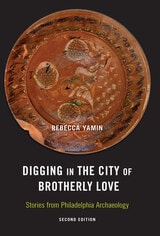
Digging in the City of Brotherly Love
Stories from Philadelphia ArchaeologyYamin, Rebecca
Temple University Press, 2023
Rebecca Yamin adds three new chapters that showcase several major discoveries from recent finds including unmarked early eighteenth-century burial grounds, one of which associated with the first African Methodist Episcopal (AME) Church, in the oldest part of the city; a nineteenth-century working-class neighborhood built along the path of what is now Route I-95 and was once home to Native American life; and the remains of two taverns found on the site of the current Museum of the American Revolution.
Yamin describes the research and state-of-the-art techniques used to study these exciting discoveries. In chronicling the value of looking into a city’s past, Digging in the City of Brotherly Love brings to life the people who lived in the early city and the people in the present who study them.