Results by title
28164 books match the query 'History' and 908 start with d
Doctoring the West
Women Physicians and the Politics and Practice of MedicineJacqueline D. Antonovich
Rutgers University Press, 2027
In the late nineteenth century, women physicians began migrating to the American West in remarkable numbers. Drawn by early suffrage laws and a booming population of health seekers, they settled across states such as California, Colorado, and Oregon—places where they might finally practice medicine and participate in politics as full and equal citizens. Over the next several decades, these women became central figures in shaping the region's health landscape. They built hospitals and clinics, championed public health reform, and positioned themselves at the center of the era's defining debates over birth control, abortion, and eugenics. Their legacy is as complex as it is consequential. Doctoring the West tells the stories of these women: the power they wielded, the choices they made, the people they cared for—and those they harmed. Their work transformed the health of the American West and defined the medical politics of the nation.

Doctors, Ambassadors, Secretaries
Humanism and Professions in Renaissance ItalyDouglas Biow
University of Chicago Press, 2002
Examining a wide range of treatises, poems, and other works that humanists wrote both as and about doctors, ambassadors, and secretaries, Biow shows how interactions with these professions forced humanists to make their studies relevant to their own times, uniting theory and practice in a way that strengthened humanism. His detailed analyses of writings by familiar and lesser-known figures, from Petrarch, Machiavelli, and Tasso to Maggi, Fracastoro, and Barbaro, will especially interest students of Renaissance Italy, but also anyone concerned with the rise of professionalism during the early modern period.
Doctrine and Race
African American Evangelicals and Fundamentalism between the WarsMary Beth Swetnam Mathews
University of Alabama Press, 2017
Doctrine and Race examines the history of African American Baptists and Methodists of the early twentieth century and their struggle for equality in the context of white Protestant fundamentalism.
By presenting African American Protestantism in the context of white Protestant fundamentalism, Doctrine and Race: African American Evangelicals and Fundamentalism between the Wars demonstrates that African American Protestants were acutely aware of the manner in which white Christianity operated and how they could use that knowledge to justify social change. Mary Beth Swetnam Mathews’s study scrutinizes how white fundamentalists wrote blacks out of their definition of fundamentalism and how blacks constructed a definition of Christianity that had, at its core, an intrinsic belief in racial equality. In doing so, this volume challenges the prevailing scholarly argument that fundamentalism was either a doctrinal debate or an antimodernist force. Instead, it was a constantly shifting set of priorities for different groups at different times.
A number of African American theologians and clergy identified with many of the doctrinal tenets of the fundamentalism of their white counterparts, but African Americans were excluded from full fellowship with the fundamentalists because of their race. Moreover, these scholars and pastors did not limit themselves to traditional evangelical doctrine but embraced progressive theological concepts, such as the Social Gospel, to help them achieve racial equality. Nonetheless, they identified other forward-looking theological views, such as modernism, as threats to “true” Christianity.
Mathews demonstrates that, although traditional portraits of “the black church” have provided the illusion of a singular unified organization, black evangelical leaders debated passionately among themselves as they sought to preserve select aspects of the culture around them while rejecting others. The picture that emerges from this research creates a richer, more profound understanding of African American denominations as they struggled to contend with a white American society that saw them as inferior.
Doctrine and Race melds American religious history and race studies in innovative and compelling ways, highlighting the remarkable and rich complexity that attended to the development of African American Protestant movements.
Document Raj
Writing and Scribes in Early Colonial South IndiaBhavani Raman
University of Chicago Press, 2012
Documentary Expression and Thirties America
William Stott
University of Chicago Press, 1986
"[Scott] might be called the Aristotle of documentary. No one before him has so comprehensively surveyed the achievement of the 1930s, suggesting what should be admired, what condemned, and why; no one else has so persuasively furnished an aesthetic for judging the form."—Times Literary Supplement
Documentary History of the Ratification of the Constitution, Volume 23
Ratification of the Constitution by the States: New York, No. 5Edited by John P. Kaminski and Gaspare J. Saladino; Senior Associate Editor: Richard Leffler; Associate Editor: Charles H. Schoenleber; Assistant Editor: Margaret A. Hogan
Wisconsin Historical Society Press, 2009
Documentary History of the Ratification of the Constitution, Volume 24
Ratification of the Constitution by the States: Rhode Island, No. 1Kaminski
Wisconsin Historical Society Press, 2011
This is the first of three volumes documenting Rhode Island's public and private debates about the Constitution. This documentary series is a research tool of remarkable power, an unrivaled reference work for historical and legal scholars, librarians, and students of the Constitution. The volumes are encyclopedic, consisting of manuscript and printed documents-contemporary newspapers, broadsides, and pamphlets-compiled from hundreds of sources, copiously annotated, thoroughly indexed, and often accompanied by microfiche supplements. Pulitzer Prize-winning historian Michael Kammen has noted that The Documentary History of the Ratification of the Constitution series "will be of enduring value centuries hence" and described it as "one of the most interesting documentary publications we have ever had." The American Bar Association Journal has stated, "Each new volume now fills another vital part of the mosaic of national history."
Documentary Trial Plays in Contemporary American Theater
Jacqueline O’Connor
Southern Illinois University Press, 2013
From the Chicago Conspiracy Trial and the O. J. Simpson trial to the Clarence Thomas/Anita Hill congressional hearings, legal and legislative proceedings in the latter part of the twentieth-century kept Americans spellbound. Situated on the shifting border between imagination and the law, trial plays edit, arrange, and reproduce court records, media coverage, and first-person interviews, transforming these elements into a performance. In this first book-length critical study of contemporary American documentary theater, Jacqueline O’Connor examines in depth ten such plays, all written and staged since 1970, and considers the role of the genre in re-creating and revising narratives of significant conflicts in contemporary history.
Documentary theater, she shows, is a particularly appropriate and widely utilized theatrical form for engaging in debate about tensions between civil rights and institutional power, the inconsistency of justice, and challenges to gender norms. For each of the plays discussed, including The Trial of the Catonsville Nine, Unquestioned Integrity: The Hill/Thomas Hearings, and The Laramie Project, O'Connor provides historical context and a brief production history before considering the trial the play focuses on. Grouping plays historically and thematically, she demonstrates how dramatic representation advances our understanding of the law's power while revealing the complexities that hinder society's pursuit of justice.
Documenting Intimate Matters
Primary Sources for a History of Sexuality in AmericaEdited by Thomas A. Foster
University of Chicago Press, 2012
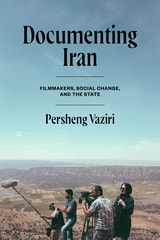
Documenting Iran
Filmmakers and Social ChangePersheng Vaziri
University of Texas Press, 2026
An ethnographic study of how Iranian documentary filmmakers navigate censorship and creativity to shape civic discourse.
Iranian filmmakers have overcome significant obstacles to create a distinctive, globally renowned cinema. Filmmaker and educator Persheng Vaziri explores how documentarians, in particular, have developed a dynamic and creative environment by negotiating limited resources and official constraints. Through their films, they share hard truths—and artful narratives—with fellow Iranians and viewers the world over.
Documenting Iran introduces key historical foundations of documentary filmmaking amid generations of political change—first under the shah and later the Islamic government—with a focus on contemporary filmmakers between 2000 and 2022. Drawing on interviews and ethnographic encounters, Vaziri describes the creative practices and pragmatic choices that provide documentarians relative independence from state censorship and other restrictions on artistic production. Relying on poetic aesthetics, observational filmmaking, international connections, and the accumulated knowledge of a tight-knit local community, filmmakers engage with controversial topics like women’s rights, marriage and divorce laws, environmental degradation, and encounters with Western culture. Documentarians have thus created an activist cinema both subtle and persuasive enough to challenge dogmatic rule and uphold progressive elements of Iranian society.
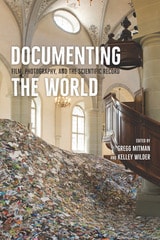
Documenting the World
Film, Photography, and the Scientific RecordEdited by Gregg Mitman and Kelley Wilder
University of Chicago Press, 2016
Documenting the World is about the material and social life of photographs and film made in the scientific quest to document the world. Drawing on scholars from the fields of art history, visual anthropology, and science and technology studies, the chapters in this book explore how this documentation—from the initial recording of images, to their acquisition and storage, to their circulation—has altered our lives, our ways of knowing, our social and economic relationships, and even our surroundings. Far beyond mere illustration, photography and film have become an integral, transformative part of the world they seek to show us.
Documents from the Luciferians
In Defense of the Nicene CreedColin M. Whiting
SBL Press, 2019
Six important documents for scholars of early church history
This volume includes English translations of several documents concerning the Luciferians, a group of fourth-century Christians whose name derives from the bishop Lucifer of Cagliari. Documents include a confession of faith written for Emperor Theodosius I and a theological treatise written for his wife by Luciferian clergyman Faustinus, the first English translation of a Luciferian petition to Theodosius that focuses on the persecution the community has suffered, Theodosius’s imperial law in response to the Luciferians, two letters composed by Luciferians that purport to represent correspondence from the bishop Athanasius of Alexandria to Lucifer, and the priest Jerome’s Dialogus adversus Luciferianos. These texts highlight connections between developments in Christian theology and local Christian communities in the course of the fourth century.
Features:
- The first English translation of Faustinus’s Libellus precum
- An overview of the development of late antique theology and Christianity
- An introduction to Luciferian beliefs and the translated texts
Documents in Medieval Latin
John Thorley
University of Michigan Press, 1998
Documents in Medieval Latin will be useful to students of medieval history, literature, and philosophy and those interested in reading more about the Middle Ages. Thorley's cheerful approach, the lively and representative selections of tests, and the documentary and epigraphic focus will prove valuable for those wishing to explore these vital original sources.
John Thorley teaches medieval Latin at Lancaster University.
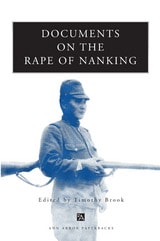
Documents on the Rape of Nanking
Timothy Brook, Editor
University of Michigan Press, 1999
Part 1, "The Records," includes two sources written as the Rape was underway. The first is a long set of documents produced by the International Committee for the Nanking Safety Zone, a group of foreigners who strove to protect the Chinese residents. The second is a series of letters that American surgeon Dr. Robert Wilson wrote for his family during the same period. These letters are published here for the first time.
The evidence compiled by the International Committee and its members would be decisive for the indictments against Japanese leaders at the International Military Tribunal for the Far East in Tokyo. Part 2, "The Judgments," reprints portions of the tribunal's 1948 judgment dealing with the Rape of Nanking, its judicial consequences, and sections of the dissenting judgment of Justice Radhabinod Pal.
These contemporary records and judgments create an intimate firsthand account of the Rape of Nanking. Together they are intended to stimulate deeper reflection than previously possible on how and why we assess and assign the burden of war guilt.
Timothy Brook is Professor of Chinese History and Associate Director of the Joint Centre for Asia Pacific Studies, University of Toronto, and is coeditor of Nation Work: Asian Elites and National Identities and Cultureand Economy: The Shaping of Capitalism in Eastern Asia, both published by the University of Michigan Press.
Does Science Need a Global Language?
English and the Future of ResearchScott L. Montgomery
University of Chicago Press, 2013
In Does Science Need a Global Language?, Scott L. Montgomery seeks to answer this question by investigating the phenomenon of global English in science, how and why it came about, the forms in which it appears, what advantages and disadvantages it brings, and what its future might be. He also examines the consequences of a global tongue, considering especially emerging and developing nations, where research is still at a relatively early stage and English is not yet firmly established.
Throughout the book, he includes important insights from a broad range of perspectives in linguistics, history, education, geopolitics, and more. Each chapter includes striking and revealing anecdotes from the front-line experiences of today’s scientists, some of whom have struggled with the reality of global scientific English. He explores topics such as student mobility, publication trends, world Englishes, language endangerment, and second language learning, among many others. What he uncovers will challenge readers to rethink their assumptions about the direction of contemporary science, as well as its future.

Dog Tags Yapping
The World War II Letters of a Combat GIM.D. Elevitch. Foreword by Jean Van Doren
Southern Illinois University Press, 2003
A chronicle of war infused with uncommon cheer, Dog Tags Yapping: The World War II Letters of a Combat GI is a young man’s education in life and death and a narrative of war told completely in letters.
During World War II, thousands of high school graduates were drafted into the army to be trained in colleges as engineers or other technicians but instead were assigned to fighting units and joined the great assault in Europe after D-Day. One of those reprogrammed combat infantrymen was Morton Elevitch from Duluth, Minnesota. Elevitch’s cartoons, drawings, and extremely unconventional letters home—rescued from box-in-the-basement oblivion after a more than fifty-year dormancy—recover the story of one rerouted GI in a voice that is compelling and new. Embellished with a boyish flair, the quirky and playful documents collected here impart a distinctly personal and uncalculated record of war, family, and coming of age. “It’s much easier to wield a melancholy pen than to sit down and cry,” Elevitch declares to his father.
Sparkling with a patina of wit and the bittersweet allure of lost innocence, the words and letters of “Privitch Elevate” offer the immediacy of the events as they unfolded. With the ease and expertise expected of a more seasoned storyteller, the young Elevitch escorts readers through his basic training and departure for Europe, duty in Brittany with the 94th Division and departure for Germany, combat under Patton’s command, wounding by mortar fragments, convalescence in England, and his return to France with the Signal Corps to guard prisoners and await demobilization. But along with these letters are the stories of his relationships with his parents, his brother, the men of his company and even the prisoners of war. The author’s perspectives on the war radically change. Both comic and tragic in its treatment of war’s chaos and tedium, this sensitive personal history covers experiences from the adjustment to military life and the temptations of flesh to the pain of wounds and recovery and the exposure to foreign countries and cultures.
Presaging his career as a novelist and editor, Elevitch’s words and drawings sketch an audacious and highly imaginative portrait of a young man during an exceptional time in world history. Evocative of life lived and nearly lost, his jarring accounts of combat reveal a soldier who was wounded not only in body but also in soul, in a war that changed him forever—just as it changed everyone it touched. Reproduced here as they were originally written, alongside a gallery of photos and hand-drawn battle maps, Elevitch’s cartoons and letters were initially intended for only three persons. But with their unique historical value and affecting exploration of the human spirit, they resurface in Dog Tags Yapping and result in an exhilarating ride for all readers through his “wild bivouac of the mind.”
Dog and Gun
A Few Loose Chapters on Shooting, Among Which Will Be Found Some Anecdotes and IncidentsJohnson J. Hooper, with an Introduction by Philip D. Beidler
University of Alabama Press, 1992
A classic portrait of hunting, sport, and gentlemanly culture in the antebellum South.
The least well known of Johnson Jones Hooper’s works, Dog and Gun was first published as a newspaper series, then appeared in six book editions between 1856 and 1871. Hooper is Alabama’s most celebrated antebellum author, and here he gives insight into the meaning of a culture where every male hunts – and a man who shoots as a gentleman will be assumed a gentleman. Beidler’s introduction to this reprint edition explores the social, literary, and technical dimensions of Dog and Gun, which he sees as an important commentary on class distinctions in the antebellum South, as well as a straightforward treatise on hunting.
Although the book is a manual for the hunter, with characteristic humor and a certain disdain, Hooper gives a full picture of the gentlemanly sport of hunting – clearly distinct from hunting for food – in all aspects including hunter, weaponry, and sporting dogs. He takes us back to an autumnal ritual of the hunt, where one is always a boy with his first gun – to the natural mystery of quest, competition, predation, pursuit, survival, bravery, endurance, and eventual defeat, called the mystery of the hunt.
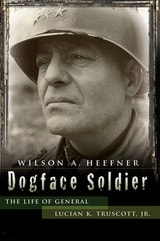
Dogface Soldier
The Life of General Lucian K. Truscott, Jr.Wilson A. Heefner
University of Missouri Press, 2026
Yet no definitive history of his life has been compiled. Wilson Heefner corrects that with the first authoritative biography of this distinguished American military leader. Heefner has undertaken impressive research in primary sources—as well as interviews with family members and former associates—to shed new light on this overlooked hero. He presents Truscott as a soldier who was shaped by his upbringing, civilian and military education, family life, friendships, and evolving experiences as a commander both in and out of combat.
Heefner’s brisk narrative explores Truscott’s career through his three decades in the Army and defines his roles in key operations. It also examines Truscott’s postwar role as military governor of Bavaria, particularly in improving living conditions for Jewish displaced persons, removing Nazis from civil government, and assisting in the trials of German war criminals. And it offers the first comprehensive examination of his subsequent career in the Central Intelligence Agency, where he served as senior CIA representative in West Germany during the early days of the Cold War, and later as CIA Director Allen Dulles’s deputy director for coordination in Washington.
Dogface Soldier is a portrait of a man who earned a reputation for being honest, forthright, fearless, and aggressive, both as a military officer and in his personal life—a man who, at the dedication ceremony for the Anzio-Nettuno American cemetery in 1945, turned away from the crowd and to the thousands of crosses stretching before him to address those buried there. Heefner has written a definitive biography of a great soldier and patriot.
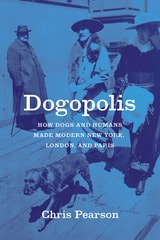
Dogopolis
How Dogs and Humans Made Modern New York, London, and ParisChris Pearson
University of Chicago Press, 2021
Stroll through any American or European city today and you probably won’t get far before seeing a dog being taken for a walk. It’s expected that these domesticated animals can easily navigate sidewalks, streets, and other foundational elements of our built environment. But what if our cities were actually shaped in response to dogs more than we ever realized?
Chris Pearson’s Dogopolis boldly and convincingly asserts that human-canine relations were a crucial factor in the formation of modern urban living. Focusing on New York, London, and Paris from the early nineteenth century into the 1930s, Pearson shows that human reactions to dogs significantly remolded them and other contemporary western cities. It’s an unalterable fact that dogs—often filthy, bellicose, and sometimes off-putting—run away, spread rabies, defecate, and breed wherever they like, so as dogs became a more and more common in nineteenth-century middle-class life, cities had to respond to people’s fear of them and revulsion at their least desirable traits. The gradual integration of dogs into city life centered on disgust at dirt, fear of crime and vagrancy, and the promotion of humanitarian sentiments. On the other hand, dogs are some people’s most beloved animal companions, and human compassion and affection for pets and strays were equally powerful forces in shaping urban modernity. Dogopolis details the complex interrelations among emotions, sentiment, and the ways we manifest our feelings toward what we love—showing that together they can actually reshape society.
Dogopolis
How Dogs and Humans Made Modern New York, London, and ParisChris Pearson
University of Chicago Press, 2021
Dogopolis presents a surprising source for urban innovation in the history of three major cities: human-canine relationships.
Stroll through any American or European city today and you probably won’t get far before seeing a dog being taken for a walk. It’s expected that these domesticated animals can easily navigate sidewalks, streets, and other foundational elements of our built environment. But what if our cities were actually shaped in response to dogs more than we ever realized?
Chris Pearson’s Dogopolis boldly and convincingly asserts that human-canine relations were a crucial factor in the formation of modern urban living. Focusing on New York, London, and Paris from the early nineteenth century into the 1930s, Pearson shows that human reactions to dogs significantly remolded them and other contemporary western cities. It’s an unalterable fact that dogs—often filthy, bellicose, and sometimes off-putting—run away, spread rabies, defecate, and breed wherever they like, so as dogs became a more and more common in nineteenth-century middle-class life, cities had to respond to people’s fear of them and revulsion at their least desirable traits. The gradual integration of dogs into city life centered on disgust at dirt, fear of crime and vagrancy, and the promotion of humanitarian sentiments. On the other hand, dogs are some people’s most beloved animal companions, and human compassion and affection for pets and strays were equally powerful forces in shaping urban modernity. Dogopolis details the complex interrelations among emotions, sentiment, and the ways we manifest our feelings toward what we love—showing that together they can actually reshape society.
Doing Emotions History
Edited by Susan Matt and Peter N. Stearns
University of Illinois Press, 2013
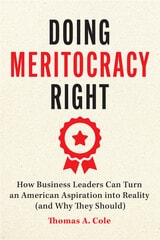
Doing Meritocracy Right
How Business Leaders Can Turn an American Aspiration into Reality (and Why They Should)Thomas A. Cole
University of Chicago Press, 2025
As America’s most vaunted cultural value, meritocracy is celebrated by some as an institution and derided by others as a myth—or even a trap. Thomas A. Cole argues in Doing Meritocracy Right that if meritocracy is to persist as an institution—and it must—it requires structural support in the private sector. For America to achieve a version of meritocracy that more closely matches our aspirations, our business leaders must first offer equity of opportunity for individuals to demonstrate and develop their talents on equal terms.
Drawing on his decades of experience in advising CEOs and corporate boards, personally serving on the boards of major not-for-profits, and leading a large global law firm, Cole cites elite professional-service institutions—consultancies and law firms especially—as improbable laboratories for equity of opportunity. These workplaces, out of self-interest, are laser-focused on the quality of their professionals, seeking out talent and representation and then judging these individuals on (ideally) equal terms once they’re in place. Here, Cole sees an opportunity that no public initiative or platitudes can deliver: if workplaces seek out representational diversity by applying, with thought and care, a single standard of merit—one that emphasizes character—and by providing training and mentoring on an equitable basis, then they will offer a ladder to social and economic mobility that serves both individuals and society.
Cole argues that a meritocratic society is achieved in two interrelated stages: access to education; and post-education promotion to membership in the elite. The latter, he says, is the domain of business. Cole argues that the private sector is better positioned to effect reform and he encourages leaders in the private sector to pursue reform both in their organizations, in government, and in the universities and communities where they have influence.
Meritocracy in the private sector can’t control the many American inequities that exist on the ground of American society. But it can do social good by serving as a reliable, merit-determined path to the highest echelons of business and industry. Cole sets the stage for the discussion of reforms with a “brief history of our imperfect meritocracy,” and rounds out the book with a to-do list for business leaders.
Doing Rhetorical History
Concepts and CasesKathleen J. Turner
University of Alabama Press, 1998
and as a perspective, offers insights that are central to the study of
communication and unavailable through other approaches.
The current field of communication derives from the historical study
of rhetoric. Over the last few decades, however, as the trend toward theoretical
conceptions has driven analysis and as a host of "isms" has defined
criticism, communication studies have moved away from a predominantly historical
perspective.
Yet many scholars in the field continue to find benefits in rhetorical
history. In the thirteen essays gathered here, eminent scholars address
the ongoing dialogue over the regrounding of rhetorical study and the relationship
between theory and history as well as history and criticism in the field.
Some examine the conceptual issues involved in the juncture of rhetoric
and history; others offer case studies, often based on research with primary
documents, to illustrate the process and promise of rhetorical history.
Collectively, their work tests theory and complements criticism while standing
as a distinct and valid approach in and of itself.
The conceptualizations and methodologies of rhetorical history will
increase in significance during the burgeoning "Communication Age"
as we seek to cope with the present and prepare for the future by better
understanding the past. This volume serves as an excellent overview of
a recently neglected methodological approach and acts as the first step
in ending that neglect.
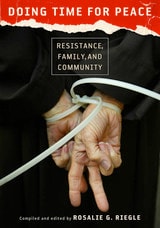
Doing Time for Peace
Resistance, Family, and CommunityRosalie G. Riegle
Vanderbilt University Press, 2013
In their own words, the narrators describe their motivations and their preparations for acts of resistance, the actions themselves, and their trials and subsequent jail time. We hear from those who do their time by caring for their families and managing communities while their partners are imprisoned. Spouses and children talk frankly of the strains on family ties that a life of working for peace in the world can cause.
The voices range from a World War II conscientious objector to those protesting the recent war in Iraq. The book includes sections on resister families, the Berrigans and Jonah House, the Plowshares Communities, the Syracuse Peace Council, and Catholic Worker houses and communities.
The introduction by Dan McKanan situates these activists in the long tradition of resistance to war and witness to peace.
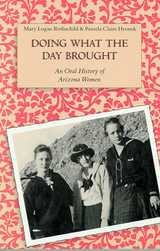
Doing What the Day Brought
An Oral History of Arizona WomenMary Logan Rothschild and Pamela Claire Hronek
University of Arizona Press, 1992
Drawing on interviews with twenty-nine individuals, Doing What the Day Brought examines the everyday lives of women from the late nineteenth century to the present day and demonstrates the role they have played in shaping the modern Arizona community.
Focusing on "ordinary" women, the book crosses race, ethnic, religious, economic, and marital lines to include Arizona women from diverse backgrounds. Rather than simply editing each woman's words, Rothschild and Hronek have analyzed these oral histories for common themes and differences and have woven portions into a narrative that gives context to the individual lives. The resulting life-course format moves naturally from childhood to home life, community service, and participation in the work force, and concludes with reflections on changes witnessed in the lifetimes of these women.
For the women whose lives are presented here, it may have been common to gather dead saguaro cactus ribs to make outdoor fires to boil laundry water, or to give birth on a dirt floor. Their stories capture not only changes in a state where history has overlooked the role of women, but the changing roles of American women over the course of this century.
Doing Women's Film History
Reframing Cinemas, Past and FutureEdited by Christine Gledhill and Julia Knight
University of Illinois Press, 2015
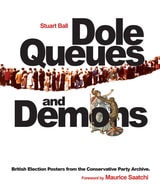
Dole Queues and Demons
British Election Posters from the Conservative Party ArchiveStuart Ball
Bodleian Library Publishing, 2011
Bold amalgams of graphic design, psychology, and art, election posters have remained unsung—and sometimes even maligned—since their inception at the beginning of the twentieth century. Through a careful selection from among the more than seven hundred posters in the Bodleian Library’s Conservative Party Archive, this lavishly illustrated volume charts the evolution of the election posters created by Britain’s Conservative Party.
Dollar, Dove, and Eagle
One Hundred Years of Palestinian Migration to HondurasNancie L. Gonzalez
University of Michigan Press, 1993
Dolly Mixtures
The Remaking of GenealogySarah Franklin
Duke University Press, 2007
Franklin combines wide-ranging sources—from historical accounts of sheep-breeding, to scientific representations of cloning by nuclear transfer, to popular media reports of Dolly's creation and birth—as she draws on gender and kinship theory as well as postcolonial and science studies. She argues that there is an urgent need for more nuanced responses to the complex intersections between the social and the biological, intersections which are literally reshaping reproduction and genealogy. In Dolly Mixtures, Franklin uses the renowned sheep as an opportunity to begin developing a critical language to identify and evaluate the reproductive possibilities that post-Dolly biology now faces, and to look back at some of the important historical formations that enabled and prefigured Dollys creation.
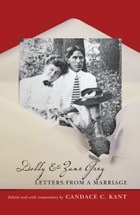
Dolly and Zane Grey
Letters from a MarriageCandace C. Kant
University of Nevada Press, 2011
Popular western writer Zane Grey was a literary celebrity during his lifetime and the center of a huge enterprise based on his writing, which included books, magazine serials, film and stage versions of his stories, even comic strips. His wife, Dolly, closely guided Grey's career almost from its beginning, editing and sometimes revising his work, negotiating with publishers and movie studios, and skillfully managing the considerable fortune derived from these activities.
Dolly maintained the facade of a conventional married life that was essential to Grey's public image and the traditional middle-class values his work reflected. This facade was constantly threatened by Grey's numerous affairs with other women. The stress of hiding these dalliances placed a huge strain on their relationship, and much of Zane and Dolly's union was sustained largely by correspondence. Their letters--thousands of them--reveal the true nature of this complex partnership. As edited by Candace Kant, the letters offer an engrossing portrait of an extremely unorthodox marriage and its times.
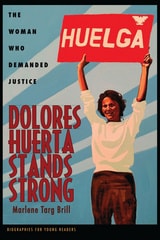
Dolores Huerta Stands Strong
The Woman Who Demanded JusticeMarlene Targ Brill
Ohio University Press, 2018
Selected as a Bank Street College of Education Best Children’s Book of the Year for 2018 (Category: Twelve–Fourteen)
“A biography for the times … An excellent read for anyone hoping to believe one person can make a difference.” —Kirkus (starred review)
“This well-told, age-appropriate account of a vital and essential activist deserves a place in all middle grade collections.” —School Library Journal (starred review)
Today, we know Dolores Huerta as the cofounder, with Cesar Chavez, of the National Farmworkers Association, which later became the United Farm Workers of America. We know her as a tireless advocate for the rights of farmworkers, Mexican American immigrants, women, and LGBTQ populations. And we know her as the recipient of the Presidential Medal of Freedom from Barack Obama in 2012.
Before all that, though, Huerta was a child in the farming community of Stockton, California, and then a teenager whose teachers underestimated her because she was Chicana. When she became a teacher herself, she witnessed her students coming to school shoeless and hungry. Many took days off from school to work in the farm fields to help feed their families. What could she do to help them? A young mother at the time, Huerta quit her teaching job to organize their parents. That began her journey to educate a nation about who produces our food and the conditions under which they work.
Dolores Huerta Stands Strong follows Huerta’s life from the mining communities of the Southwest where her father toiled, to the vineyards and fields of California, and across the country to the present day. As she worked for fair treatment for others, Dolores earned the nation’s highest honors. More important, she found her voice.

Dom Pedro
The Struggle for Liberty in Brazil and Portugal, 1798-1834Neill Macaulay
Duke University Press, 1986

Domestic Architecture In Andes
Mark S. Aldenderfer
University of Iowa Press, 1993
Domestic Contradictions
Race and Gendered Citizenship from Reconstruction to Welfare ReformPriya Kandaswamy
Duke University Press, 2021
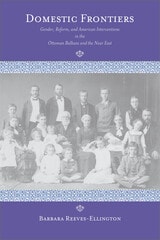
Domestic Frontiers
Gender, Reform, and American Interventions in the Ottoman Balkans and the Near EastBarbara Reeves-Ellington
University of Massachusetts Press, 2013
During the nineteenth and early twentieth centuries, American Protestant missionaries attempted to export their religious beliefs and cultural ideals to the Ottoman Empire. Seeking to attract Orthodox Christians and even Muslims to their faith, they promoted the paradigm of the “Christian home” as the foundation of national progress. Yet the missionaries' efforts not only failed to win many converts but also produced some unexpected results.
Drawing on a broad range of sources—Ottoman, Bulgarian, Russian, French, and English—Barbara Reeves-Ellington tracks the transnational history of this little-known episode of American cultural expansion. She shows how issues of gender and race influenced the missionaries' efforts as well as the complex responses of Ottoman subjects to American intrusions into their everyday lives. Women missionaries—married and single—employed the language of Christian domesticity and female moral authority to challenge the male-dominated hierarchy of missionary society and to forge bonds of feminist internationalism. At the same time, Orthodox Christians adapted the missionaries' ideology to their own purposes in developing a new strain of nationalism that undermined Ottoman efforts to stem growing sectarianism within their empire. By the beginning of the twentieth century, as some missionaries began to promote international understanding rather than Protestantism, they also paved the way for future expansion of American political and commercial interests.
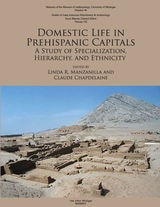
Domestic Life in Prehispanic Capitals
A Study of Specialization, Hierarchy, and EthnicityEdited by Linda R. Manzanilla and Claude Chapdelaine
University of Michigan Press, 2009
Domestic Negotiations
Gender, Nation, and Self-Fashioning in US Mexicana and Chicana Literature and ArtMcMahon, Marci R
Rutgers University Press, 2013
This interdisciplinary study explores how US Mexicana and Chicana authors and artists across different historical periods and regions use domestic space to actively claim their own histories. Through “negotiation”—a concept that accounts for artistic practices outside the duality of resistance/accommodation—and “self-fashioning,” Marci R. McMahon demonstrates how the very sites of domesticity are used to engage the many political and recurring debates about race, gender, and immigration affecting Mexicanas and Chicanas from the early twentieth century to today.
Domestic Negotiations covers a range of archival sources and cultural productions, including the self-fashioning of the “chili queens” of San Antonio, Texas, Jovita González’s romance novel Caballero, the home economics career and cookbooks of Fabiola Cabeza de Baca, Sandra Cisneros’s “purple house controversy” and her acclaimed text The House on Mango Street, Patssi Valdez’s self-fashioning and performance of domestic space in Asco and as a solo artist, Diane Rodríguez’s performance of domesticity in Hollywood television and direction of domestic roles in theater, and Alma López’s digital prints of domestic labor in Los Angeles. With intimate close readings, McMahon shows how Mexicanas and Chicanas shape domestic space to construct identities outside of gendered, racialized, and xenophobic rhetoric.
Domestic Occupations
Spatial Rhetorics and Women’s WorkJessica Enoch
Southern Illinois University Press, 2019
Enoch explores how three different groups of women workers—teachers, domestic scientists, and World War II factory employees—contended with the physical and ideological space of the home, examining how this everyday yet powerful space thwarted or enabled their financial and familial security as well as their intellectual engagements and work-related opportunities.
Domestic Occupations demonstrates a multimodal and multigenre research method for conducting spatio-rhetorical analysis that serves as a model for new kinds of thinking and new kinds of scholarship. This study adds historical depth and exigency to an important contemporary conversation in the public sphere about how women’s ties to the home inflect their access to work and professional advancement.
Domestic Perspectives on Contemporary Democracy
Edited by Peter F. Nardulli
University of Illinois Press, 2007
In looking at the remarkable proliferation of democracies since 1974, this volume offers important insight into the challenges and opportunities that democracy faces in the twenty-first century. Distinguished contributors detail difficulties that democracies face from within and how they deal with them. Among the contemporary threats to democracy emanating from internal sources are tensions arising over technology and its uses; ethnic, religious, and racial distinctions; and disparate access to resources, education, and employment. A democratically elected government can behave more or less democratically, even when controlling access to information, using legal authority to aid or intimidate, and applying resources to shape the conditions for the next election. With elections recently disputed in the United States, Mexico, Lebanon, and the Ukraine, debates about the future of democracy are inescapably debates about what kind of democracy is desired.
Contributors are W. Lance Bennett, Bruce Bimber, Jon Fraenkel, Brian J. Gaines, Bernard Grofman, Wayne V. McIntosh, Peter F. Nardulli, Mark Q. Sawyer, Stephen Simon, Paul M. Sniderman, and Jack Snyder.

Domestic Tyranny
The Making of American Social Policy against Family Violence from Colonial Times to the PresentElizabeth Pleck
University of Illinois Press, 2004
Domestic Violence and the Law in Colonial and Postcolonial Africa
Emily S. Burrill
Ohio University Press, 2010
Domestic Violence and the Law in Colonial and Postcolonial Africa reveals the ways in which domestic space and domestic relationships take on different meanings in African contexts that extend the boundaries of family obligation, kinship, and dependency. The term domestic violence encompasses kin-based violence, marriage-based violence, gender-based violence, as well as violence between patrons and clients who shared the same domestic space. As a lived experience and as a social and historical unit of analysis, domestic violence in colonial and postcolonial Africa is complex.
Using evidence drawn from Sub-saharan Africa, the chapters explore the range of domestic violence in Africa’s colonial past and its present, including taxation and the insertion of the household into the broader structure of colonial domination.
African histories of domestic violence demand that scholars and activists refine the terms and analyses and pay attention to the historical legacies of contemporary problems. This collection brings into conversation historical, anthropological, legal, and activist perspectives on domestic violence in Africa and fosters a deeper understanding of the problem of domestic violence, the limits of international human rights conventions, and local and regional efforts to address the issue.
Domesticating Brown
Movements of Racial ImaginationChristopher B. Patterson
Duke University Press, 2026
Domesticating Empire
Enlightenment in Spanish AmericaKaren Stolley
Vanderbilt University Press, 2013
Through the work of five authors--Jose de Oviedo y Banos, Juan Ignacio Molina, Felix de Azara, Catalina de Jesus Herrera, and Felix de Arrate--Domesticating Empire explores the Ibero-American Enlightenment as a project that reflects both key Enlightenment concerns and the particular preoccupations of Bourbon Spain and its territories in the Americas. At a crucial moment in Spain's imperial trajectory, these authors domesticate topics central to empire--conquest, Indians, nature, God, and gold--by making them familiar and utilitarian. As a result, their works later proved resistant to overarching schemes of Latin American literary history and have been largely forgotten. Nevertheless, eighteenth-century Ibero-American writing complicates narratives about both the Enlightenment and Latin American cultural identity.

Domesticating Organ Transplant
Familial Sacrifice and National Aspiration in MexicoMegan Crowley-Matoka
Duke University Press, 2016
Domestications
American Empire, Literary Culture, and the Postcolonial LensHosam Aboul-Ela
Northwestern University Press, 2018
Domestications traces a genealogy of American global engagement with the Global South since World War II. Hosam Aboul-Ela reads American writers contrapuntally against intellectuals from the Global South in their common—yet ideologically divergent—concerns with hegemony, world domination, and uneven development. Using Edward Said’s Culture and Imperialism as a model, Aboul-Ela explores the nature of U.S. imperialism’s relationship to literary culture through an exploration of five key terms from the postcolonial bibliography: novel, idea, perspective, gender, and space.
Within this framework the book examines juxtapositions including that of Paul Bowles’s Morocco with North African intellectuals’ critique of Orientalism, the global treatment of Vietnamese liberation movements with the American narrative of personal trauma in the novels of Tim O’Brien and Hollywood film, and the war on terror’s philosophical idealism with Korean and post-Arab nationalist materialist archival fiction.
Domestications departs from other recent studies of world literature in its emphases not only on U.S. imperialism but also on intellectuals working in the Global South and writing in languages other than English and French. Although rooted in comparative literature, its readings address issues of key concern to scholars in American studies, postcolonial studies, literary theory, and Middle Eastern studies.
Domesticity And Dirt
Housewives and Domestic Servants in the United States, 1920-1945Phyllis Palmer
Temple University Press, 1991
In the era after Suffrage, white middle-class housewives abandoned moves toward paid work for themselves, embraced domestic life, and felt entitled to servants. In Domesticity and Dirt, Phyllis Palmer examines the cultural norms that led such women to take on the ornamental and emotional elements of the job while relegating the hard physical work and demeaning service tasks to servants—mainly women of color. Using novels, films, magazine articles, home economics texts, and government-funded domestic training course manuals, the author details cultural expectations about middle-class homelife.
Palmer describes how government-funded education programs encouraged the divisions of labor and identity and undercut domestic workers’ organized efforts during the 1930s to win inclusion in New Deal programs regulating labor conditions. Aided by less powerful black civil rights groups, without the assistance of trade unions or women’s clubs, domestics failed to win legal protections and the legal authority and self-respect these brought to covered workers. The author also reveals how middle- class women responded ambivalently to the call to aid women workers when labor reforms threatened their domestic arrangements.
Throughout her study, Palmer questions why white middle-class women looked to new technology and domestic help to deal with cultural demands upon "the perfect housewife" rather than expecting their husbands to help. When the supply of servants declined during the 1950s, middle-class housewives were left isolated with lots of housework. Although they rapidly followed their servants into paid work outside the home, they remain responsible for housework and child care.
In the series Women in the Political Economy, edited by Ronnie J. Steinberg.
Domination without Dominance
Inca-Spanish Encounters in Early Colonial PeruGonzalo Lamana
Duke University Press, 2008
Lamana’s redefinition of the order of things reveals that, contrary to the conquerors’ accounts, what the Spanairds achieved was a “domination without dominance.” This conclusion undermines common ideas of Spanish (and Western) superiority. It shows that casting order as a by-product of military action rests on a pervasive fallacy: the translation of military superiority into cultural superiority. In constant dialogue with critical thinking from different disciplines and traditions, Lamana illuminates how this new interpretation of the conquest of the Incas revises current understandings of Western colonialism and the emergence of still-current global configurations.
Dominguez Escalante Journal
Their Expedition Through Colorado Utah Az & N Mex 1776Ted J. Warner
University of Utah Press, 1995
Translated by Fray Angelico Chavez, Edited by Ted J. Warner
Western History
The chronicle of Fray Francisco Atanasio Domínguez and Fray Silvestre Vélez de Escalante’s most remarkable 1776 expedition through the Rocky Mountains, the eastern Great Basin, and the Colorado Plateau to inventory new lands for the Spanish crown and to find a route from Santa Fe to Monterey, California.
Escalante’s journal wonderfully describes every detail of the rugged and scenic country through which they journeyed, along the qualities and customs of its inhabitants. Working as far north as present-day Provo, Utah, the expedition finally returned south. An approaching severe winter and mishaps among the maze of the Grand Canyon forced the party to return to Santa Fe by way of the Hopi pueblos.
This journal provides a fascinating account of over a thousand miles of wilderness exploration.

Dominican Baseball
New Pride, Old PrejudiceAlan Klein
Temple University Press, 2014
Pedro Martínez. Sammy Sosa. Manny Ramírez. By 2000, Dominican baseball players were in every Major League clubhouse, and regularly winning every baseball award. In 2002, Omar Minaya became the first Dominican general manager of a Major League team. But how did this codependent relationship between MLB and Dominican talent arise and thrive?
In his incisive and engaging book, Dominican Baseball, Alan Klein examines the history of MLB's presence and influence in the Dominican Republic, the development of the booming industry and academies, and the dependence on Dominican player developers, known as buscones. He also addresses issues of identity fraud and the use of performance-enhancing drugs as hopefuls seek to play professionally.
Dominican Baseball charts the trajectory of the economic flows of this transnational exchange, and the pride Dominicans feel in their growing influence in the sport. Klein also uncovers the prejudice that prompts MLB to diminish Dominican claims on legitimacy. This sharp, smartly argued book deftly chronicles the uneasy and often contested relations of the contemporary Dominican game and industry.
Dominican Crossroads
H. C. C. Astwood and the Moral Politics of Race-Making in the Age of EmancipationChristina Cecelia Davidson
Duke University Press, 2024