Results by title
28164 books match the query 'History' and 908 start with d
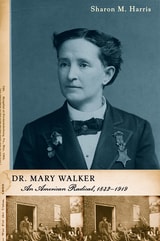
Dr. Mary Walker
An American Radical, 1832-1919Harris, Sharon M
Rutgers University Press, 2009
Perhaps more telling about her life are the words of an 1866 London Anglo-American Times reporter, "Her strange adventures, thrilling experiences, important services and marvelous achievements exceed anything that modern romance or fiction has produced. . . . She has been one of the greatest benefactors of her sex and of the human race."
In this biography Sharon M. Harris steers away from a simplistic view and showcases Walker as a Medal of Honor recipient, examining her work as an activist, author, and Civil War surgeon, along with the many nineteenth-century issues she championed:political, social, medical, and legal reforms, abolition, temperance, gender equality, U.S. imperialism, and the New Woman.
Rich in research and keyed to a new generation, Dr. Mary Walker captures its subject's articulate political voice, public self, and the realities of an individual whose ardent beliefs in justice helped shape the radical politics of her time.
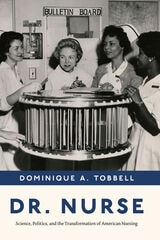
Dr. Nurse
Science, Politics, and the Transformation of American NursingDominique A. Tobbell
University of Chicago Press, 2022
Nurses represent the largest segment of the U.S. health care workforce and spend significantly more time with patients than any other member of the health care team. Dr. Nurse probes their history to examine major changes that have taken place in American health care in the second half of the twentieth century. The book reveals how federal and state health and higher education policies shaped education within health professions after World War II.
Starting in the 1950s, academic nurses sought to construct a science of nursing—distinct from that of the related biomedical or behavioral sciences—that would provide the basis for nursing practice. Their efforts transformed nursing’s labor into a valuable site of knowledge production and proved how the application of their knowledge was integral to improving patient outcomes. Exploring the knowledge claims, strategies, and politics involved as academic nurses negotiated their roles and nursing’s future, Dr. Nurse highlights how state-supported health centers have profoundly shaped nursing education and health care delivery.
Dr. Nurse
Science, Politics, and the Transformation of American NursingDominique A. Tobbell
University of Chicago Press, 2022
An analysis of the efforts of American nurses to establish nursing as an academic discipline and nurses as valued researchers in the decades after World War II.
Nurses represent the largest segment of the U.S. health care workforce and spend significantly more time with patients than any other member of the health care team. Dr. Nurse probes their history to examine major changes that have taken place in American health care in the second half of the twentieth century. The book reveals how federal and state health and higher education policies shaped education within health professions after World War II.
Starting in the 1950s, academic nurses sought to construct a science of nursing—distinct from that of the related biomedical or behavioral sciences—that would provide the basis for nursing practice. Their efforts transformed nursing’s labor into a valuable site of knowledge production and proved how the application of their knowledge was integral to improving patient outcomes. Exploring the knowledge claims, strategies, and politics involved as academic nurses negotiated their roles and nursing’s future, Dr. Nurse highlights how state-supported health centers have profoundly shaped nursing education and health care delivery.
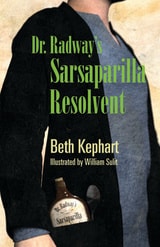
Dr. Radway's Sarsaparilla Resolvent
Beth Kephart
Temple University Press, 2013
Flavored by the oddities of historic personalities and facts, Dr. Radway’s Sarsaparilla Resolvent is set in Bush Hill, Philadelphia, 1871—home to the Baldwin Locomotive Works and a massive, gothic prison. Acclaimed writer Beth Kephart captures the rhythms and smells of an extraordinary era as William Quinn and his Ma, Essie, grapple with life among terrible accidents, miraculous escapes, and shams masquerading as truth.
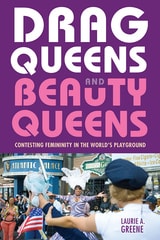
Drag Queens and Beauty Queens
Contesting Femininity in the World's PlaygroundLaurie Greene
Rutgers University Press, 2021
Drag Queens and Beauty Queens presents a vivid ethnography of the Miss’d America pageant and the gay neighborhood from which it emerged in the early 1990s as a moment of campy celebration in the midst of the AIDS crisis. It examines how the pageant strengthened community bonds and activism, as well as how it has changed now that Rupaul’s Drag Race has brought many of its practices into the cultural mainstream. Comparing the Miss’d America pageant with its glitzy cisgender big sister, anthropologist Laurie Greene discovers how the two pageants have influenced each other in unexpected ways.
Drag Queens and Beauty Queens deepens our understanding of how femininity is performed at pageants, exploring the various ways that both the Miss’d America and Miss America pageants have negotiated between embracing and critiquing traditional gender roles. Ultimately, it celebrates the rich tradition of drag performance and the community it engenders.
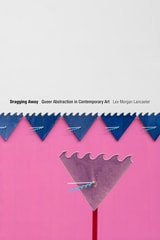
Dragging Away
Queer Abstraction in Contemporary ArtLex Morgan Lancaster
Duke University Press, 2022
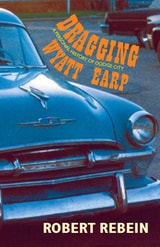
Dragging Wyatt Earp
A Personal History of Dodge CityRobert Rebein
Ohio University Press, 2013
In Dragging Wyatt Earp essayist Robert Rebein explores what it means to grow up in, leave, and ultimately return to the iconic Western town of Dodge City, Kansas. In chapters ranging from memoir to reportage to revisionist history, Rebein contrasts his hometown’s Old West heritage with a New West reality that includes salvage yards, beefpacking plants, and bored teenagers cruising up and down Wyatt Earp Boulevard.
Along the way, Rebein covers a vast expanse of place and time and revisits a number of Western myths, including those surrounding Francisco Vasquez de Coronado, the Cheyenne chief Black Kettle, George Armstrong Custer, and of course Wyatt Earp himself. Rebein rides a bronc in a rodeo, spends a day as a pen rider at a local feedlot, and attempts to “buck the tiger” at Dodge City’s new Boot Hill Casino and Resort.
Funny and incisive, Dragging Wyatt Earp is an exciting new entry in what is sometimes called the nonfiction of place. It is a must- read for anyone interested in Western history, contemporary memoir, or the collision of Old and New West on the High Plains of Kansas.
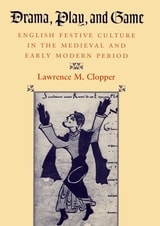
Drama, Play, and Game
English Festive Culture in the Medieval and Early Modern PeriodLawrence M. Clopper
University of Chicago Press, 2001
Drama, Play, and Game demonstrates that the theatrum repudiated by medieval clerics was not "theater" as we understand the term today. Clopper contends that critics have misrepresented Western stage history because they have assumed that theatrum designates a place where drama is performed. While theatrum was thought of as a site of spectacle during the Middle Ages, the term was more closely connected with immodest behavior and lurid forms of festive culture. Clerics were not opposed to liturgical representations in churches, but they strove ardently to suppress May games, ludi, festivals, and liturgical parodies. Medieval drama, then, stemmed from a more vernacular tradition than previously acknowledged-one developed by England's laity outside the boundaries of clerical rule.

Drama, Poetry and Music in Late-Renaissance Italy
The Life and Works of Leonora BernardiVirginia Cox and Lisa Sampson
University College London, 2023
Leonora Bernardi (1559–1616), a gentlewoman of Lucca, was a highly regarded poet, dramatist, and singer. She was active in the brilliant courts of Ferrara and Florence at a time when creative women enjoyed exceptional visibility in Italy. Like many such figures, she has since suffered historical neglect. Drama, Poetry and Music in Late-Renaissance Italy presents the first-ever study of Bernardi’s life along with a modern edition of her recently discovered literary corpus, which mostly exists in manuscripts. Her writings are presented in the original Italian with new English translations, scholarly notes, and critical essays. Based on new archival research, the substantial opening section reconstructs Bernardi’s unusually colorful life. The second major section presents her pastoral tragicomedy Clorilli, one of the earliest secular dramatic works by a woman. The third section presents Bernardi’s secular and religious verse, which engaged with new trends in lyric and poetry for music, and was set by various key composers across Italy. The volume thus firmly positions Leonora Bernardi as a distinctive voice and dynamic player in the extraordinarily rich social, cultural, and geo-political networks of late-Renaissance Italy.
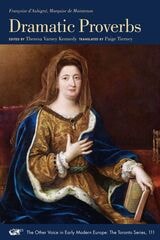
Dramatic Proverbs
Françoise d’Aubigné, Marquise de Maintenon
Iter Press, 2025
Madame de Maintenon’s Dramatic Proverbs provides unprecedented access to an important transitional marker between the society games of the salon and the education theater of the eighteenth century. Composed for the impoverished female pupils at the boarding school she and King Louis XIV founded at Saint-Cyr, Maintenon’s dramatic proverbs crucially reveal the values emphasized in female education at the end of the seventeenth century—a period plagued by economic crisis and growing aristocratic poverty. Some of the first to exclusively express a woman’s point of view, Maintenon’s dramatic proverbs challenged traditional female education and promoted improved conditions for women. The proverbs contributed uniquely to improvisational educational theater, inaugurating a tradition that continued well into the eighteenth century.
This edition of the plays aims to privilege accessibility and accuracy so that twenty-first-century students can act out, interpret, and discuss these historical texts.
Dramatists in Revolt
The New Latin American TheaterEdited by Leon F. Lyday and George W. Woodyard
University of Texas Press, 1976
Dramatists in Revolt, through studies of the major playwrights, explores significant movements in Latin American theater. Playwrights discussed are those who have made outstanding contributions to Latin American theater during the post–World War II period and who have been particularly sensitive to world currents in literature and drama, while being acutely responsive to the problems of their own areas. They express concern about communication, isolation, and solitude. On a more basic level, they concern themselves with the political and socioeconomic problems that figure importantly in the Third World.
The fifteen essays deal with the playwrights Antón Arrufat and José Triana (Cuba); Emilio Carballido and Luisa Josefina Hernández (Mexico); Agustín Cuzzani, Osvaldo Dragún, Griselda Gambaro, and Carlos Gorostiza (Argentina); Jorge Díaz, Egon Wolff, and Luis Alberto Heiremans (Chile); René Marqués (Puerto Rico); and Jorge Andrade, Alfredo Dias Gomes, and Plínio Marcos (Brazil). These are dramatists in revolt, sometimes in a thematic sense, not only in protesting the indignities that various systems impose on modern man, but also in a dramatic configuration. They dare to experiment with techniques in the constant search for viable theatrical forms.
Each essay is written by a specialist familiar with the works of the playwright under consideration. In addition to the essays, the book includes a listing of source materials on Latin American theater.

Drawing -- The Process
Edited by Jo Davies and Leo Duff
Intellect Books, 2005
Drawing - The Process is a collection of papers, theories and interviews based on the conference and exhibition of the same name held at Kingston University in 2003.
Much debate and research is currently undertaken in this area and it is the intention of the book to galvanize this, while providing a vehicle for deep enquiry. The publication will firstly comprise a collection of refereed papers representing a breadth of activity and research around the issues of drawing within the broad context of art and design activity. The second dimension of the book will be an examination of the drawing processes of high profile practitioners.
The publication will encompass the best contemporary investigation of a subject pivotal to art and design activity, and should be recognized as a fundamental text for students at both undergraduate and postgraduate levels.
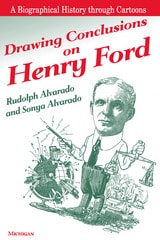
Drawing Conclusions on Henry Ford
Rudolph Alvarado and Sonya Alvarado
University of Michigan Press, 2001
For years political cartoons have shaped the often unflattering popular view of public figures. One of the most-often-portrayed figures of the twentieth century was the automobile manufacturer Henry Ford. Through editorial drawings, a vivid picture of Ford was presented that became the source of myths that surrounded him and continue even to this day.
Drawing Conclusions on Henry Ford is the first and only collection that brings together in one volume these editorial cartoons. They date back as far as the time Ford introduced the Model T in 1908 and extend forward to the introduction of the Model A and subsequent V8 engines in the 1930s. They illustrate the emergence of many of the popular myths surrounding Henry Ford, as seen and understood by the average citizen during the opening decades of the twentieth century. With 150 illustrations, the reader is able to trace the evolving images of Ford from a time period when caricature images of public figures were a primary source of information about those persons. Sometimes funny, sometimes sharp and critical, these cartoons are entertaining in themselves. Viewed as a whole, they create anew view of the Henry Ford story.
Rudolph V. Alvarado is a freelance writer and museum consultant, as well as the former programs leader for the Henry Ford Museum and Greenfield Village. Sonya Y. Alvarado is an instructor of English, at Eastern Michigan University and a former adjunct faculty member, Wayne State University.

Drawing Theories Apart
The Dispersion of Feynman Diagrams in Postwar PhysicsDavid Kaiser
University of Chicago Press, 2005
Drawing on rich archival materials, interviews, and more than five hundred scientific articles from the period, Drawing Theories Apart uses the Feynman diagrams as a means to explore the development of American postwar physics. By focusing on the ways young physicists learned new calculational skills, David Kaiser frames his story around the crafting and stabilizing of the basic tools in the physicist's kit—thus offering the first book to follow the diagrams once they left Feynman's hands and entered the physics vernacular.
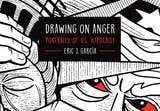
Drawing on Anger
Portraits of U.S. HypocrisyEric J. García
The Ohio State University Press, 2018
For over a decade García has been serving up inked visuals with the sharpest of political critiques through a Chicano lens. If you’re looking for funny punch lines, these aren’t the cartoons for you. But if you want to pull down Uncle Sam’s pants and see what’s really going on, this is your book.
Drawing on Blue
European Drawings on Blue Paper, 1400s–1700sEdina Adam
J. Paul Getty Trust, The, 2024
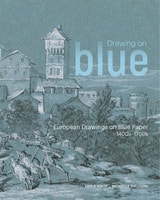
The rich history of blue paper, from the late fifteenth to the mid-eighteenth centuries, illuminates themes of transcultural interchange, international trade, and global reach. Through the examination of significant works, this volume investigates considerations of supply, use, economics, and innovative creative practice. How did the materials necessary for the production of blue paper reach artistic centers? How were these materials produced and used in various regions? Why did they appeal to artists, and how did they impact artistic practice and come to be associated with regional artistic identities? How did commercial, political, and cultural relations, and the mobility of artists, enable the dispersion of these materials and related techniques? Bringing together the work of the world’s leading specialists, this striking publication is destined to become essential reading on the history, materials, and techniques of drawings executed on blue paper.
Drawing on the Victorians
The Palimpsest of Victorian and Neo-Victorian Graphic TextsAnna Maria Jones
Ohio University Press, 2017
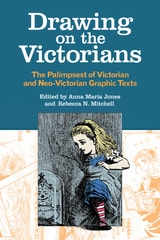
Late nineteenth-century Britain experienced an unprecedented explosion of visual print culture and a simultaneous rise in literacy across social classes. New printing technologies facilitated quick and cheap dissemination of images—illustrated books, periodicals, cartoons, comics, and ephemera—to a mass readership. This Victorian visual turn prefigured the present-day impact of the Internet on how images are produced and shared, both driving and reflecting the visual culture of its time.
From this starting point, Drawing on the Victorians sets out to explore the relationship between Victorian graphic texts and today’s steampunk, manga, and other neo-Victorian genres that emulate and reinterpret their predecessors. Neo-Victorianism is a flourishing worldwide phenomenon, but one whose relationship with the texts from which it takes its inspiration remains underexplored.
In this collection, scholars from literary studies, cultural studies, and art history consider contemporary works—Alan Moore’s League of Extraordinary Gentlemen, Moto Naoko’s Lady Victorian, and Edward Gorey’s Gashlycrumb Tinies, among others—alongside their antecedents, from Punch’s 1897 Jubilee issue to Alice in Wonderland and more. They build on previous work on neo-Victorianism to affirm that the past not only influences but converses with the present.
Contributors: Christine Ferguson, Kate Flint, Anna Maria Jones, Linda K. Hughes, Heidi Kaufman, Brian Maidment, Rebecca N. Mitchell, Jennifer Phegley, Monika Pietrzak-Franger, Peter W. Sinnema, Jessica Straley
Drawing the Future
Chicago Architecture on the International Stage, 1900-1925David Van Zanten
Northwestern University Press, 2013
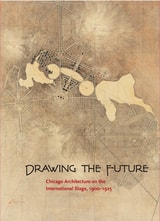
Drawing the Future: Chicago Architecture on the International Stage, 1900–1925 is an illustrated catalog with companion essays for an exhibition of the same name at the Mary and Leigh Block Museum of Art at Northwestern University. Drawing the Future explores the creative ferment among Chicago architects in the early twentieth century, coinciding with similar visions around the world. The essays focus on the highlights of the exhibition. David Van Zanten profiles Walter Burley Griffin and Marion Mahony Griffin, Chicago architects who created an influential, prize-winning plan for Canberra, the new capital of Australia. Ashley Dunn looks at the two exhibits at the Musée des Arts Décoratifs in Paris, one devoted to the Griffins in 1914 and the other to the French architect Tony Garnier in 1925, demonstrating the impact of World War I on city planning and architecture. Leslie Coburn examines Chicago’s Neighborhood Center Competition of 1914–15, which sought to redress gaps in Daniel Burnham’s plan of 1909. The ambition and reach of Chicago architecture in this epoch would have lasting influence on cities of the future.
Drawing the Iron Curtain
Jews and the Golden Age of Soviet AnimationMaya Balakirsky Katz
Rutgers University Press, 2016

Drawing the Line
The Irish Border in British PoliticsIvan Gibbons
Haus Publishing, 2017
Drawing with Great Needles
Ancient Tattoo Traditions of North AmericaEdited by Aaron Deter-Wolf and Carol Diaz-Granados
University of Texas Press, 2013
For thousands of years, Native Americans throughout the Eastern Woodlands and Great Plains used the physical act and visual language of tattooing to construct and reinforce the identity of individuals and their place within society and the cosmos. The act of tattooing served as a rite of passage and supplication, while the composition and use of ancestral tattoo bundles was intimately related to group identity. The resulting symbols and imagery inscribed on the body held important social, civil, military, and ritual connotations within Native American society. Yet despite the cultural importance that tattooing held for prehistoric and early historic Native Americans, modern scholars have only recently begun to consider the implications of ancient Native American tattooing and assign tattooed symbols the same significance as imagery inscribed on pottery, shell, copper, and stone.
Drawing with Great Needles is the first book-length scholarly examination into the antiquity, meaning, and significance of Native American tattooing in the Eastern Woodlands and Great Plains. The contributors use a variety of approaches, including ethnohistorical and ethnographic accounts, ancient art, evidence of tattooing in the archaeological record, historic portraiture, tattoo tools and toolkits, gender roles, and the meanings that specific tattoos held for Dhegiha Sioux and other Native speakers, to examine Native American tattoo traditions. Their findings add an important new dimension to our understanding of ancient and early historic Native American society in the Eastern Woodlands and Great Plains.
Drawn to Nature
American Animation in the Age of ScienceColin Williamson
University of Minnesota Press, 2025
How twentieth-century developments in science influenced the aesthetics of the burgeoning American cartoon
What do technical renderings of plant cells in trees have to do with Disney’s animated opus Fantasia? Quite a bit, as it turns out: such emergent scientific models and ideas about nature were an important inspiration for Disney’s groundbreaking animated realism. In Drawn to Nature, Colin Williamson presents a vivid portrait of how developments in biology, physics, and geology between 1900 and the long 1960s influenced not just Disney but the American cartoon industry as a whole.
Drawing on original research on the scientific appetites of animators and studios such as Winsor McCay, the Fleischer Brothers, Walt Disney, and United Productions of America, Williamson opens new avenues for understanding the history and aesthetics of cartoons. Interrogating the differences between art and science and reconsidering the realms of dream, magic, and fantasy as they pertain to pop culture, he yields novel proposals for bridging longstanding divides between animation, live-action cinema, and the history of science.
Drawn to Nature not only illuminates the extent to which animators have drawn on scientific insights, it also considers seriously how commercial animations themselves participate in scientific discourse. It revises and revitalizes our existing narratives about the history of American animation to uncover the many ways science informs our collective cultural imagination.
Drawn to the Word
The Bible and Graphic DesignAmanda Dillon
SBL Press, 2021
A unique study of lectionaries and graphic design as a site of biblical reception
How artists portrayed the Bible in large canvas paintings is frequently the subject of scholarly exploration, yet the presentation of biblical texts in contemporary graphic designs has been largely ignored. In this book Amanda Dillon engages multimodal analysis, a method of semiotic discourse, to explore how visual composition, texture, color, directionality, framing, angle, representations, and interactions produce potential meanings for biblical graphic designs. Dillon focuses on the artworks of two American graphic designers—the woodcuts designed by Meinrad Craighead for the Roman Catholic Sunday Missal and Nicholas Markell’s illustrations for the worship books of the Evangelical Lutheran Church in America—to present the merits of multimodal analysis for biblical reception history.
Dreadful Desires
The Uses of Love in Neoliberal ChinaCharlie Yi Zhang
Duke University Press, 2022
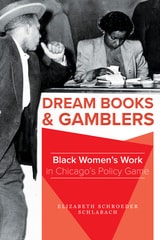
Dream Books and Gamblers
Black Women's Work in Chicago's Policy GameElizabeth Schroeder Schlabach
University of Illinois Press, 2022
Elizabeth Schroeder Schlabach examines the complexities of Black women’s work in policy gambling. Policy provided Black women with a livelihood for themselves and their families. At the same time, navigating gender expectations, aggressive policing, and other hazards of the infromal economy led them to refashion ideas about Black womanhood and respectability. Policy earnings also funded above-board enterprises ranging from neighborhood businesses to philanthropic institutions, and Schlabach delves into the various ways Black women straddled the illegal policy business and reputable community involvement.
Vivid and revealing, Dream Books and Gamblers tells the stories of Black women in the underground economy and how they used their work to balance the demands of living and laboring in Black Chicago.
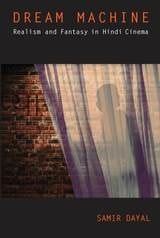
Dream Machine
Realism and Fantasy in Hindi CinemaSamir Dayal
Temple University Press, 2015
Popular Hindi films offer varied cinematic representations ranging from realistic portraits of patriotic heroes to complex fantasies that go beyond escapism. In Dream Machine, Samir Dayal provides a history of Hindi cinema starting with films made after India’s independence in 1947. He constructs a decade-by-decade consideration of Hindi cinema’s role as a site for the construction of “Indianness.”
Dayal suggests that Hindi cinema functions as both mirror and lamp, reflecting and illuminating new and possible representations of national and personal identity, beginning with early postcolonial films including Awaara and Mother India, a classic of the Golden Age. More recent films address critical social issues, such as My Name is Khan and Fire, which concern terrorism and sexuality, respectively. Dayalalso chronicles changes in the industry and in audience reception, and the influence of globalization, considering such films as Slumdog Millionaire.
Dream Machine analyzes the social and aesthetic realism of these films concerning poverty and work, the emergence of the middle class, crime, violence, and the law while arguing for their sustained and critical attention to forms of fantasy.
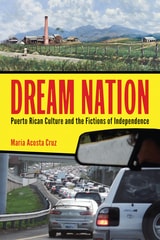
Dream Nation
Puerto Rican Culture and the Fictions of IndependenceAcosta Cruz, María
Rutgers University Press, 2014
Bringing together texts from Puerto Rican literature, history, and popular culture, Dream Nation shows how imaginings of national independence have served many competing purposes. They have given authority to the island’s literary and artistic establishment but have also been a badge of countercultural cool. These ideas have been fueled both by nostalgia for an imagined past and by yearning for a better future. They have fostered local communities on the island, and still helped define Puerto Rican identity within U.S. Latino culture.
In clear, accessible prose, Acosta Cruz takes us on a journey from the 1898 annexation of Puerto Rico to the elections of 2012, stopping at many cultural touchstones along the way, from the canonical literature of the Generación del 30 to the rap music of Tego Calderón. Dream Nation thus serves both as a testament to how stories, symbols, and heroes of independence have inspired the Puerto Rican imagination and as an urgent warning about how this culture has become detached from the everyday concerns of the island’s people.
A volume in the American Literature Initiatives series
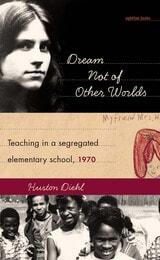
Dream Not of Other Worlds
Teaching in a Segregated Elementary School, 1970Huston Diehl
University of Iowa Press, 2007
When Huston Diehl began teaching a fourth-grade class in a "Negro" elementary school in rural Louisa County, Virginia, the school's white superintendent assured her that he didn't expect her to teach "those children" anything. She soon discovered how these low expectations, widely shared by the white community, impeded her students' ability to learn. With its overcrowded classrooms, poorly trained teachers, empty bookshelves, and meager supplies, her segregated school was vastly inferior to the county's white elementary schools, and the message it sent her students was clear: "dream not of other worlds."
In her often lyrical memoir, Diehl reveals how, in the intimacy of the classroom, her students reached out to her, a young white northerner, and shared their fears, anxieties, and personal beliefs. Repeatedly surprised and challenged by her students, Diehl questions her long-standing middle-class assumptions and confronts her own prejudices. In doing so, she eloquently reflects on what the students taught her about the hurt of bigotry and the humiliation of poverty as well as dignity, courage, and resiliency.
Set in the waning days of the Jim Crow South, Dream Not of Other Worlds chronicles an important moment in American history. Diehl examines the history of black education in the South and narrates the dramatic struggle to integrate Virginia's public schools. Meeting with some of her former students and colleagues and visiting the school where she once taught, she considers what has—and has not—changed after more than thirty years of integrated schooling. This provocative book raises many issues that are of urgent concern today: the continuing social consequences of segregated schools, the role of public education in American society, and the challenges of educating minority and poor children.
Dream Reaper
The Story of an Old-Fashioned Inventor in the High-Tech, High-Stakes World of Modern AgricultureCraig Canine
University of Chicago Press, 1997
"This intriguing tale weaves together the creativity and ingenuity of an inventor and the hurdles he and his partner face in selling and producing what appears to be an amazingly efficient Bi-Rotor combine."—Science News
"Canine writes with style and flourish. . . Dream Reaper is a riveting journey into America's heartland, where necessity is the mother of invention—and hard work, conviction, and sacrifice are its lifeblood."—People Magazine
"Canine deftly interweaves the story of the two men's struggles with a history of the mechanization of agriculture. This lively account of men working under pressure, improvising repairs and demonstrating the new machine, is also a story of courage that illustrates the barriers facing an independent inventor."—Publishers Weekly
"Craig Canine's Dream Reaper is a delight. It's an important book, rich with history and stories. It brings our most essential industry—farming—into new perspective. Reading it made me want to get out a crop."—Bobbie Ann Mason
A volume in the Sloan Technology Series. The series presents to a general audience highly readable accounts of the development of 20th century technologies and the ways these have shaped and are shaped by society.
Dream Shot
The Journey to a Wheelchair Basketball National ChampionshipJosh Birnbaum
University of Illinois Press, 2017
Dream Street
W. Eugene Smith's Pittsburgh ProjectW. Eugene Smith
University of Chicago Press, 2023
In 1955, having just resigned from his high-profile but stormy career with Life Magazine, W. Eugene Smith was commissioned to spend three weeks in Pittsburgh and produce one hundred photographs for noted journalist and author Stefan Lorant’s book commemorating the city’s bicentennial. Smith ended up staying a year, compiling twenty thousand images for what would be the most ambitious photographic essay of his life. But only a fragment of this work was ever seen, despite Smith's lifelong conviction that it was his greatest collection of photographs.
In 2001, Sam Stephenson published for the first time an assemblage of the core images from this project, selections that Smith asserted were the “synthesis of the whole,” presenting not only a portrayal of Pittsburgh but of postwar America. This new edition, updated with a foreword by the poet Ross Gay, offers a fresh vision of Smith's masterpiece.
Dream Trippers
Global Daoism and the Predicament of Modern SpiritualityDavid A. Palmer and Elijah Siegler
University of Chicago Press, 2017
Dream Trippers draws on more than a decade of ethnographic work with Daoist monks and Western seekers to trace the spread of Westernized Daoism in contemporary China. David A. Palmer and Elijah Siegler take us into the daily life of the monastic community atop the mountain of Huashan and explore its relationship to the socialist state. They follow the international circuit of Daoist "energy tourism," which connects a number of sites throughout China, and examine the controversies around Western scholars who become practitioners and promoters of Daoism. Throughout are lively portrayals of encounters among the book’s various characters—Chinese hermits and monks, Western seekers, and scholar-practitioners—as they interact with each other in obtuse, often humorous, and yet sometimes enlightening and transformative ways. Dream Trippers untangles the anxieties, confusions, and ambiguities that arise as Chinese and American practitioners balance cosmological attunement and radical spiritual individualism in their search for authenticity in a globalized world.
Dream of Justice
The Story of Keyes v. Denver Public Schoolsby Pat Pascoe
University Press of Colorado, 2023
Pascoe details Denver’s desegregation battle, beginning with the citizen studies that exposed the inequities of segregated schools and Rachel Noel’s resolution to integrate the system, followed by the momentous pro-integration Benton-Pascoe campaign of Ed Benton and Monte Pascoe for the school board in 1969. When segregationists won that election and reversed the integration plan for northeast Denver, Black, white, and Latino parents filed Keyes v. School District No. 1. This book follows the arguments in the case through briefs, transcripts, and decisions from district court to the Supreme Court of the United States and back, to its ultimate order to desegregate all Denver schools “root and branch.” It was the first northern city desegregation suit to be brought before the Supreme Court. However, with the end of court-ordered busing in 1995, schools quickly resegregated and are now more segregated than before Keyes was filed.
Pascoe asserts that school integration is a necessary step toward eliminating systemic racism in our country and should be the objective of every school board. A Dream of Justice will appeal to students, scholars, and readers interested in the history of civil rights in America, Denver history, and the history of US education.
Dream, Fantasy, and Visual Art in Roman Elegy
Emma Scioli
University of Wisconsin Press, 2015
By treating dreams as a mode for viewing, an analogy suggested by diverse ancient authors, Emma Scioli extracts new information from the poetry of Propertius, Tibullus, and Ovid about the Roman concept of “seeing” dreams. Through comparison with other visual modes of description, such as ekphrasis and simile, as well as with related types of visual experience, such as fantasy and voyeurism, Scioli demonstrates similarities between artist, dreamer, and poet as creators, identifying the dreamer as a particular type of both viewer and narrator.
Dreamer Nation
Immigration, Activism, and NeoliberalismAna Milena Ribero
University of Alabama Press, 2023
Dreamer Nation tells the story of how Dreamers in the Obama era creatively confronted a complex sociopolitical landscape to advocate for immigrant rights and empower undocumented youth to proudly represent their lives and identities, all while under the ever-present threat of detention and deportation. Contributing to rhetorical studies of social movements, immigration, and minoritized rhetorics, Ribero argues that even though Dreamer rhetorics were reflective of the discursive limits of the neoliberal milieu, they also worked to disrupt neoliberal constraints through activism that troubled the primacy of the nation-state and citizenship, refused to adhere to respectability politics, forwarded embodied identity and transnational belonging, and looked for liberation in community—not solely in legislative action.
Each chapter presents a different rhetorical situation within the US “crisis” of immigration and the rhetoric that Dreamers used to respond to it. Organized chronologically, the chapters document Dreamer activism during the Obama presidency, from the 2010 hunger strikes advocating for the DREAM Act to undocuqueer “artivism” responding to Trump’s presidential campaign. The author draws not only on the methods and theories of rhetorical studies but also on women of color feminisms, ethnic studies, critical theory, and queer theory. In this way, the book looks across disciplines to illustrate the rhetorical savvy of one of the most important US social movements of our time.
Dreamers, Thinkers, Doers
Conversations on the Economy of TomorrowGovert Buijs
Amsterdam University Press, 2026
But these voices do more than imagine a better future; they show how it can be realized. They examine what it takes to turn ideas into action and take the first concrete steps toward change. The collection brings to life a new “multi-actor approach,” as outlined by Jan Peter Balkenende and Govert Buijs in Capitalism Reconnected (2024) – an approach in which everyone matters and shares responsibility: governments, businesses, civil society, and consumers alike.
Dreamers, Visionaries, and Revolutionaries in the Life Sciences
Edited by Oren Harman and Michael R. Dietrich
University of Chicago Press, 2018
From the Frenchman Jean-Baptiste Lamarck, who coined the word “biology” in the early nineteenth century, to the American James Lovelock, for whom the Earth is a living, breathing organism, these dreamers innovated in ways that forced their contemporaries to reexamine comfortable truths. With this collection readers will follow Jane Goodall into the hidden world of apes in African jungles and Francis Crick as he attacks the problem of consciousness. Join Mary Lasker on her campaign to conquer cancer and follow geneticist George Church as he dreams of bringing back woolly mammoths and Neanderthals. In these lives and the many others featured in these pages, we discover visions that were sometimes fantastical, quixotic, and even threatening and destabilizing, but always a challenge to the status quo.

Dreaming Revolution
Transgression in the Development of American RomanceScott Bradfield
University of Iowa Press, 1993
Dreaming Revolution usefully employs current critical theory to address how the European novel of class revolt was transformed into the American novel of imperial expansion. Bradfield shows that early American romantic fiction—including works by William Godwin, Charles Brockden Brown, James Fenimore Cooper, and Edgar Allan Poe—can and should be considered as part of a genre too often limited to the nineteenth-century European novel. In a spirited discussion of the works from these four authors, Bradfield argues that Americans take the class dynamics of the European psychological novel and apply them to the American landscape, reimagining psychological spaces as geographical ones.
Dreaming and Historical Consciousness in Island Greece
Charles Stewart
University of Chicago Press, 2017
Charles Stewart tells the story of the inhabitants of Kóronos, on the Greek island of Naxos, who, in the 1830s, began experiencing dreams in which the Virgin Mary instructed them to search for buried Christian icons nearby and build a church to house the ones they found. Miraculously, they dug and found several icons and human remains, and at night the ancient owners of them would speak to them in dreams. The inhabitants built the church and in the years since have experienced further waves of dreams and startling prophesies that shaped their understanding of the past and future and often put them at odds with state authorities. Today, Kóronos is the site of one of the largest annual pilgrimages in the Mediterranean. Telling this fascinating story, Stewart draws on his long-term fieldwork and original historical sources to explore dreaming as a mediator of historical change, while widening the understanding of historical consciousness and history itself.

Dreaming in Books
The Making of the Bibliographic Imagination in the Romantic AgeAndrew Piper
University of Chicago Press, 2009
At the turn of the nineteenth century, publishing houses in London, New York, Paris, Stuttgart, and Berlin produced books in ever greater numbers. But it was not just the advent of mass printing that created the era’s “bookish” culture. According to Andrew Piper, romantic writing and romantic writers played a crucial role in adjusting readers to this increasingly international and overflowing literary environment. Learning how to use and to want books occurred through more than the technological, commercial, or legal conditions that made the growing proliferation of books possible; the making of such bibliographic fantasies was importantly a product of the symbolic operations contained within books as well.
Examining novels, critical editions, gift books, translations, and illustrated books, as well as the communities who made them, Dreaming in Books tells a wide-ranging story of the book’s identity at the turn of the nineteenth century. In so doing, it shows how many of the most pressing modern communicative concerns are not unique to the digital age but emerged with a particular sense of urgency during the bookish upheavals of the romantic era. In revisiting the book’s rise through the prism of romantic literature, Piper aims to revise our assumptions about romanticism, the medium of the printed book, and, ultimately, the future of the book in our so-called digital age.
Dreaming in French
The Paris Years of Jacqueline Bouvier Kennedy, Susan Sontag, and Angela DavisAlice Kaplan
University of Chicago Press, 2012
All three women would go on to become icons, key figures in American cultural, intellectual, and political life, but when they embarked for France, they were young, little-known, uncertain about their future, and drawn to the culture, sophistication, and drama that only Paris could offer. Yet their backgrounds and their dreams couldn’t have been more different. Jacqueline Bouvier was a twenty-year-old debutante, a Catholic girl from a wealthy East Coast family. Susan Sontag was twenty-four, a precocious Jewish intellectual from a North Hollywood family of modest means, and Paris was a refuge from motherhood, a failing marriage, and graduate work in philosophy at Oxford. Angela Davis, a French major at Brandeis from a prominent African American family in Birmingham, Alabama, found herself the only black student in her year abroad program—in a summer when all the news from Birmingham was of unprecedented racial violence.
Kaplan takes readers into the lives, hopes, and ambitions of these young women, tracing their paths to Paris and tracking the discoveries, intellectual adventures, friendships, and loves that they found there. For all three women, France was far from a passing fancy; rather, Kaplan shows, the year abroad continued to influence them, a significant part of their intellectual and cultural makeup, for the rest of their lives. Jackie Kennedy carried her love of France to the White House and to her later career as a book editor, bringing her cultural and linguistic fluency to everything from art and diplomacy to fashion and historic restoration—to the extent that many, including Jackie herself, worried that she might seem “too French.” Sontag found in France a model for the life of the mind that she was determined to lead; the intellectual world she observed from afar during that first year in Paris inspired her most important work and remained a key influence—to be grappled with, explored, and transcended—the rest of her life. Davis, meanwhile, found that her Parisian vantage strengthened her sense of political exile from racism at home and brought a sense of solidarity with Algerian independence. For her, Paris was a city of political commitment, activism, and militancy, qualities that would deeply inform her own revolutionary agenda and soon make her a hero to the French writers she had once studied.
Kaplan, whose own junior year abroad played a prominent role in her classic memoir, French Lessons, spins these three quite different stories into one evocative biography, brimming with the ferment and yearnings of youth and shot through with the knowledge of how a single year—and a magical city—can change a whole life. No one who has ever dreamed of Paris should miss it.
Dreaming in Russian
The Cuban Soviet ImaginaryBy Jacqueline Loss
University of Texas Press, 2013
The specter of the Soviet Union lingers in Cuba, yet until now there has been no book-length work on the ways Cubans process their country’s relationship with the Soviet bloc. Dreaming in Russian at last brings into the light the reality that for nearly three decades, the Soviet Union subsidized the island economically, intervened in military matters, and exported distinct pedagogical and cultural models to Cuba. Drawing on interviews with Cuban artists and intellectuals, as well as treasures from cinematographic and bibliographic archives, Jacqueline Loss delivers the first book to show that Cuba remembers and retains many aspects of the Soviet era, far from shedding those cultural facets as relics of the Cold War.
Weaving together intriguing, seldom-seen images, Dreaming in Russian showcases the ways in which Cuba’s relationship to its Soviet benefactors lingered after the disintegration of the U.S.S.R. in 1991. Analyzing numerous literary texts and works of visual art, Loss also incorporates aspects of architecture, popular culture, the space race, and other strands to create a captivating new perspective on Cuban society. Among the luminaries featured are poet Reina María Rodríguez, writer Antonio José Ponte, visual artist Tonel, and novelist Wendy Guerra. A departure from traditional cultural history, Loss’s approach instead presents a kaleidoscopic series of facets, reflecting the hybrid nature of the self-images that emerged in the aftermath of the Soviet aegis. As speculations about Cuba’s future under Fidel Castro’s heir apparent continue, the portrait that emerges in Dreaming in Russian is both timely and mesmerizing.
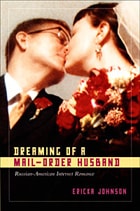
Dreaming of a Mail-Order Husband
Russian-American Internet RomanceEricka Johnson
Duke University Press, 2007
Each chapter presents one woman’s story and then links it to a discussion of gender roles, the mail-order bride industry, and the severe economic and social constraints of life in Russia. The transitional economy has often left people, after a month’s work, either unpaid or paid unexpectedly with a supply of sunflower oil or toilet paper. Women over twenty-three are considered virtually unmarriageable in Russian society. Russia has a large population of women who are single, divorced, or widowed, who would like to be married yet feel that they have no chance finding a Russian husband. Grim realities such as these motivate women to seek better lives abroad. For many of those seeking a mail-order husband, children or parents play significant roles in the search for better lives, and they play a role in Johnson’s account as well. In addition to her research in the former Soviet Union, Johnson conducted interviews in the United States, and she shares the insights—about dating, marriage, and cross-cultural communication—of a Russian-American married couple who met via the Internet.
Dreamland of Humanists
Warburg, Cassirer, Panofsky, and the Hamburg SchoolEmily J. Levine
University of Chicago Press, 2013
In Dreamland of Humanists, Emily J. Levine considers not just these men, but the historical significance of the time and place where their ideas took form. Shedding light on the origins of their work on the Renaissance and the Enlightenment, Levine clarifies the social, political, and economic pressures faced by German-Jewish scholars on the periphery of Germany’s intellectual world. By examining the role that context plays in our analysis of ideas, Levine confirms that great ideas—like great intellectuals—must come from somewhere.

Dreams and Ideas
The Artistry of Costume Designer Winn MortonMyra Walker
University of North Texas Press, 2026
Dreams in Double Time
On Race, Freedom, and BebopJonathan Leal
Duke University Press, 2023
Dreams of Flight
The Lives of Chinese Women Students in the WestFran Martin
Duke University Press, 2022

Dreams of the Hmong Kingdom
The Quest for Legitimation in French Indochina, 1850–1960Mai Na M. Lee
University of Wisconsin Press, 2015
In China, Vietnam, and Laos, the Hmong continuously negotiated with these states and with the French to maintain political autonomy in a world of shifting boundaries, emerging nation-states, and contentious nationalist movements and ideologies. Often divided by clan rivalries, the Hmong placed their hope in finding a leader who could unify them and recover their sovereignty. In a compelling analysis of Hmong society and leadership throughout the French colonial period, Mai Na M. Lee identifies two kinds of leaders—political brokers who allied strategically with Southeast Asian governments and with the French, and messianic resistance leaders who claimed the Mandate of Heaven. The continuous rise and fall of such leaders led to cycles of collaboration and rebellion. After World War II, the powerful Hmong Ly clan and their allies sided with the French and the new monarchy in Laos, but the rival Hmong Lo clan and their supporters allied with Communist coalitions.
Lee argues that the leadership struggles between Hmong clans destabilized French rule and hastened its demise. Martialing an impressive array of oral interviews conducted in the United States, France, and Southeast Asia, augmented with French archival documents, she demonstrates how, at the margins of empire, minorities such as the Hmong sway the direction of history.
Best books for public & secondary school libraries from university presses, American Library Association
Dreamscapes of Modernity
Sociotechnical Imaginaries and the Fabrication of PowerEdited by Sheila Jasanoff and Sang-Hyun Kim
University of Chicago Press, 2015
Dreamworlds of Alabama
Allen Shelton
University of Minnesota Press, 2007
“I speak in what others often hear as a strange accent. My past can’t be located. I live in Buffalo, New York, an exile from the South. But these aren’t Yankee dreams, even though my past seems like a fabrication, a dreamworld in which I’m a paper character and not a historical participant, with scars from barbed wire ripping under the pressure and flying through the air like a swarm of bees, or a horse rearing up and banging its head into mine from within, exploding my forehead.” —from the Preface
Wisteria draped on a soldier’s coffin, sent home to Alabama from a Virginia battlefield. The oldest standing house in the county, painted gray and flanked by a pecan orchard. A black steel fence tool, now perched atop a pile of books like a prehistoric bird of prey. In Dreamworlds of Alabama, Allen Shelton explores physical, historical, and social landscapes of northeastern Alabama. His homeplace near the Appalachian foothills provides the setting for a rich examination of cultural practices, a place where the language of place and things resonates with as much vitality and emotional urgency as the language of humans.
Throughout the book, Shelton demonstrates how deeply culture is inscribed in the land and in the most intimate spaces of the person—places of belonging and loss, insight and memory.
Born and raised in Jacksonville, Alabama, Allen Shelton is associate professor of sociology at Buffalo State College.