Results by title
3258 books match the query 'Performing Arts' and 166 start with d

Directory of World Cinema
American Independent 2Edited by John Berra
Intellect Books, 2013
Directory of World Cinema
Australia and New ZealandEdited by Ben Goldsmith and Geoff Lealand
Intellect Books, 2010
This addition to Intellect's Directory of World Cinema series turns the spotlight on Australia and New Zealand and offers an in-depth and exciting look at the cinema produced in these two countries since the turn of the twentieth century. Though the two nations share considerable cultural and economic connections, their film industries remain distinct, marked by differences of scale, level of government involvement and funding, and relations with other countries and national cinemas. Through essays about prominent genres and themes, profiles of directors, and comprehensive reviews of significant titles, this user-friendly guide explores the diversity and distinctiveness of films from Australia and New Zealand from Whale Rider to The Piano to Wolf Creek.
Directory of World Cinema
Australia and New Zealand 2Edited by Ben Goldsmith, Mark David Ryan and Geoff Lealand
Intellect Books, 2015
Directory of World Cinema
East EuropeEdited by Adam Bingham
Intellect Books, 2011
Since the 1970s, the works of filmmakers from the nations of Eastern Europe— among them, Krzysztof Kieslowski, Béla Tarr, István Szabó, and Jirí Menzel—have experienced an international upsurge in popularity. Charting the trends of the national cinemas of Poland, Hungary, and Yugoslavia, as well as the lesser-known industries of Serbia, Slovakia, and Romania, this new volume in the Directory of World Cinema series explores important genres in the cinema of Eastern Europe, including war films, new wave, comedies, and surrealist art cinema, with essays on the most prolific filmmakers, in-depth reviews of key titles, and suggested resources for further study. Fifty full-color stills round out this invaluable guide to the burgeoning cinema of Eastern Europe.
Directory of World Cinema
FinlandEdited by Pietari Kääpä
Intellect Books, 2012
Directory of World Cinema
GermanyEdited by Michelle Langford
Intellect Books, 2012
From bleak expressionist works to the edgy political works of the New German Cinema to the feel-good Heimat films of the postwar era, Directory of World Cinema: Germany aims to offer a wider film and cultural context for the films that have emerged from Germany—including some of the East German films recently made available to Western audiences for the first time. With contributions by leading academics and emerging scholars in the field, this volume explores the key directors, themes, and periods in German film history, and demonstrates how genres have been adapted over time to fit historical circumstances. Rounding out this addition to the Directory of World Cinema series are fifty full-color stills, numerous reviews and recommendations, and a comprehensive filmography.
Directory of World Cinema
IndiaEdited by Adam Bingham
Intellect Books, 2015
Directory of World Cinema
JapanEdited by John Berra
Intellect Books, 2010
From the revered classics of Akira Kurosawa to the modern marvels of Takeshi Kitano, the films that have emerged from Japan represent a national cinema that has gained worldwide admiration and appreciation. The Directory of World Cinema: Japan provides an insight into the cinema of Japan through reviews of significant titles and case studies of leading directors, alongside explorations of the cultural and industrial origins of key genres.
As the inaugural volume of an ambitious new series from Intellect documenting world cinema, the directory aims to play a part in moving intelligent, scholarly criticism beyond the academy by building a forum for the study of film that relies on a disciplined theoretical base. It takes the form of an A–Z collection of reviews, longer essays, and research resources, accompanied by fifty full-color film stills highlighting significant films and players. The cinematic lineage of samurai warriors, yakuza enforcers, and atomic monsters take their place alongside the politically charged works of the Japanese New Wave, making this a truly comprehensive volume.
Directory of World Cinema
SpainEdited by Lorenzo J. Torres Hortelano
Intellect Books, 2011
Though loved by moviegoers worldwide, Spanish cinema has thus far suffered from a relative lack of critical attention. Focusing on the vast corpus of films that have left their marks on generations of spectators, Directory of World Cinema: Spain returns the national cinema of Spain rightfully to the forefront with numerous full-color stills and essays establishing the key players and genres in their sociopolitical context, including civil war films, romances, comedies, and the cinema of the transition. From the award-winning big-budget productions of Pedro Almodóvar in Madrid to Pere Portabella’s experimental documentaries and the influential Barcelona School, reviews cover individual titles in considerable depth. Essential reading for aficionados of Spanish cinema at all levels, this volume provides an accessible overview of the main trends and issues in Spanish film.
Directory of World Cinema
TurkeyEdited by Eylem Atakav
Intellect Books, 2013
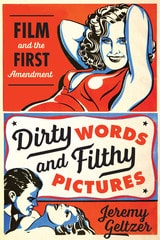
Dirty Words and Filthy Pictures
Film and the First AmendmentBy Jeremy Geltzer
University of Texas Press, 2015
From the earliest days of cinema, scandalous films such as The Kiss (1896) attracted audiences eager to see provocative images on screen. With controversial content, motion pictures challenged social norms and prevailing laws at the intersection of art and entertainment. Today, the First Amendment protects a wide range of free speech, but this wasn’t always the case. For the first fifty years, movies could be censored and banned by city and state officials charged with protecting the moral fabric of their communities. Once film was embraced under the First Amendment by the Supreme Court’s Miracle decision in 1952, new problems pushed notions of acceptable content even further.
Dirty Words & Filthy Pictures explores movies that changed the law and resulted in greater creative freedom for all. Relying on primary sources that include court decisions, contemporary periodicals, state censorship ordinances, and studio production codes, Jeremy Geltzer offers a comprehensive and fascinating history of cinema and free speech, from the earliest films of Thomas Edison to the impact of pornography and the Internet. With incisive case studies of risqué pictures, subversive foreign films, and banned B-movies, he reveals how the legal battles over film content changed long-held interpretations of the Constitution, expanded personal freedoms, and opened a new era of free speech. An important contribution to film studies and media law, Geltzer’s work presents the history of film and the First Amendment with an unprecedented level of detail.
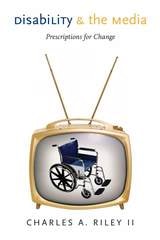
Disability and the Media
Prescriptions for ChangeCharles A. Riley
University Press of New England, 2005
Disabled Theater
Edited by Sandra Umathum and Benjamin Wihstutz
Diaphanes, 2015
Disappearing Acts
Spectacles of Gender and Nationalism in Argentina's "Dirty War"Diana Taylor
Duke University Press, 1997
Taylor uses performance theory to explore how public spectacle both builds and dismantles a sense of national and gender identity. Here, nation is understood as a product of communal "imaginings" that are rehearsed, written, and staged—and spectacle is the desiring machine at work in those imaginings. Taylor argues that the founding scenario of Argentineness stages the struggle for national identity as a battle between men—fought on, over, and through the feminine body of the Motherland. She shows how the military’s representations of itself as the model of national authenticity established the parameters of the conflict in the 70s and 80s, feminized the enemy, and positioned the public—limiting its ability to respond. Those who challenged the dictatorship, from the Mothers of the Plaza de Mayo to progressive theater practitioners, found themselves in what Taylor describes as "bad scripts." Describing the images, myths, performances, and explanatory narratives that have informed Argentina’s national drama, Disappearing Acts offers a telling analysis of the aesthetics of violence and the disappearance of civil society during Argentina’s spectacle of terror.
Disappearing Acts
Spectacles of Gender and Nationalism in Argentina's "Dirty War"Diana Taylor
Duke University Press, 0
Taylor uses performance theory to explore how public spectacle both builds and dismantles a sense of national and gender identity. Here, nation is understood as a product of communal "imaginings" that are rehearsed, written, and staged—and spectacle is the desiring machine at work in those imaginings. Taylor argues that the founding scenario of Argentineness stages the struggle for national identity as a battle between men—fought on, over, and through the feminine body of the Motherland. She shows how the military’s representations of itself as the model of national authenticity established the parameters of the conflict in the 70s and 80s, feminized the enemy, and positioned the public—limiting its ability to respond. Those who challenged the dictatorship, from the Mothers of the Plaza de Mayo to progressive theater practitioners, found themselves in what Taylor describes as "bad scripts." Describing the images, myths, performances, and explanatory narratives that have informed Argentina’s national drama, Disappearing Acts offers a telling analysis of the aesthetics of violence and the disappearance of civil society during Argentina’s spectacle of terror.
Disappearing Tricks
Silent Film, Houdini, and the New Magic of the Twentieth CenturyMatthew Solomon
University of Illinois Press, 2010
Disappearing Tricks revisits the golden age of theatrical magic and silent film to reveal how professional magicians shaped the early history of cinema. Where others have called upon magic as merely an evocative metaphor for the wonders of cinema, Matthew Solomon focuses on the work of the professional illusionists who actually made magic with moving pictures between 1895 and 1929.
The first to reveal fully how powerfully magic impacted the development of cinema, the book combines film and theater history to uncover new evidence of the exchanges between magic and filmmaking in the United States and France during the silent period. Chapters detailing the stage and screen work of Harry Houdini and Georges Méliès show how each transformed theatrical magic to create innovative cinematic effects and thrilling new exploits for twentieth-century mass audiences. The book also considers the previously overlooked roles of anti-spiritualism and presentational performance in silent film.
Highlighting early cinema's relationship to the performing body, visual deception, storytelling, and the occult, Solomon treats cinema and stage magic as overlapping practices that together revise our understanding of the origins of motion pictures and cinematic spectacle.
Disaster Capitalism
Or Money Can't Buy You Love - Three PlaysRick Mitchell
Intellect Books, 2011
Disaster capitalism is an increasingly popular critical paradigm for contextualizing and understanding life in the twenty-first century. This book includes three full-length plays by award-winning dramatist Rick Mitchell: Shadow Anthropology, a dark comedy about the US occupation of Afghanistan; Through the Roof, a Faustian trip through the social history of natural disaster in New Orleans; and Celestial Flesh, a sacrilegious romp through the 1980s sanctuary movement. Placing the plays in historical and thematic context, the author introduces the collection with an essay examining catastrophe, capitalism, and what he calls “Apocalypse Theater for the Twenty-First Century.”
Discipline and Desire
Surveillance Technologies in PerformanceElise Morrison
University of Michigan Press, 2016
While the subject of surveillance continues to provoke fascination and debate in mainstream media and academia, opportunities to critically reflect upon and, more importantly, to imagine alternative, creative responses to living in a rapidly expanding surveillance society have been harder to find. Author Elise Morrison argues that such opportunities are being created through the growing genre of “surveillance art and performance,” defined as works that centrally employ technologies and techniques of surveillance to create theater, installation, and performance art. Introducing readers to a broad range of surveillance art works, including the work of artists and activists such as Surveillance Camera Players, Jill Magid, Steve Mann, Hasan Elahi, Wafaa Bilal, Blast Theory, Electronic Disturbance Theater, George Brant, Janet Cardiff, Mona Hatoum, and Zach Blas, Discipline and Desire provides a practical and analytical framework that can aid the diverse pursuits of new media-arts practitioners, performance scholars, activists, and hobbyists interested in critical and creative uses of surveillance technologies.
Discorrelated Images
Shane Denson
Duke University Press, 2020
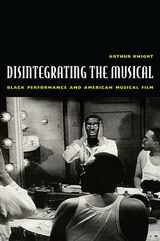
Disintegrating the Musical
Black Performance and American Musical FilmArthur Knight
Duke University Press, 2002
Arthur Knight focuses on American film’s classic sound era, when Hollywood studios made eight all-black-cast musicals—a focus on Afro-America unparalleled in any other genre. It was during this same period that the first black film stars—Paul Robeson, Louis Armstrong, Lena Horne, Harry Belafonte, Dorothy Dandridge—emerged, not coincidentally, from the ranks of musical performers. That these films made so much of the connection between African Americans and musicality was somewhat ironic, Knight points out, because they did so in a form (song) and a genre (the musical) celebrating American social integration, community, and the marriage of opposites—even as the films themselves were segregated and played before even more strictly segregated audiences.
Disintegrating the Musical covers territory both familiar—Show Boat, Stormy Weather, Porgy and Bess—and obscure—musical films by pioneer black director Oscar Micheaux, Lena Horne’s first film The Duke Is Tops, specialty numbers tucked into better-known features, and lost classics like the short Jammin’ the Blues. It considers the social and cultural contexts from which these films arose and how African American critics and audiences responded to them. Finally, Disintegrating the Musical shows how this history connects with the present practices of contemporary musical films like O Brother, Where Art Thou? and Bamboozled.
Disney Culture
Wills, John
Rutgers University Press, 2017
Disney Culture proposes that there is still a unifying Disney ethos, one that can be traced back to the corporate philosophy that Walt Disney himself developed back in the 1920s. Yet, as cultural historian John Wills demonstrates, Disney’s values have also adapted to changing social climates. At the same time, the world of Disney has profoundly shaped how Americans view the world.
Wills offers a nuanced take on the corporate ideologies running through animated and live-action Disney movies from Frozen to Fantasia, from Mary Poppins to Star Wars: The Force Awakens. But Disney Culture encompasses much more than just movies as it explores the intersections between Disney’s business practices and its cultural mythmaking. Welcome to “the Disney Way.”
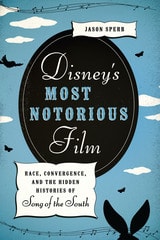
Disney's Most Notorious Film
Race, Convergence, and the Hidden Histories of Song of the SouthBy Jason Sperb
University of Texas Press, 2012
The Walt Disney Company offers a vast universe of movies, television shows, theme parks, and merchandise, all carefully crafted to present an image of wholesome family entertainment. Yet Disney also produced one of the most infamous Hollywood films, Song of the South. Using cartoon characters and live actors to retell the stories of Joel Chandler Harris, SotS portrays a kindly black Uncle Remus who tells tales of Brer Rabbit, Brer Fox, and the “Tar Baby” to adoring white children. Audiences and critics alike found its depiction of African Americans condescending and outdated when the film opened in 1946, but it grew in popularity—and controversy—with subsequent releases. Although Disney has withheld the film from American audiences since the late 1980s, SotS has an enthusiastic fan following, and pieces of the film—such as the Oscar-winning “Zip-a-Dee-Doo-Dah”—remain throughout Disney’s media universe.
Disney’s Most Notorious Film examines the racial and convergence histories of Song of the South to offer new insights into how audiences and Disney have negotiated the film’s controversies over the last seven decades. Jason Sperb skillfully traces the film’s reception history, showing how audience perceptions of SotS have reflected debates over race in the larger society. He also explores why and how Disney, while embargoing the film as a whole, has repurposed and repackaged elements of SotS so extensively that they linger throughout American culture, serving as everything from cultural metaphors to consumer products.
Disney's Star Wars
Forces of Production, Promotion, and ReceptionWilliam Proctor and Richard McCulloch
University of Iowa Press, 2019
Covering the period from Disney’s purchase through the release of The Force Awakens, the book reveals how fans anticipated, interpreted, and responded to the steady stream of production stories, gossip, marketing materials, merchandise, and other sources in the build-up to the movie’s release. From fears that Princess Leia would be turned into a “Disney princess” to collaborative brand management, the authors explore the shifting relationship between fans, texts, and media industries in the context of a crucial rebranding campaign. The result is a fascinating examination of a critical moment in the iconic series’ history.
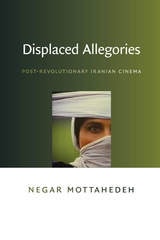
Displaced Allegories
Post-Revolutionary Iranian CinemaNegar Mottahedeh
Duke University Press, 2008
Mottahedeh asserts that, in response to the prohibitions against the desiring look, a new narrative cinema emerged as the displaced allegory of the constraints on the post-Revolutionary Iranian film industry. Allegorical commentary was not developed in the explicit content of cinematic narratives but through formal innovations. Offering close readings of the work of the nationally popular and internationally renowned Iranian auteurs Bahram Bayza’i, Abbas Kiarostami, and Mohsen Makhmalbaf, Mottahedeh illuminates the formal codes and conventions of post-Revolutionary Iranian films. She insists that such analyses of cinema’s visual codes and conventions are crucial to the study of international film. As Mottahedeh points out, the discipline of film studies has traditionally seen film as a medium that communicates globally because of its dependence on a (Hollywood) visual language assumed to be universal and legible across national boundaries. Displaced Allegories demonstrates that visual language is not necessarily universal; it is sometimes deeply informed by national culture and politics.
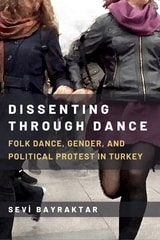
Dissenting Through Dance
Folk Dance, Gender, and Political Protest in TurkeySevi Bayraktar
University of Michigan Press, 2026
Dissenting Through Dance examines how femme activists in contemporary Turkey deploy folk dance as a powerful tool of political resistance and collective solidarity. Drawing on extensive ethnographic fieldwork, choreographic analysis, and archival research, the book examines how traditional dances, particularly those rooted in marginalized cultures such as Kurdish, Roma, Alevi, Laz, and Hemşin communities, are reimagined to contest misogyny, cultural erasure, and oppressive gender politics. Sevi Bayraktar brings to life the stories of feminist, LGBTQ+, and grassroots activists occupying public spaces with dance as a form of protest when conventional forms of assembly are suppressed or criminalized in Turkey.
Working outward from these femmes’ stories, protests, and dances, Bayraktar argues that by reconfiguring Turkey’s folk-dance heritage for their contemporary political aims, dissenting femmes rechoreograph national space in opposition to the state as a way to reclaim the public sphere for pluralist democracy and to subvert hegemonic discourses about Turkish national identity, neoliberal economic development, and female and ethnic bodies. By moving together, activists subvert patriarchal norms, embody new visions of community, and create moments of hope, joy, and resistance even under conditions of surveillance and fear.
Distant Reading
Performance, Readership, and Consumption in Contemporary PoetryPeter Middleton
University of Alabama Press, 2005
A dynamic account of the history, practice, and theory of poetry as performance.
Distant Reading considers poetry as performance, offers new insights into its popularity, and proposes a new history of its origins. It also explores related issues concerning the reception of poetry, the impact of the computer on how we read poetry, the persistence of the letter "I" in poems by avant-garde poets, the strangeness of the line-break as a demand on the reader's attention, and the idea of the reader as consumer. These themes are connected by a historically contextualized and theoretically sophisticated discussion of contemporary American and British poets continuing to work in the modernist tradition.
The introductory essay establishes a new methodology that transforms close reading into what Middleton calls "distant reading," interpretive reading that acknowledges the distances that texts travel from their point of composition to readers in other geographical and historical locations. It indicates that poetic innovation is often driven by a desire on the part of the poet to make this distance do cultural work in the meanings that the poem generates.
Ultimately, Distant Reading treats poetry as a cultural practice that is always situated within specific sites of performance—recited on stage, displayed in magazines, laid out on a page, scrolled on the computer screen—rather than as a transcendent cloud of meaning tethered only to its words.
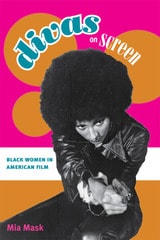
Divas on Screen
Black Women in American FilmMia Mask
University of Illinois Press, 2008
This insightful study places African American women's stardom in historical and industrial contexts by examining the star personae of five African American women: Dorothy Dandridge, Pam Grier, Whoopi Goldberg, Oprah Winfrey, and Halle Berry. Interpreting each woman's celebrity as predicated on a brand of charismatic authority, Mia Mask shows how these female stars have ultimately complicated the conventional discursive practices through which blackness and womanhood have been represented in commercial cinema, independent film, and network television.
Mask examines the function of these stars in seminal yet underanalyzed films. She considers Dandridge's status as a sexual commodity in films such as Tamango, revealing the contradictory discourses regarding race and sexuality in segregation-era American culture. Grier's feminist-camp performances in sexploitation pictures Women in Cages and The Big Doll House and her subsequent blaxploitation vehicles Coffy and Foxy Brown highlight a similar tension between representing African American women as both objectified stereotypes and powerful, self-defining icons. Mask reads Goldberg's transforming habits in Sister Act and The Associate as representative of her unruly comedic routines, while Winfrey's daily television performance as self-made, self-help guru echoes Horatio Alger narratives of success. Finally, Mask analyzes Berry's meteoric success by acknowledging the ways in which Dandridge's career made Berry's possible.
Divine Days
A NovelLeon Forrest; Foreword by Kenneth W. Warren, Preface by Zachary Price
Northwestern University Press, 2023
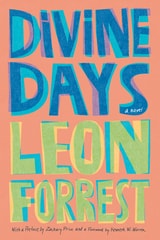
“I have an awful memory for faces, but an excellent one for voices,” muses Joubert Jones, the aspiring playwright at the center of Divine Days. A kaleidoscopic whorl of characters, language, music, and Black experience, this saga follows Jones for one week in 1966 as he pursues the lore and legends of fictional Forest County, a place resembling Chicago’s South Side. Joubert is a veteran, recently returned to the city, who works for his aunt Eloise’s newspaper and pours drinks at her Night Light Lounge. He wants to write a play about Sugar-Groove, a drifter, “eternal wunderkind,” and local folk hero who seems to have passed away. Sugar-Groove’s disappearance recalls the subject of one of Joubert’s earlier writing attempts—W. A. D. Ford, a protean, diabolical preacher who led a religious sect known as “Divine Days.” Joubert takes notes as he learns about both tricksters, trying to understand their significance.
Divine Days introduces readers to a score of indelible characters: Imani, Joubert’s girlfriend, an artist and social worker searching for her lost siblings and struggling to reconcile middle class life with her values and Black identity; Eloise, who raised Joubert and whose influence is at odds with his writerly ambitions; (Oscar) Williemain, a local barber, storyteller, and founder of the Royal Rites and Righteous Ramblings Club; and the Night Light’s many patrons. With a structure inspired by James Joyce and jazz, Leon Forrest folds references to African American literature and cinema, Shakespeare, the Bible, and classical mythology into a heady quest that embraces life in all its tumult and adventure.
This edition brings Forrest’s masterpiece back into print, incorporating hundreds of editorial changes that the author had requested from W. W. Norton, but were not made for their editions in 1993 and 1994. Much of the inventory from the original printing of the book by Another Chicago Press in 1992 had been destroyed in a disastrous warehouse fire.
Doctor Who and Race
Edited by Lindy Orthia
Intellect Books, 2013
Doctor Who is the longest running science fiction television series in the world and is regularly watched by millions of people across the globe. While its scores of fans adore the show with cult-like devotion, the fan-contributors to this book argue that there is an uncharted dimension to Doctor Who. Bringing together diverse perspectives on race and its representation in Doctor Who, this anthology offers new understandings of the cultural significance of race in the programme – how the show’s representations of racial diversity, colonialism, nationalism and racism affect our daily lives and change the way we relate to each other.
An accessible introduction to critical race theory, postcolonial studies and other race-related academic fields, the 23 contributors deftly combine examples of the popular cultural icon and personal reflections to provide an analysis that is at once approachable but also filled with the intellectual rigor of academic critique.
Documentary Dilemmas
Frederick Wiseman's Titicut FolliesCarolyn Anderson and Thomas W. Benson
Southern Illinois University Press, 1991
A case history of the only American film under court-imposed restrictions for reasons other than obscenity or national security.
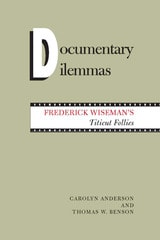
Titicut Follies is an excoriating depiction of conditions in the Massachusetts Correctional Institution at Bridgewater, a prison-hospital for the criminally insane. The Commonwealth of Massachusetts took Wiseman to court, seeking to prevent the exhibition of Titicut Follies soon after its release in 1967.
This account of the Titicut Follies case is based on ten years of research and relies on interviews, journalistic accounts, and especially on the legal record, including the Commonwealth v. Wiseman transcript, to describe the entire process of independent documentary filmmaking. The trials of Titicut Follies raise crucial questions about the relation of social documentary to its subjects and audiences.
Documentary Time
Film and PhenomenologyMalin Wahlberg
University of Minnesota Press, 2008
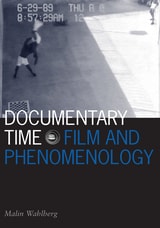
Finding the theoretical space where cinema and philosophy meet, Malin Wahlberg’s sophisticated approach to the experience of documentary film aligns with attempts to reconsider the premises of existential phenomenology. The configuration of time is crucial in organizing the sensory affects of film in general but, as Wahlberg adroitly demonstrates, in nonfiction films the problem of managing time is writ large by the moving image’s interaction with social memory and historical figures.
Wahlberg discusses a thought-provoking corpus of classical and recent experiments in film and video (including Andy Warhol’s films) in which creative approaches to the time of the image and the potential archive memory of filmic representation illuminates meanings of temporality and time experience. She also offers a methodological account of film and brings Deleuze and Ricoeur into dialogue with Bazin and Mitry on the subject of cinema and phenomenology.
Drawing attention to the cultural significance of the images’ imprint as a trace of the past, Documentary Time brings to bear phenomenological inquiry on nonfiction film while at the same time reconsidering the existential dimensions of time that have always puzzled humans.
Malin Wahlberg is a research fellow in cinema studies at Stockholm University.
Documentary Trial Plays in Contemporary American Theater
Jacqueline O’Connor
Southern Illinois University Press, 2013
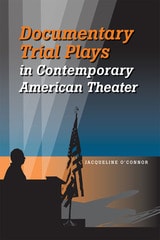
From the Chicago Conspiracy Trial and the O. J. Simpson trial to the Clarence Thomas/Anita Hill congressional hearings, legal and legislative proceedings in the latter part of the twentieth-century kept Americans spellbound. Situated on the shifting border between imagination and the law, trial plays edit, arrange, and reproduce court records, media coverage, and first-person interviews, transforming these elements into a performance. In this first book-length critical study of contemporary American documentary theater, Jacqueline O’Connor examines in depth ten such plays, all written and staged since 1970, and considers the role of the genre in re-creating and revising narratives of significant conflicts in contemporary history.
Documentary theater, she shows, is a particularly appropriate and widely utilized theatrical form for engaging in debate about tensions between civil rights and institutional power, the inconsistency of justice, and challenges to gender norms. For each of the plays discussed, including The Trial of the Catonsville Nine, Unquestioned Integrity: The Hill/Thomas Hearings, and The Laramie Project, O'Connor provides historical context and a brief production history before considering the trial the play focuses on. Grouping plays historically and thematically, she demonstrates how dramatic representation advances our understanding of the law's power while revealing the complexities that hinder society's pursuit of justice.
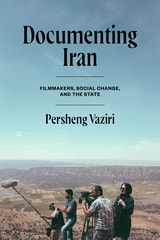
Documenting Iran
Filmmakers and Social ChangePersheng Vaziri
University of Texas Press, 2026
An ethnographic study of how Iranian documentary filmmakers navigate censorship and creativity to shape civic discourse.
Iranian filmmakers have overcome significant obstacles to create a distinctive, globally renowned cinema. Filmmaker and educator Persheng Vaziri explores how documentarians, in particular, have developed a dynamic and creative environment by negotiating limited resources and official constraints. Through their films, they share hard truths—and artful narratives—with fellow Iranians and viewers the world over.
Documenting Iran introduces key historical foundations of documentary filmmaking amid generations of political change—first under the shah and later the Islamic government—with a focus on contemporary filmmakers between 2000 and 2022. Drawing on interviews and ethnographic encounters, Vaziri describes the creative practices and pragmatic choices that provide documentarians relative independence from state censorship and other restrictions on artistic production. Relying on poetic aesthetics, observational filmmaking, international connections, and the accumulated knowledge of a tight-knit local community, filmmakers engage with controversial topics like women’s rights, marriage and divorce laws, environmental degradation, and encounters with Western culture. Documentarians have thus created an activist cinema both subtle and persuasive enough to challenge dogmatic rule and uphold progressive elements of Iranian society.
Documenting the American Student Abroad
The Media Cultures of International EducationKelly Hankin
Rutgers University Press, 2021
In Documenting the American Student Abroad, Kelly Hankin explores the documentary media cultures that shape these beliefs, drawing our attention to the broad range of stakeholders and documentary modes involved in defining the core values and practices of study abroad. From study abroad video contests and a F.B.I. produced docudrama about student espionage to reality television inspired educational documentaries and docudramas about Amanda Knox, Hankin shows how the institutional values of "global citizenship," "intercultural communication," and "cultural immersion" emerge in contradictory ways through their representation.
By bringing study abroad and media studies into conversation with one another, Documenting the American Student Abroad: The Media Cultures of International Education offers a much needed humanist contribution to the field of international education, as well as a unique approach to the growing scholarship on the intersection of media and institutions. As study abroad practitioners and students increase their engagement with moving images and digital environments, the insights of media scholars are essential for helping the field understand how the mediation of study abroad rhetoric shapes rather than reflects the field's central institutional ideals
Documenting the World
Film, Photography, and the Scientific RecordEdited by Gregg Mitman and Kelley Wilder
University of Chicago Press, 2016
Documenting the World is about the material and social life of photographs and film made in the scientific quest to document the world. Drawing on scholars from the fields of art history, visual anthropology, and science and technology studies, the chapters in this book explore how this documentation—from the initial recording of images, to their acquisition and storage, to their circulation—has altered our lives, our ways of knowing, our social and economic relationships, and even our surroundings. Far beyond mere illustration, photography and film have become an integral, transformative part of the world they seek to show us.
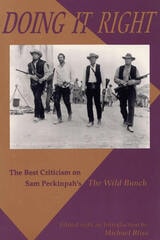
Doing It Right
The Best Criticism on Sam Peckinpah's The Wild BunchEdited with an Introduction by Michael Bliss
Southern Illinois University Press, 1994
Doing It Right brings together the very finest in reviews and criticism of The Wild Bunch since its release in 1969.
Often misinterpreted because of its graphic violence, the film initially generated considerable controversy. Sam Peckinpah, who made the film after a four-year forced hiatus in his career (he had been blacklisted), created it as a depiction of the savage behavior possible in the post– World War I era. However, the ensuing controversy was not restricted only to the explicit story and images. Producer Phil Feldman’s withdrawal of Peckinpah’s cut of the film drew tremendous sympathy for Peckinpah from American and European film critics alike.
This casebook should be read as a supplement to a viewing of the film, which is now available in its uncut form in video. Edited and with an introduction by Michael Bliss, the book explores the film’s production history, giving an overview of its release problems and highlighting its stylistic characteristics, classic structure, use of the widescreen frame, and innovative editing techniques. It also discusses in detail the film’s underlying moral message and its representation of camaraderie and loyalty. In addition to Bliss, essayists include Robert Culp, Paul Schrader, Stephen Farber, Paul Seydor, Jim Kitses, Cordell Strug, John L. Simons, Aljean Harmetz, and Michael Sragow. The book concludes with an appendix and an extensive bibliography.
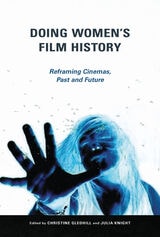
Doing Women's Film History
Reframing Cinemas, Past and FutureEdited by Christine Gledhill and Julia Knight
University of Illinois Press, 2015
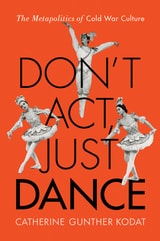
Don't Act, Just Dance
The Metapolitics of Cold War CultureCatherine Gunther Kodat
Rutgers University Press, 2014
Don't Look Now
British Cinema in the 1970sEdited by Paul Newland
Intellect Books, 2010
While postwar British cinema and the British new wave have received much scholarly attention, the misunderstood period of the 1970s has been comparatively ignored. Don’t Look Now uncovers forgotten but richly rewarding films, including Nicolas Roeg’s Don’t Look Now and the films of Lindsay Anderson and Barney Platts-Mills. This volume offers insight into the careers of important filmmakers and sheds light on the genres of experimental film, horror, rock and punk films, as well as representations of the black community, shifts in gender politics, and adaptations of television comedies. The contributors ask searching questions about the nature of British film culture and its relationship to popular culture, television, and the cultural underground.

Doomed by Hope
Essays on Arab TheatreEdited by Eyad Houssami and Elias Khoury
Pluto Press, 2012
Doomed by Hope is a beautifully presented collection of essays by writers and artists which traces the history of contemporary Arab theatre and its relationship to social change.
With contributors from Syria, Egypt, Lebanon, Palestine, Kuwait and Yemen, this book includes both academic discussions and personal narratives, alongside a number of specially commissioned portraits of contemporary Arab theatre artists. The essays revolve around the legacy of the late Syrian dramatist Saadallah Wannous, whose monumental plays incited audiences to rise up against tyranny decades ago.
This unique book is one of the first English language volumes on Arab theatre. In a highly topical manner following the Arab Spring, it explores cultural practices – from reading plays in a classroom to performing in a security state and directing in theatres, prisons, and international festivals – in times of revolt.
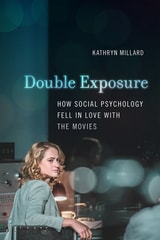
Double Exposure
How Social Psychology Fell in Love with the MoviesKathryn Millard
Rutgers University Press, 2022
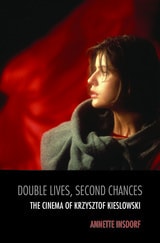
Double Lives, Second Chances
The Cinema of Krzysztof KieslowskiAnnette Insdorf
Northwestern University Press, 2013
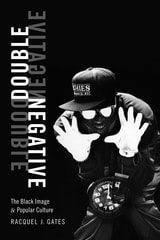
Double Negative
The Black Image and Popular CultureRacquel J. Gates
Duke University Press, 2018
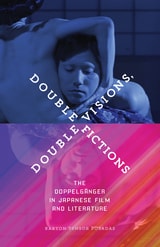
Double Visions, Double Fictions
The Doppelgänger in Japanese Film and LiteratureBaryon Tensor Posadas
University of Minnesota Press, 2018
A fresh take on the dopplegänger and its place in Japanese film and literature—past and present
Since its earliest known use in German Romanticism in the late 1700s, the word Doppelgänger (double-walker) can be found throughout a vast array of literature, culture, and media. This motif of doubling can also be seen traversing historical and cultural boundaries. Double Visions, Double Fictions analyzes the myriad manifestations of the doppelgänger in Japanese literary and cinematic texts at two historical junctures: the interwar period of the 1920s and 1930s and the present day.
According to author Baryon Tensor Posadas, the doppelgänger marks the intersection of the historical impact of psychoanalytic theory, the genre of detective fiction in Japan, early Japanese cinema, and the cultural production of Japanese colonialism. He examines the doppelgänger’s appearance in the works of Edogawa Rampo, Tanizaki Jun’ichiro, and Akutagawa Ryunosuke, as well as the films of Tsukamoto Shin’ya and Kurosawa Kiyoshi, not only as a recurrent motif but also as a critical practice of concepts. Following these explorations, Posadas asks: What were the social, political, and material conditions that mobilized the desire for the doppelgänger? And how does the dopplegänger capture social transformations taking place at these historical moments?
Double Visions, Double Fictions ultimately reveals how the doppelgänger motif provides a fascinating new backdrop for understanding the enmeshment of past and present.
Downtown Film and TV Culture 1975-2001
Edited by Joan Hawkins
Intellect Books, 2015
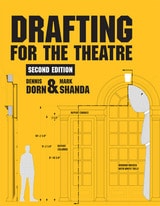
Drafting for the Theatre
Dennis Dorn and Mark Shanda
Southern Illinois University Press, 2012
Early chapters focus on the basics of geometric constructions, orthographic techniques, soft-line sketching applications, lettering, and dimensioning. Later chapters discuss real-life applications of production drawing and ancillary skills such as time and material estimation and shop-drawing nomenclature. Two chapters detail a series of design and shop drawings required to mount a specific design project, providing a guided path through both phases of the design/construction process. Most chapters conclude with one or more worksheets or problems that provide readers with an opportunity to test their understanding of the material presented.
The authors' discussion of universal CAD principles throughout the manuscript provides a valuable foundation that can be used in any computer-based design, regardless of the software. Dorn and Shanda treat the computer as another drawing tool, like the pencil or T-square, but one that can help a knowledgeable drafter potentially increase personal productivity and accuracy when compared to traditional hand-drafting techniques.
Drafting for the Theatre, second edition assembles in one book all the principal types of drawings, techniques, and conventional wisdom necessary for the production of scenic drafting, design, and shop drawings. It is richly illustrated with numerous production examples and is fully indexed to assist students and technicians in finding important information. It is structured to support a college-level course in drafting, but will also serve as a handy reference for the working theatre professional.
Dramatists in Revolt
The New Latin American TheaterEdited by Leon F. Lyday and George W. Woodyard
University of Texas Press, 1976
Dramatists in Revolt, through studies of the major playwrights, explores significant movements in Latin American theater. Playwrights discussed are those who have made outstanding contributions to Latin American theater during the post–World War II period and who have been particularly sensitive to world currents in literature and drama, while being acutely responsive to the problems of their own areas. They express concern about communication, isolation, and solitude. On a more basic level, they concern themselves with the political and socioeconomic problems that figure importantly in the Third World.
The fifteen essays deal with the playwrights Antón Arrufat and José Triana (Cuba); Emilio Carballido and Luisa Josefina Hernández (Mexico); Agustín Cuzzani, Osvaldo Dragún, Griselda Gambaro, and Carlos Gorostiza (Argentina); Jorge Díaz, Egon Wolff, and Luis Alberto Heiremans (Chile); René Marqués (Puerto Rico); and Jorge Andrade, Alfredo Dias Gomes, and Plínio Marcos (Brazil). These are dramatists in revolt, sometimes in a thematic sense, not only in protesting the indignities that various systems impose on modern man, but also in a dramatic configuration. They dare to experiment with techniques in the constant search for viable theatrical forms.
Each essay is written by a specialist familiar with the works of the playwright under consideration. In addition to the essays, the book includes a listing of source materials on Latin American theater.
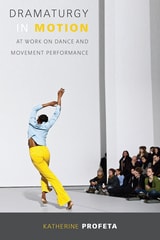
Dramaturgy in Motion
At Work on Dance and Movement PerformanceKatherine Profeta
University of Wisconsin Press, 2015
Profeta explores five arenas for the dramaturg’s attention—text and language, research, audience, movement, and interculturalism. Drawing on her extended collaboration with choreographer and visual artist Ralph Lemon, she grounds her thinking in actual rehearsal-room examples and situates practice within theoretical discourse about contemporary dramaturgy. Moving between theory and practice, word and movement, question and answer until these distinctions blur, she develops the foundational concept of dramaturgical labor as a quality of motion.
Dramaturgy in Motion will be invaluable to practitioners and scholars interested in the processes of creating contemporary dance and movement performance—particularly artists wondering what it might be like to collaborate with a dramaturg and dramaturgs wondering what it might be like to collaborate on movement performance. The book will also appeal to those intrigued by the work of Lemon and his collaborators, to which Profeta turns repeatedly to unfold the thorny questions and rich benefits of dramaturgical labor.
Dramaturgy
An IntroductionCock Dieleman
Amsterdam University Press, 2021
'Dramaturgy. An Introduction' provides a broad overview of the concept of dramaturgy and the profession of the dramaturg. It is intended for students and teachers of theatre and performance studies, but also for directors, scenographers, actors and for all lovers of theatre.
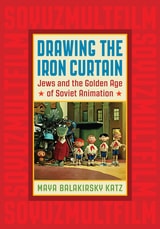
Drawing the Iron Curtain
Jews and the Golden Age of Soviet AnimationMaya Balakirsky Katz
Rutgers University Press, 2016