Results by title
3785 books match the query 'Poetry' and 128 start with d

Door to Remain
Austin Segrest
University of North Texas Press, 2022
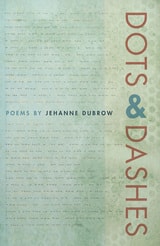
Dots & Dashes
Jehanne Dubrow
Southern Illinois University Press, 2017
As in the poet’s earlier collection, Stateside, the poems in Dots & Dashes are explicitly feminist, exploring the experiences of women whose husbands are deployed. But, while Stateside looked to masculine stories of war, Dots & Dashes incorporates the views and voices of female poets who have written about combat. Looking to Sappho and Emily Dickinson, the poet considers how the act of writing allows her autonomy and agency rarely granted to military spouses, even in the twenty-first century. Dubrow catalogs the domestic life of a military spouse, illustrating what it is like to live in a tightly constructed world of rules and regulations, ceremony and tradition, where “every sacrifice already / knows its place.”
Navigating the rough seas of marriage alongside questions about how civilians and those in the military can learn to communicate with one another, Dubrow argues for compassion and empathy on both sides. In this timely collection, Dubrow offers the hope that if we can break apart our preconceptions and stereotypes, we can find what connects all of us.

Double Quartet, Volume I
Nathaniel Mackey
Duke University Press, 2027
Double Quartet, Volume II
Nathaniel Mackey
Duke University Press, 2027
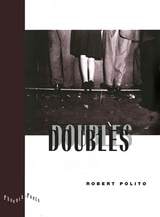
Doubles
Robert Polito
University of Chicago Press, 1995
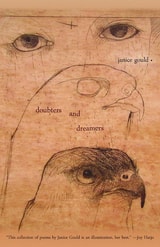
Doubters and Dreamers
Janice Gould
University of Arizona Press, 2011
In the first half of the book, “Tribal History,” Gould ingeniously repurposes the sonnet form to preserve the stories of her mother and aunt, who grew up when “muleback was the customary mode / of transport” and the “spirit world was present”—stories of “old ways” and places claimed in memory but lost in time. Elsewhere, she remembers her mother’s “ferocious, upright anger” and her unexpected tenderness (“Like a miracle, I was still her child”), culminating in the profound expression of loss that is the poem “Our Mother’s Death.”
In the second half of the book, “It Was Raining,” Gould tells of the years of lonely self-making and “unfulfilled dreams” as she comes to terms with what she has been told are her “crazy longings” as a lesbian: “It’s been hammered into me / that I’ll be spurned / by a ‘real woman,’ / the only kind I like.” The writing here commemorates old loves and relationships in language that mingles hope and despair, doubt and devotion, veering at times into dreamlike moments of consciousness. One poem and vignette at a time, Doubters and Dreamers explores what it means to be a mixed-blood Native American who grew up urban, lesbian, and middle class in the West.
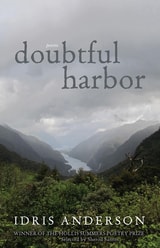
Doubtful Harbor
PoemsIdris Anderson
Ohio University Press, 2018
In Doubtful Harbor, Idris Anderson turns wandering into art. From large landscapes to the minutest details, she seeks with each poem to convey the world more clearly, acutely, and exquisitely. As she meditates on indelible moments with intimate others, friends, and strangers, she teases from these encounters their elusive connections and disconnections. As Sherod Santos wrote when selecting the book for the Hollis Summers Poetry Prize, “These are not the journeys of a tourist, but of a wandering solitaire whose purpose is not to maintain a travelogue, but to lose herself in the otherness of her surroundings.”
Doubt is itself a driving force here, an engine of both questing and questioning. As exact as Anderson’s eye is, her poems draw energy from ambiguity as she renders interior and exterior landscapes—foreign and domestic, lovely and littered, familiar and strange.
Doubting Conscience
Donne and the Poetry of Moral ArgumentDwight Cathcart
University of Michigan Press, 1975
Draft of a Letter
James Longenbach
University of Chicago Press, 2007
From Second Draft:
What other people learn
From birth,
Betrayal,
I learned late.
My soul perched
On an olive branch
Combing itself,
Waving its plumes. I said
Being mortal,
I aspire to
Mortal things.
I need you,
Said my soul,
If you’re telling the truth.
Draft of a Letter is a book about belief—not belief in the unknowable but belief in what seems bewilderingly plain. Pondering the bodies we inhabit, the words we speak, these poems discover infinitude in the most familiar places. The revelation is disorienting and, as a result, these poems talk to themselves, revise themselves, fashioning a dialogue between self and soul that opens outward to include other voices, lovers, children, angels, and ghosts. For James Longenbach, great distance makes the messages we send sweeter. To be divided from ourselves is never to be alone. “If the kingdom is in the sky,” says the body to the soul, “Birds will get there before you.” “In time,” says the awakening soul, “I liked my second / Body better / Than the first.” To live, these poems insist, is to arise every day to the strange magnificence of the people and places we thought we knew best. Draft of a Letter is an unsettled and radiant paradiso, imagined in the death-shadowed, birth-haunted middle of a long life.
Praise for Fleet River
“A sensibility this cogent, this subtle and austere is rare; even rarer is its proof that poetry still flows through all things and transforms all things in the process.”—Carol Muske-Dukes, Los Angeles Times Book Review
Dragonfly Dance
Denise K. Lajimodiere
Michigan State University Press, 2010
Dragonfly Dance is a collection of poems remarkable for their candor and sense of catharsis. Writing from the vantage point of an American Indian women, Denise Lajimodiere opens a door into the lives of Native girls and women. Her poems often reflect the deep tensions between Native culture and white culture.
Reflected in Lajimodiere's poems, life is sometimes beautiful but rarely easy. "The Necklace," the narrator details how her mother repaired a favorite beaded necklace, "her arthritic fingers patiently / threading beads / on the long thin needle, weaving / night after night." When the necklace is finally repaired, she wears it to school where
At recess a White boy
ran by, yanked
it off my neck and threw it.
I watched as it ascended
high above the blacktop,
the beads glittered, scattering their light,
a rainbow against gray skies.
Unadorned, direct, and often raw, these riveting poems sear their way into our imaginations, inviting us into a world we might never have known. We are richer for the knowledge.
Drama, Poetry and Music in Late-Renaissance Italy
The Life and Works of Leonora BernardiVirginia Cox and Lisa Sampson
University College London, 2023
Leonora Bernardi (1559–1616), a gentlewoman of Lucca, was a highly regarded poet, dramatist, and singer. She was active in the brilliant courts of Ferrara and Florence at a time when creative women enjoyed exceptional visibility in Italy. Like many such figures, she has since suffered historical neglect. Drama, Poetry and Music in Late-Renaissance Italy presents the first-ever study of Bernardi’s life along with a modern edition of her recently discovered literary corpus, which mostly exists in manuscripts. Her writings are presented in the original Italian with new English translations, scholarly notes, and critical essays. Based on new archival research, the substantial opening section reconstructs Bernardi’s unusually colorful life. The second major section presents her pastoral tragicomedy Clorilli, one of the earliest secular dramatic works by a woman. The third section presents Bernardi’s secular and religious verse, which engaged with new trends in lyric and poetry for music, and was set by various key composers across Italy. The volume thus firmly positions Leonora Bernardi as a distinctive voice and dynamic player in the extraordinarily rich social, cultural, and geo-political networks of late-Renaissance Italy.
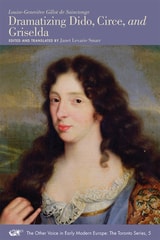
Dramatizing Dido, Circe, and Griselda
Louise-Geneviève Gillot de Sainctonge
Iter Press, 2010
—Perry Gethner
Norris Professor of French, Oklahoma State University

Dread Poetry and Freedom
Linton Kwesi Johnson and the Unfinished RevolutionDavid Austin
Pluto Press, 2018
Standing at the forefront of political poetry since the 1970s, Linton Kwesi Johnson has been fighting neo-fascism, police violence and promoting socialism while putting pen to paper to refute W.H. Auden's claim that 'poetry makes nothing happen'. For Johnson, only the second living poet to have been published in the Penguin Modern Classics series, writing has always been 'a political act' and poetry 'a cultural weapon'.
In Dread Poetry and Freedom - the first book dedicated to the work of this 'political poet par excellence' - David Austin explores the themes of poetry, political consciousness and social transformation through the prism of Johnson's work. Drawing from the Bible, reggae and Rastafari, and surrealism, socialism and feminism, and in dialogue with Aime Cesaire and Frantz Fanon, C.L.R. James and Walter Rodney, and W.E.B. Du Bois and the poetry of d'bi young anitafrika, Johnson's work becomes a crucial point of reflection on the meaning of freedom in this masterful and rich study.
In the process, Austin demonstrates why art, and particularly poetry, is a vital part of our efforts to achieve genuine social change in times of dread.
Dreams of Waking
An Anthology of Iberian Lyric Poetry, 1400-1700Edited and Translated by Vincent Barletta, Mark L. Bajus, and Cici Malik
University of Chicago Press, 2013
In this anthology, Vincent Barletta, Mark L. Bajus, and Cici Malik treat the Iberian lyric in the late Middle Ages and early modernity as a deeply multilingual, transnational genre that needs to break away from the old essentialist ideas about language, geography, and identity in order to be understood properly. More and more, scholars and students are recognizing the limitations of single-language, nationalist, and period-bound canons and are looking for different ways to approach the study of literature. The Iberian Peninsula is an excellent site for this approach, where the history and politics of the region, along with its creative literature, need to be read and studied together with the way the works were composed by poets and eventually consumed by readers.
With a generous selection of more than one hundred poems from thirty-three poets, Dreams of Waking is unique in its coverage of the three main languages—Catalan, Portuguese, and Spanish—and lyrical styles employed by peninsular poets. It contains new translations of canonical poems but also translations of many poems that have never before been edited or translated. Brief headnotes provide essential details of the poets’ lives, and a general introduction by the volume editors shows how the poems and languages fruitfully intersect. With helpful annotations to the poetry, as well as a selected bibliography containing the most important editions and translations from all three of the main Iberian languages, this volume will be an indispensable tool for both specialists and students in comparative literature.

Dreamtigers
By Jorge Luis Borges
University of Texas Press, 1964
Dreamtigers has been heralded as one of the literary masterpieces of the twentieth century by Mortimer J. Adler, editor of Great Books of the Western World. It has been acknowledged by its author as his most personal work. Composed of poems, parables, and stories, sketches and apocryphal quotations, Dreamtigers at first glance appears to be a sampler—albeit a dazzling one—of the master's work. Upon closer examination, however, the reader discovers the book to be a subtly and organically unified self-revelation.
Dreamtigers explores the mysterious territory that lies between the dreams of the creative artist and the "real" world. The central vision of the work is that of a recluse in the "enveloping serenity " of a library, looking ahead to the time when he will have disappeared but in the timeless world of his books will continue his dialogue with the immortals of the past — Homer, Don Quixote, Shakespeare. Like Homer, the maker of these dreams is afflicted with failing sight. Still, he dreams of tigers real and imagined and reflects upon of a life that, above all, has been intensely introspective, a life of calm self-possession and absorption in the world of the imagination. At the same time he is keenly aware of that other Borges, the public figure about whom he reads with mixed emotions: "It's the other one, it's Borges, that things happen to."
Driving the Body Back
Mary Swander
University of Iowa Press, 1998

Dry Place
Landscapes Of Belonging And ExclusionPatricia L. Price
University of Minnesota Press, 2004
Gathers tales from the Southwestern United States and Northern Mexico to understand the relationship between people and place in a borderland
Landscape is the space of negotiation between human beings and the physical world, and rarely are the negotiations more complex and subtle than those conducted through the desert landscape along the Mexico-U.S. border.
Patricia L. Price views the shaping of the landscape on and around the border through various narratives that have sought to establish claims to these dry lands. Most prominent are the accounts of Anglo-American expansionism and Manifest Destiny juxtaposed with the Chicano nationalist tale of Aztlán in the twentieth century, all constituting collective, contending claims to the U.S. Southwest. Demonstrating how stories can become vehicles for changing places and identities, Price considers characters old and new who inhabit the contemporary borderlands between Mexico and the United States—ranging from longstanding manifestations of good and evil in the figures of the Virgin of Guadalupe and the Devil to a collection of lay saints embodying current concerns. Dry Place weaves together theoretical insights with field-based inquiry, autobiography, and creative writing to arrive at a textured understanding of the bordered landscape of late modern subjectivity.
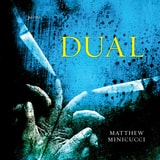
Dual
PoemsMatthew Minicucci
Acre Books, 2023
In his fourth poetry collection, Matthew Minicucci examines masculinity and gun violence as he brings to life the grammatical concept of the dual, a number that is neither singular nor plural. Though now lost in English, the concept is present in other languages both extant and ancient. The poems’ forms fittingly include the elegy, palinode, and contrapuntal, which is both a single poem and two poems intertwined. They align contemporary moments with key texts from Western literature, including ancient Greek epics, in a way that helps us reconsider the aggression of young men. “The world kills kind boys,” Minicucci writes, and “we bury the bodies inside men.”
Minicucci recategorizes our idea of “West,” the Western canon, and the Old West and its bullets, comparing them to modern-day landscapes in Utah, Oregon, Washington, California, and Hawai’i. Whether memorializing a woodworking grandfather or poets Brigit Pegeen Kelly and James Longenbach, Dual notes that loss has a double vision. While weighty in their subjects, Dual’s poems make room for unexpected moments of lightness, such as when the speaker compares the complications of love to “reading the Iliad and realizing, sure, there's anger, // but before that there’s just a lot of camping.”
The book argues, in the end, that there is an unalienable dual between the observer and the observed, the self and the self as confessed to another.
Dual
PoemsMatthew Minicucci
Acre Books, 2023
In his fourth poetry collection, Matthew Minicucci examines masculinity and gun violence as he brings to life the grammatical concept of the dual, a number that is neither singular nor plural. Though now lost in English, the concept is present in other languages both extant and ancient. The poems’ forms fittingly include the elegy, palinode, and contrapuntal, which is both a single poem and two poems intertwined. They align contemporary moments with key texts from Western literature, including ancient Greek epics, in a way that helps us reconsider the aggression of young men. “The world kills kind boys,” Minicucci writes, and “we bury the bodies inside men.”
Minicucci recategorizes our idea of “West,” the Western canon, and the Old West and its bullets, comparing them to modern-day landscapes in Utah, Oregon, Washington, California, and Hawai’i. Whether memorializing a woodworking grandfather or poets Brigit Pegeen Kelly and James Longenbach, Dual notes that loss has a double vision. While weighty in their subjects, Dual’s poems make room for unexpected moments of lightness, such as when the speaker compares the complications of love to “reading the Iliad and realizing, sure, there's anger, // but before that there’s just a lot of camping.”
The book argues, in the end, that there is an unalienable dual between the observer and the observed, the self and the self as confessed to another.
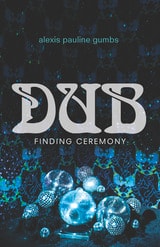
Dub
Finding CeremonyAlexis Pauline Gumbs
Duke University Press, 2019
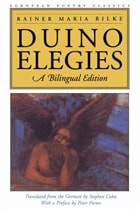
Duino Elegies
A Bilingual EditionRainer Maria Rilke
Northwestern University Press, 1998
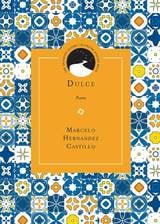
Dulce
PoemsMarcelo Hernandez Castillo
Northwestern University Press, 2018
The poems in Dulce are at once confession and elegy that admit the speaker’s attempt and possible failure to reconcile intimacy toward another and toward the self. The collection asks: what’s the point in any of this?—meaning, what’s the use of longing beyond pleasure; what’s the use of looking for an origin if we already know the ending?
Surreal and deeply imagistic, the poems map a parallel between the landscape of the border and the landscape of sexuality. Marcelo Hernandez Castillo invites the reader to confront and challenge the distinctions of borders and categories, and in doing so, he obscures and negates such divisions. He allows for the possibility of an and in a world of either/or.
These poems enact a prescient anxiety of what is to come, “I want to say all of this is true / but we both know it isn’t. . . . We already know what’s at the other end of this.” Dulce is truly a lyrical force rife with the rich language of longing and regret that disturbs even the most serene quiet.
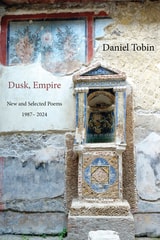
Dusk, Empire
New and SelectedDaniel Tobin
Four Way Books, 2026
Dusk, Empire: New and Selected Poems 1987-2024 is a panoramic collection of Daniel Tobin’s most exemplary, ambitious, and accomplished poems from nearly forty years at work in the art. These range from his award-winning first book, Where the World is Made, through successive volumes that reveal a progressive deepening of his essential themes even as the poems evolve to an ever more refined technical risk and mastery. These themes include the unflinching encounter with time, suffering, and mortality, as well as what one earlier reviewer called “a quest for transcendence, a search for the sacred.” They seek, in short, to do, as another reviewer observed, what Yeats said was “one ideal for poetry: to hold justice and reality in a single thought.” In so doing, Tobin’s poems probe the individual life in relation to the pressures of history, including his own family’s perilous and traumatic immigration from famine in the 19th century—a backstory he explores in The Narrows, which he has called “a mural in verse.” At the same time, his “Homage to Bartolomeo de las Casas” delves into the fraught early colonial history of the Americas through the eyes of the eponymous friar, a repentant colonizer.
These earlier works establish Tobin’s mastery of the poetic sequence, among a wide variety of other formal displays, all amply evident in the books that follow, including the lyrically meditative orchestrations of Second Things, the award-winning poems of Belated Heavens, The Net, and Blood Labors, characterized at once by their compendious erudition, their sense of intellectual and cultural history, as well as their emotional urgency and formal variousness. This generous selection from Tobin’s work is intended to be a companion volume to The Mansions, his trilogy of book-length poems that explore twentieth century history, and the counter claims of science and religion, through three exemplary lives, which reviewers said inspired genuine awe. Finally, Dusk, Empire leads with a gripping selection of new work that engages the enormous pressures and troubles of the present historical moment, set in dialogue with Tobin’s characteristic passion for what would transcend it. Or as he asks in “The Sand Painting,” “What is that joyous singing inside the rock / Though each intricate, lovely thing will be erased?”

Duties of the Spirit
Patricia Fargnoli
Tupelo Press, 2005
“These poems are stamped with an energetic and outgoing attentiveness to the world. This, so much more than just the humming examination of the self, is what makes writing a sacred thing. Who does this is a true poet, and few do it better than Patricia Fargnoli.”
— Mary Oliver
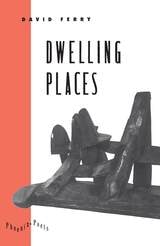
Dwelling Places
Poems and TranslationsDavid Ferry
University of Chicago Press, 1993
"David Ferry's Dwelling Places is a marvelous, extremely moving book, distinguished by Ferry's characteristic formal virtuosity, extraordinarily fresh and 'inner' translations, and a kind of driven anguished rage at both the social conditions in which human beings have to live and the mysteriously unchangeable tragedies of individual human lives. The translations amplify and deepen the contemporary scenes. I feel that in the future this will be perceived as a great book."—Frank Bidart
"Not until I had read Dwelling Places several times did I see how ingeniously resourceful, ambitious, and admirably modest a book David Ferry has made."—Boston Review
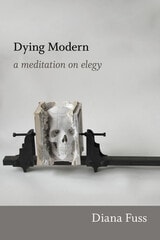
Dying Modern
A Meditation on ElegyDiana Fuss
Duke University Press, 2013
Focusing primarily on American and British poetry written during the past two centuries, Fuss maintains that poetry can still offer genuine ethical compensation, even for the deep wounds and shocking banalities of modern death. As dying, loss, and grief become ever more thoroughly obscured from public view, the dead start chattering away in verse. Through bold, original interpretations of little-known works, as well as canonical poems by writers such as Emily Dickinson, Randall Jarrell, Elizabeth Bishop, Richard Wright, and Sylvia Plath, Fuss explores modern poetry's fascination with pre- and postmortem speech, pondering the literary desire to make death speak in the face of its cultural silencing.
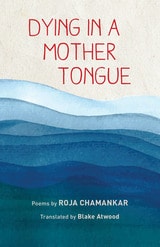
Dying in a Mother Tongue
By Roja Chamankar, Translated by Blake Atwood
University of Texas Press, 2018
This collection of poetry by the celebrated southern Iranian poet and filmmaker Roja Chamankar (b. 1981) introduces English-speaking readers to one of the most accomplished and well-loved poets of her generation. Chamankar’s work blends surrealism and the southern coastal landscape of the poet’s upbringing with everyday experiences in rapidly urbanizing Tehran. While locating herself in the modernist tradition of Iranian poets like Forugh Farrokhzad and Ahmad Shamlu through form and imagery, Chamankar infuses this tradition with concerns unique to a generation that grew up in post-revolutionary Iran and endured the effects of the Iran-Iraq war. Seascapes, love and eroticism, the disconnection of modern life, and myths and fairytales figure prominently in these vivid, lyrical poems.
In the rich miniature worlds of Chamankar’s poetry, readers become privy to a range of experiences, from desire and pain to rage and humor. Sometimes abstract, other times surreal—Chamankar’s unique poetic voice, like the sea she returns to again and again, combines and sweeps these experiences to shore with assurance, strength, and beauty.
domina Un/blued
Ruth Ellen Kocher
Tupelo Press, 2013