Paper: 978-1-961897-76-2 | eISBN: 978-1-961897-77-9
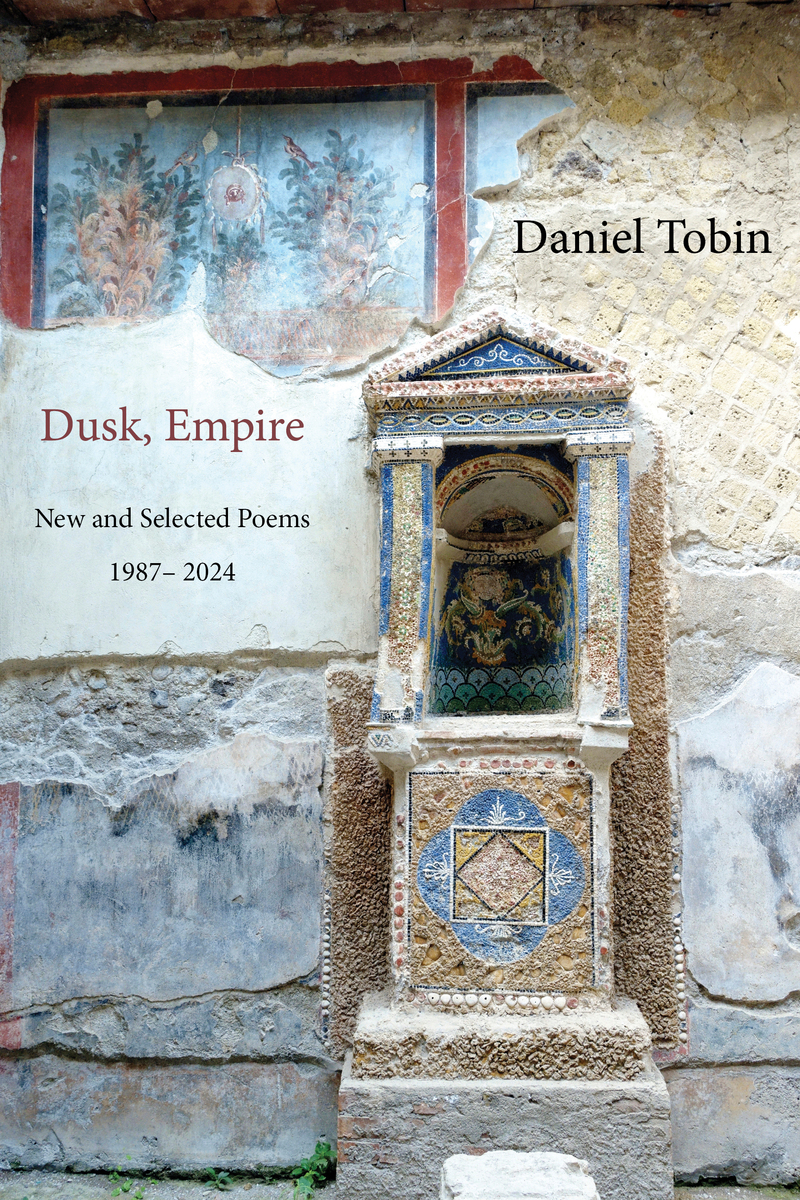
Dusk, Empire: New and Selected Poems 1987-2024 is a panoramic collection of Daniel Tobin’s most exemplary, ambitious, and accomplished poems from nearly forty years at work in the art. These range from his award-winning first book, Where the World is Made, through successive volumes that reveal a progressive deepening of his essential themes even as the poems evolve to an ever more refined technical risk and mastery. These themes include the unflinching encounter with time, suffering, and mortality, as well as what one earlier reviewer called “a quest for transcendence, a search for the sacred.” They seek, in short, to do, as another reviewer observed, what Yeats said was “one ideal for poetry: to hold justice and reality in a single thought.” In so doing, Tobin’s poems probe the individual life in relation to the pressures of history, including his own family’s perilous and traumatic immigration from famine in the 19th century, which he explores in The Narrows, which he called “a mural in verse.” At the same time, his “Homage to Bartolomeo de las Casas” delves into the fraught early colonial history of the Americas through the eyes of the eponymous friar, a repentant colonizer.
These earlier works establish Tobin’s mastery of the poetic sequence, among a wide variety of other formal displays, all amply evident in the books that follow, including the lyrically meditative orchestrations of Second Things, the award-winning poems of Belated Heavens, The Net, and Blood Labors, characterized at once by their compendious erudition, their sense of intellectual and cultural history, as well as their emotional urgency and formal variousness. This generous selection from Tobin’s work is intended to be a companion volume to The Mansions, his trilogy of book-length poems that explore twentieth century history, and the counter claims of science and religion, through three exemplary lives, which reviewers said inspired genuine awe. Finally, Dusk, Empire leads with a gripping selection of new work that engages the enormous pressures and troubles of the present historical moment, set in dialogue with Tobin’s characteristic passion for what would transcend it. Or as he asks in “The Sand Painting,” “What is that joyous singing inside the rock / Though each intricate, lovely thing will be erased?”
See other books on: Death, Grief, Loss | Dusk | New | Selected | Tobin, Daniel
See other titles from Four Way Books