Results by title
18284 books match the query 'United States' and 684 start with d
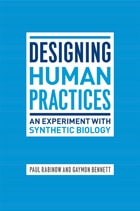
Designing Human Practices
An Experiment with Synthetic BiologyPaul Rabinow and Gaymon Bennett
University of Chicago Press, 2012
In 2006 anthropologists Paul Rabinow and Gaymon Bennett set out to rethink the role that human sciences play in biological research, creating the Human Practices division of the Synthetic Biology Engineering Research Center—a facility established to create design standards for the engineering of new enzymes, genetic circuits, cells, and other biological entities—to formulate a new approach to the ethical, security, and philosophical considerations of controversial biological work. They sought not simply to act as watchdogs but to integrate the biosciences with their own discipline in a more fundamentally interdependent way, inventing a new, dynamic, and experimental anthropology that they could bring to bear on the center’s biological research.
Designing Human Practices is a detailed account of this anthropological experiment and, ultimately, its rejection. It provides new insights into the possibilities and limitations of collaboration, and diagnoses the micro-politics which effectively constrained the potential for mutual scientific flourishing. Synthesizing multiple disciplines, including biology, genetics, anthropology, and philosophy, alongside a thorough examination of funding entities such as the National Science Foundation, Designing Human Practices pushes the social study of science into new and provocative territory, utilizing a real-world experience as a springboard for timely reflections on how the human and life sciences can and should transform each other.
Designing Judicial Review
Interest Groups, Congress, and Communications PolicyCharles R. Shipan
University of Michigan Press, 2000
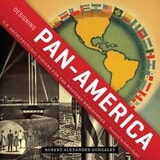
Designing Pan-America
U.S. Architectural Visions for the Western HemisphereBy Robert Alexander González
University of Texas Press, 2011
Coinciding with the centennial of the Pan American Union (now the Organization of American States), González explores how nineteenth- and twentieth-century U.S. architects and their clients built a visionary Pan-America to promote commerce and cultural exchange between United States and Latin America.
Late in the nineteenth century, U.S. commercial and political interests began eyeing the countries of Latin America as plantations, farms, and mines to be accessed by new shipping lines and railroads. As their desire to dominate commerce and trade in the Western Hemisphere grew, these U.S. interests promoted the concept of "Pan-Americanism" to link the United States and Latin America and called on U.S. architects to help set the stage for Pan-Americanism's development. Through international expositions, monuments, and institution building, U.S. architects translated the concept of a united Pan-American sensibility into architectural or built form. In the process, they also constructed an artificial ideological identity—a fictional Pan-America peopled with imaginary Pan-American citizens, the hemispheric loyalists who would support these projects and who were the presumed benefactors of this presumed architecture of unification.
Designing Pan-America presents the first examination of the architectural expressions of Pan-Americanism. Concentrating on U.S. architects and their clients, Robert Alexander González demonstrates how they proposed designs reflecting U.S. presumptions and projections about the relationship between the United States and Latin America. This forgotten chapter of American architecture unfolds over the course of a number of international expositions, ranging from the North, Central, and South American Exposition of 1885–1886 in New Orleans to Miami's unrealized Interama fair and San Antonio's HemisFair '68 and encompassing the Pan American Union headquarters building in Washington, D.C. and the creation of the Columbus Memorial Lighthouse in the Dominican Republic.
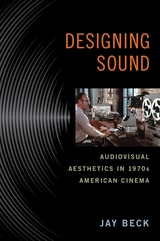
Designing Sound
Audiovisual Aesthetics in 1970s American CinemaBeck, Jay
Rutgers University Press, 2016

Designing Space for Children and Teens in Libraries and Public Places
Sandra Feinberg
American Library Association, 2010
Designing a School Library Media Center for the Future
Rolf Erikson
American Library Association, 2007
Designing for Diversity
Gender, Race, and Ethnicity in the Architectural ProfessionKathryn H. Anthony
University of Illinois Press, 2000
A powerful statement about the repercussions of discrimination and the benefits of diversity in architecture
Providing hard data for trends that many perceive only vaguely and some deny altogether, Designing for Diversity reveals a profession rife with gender and racial discrimination and examines the aspects of architectural practice that hinder or support the full participation of women and persons of color.
Drawing on interviews and surveys of hundreds of architects, Kathryn H. Anthony outlines some of the forms of discrimination that recur most frequently in architecture: being offered added responsibility without a commensurate rise in position, salary, or credit; not being allowed to engage in client contact, field experience, or construction supervision; and being confined to certain kinds of positions, typically interior design for women, government work for African Americans, and computer-aided design for Asian American architects.
Anthony discusses the profession's attitude toward flexible schedules, part-time contracts, and the demands of family and identifies strategies that have helped underrepresented individuals advance in the profession, especially establishing a strong relationship with a mentor. She also observes a strong tendency for underrepresented architects to leave mainstream practice, either establishing their own firms, going into government or corporate work, or abandoning the field altogether.
Given the traditional mismatch between diverse consumers and predominantly white male producers of the built environment, plus the shifting population balance toward communities of color, Anthony contends that the architectural profession staves off true diversity at its own peril. Designing for Diversity argues convincingly that improving the climate for nontraditional architects will do much to strengthen architecture as a profession. Practicing architects, managers of firms, and educators will learn how to create conditions more welcoming to a diversity of users as well as designers of the built environment.
Designing the Creative Child
Playthings and Places in Midcentury AmericaAmy F. Ogata
University of Minnesota Press, 2013
The postwar American stereotypes of suburban sameness, traditional gender roles, and educational conservatism have masked an alternate self-image tailor-made for the Cold War. The creative child, an idealized future citizen, was the darling of baby boom parents, psychologists, marketers, and designers who saw in the next generation promise that appeared to answer the most pressing worries of the age.
Designing the Creative Child reveals how a postwar cult of childhood creativity developed and continues to this day. Exploring how the idea of children as imaginative and naturally creative was constructed, disseminated, and consumed in the United States after World War II, Amy F. Ogata argues that educational toys, playgrounds, small middle-class houses, new schools, and children’s museums were designed to cultivate imagination in a growing cohort of baby boom children. Enthusiasm for encouraging creativity in children countered Cold War fears of failing competitiveness and the postwar critique of social conformity, making creativity an emblem of national revitalization.
Ogata describes how a historically rooted belief in children’s capacity for independent thinking was transformed from an elite concern of the interwar years to a fully consumable and aspirational ideal that persists today. From building blocks to Gumby, playhouses to Playskool trains, Creative Playthings to the Eames House of Cards, Crayola fingerpaint to children’s museums, material goods and spaces shaped a popular understanding of creativity, and Designing the Creative Child demonstrates how this notion has been woven into the fabric of American culture.
Designs upon Nature
The Cultural Landscape History of Yellowstone National Park since 1872William K. Wyckoff
University of Wyoming Press, 2025
Chapters in the book follow the park’s traditional “Grand Tour,” which often began for visitors at park headquarters at Mammoth Hot Springs and then moved on to Old Faithful and the Upper Geyser Basin, the glistening waters of Yellowstone Lake, the unforgettable waterfalls of the Yellowstone River’s Grand Canyon, and the western hospitality found at Roosevelt Lodge near Tower Falls. Authors consider how visitor experiences and cultural landscapes within the park have changed dramatically since 1872. Early horseback trips were replaced by an era of railroad tourism and grand hotels. The later arrival of automobiles invited a more casual visitor experience among rustic lodges and campgrounds. Travel accommodations for the twenty-first-century visitor continue to affect cultural landscapes through larger parking lots and further road improvements. The result is indeed a “design upon nature,” an engineered imprint upon a wild place that has forever shaped and changed its character.
Designs upon Nature is a rich and nuanced narrative that encourages us to see the park in a way we never have before. It is a significant addition to our understanding of Yellowstone and the evolution of the national park idea as seen there—how experiencing wild nature is made possible by human designs upon the land.
Desire and Disaster in New Orleans
Tourism, Race, and Historical MemoryLynnell L. Thomas
Duke University Press, 2014

Desire to Serve
The Autobiography of Congresswoman Eddie Bernice JohnsonCheryl Wattley
University of North Texas Press, 2024
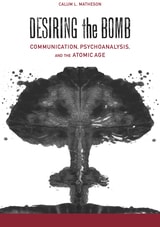
Desiring the Bomb
Communication, Psychoanalysis, and the Atomic AgeCalum L. Matheson
University of Alabama Press, 2019
Every culture throughout history has obsessed over various “end of the world” scenarios. The dawn of the Atomic Age marked a new twist in this tale. For the first time, our species became aware of its capacity to deliberately destroy itself. Since that time the Bomb has served as an organizing metaphor, a symbol of human annihilation, a stand-in for the unspeakable void of extinction, and a discursive construct that challenges the limits of communication itself. The parallel fascination with and abhorrence of nuclear weapons has metastasized into a host of other end-of-the-world scenarios, from global pandemics and climate change to zombie uprisings and asteroid collisions.
Desiring the Bomb: Communication, Psychoanalysis, and the Atomic Age explores these world-ending fantasies through the lens of psychoanalysis to reveal their implications for both contemporary apocalyptic culture and the operations of language itself. What accounts for the enduring power of the Bomb as a symbol? What does the prospect of annihilation suggest about language and its limits? Thoroughly researched and accessibly written, this study expands on the theories of Kenneth Burke, Jacques Lacan, Sigmund Freud, and many others from a variety of disciplines to arrive at some answers to these questions.
Calum L. Matheson undertakes a series of case studies—including the Trinity test site, nuclear war games, urban shelter schemes, and contemporary survivalism—and argues that contending with the anxieties (individual, social, cultural, and political) born of the Atomic Age depends on rhetorical conceptions of the “real,” an order of experience that cannot be easily negotiated in language. Using aspects of media studies, rhetorical theory, and psychoanalysis, the author deftly engages the topics of Atomic Age survival, extinction, religion, and fantasy, along with their enduring cultural legacies, to develop an account of the Bomb as a signifier and to explore why some Americans have become fascinated with fantasies of nuclear warfare and narratives of postapocalyptic rebirth.

Desk and Beyond
Next Generation Reference ServicesSarah K. American Library Association
Assoc of College & Research Libraries, 2011
Desperately Seeking Certainty
The Misguided Quest for Constitutional FoundationsDaniel A. Farber and Suzanna Sherry
University of Chicago Press, 2002
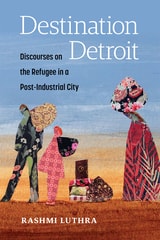
Destination Detroit
Discourses on the Refugee in a Post-Industrial CityRashmi Luthra
University of Michigan Press, 2024
Few U.S. locations provide a more vivid case study of this fight than Metro Detroit, where competing interest groups are waging war over the meaning of the figure of the refugee. This book dives deeply into the discourse on refugees occurring among various institutions in Metro Detroit. The way in which local institutions talk about refugees gives us vital clues as to how they are negotiating competing pressures and how the city overall is negotiating competing imperatives. Indeed, this local discourse gives us a crucial glimpse into how U.S. cities are defining and redefining themselves today. The figure of the refugee becomes a slate on which groups with varied interests write their stories, aspirations, and fears. Consequently, we can figure out from local refugee discourses the ongoing question of what it means to be a Metro Detroiter—and by extension, what it means to be a revitalizing U.S. city in this age.
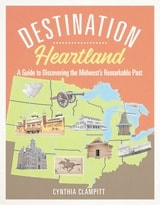
Destination Heartland
A Guide to Discovering the Midwest's Remarkable PastCynthia Clampitt
University of Illinois Press, 2022
An informative handbook and introduction to the Midwest's colorful past, Destination Heartland provides travelers with a knowledgeable companion on the highways and backroads of history.
States covered in the book: Illinois, Indiana, Iowa, Kansas, Michigan, Minnesota, Missouri, Nebraska, North Dakota, Ohio, South Dakota, and Wisconsin.

Destinies of the Disadvantaged
The Politics of Teen ChildbearingFrank F. Furstenberg
Russell Sage Foundation, 2007
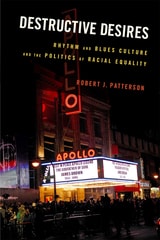
Destructive Desires
Rhythm and Blues Culture and the Politics of Racial EqualityRobert J. Patterson
Rutgers University Press, 2019
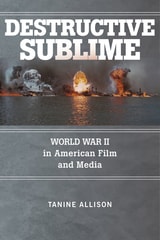
Destructive Sublime
World War II in American Film and MediaAllison, Tanine
Rutgers University Press, 2018
Destructive Sublime traces a new aesthetic history of the World War II combat genre by looking back at it through the lens of contemporary video games like Call of Duty. Allison locates some of video games’ glorification of violence, disruptive audiovisual style, and bodily sensation in even the most canonical and seemingly conservative films of the genre. In a series of case studies spanning more than seventy years—from wartime documentaries like The Battle of San Pietro to fictional reenactments like The Longest Day and Saving Private Ryan to combat video games like Medal of Honor—this book reveals how the genre’s aesthetic forms reflect (and influence) how American culture conceives of war, nation, and representation itself.

Detained
Immigration Laws & Expanding Ins Jail ComplexMichael Welch
Temple University Press, 2002

Dethroning the Deceitful Pork Chop
Rethinking African American Foodways from Slavery to ObamaJennifer Jensen Wallach
University of Arkansas Press, 2015
2017 Association for the Study of Food and Society Award, best edited collection.
The fifteen essays collected in Dethroning the Deceitful Pork Chop utilize a wide variety of methodological perspectives to explore African American food expressions from slavery up through the present. The volume offers fresh insights into a growing field beginning to reach maturity. The contributors demonstrate that throughout time black people have used food practices as a means of overtly resisting white oppression—through techniques like poison, theft, deception, and magic—or more subtly as a way of asserting humanity and ingenuity, revealing both cultural continuity and improvisational finesse. Collectively, the authors complicate generalizations that conflate African American food culture with southern-derived soul food and challenge the tenacious hold that stereotypical black cooks like Aunt Jemima and the depersonalized Mammy have on the American imagination. They survey the abundant but still understudied archives of black food history and establish an ongoing research agenda that should animate American food culture scholarship for years to come.
Detours
A Decolonial Guide to Hawai'iHokulani K. Aikau and Vernadetta Vicuña Gonzalez, editors
Duke University Press, 2019
Contributors. Hōkūlani K. Aikau, Malia Akutagawa, Adele Balderston, Kamanamaikalani Beamer, Ellen-Rae Cachola, Emily Cadiz, Iokepa Casumbal-Salazar, David A. Chang, Lianne Marie Leda Charlie, Greg Chun, Joy Lehuanani Enomoto, S. Joe Estores, Nicholas Kawelakai Farrant, Jessica Ka‘ui Fu, Candace Fujikane, Linda H. L. Furuto, Sonny Ganaden, Cheryl Geslani, Vernadette Vicuña Gonzalez, Noelani Goodyear-Ka‘ōpua, Tina Grandinetti, Craig Howes, Aurora Kagawa-Viviani, Noelle M. K. Y. Kahanu, Haley Kailiehu, Kyle Kajihiro, Halena Kapuni-Reynolds, Terrilee N. Kekoolani-Raymond, Kekuewa Kikiloi, William Kinney, Francesca Koethe, Karen K. Kosasa, N. Trisha Lagaso Goldberg, Kapulani Landgraf, Laura E. Lyons, David Uahikeaikalei‘ohu Maile, Brandy Nālani McDougall, Davianna Pōmaika‘i McGregor, Laurel Mei-Singh, P. Kalawai‘a Moore, Summer Kaimalia Mullins-Ibrahim, Jordan Muratsuchi, Hanohano Naehu, Malia Nobrega-Olivera, Katrina-Ann R. Kapā‘anaokalāokeola Nākoa Oliveira, Jamaica Heolimelekalani Osorio, No‘eau Peralto, No‘u Revilla, Kalaniua Ritte, Maya L. Kawailanaokeawaiki Saffery, Dean Itsuji Saranillio, Noenoe K. Silva, Ty P. Kāwika Tengan, Stephanie Nohelani Teves, Stan Tomita, Mehana Blaich Vaughan, Wendy Mapuana Waipā, Julie Warech

Detroit Country Music
Mountaineers, Cowboys, and RockabilliesCraig Maki with Keith Cady
University of Michigan Press, 2013
The richness of Detroit’s music history has by now been well established. We know all about Motown, the MC5, and Iggy and the Stooges. We also know about the important part the Motor City has played in the history of jazz. But there are stories about the music of Detroit that remain untold. One of the lesser known but nonetheless fascinating histories is contained within Detroit’s country music roots. At last, Craig Maki and Keith Cady bring to light Detroit’s most important country and western and bluegrass stars, such as Chief Redbird, the York Brothers, and Roy Hall. Beyond the individuals, Maki and Cady also map out the labels, radio programs, and performance venues that sustained Detroit’s vibrant country and bluegrass music scene. In the process, Detroit Country Music examines how and why the city’s growth in the early twentieth century, particularly the southern migration tied to the auto industry, led to this vibrant roots music scene.
This is the first book—the first resource of any kind—to tell the story of Detroit’s contributions to country music. Craig Maki and Keith Cady have spent two decades collecting music and images, and visiting veteran musicians to amass more than seventy interviews about country music in Detroit. Just as astounding as the book’s revelations are the photographs, most of which have never been published before. Detroit Country Musicwill be essential reading for music historians, record collectors, roots music fans, and Detroit music aficionados.
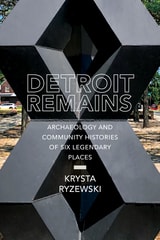
Detroit Remains
Archaeology and Community Histories of Six Legendary PlacesKrysta Ryzewski
University of Alabama Press, 2021
WINNER OF THE UNIVERSITY OF MARY WASHINGTON CENTER FOR HISTORIC PRESERVATION BOOK PRIZE, THE JAMES DEETZ BOOK AWARD, AND THE JOAN GERO BOOK AWARD
An interdisciplinary study of urban archaeology, community heritage, and social justice in modern Detroit.
The city of Detroit has endured periods of unprecedented industrial growth, decline, and revitalization between the late nineteenth century and the present. In Detroit Remains: Archaeology and Community Histories of Six Legendary Places, Krysta Ryzewski presents six archaeological case studies of legendary Detroit institutions—Little Harry speakeasy, the Ransom Gillis house, the Blue Bird Inn, Gordon Park, the Grande Ballroom, and the Halleck Street log cabin—that trace the contours of the city’s underrepresented communities and their relationship to local currents of capitalism and social justice. Through a combination of rigorous historical archaeological research and narrative storytelling, Ryzewski deftly contextualizes the cases within the city’s current struggles, including recovery from bankruptcy, and future-oriented recovery efforts.
This is the first historical archaeology book focused on Detroit and one of the few to foreground the archaeology of the Great Migration era (ca. 1915–1970). The archaeological scholarship is rooted in collaborative, community-involved, and public-facing initiatives. The case studies examine how power is and has been exercised in Detroit’s communities over the past century: how it was stripped from the city’s twentieth- and twenty-first-century residents, but also how they acquired alternative sources of agency by establishing creative and illicit economies, most of which still operated within the city’s capitalist framework.
Throughout this book, connections run deep between archaeology, heritage, politics, historic preservation, and storytelling. Detroit Remains demonstrates how the city’s past, present, and future lie not in ruins but in the tangible archaeological traces of the everyday lives of Detroiters and their legacies.
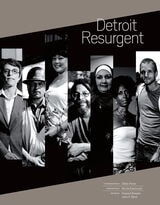
Detroit Resurgent
Howard Bossen
Michigan State University Press, 2014

Detroit's Cold War
The Origins of Postwar ConservatismColleen Doody
University of Illinois Press, 2017
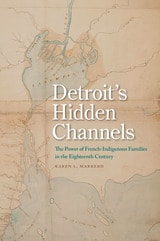
Detroit's Hidden Channels
The Power of French-Indigenous Families in the Eighteenth CenturyKaren L. Marrero
Michigan State University Press, 2020
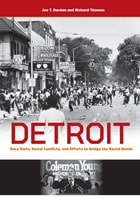
Detroit
Race Riots, Racial Conflicts, and Efforts to Bridge the Racial DivideJoe T. Darden and Richard Thomas
Michigan State University Press, 2013

Developing Animals
Wildlife and Early American PhotographyMatthew Brower
University of Minnesota Press, 2010
Developing Animals compellingly investigates the way photography changed our perception of animals. Brower analyzes how photographers created new ideas about animals as they moved from taking pictures of taxidermic specimens in so-called natural settings to the emergence of practices such as camera hunting, which made it possible to capture images of creatures in the wild.
By combining approaches in visual cultural studies and the history of photography, Developing Animals goes further to argue that photography has been essential not only to the understanding of wildlife but also to the conceptual separation of humans and animals.
Developing Faculty in Liberal Arts Colleges
Aligning Individual Needs and Organizational GoalsBaker, Vicki L.
Rutgers University Press, 2017
Drawing on research conducted at the thirteen institutions of the Great Lakes Colleges Association, Vicki L. Baker, Laura Gail Lunsford, and Meghan J. Pifer propose a compelling Alignment Framework for Faculty Development in Liberal Arts Colleges to show how these colleges succeed—or sometimes fail—in providing their faculties with the right support to be successful.
Developing The Next Gen Library Leaders
ACRL Pub In LibrarianLori Birrell
Assoc of College & Research Libraries, 2020
Developing an Outstanding Core Collection
A Guide for LibrariesCarol Alabaster
American Library Association, 2010
Developing and Managing Electronic Collections
The EssentialsPeggy Johnson
American Library Association, 2013
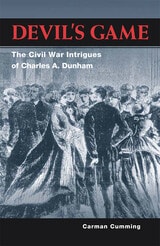
Devil's Game
The Civil War Intrigues of Charles A. DunhamCarman Cumming
University of Illinois Press, 2003
The first book-length study of one of the Civil War's most outlandish and mysterious characters
Devil's Game traces the amazing career of Charles A. Dunham, Civil War spy, forger, journalist, and master of dirty tricks. Writing for a variety of New York papers under alternate names, Dunham routinely faked stories, created new identities, and later boldly cast himself to play those roles. He achieved his greatest infamy when he was called to testify in Washington concerning Abraham Lincoln's assassination. Many parts of Dunham's career remain shadowy, but Cumming offers the first detailed tour of Dunham's convoluted, high-stakes, international deceits, including his effort to sell Lincoln on plans for a raid to capture Jefferson Davis.
Exhaustively researched and unprecedented in depth, this carefully crafted assessment of Dunham's motives, personality, and the complex effects of his schemes changes assumptions about covert operations during the Civil War.
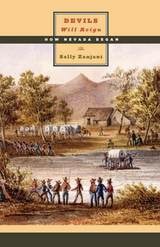
Devils Will Reign
How Nevada BeganSally Zanjani
University of Nevada Press, 2007
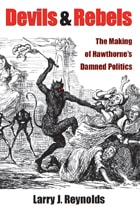
Devils and Rebels
The Making of Hawthorne's Damned PoliticsLarry J. Reynolds
University of Michigan Press, 2010
"An outstanding combination of literary interpretation and cultural and historical context that will be an important addition to the critical literature on Hawthorne."
---Nina Baym, University of Illinois
"It is difficult to imagine a more timely book than Devils and Rebels. Examining the role of the public intellectual and writer during a time of political conflict and war, Reynolds takes up his charges with great precision and historical finesse. What particularly distinguishes this book is its attention to the ways in which one of this country's most important authors struggled to resist the waves of political extremism and patriotic hysteria that swept around him."
---Jeffrey Steele, University of Wisconsin—Madison
Widely condemned even in his own time, Nathaniel Hawthorne's views on abolitionism and slavery are today frequently characterized by scholars as morally reprehensible. Devils and Rebels explores the historical and biographical record to reveal striking evidence of the author's true political values---values grounded in pacifism and resistant to the kind of binary thinking that could lead to violence and war.
The book offers fresh readings of not only Hawthorne's four major romances but also some of his less familiar works like "Legends of the Province House," The Whole History of Grandfather's Chair, Journal of an African Cruiser, The Life of Franklin Pierce, and "Septimius Felton." Reynolds argues that Hawthorne---whether in his politics or his art---drew upon racialized imagery from America's past revolution and war on witchcraft to create a politics of quiet imagination, alert to the ways in which New England righteousness could become totalitarian by imposing its narrow view of the world on others.
Meticulously researched and cogently argued, this groundbreaking work demonstrates the need to examine perspectives and values from beyond the New England region when studying the literary history of the American Renaissance and illuminates the difficulties faced by public intellectuals during times of political strife---an issue as relevant today as it was some one hundred and fifty years ago.
Larry J. Reynolds is Thomas Franklin Mayo Professor of Liberal Arts and Professor of English at Texas A&M University. His previous books include A Historical Guide to Nathaniel Hawthorne, National Imaginaries, American Identities: The Cultural Work of American Iconography, and European Revolutions and the American Literary Renaissance as well as an edition of the European writings of Margaret Fuller.
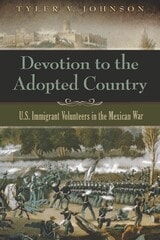
Devotion to the Adopted Country
U.S. Immigrant Volunteers in the Mexican WarTyler V. Johnson
University of Missouri Press, 2012
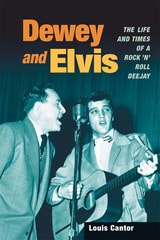
Dewey and Elvis
The Life and Times of a Rock 'n' Roll DeejayLouis Cantor
University of Illinois Press, 2010
Louis Cantor illuminates Phillips's role in turning a huge white audience on to previously forbidden race music. Phillips's zeal for rhythm and blues legitimized the sound and set the stage for both Elvis's subsequent success and the rock 'n' roll revolution of the 1950s. Using personal interviews, documentary sources, and oral history collections, Cantor presents a personal view of the disc jockey while restoring Phillips's place as an essential figure in rock 'n' roll history.
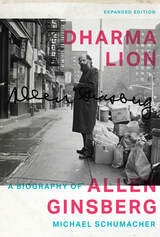
Dharma Lion
A Biography of Allen GinsbergMichael Schumacher
University of Minnesota Press, 2016
With the sweep of an epic novel, Michael Schumacher tells the story of Allen Ginsberg and his times, with fascinating portraits of Jack Kerouac, Neal Cassady, and William Burroughs, among others, along with many rarely seen photographs.
Diagnosing America
Anthropology and Public EngagementShepard Forman, Editor
University of Michigan Press, 1995
Debunking the notion of anthropology as a "value-free" science, the authors argue forcefully for an anthropology expressly committed to cultural pluralism and democratic participation.
At the same time, individual essays demonstrate the applicability of standard anthropological methods to the study of contemporary U.S. society and culture as they investigate contested values, community politics, middle-class economics, and workplace culture or describe the psychophysiological stress effects of exclusion on African- Americans and the coping mechanisms of Mexican-Americans along the border.
Diagnosing America and the challenging "Statement to the Profession" that concludes it call for anthropologists to reach beyond the parochialism of their own discipline and to engage history, economics, sociology, and the policy sciences. It will be of interest to scholars in each of these fields who are concerned with the study and resolution of contemporary social problems in the United States and to students of American culture in this country and abroad.
Shepard Forman is Director of the International Affairs Program of the Ford Foundation and a former Professor of Anthropology, University of Michigan.
Diagnosis, Therapy, and Evidence
Conundrums in Modern American MedicineGrob, Gerald N
Rutgers University Press, 2010
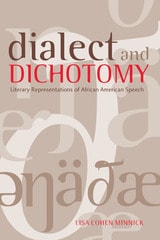
Dialect and Dichotomy
Literary Representations of African American SpeechLisa Cohen Minnick
University of Alabama Press, 2007
Applies linguistics methods for a richer understanding of literary texts and spoken language.
Dialect and Dichotomy outlines the history of dialect writing in English and its influence on linguistic variation. It also surveys American dialect writing and its relationship to literary, linguistic, political, and cultural trends, with emphasis on African American voices in literature.
Furthermore, this book introduces and critiques canonical works in literary dialect analysis and covers recent, innovative applications of linguistic analysis of literature. Next, it proposes theoretical principles and specific methods that can be implemented in order to analyze literary dialect for either linguistic or literary purposes, or both. Finally, the proposed methods are applied in four original analyses of African American speech as represented in major works of fiction of the American South—Mark Twain's Adventures of Huckleberry Finn, Charles W. Chesnutt's The Conjure Woman, William Faulkner's The Sound and the Fury, and Zora Neale Hurston's Their Eyes Were Watching God.
Dialect and Dichotomy is designed to be accessible to audiences with a variety of linguistic and literary backgrounds. It is an ideal research resource and course text for students and scholars interested in areas including American, African American, and southern literature and culture; linguistic applications to literature; language in the African American community; ethnicity and representation; literary dialect analysis and/or computational linguistics; dialect writing as genre; and American English.
Dialectical Imaginaries
Materialist Approaches to U.S. Latino/a Literature in the Age of NeoliberalismMarcial González and Carlos Gallego, editors
University of Michigan Press, 2018
Dialogues/Dialogi
Literary and Cultural Exchanges Between (Ex)Soviet and American WomenSusan Hardy Aiken, Adele Barker, Maya Koreneva, and Ekaterina Stetsenko
Duke University Press, 1993
Dialogues/Dialogi pairs stories by Tillie Olsen, Toni Cade Bambara, Jayne Anne Phillips, and Leslie Marmon Silko (reprinted here in full) with Russian stories by I. Grekova, Liudmila Petrushevskaya, Elena Makarova, and Anna Nerkagi, many of them appearing here for the first time in English. Exquisite in their stylistic and thematic variety, suggestive of the range of women's experience and fiction in both countries, each story is the subject of paired interpretive essays by an American and an (ex)Soviet critic from among the book's authors.
A colloquy of diverse voices speaking together in multiple, mutually illuminating exchanges, Dialogues/Dialogi testifies to the possibility of evolving relationships among women across borders once considered impassable.
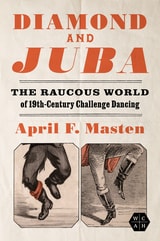
Diamond and Juba
The Raucous World of 19th-Century Challenge DancingApril F. Masten
University of Illinois Press, 2025
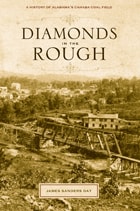
Diamonds in the Rough
A History of Alabama's Cahaba Coal FieldJames Sanders Day
University of Alabama Press, 2013
Winner of the 2014 Clinton Jackson Coley Award for Best Work on Alabama Local History from the Alabama Historical Association
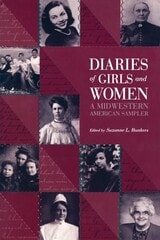
Diaries of Girls and Women
A Midwestern American SamplerSuzanne L. Bunkers
University of Wisconsin Press, 2001
Diaries of Girls and Women captures and preserves the diverse lives of forty-seven girls and women who lived in Minnesota, Iowa, and Wisconsin between 1837 and 1999—young schoolgirls, adolescents coming of age, newlywed wives, mothers grieving the loss of children, teachers, nurses, elderly women, Luxembourger immigrant nuns, and women traveling abroad. A compelling work of living history, it brings together both diaries from historical society archives and diaries still in possession of the diarists or their descendents.
Editor Suzanne L. Bunkers has selected these excerpts from more than 450 diaries she examined. Some diaries were kept only briefly, others through an entire lifetime; some diaries are the intensely private record of a life, others tell the story of an entire family and were meant to be saved and appreciated by future generations. By approaching diaries as historical documents, therapeutic tools, and a form of literature, Bunkers offers readers insight into the self-images of girls and women, the dynamics of families and communities, and the kinds of contributions that girls and women have made, past and present. As a representation of the girls and women of varied historical eras, locales, races, and economic circumstances who settled and populated the Midwest, Diaries of Girls and Women adds texture and pattern to the fabric of American history.
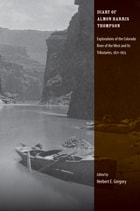
Diary of Almon Harris Thompson
Explorations of the Colorado River of the West and Its Tributaries, 1871-1875Herbert E Gregory
University of Utah Press, 2009
Originally published in 1939 as volume seven of the Utah Historical Quarterly, Thompson’s journal is reprinted here for the first time in seventy years. Co-published with the Utah State Historical Society.
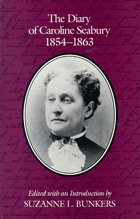
Diary of Caroline Seabury
Caroline Seabury
University of Wisconsin Press, 1991
In 1854 Caroline Seabury of Brooklyn, New York, set out for Columbus, Mississippi, to teach French at its Institute for Young Ladies. She lived in Columbus until 1863, through the years of mounting sectional bitterness that preceded the Civil War and through the turmoil and hardships of the war itself. During that time, her most intimate confidant was her diary. Discovered in the archives of the Minnesota State Historical Society, it is published here for the first time.
The diary is an illuminating account of southern plantation society and the “peculiar institution” of slavery on the eve of its destruction. Seabury also records her uneasy attempts to come to terms with her position as an unmarried, white, Northern woman whose job was to educate wealthy, white, Southern girls in a setting seemingly oblivious to the horrors of slavery. The diary is not simply a chronicle of daily happenings; Seabury concentrates on remarkable events and the memorable feelings and ideas they generate, shaping them into entries that reveal her as an accomplished writer. She frames her narrative with her journey south in 1854 and the hazardous and exhausting return north through battle lines in 1863.
Disapproving of slavery, yet deeply attached to friends and her life in Columbus and also painfully conscious of the fragility of her own economic and social position, Seabury condemned privately in her diary the evils that she endured silently in public. There are striking scenes of plantation life that depict the brutalities of slavery and benumbed responses to them. Seabury also successfully captures the mood of Mississippi as it changed from a fire-eating appetite to fight the Yankees to a grim apprehension of inexorable defeat. Most impressive of all is Seabury’s poignantly honest presentation of herself, caught in the middle.
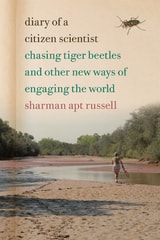
Diary of a Citizen Scientist
Chasing Tiger Beetles and Other New Ways of Engaging the WorldSharman Apt-Russell
Oregon State University Press, 2014
In the exploding world of citizen science, hundreds of thousands of volunteers are monitoring climate change, tracking bird migrations, finding stardust for NASA, and excavating mastodons. The sheer number of citizen scientists, combined with new technology, has begun to shape how research gets done. Non-professionals become acknowledged experts: dentists turn into astronomers and accountants into botanists.
Diary of a Citizen Scientist is a timely exploration of the phenomenon of citizen science, told through the lens of nature writer Sharman Apt Russell’s yearlong study of a little-known species, the Western red-bellied tiger beetle. In a voice both humorous and lyrical, Russell recounts her persistent and joyful tracking of an insect she calls “charismatic,” “elegant,” and “fierce.” Patrolling the Gila River in southwestern New Mexico, collector’s net in hand, she negotiates the realities of climate change even as she celebrates the beauty of a still-wild and rural landscape.
Russell’s self-awareness—of her occasionally-misplaced confidence, her quest to fill in “that blank spot on the map of tiger beetles,” and her desire to become newly engaged in her life—creates a portrait not only of the tiger beetle she tracks, but of the mindset behind self-driven scientific inquiry. Falling in love with the diversity of citizen science, she participates in crowdsourcing programs that range from cataloguing galaxies to monitoring the phenology of native plants, applauds the growing role of citizen science in environmental activism, and marvels at the profusion of projects around the world.
Diary of a Citizen Scientist offers its readers a glimpse into the transformative properties of citizen science—and documents the transformation of the field as a whole.