Results by title
935 books match the query 'Ancient' and 30 start with e
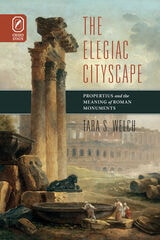
ELEGIAC CITYSCAPE
Propertius and the Meaning of Roman MonumentsTara S. Welch
The Ohio State University Press, 2005
The Elegiac Cityscape explores Propertius’ Rome and the various ways his poetry about the city illuminates the dynamic relationship between one individual and his environment. Combining the approaches of archaeology and literary criticism, Tara S. Welch examines how Propertius’ poems on Roman places scrutinize the monumentalization of various ideological positions in Rome, as they poke and prod Rome’s monuments to see what further meanings they might admit. The result is a poetic book rife with different perspectives on the eternal city, perspectives that often call into question any sleepy or complacent adherence to Rome’s traditional values.
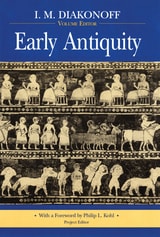
Early Antiquity
Edited by I. M. Diakonoff
University of Chicago Press, 1991
M. Diakonoff has gathered the work of Soviet historians in
this survey of the earliest history of the ancient Near East,
Central Asia, India, and China. Diakonoff and his
colleagues, nearly all working within the general Marxist
historiographic tradition, offer a comprehensive, accessible
synthesis of historical knowledge from the beginnings of
agriculture through the advent of the Iron Age and the Greek
colonization in the Mediterranean and the Black Sea areas.
Besides discussing features of Soviet historical
scholarship of the ancient world, the essays treat the
history of early Mesopotamia and the course of Pharaonic
Egyptian civilization and developments in ancient India and
China from the Bronze Age into the first millennium B.C.
Additional chapters are concerned with the early history of
Syria, Phoenicia, and Palestine, the Hittite civilization,
the Creto-Mycenaean world, Homeric Greece, and the Phoenician
and Greek colonization.
This volume offers a unified perspective on early
antiquity, focusing on the economic and social relations of
production. Of immense value to specialists, the book will
also appeal to general readers.
I. M. Diakonoff is a senior research scholar of ancient
history at the Institute of Oriental Studies, Leningrad
Academy of Sciences. Philip L. Kohl is professor of
anthropology at Wellesley College.
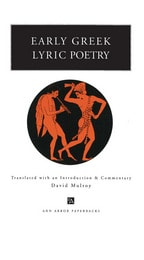
Early Greek Lyric Poetry
Translated with an Introduction and Commentary by David Mulroy
University of Michigan Press, 1999
In Early Greek Lyric Poetry David Mulroy offers an accurate and lively translation of all the important lyric fragments and new papyri, as well as selections from the more fully preserved works of Theognis, Bacchylides, and Pindar. Unlike any other version of these poems, Early Greek Lyric Poetry also provides a translation of the literary context in which each poem survives. This format enables readers to see for themselves why particular lines or phrases happen to be preserved, and it also provides information on how earlier writers understood the poems.
The poems and fragments are accompanied by a comprehensive introduction to the genre and to the individual poets, explanatory notes, and a useful bibliography. Early Greek Lyric Poetry is indispensable for courses on Greek culture and literature in translation or on literary "great books."
David Mulroy is Associate Professor of Classics, University of Wisconsin at Milwaukee. He is also the author of Horace's Odes and Epodes: Translated with an Introduction and Commentary.
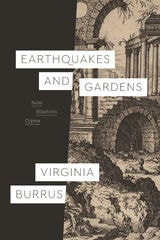
Earthquakes and Gardens
Saint Hilarion’s CyprusVirginia Burrus
University of Chicago Press, 2023
In Jerome’s Life of Saint Hilarion, a fourth-century saint briefly encounters the ruins of an earthquake-toppled city and a haunted garden in Cyprus. From these two fragmentary passages, Virginia Burrus delivers a series of sweeping meditations on our experience of place and the more-than-human worlds—the earth and its gods—that surround us. Moving between the personal and geological, Earthquakes and Gardens ruminates on destruction and resilience, ruination and resurgence, grief and consolation in times of disaster and loss. Ultimately, Burrus’s close readings reimagine religion as a practice that unsettles certainty and develops mutual flourishing.
East-West Divan
In Memory of Werner Mark LinzEdited by Aran Byrne
Gingko, 2014
Ecclesial Exegesis
A Synthesis of Ancient and Modern Approaches to ScriptureGregory Vall
Catholic University of America Press, 2022
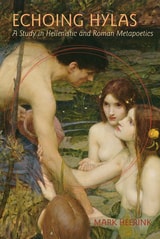
Echoing Hylas
A Study in Hellenistic and Roman MetapoeticsMark Heerink
University of Wisconsin Press, 2015
In Echoing Hylas, Mark Heerink argues that the story of Hylas—a famous episode of the Argonauts' voyage—was used by poets throughout classical antiquity to reflect symbolically on the position of their poetry in the literary tradition. Certain elements of the story, including the characters of Hylas and Hercules themselves, functioned as metaphors of the art of poetry. In the Hellenistic age, for example, the poet Theocritus employed Hylas as an emblem of his innovative
bucolic verse, contrasting the boy with Hercules, who symbolized an older, heroic-epic tradition. The Roman poet Propertius further developed and transformed Theocritus's metapoetical allegory by turning Heracles into an elegiac lover in pursuit of an unattainable object of affection. In this way, the myth of Hylas became the subject of a dialogue among poets across time, from the Hellenistic age to the Flavian era. Each poet, Heerink demonstrates, used elements of the myth to claim his own place in a developing literary tradition.
With this innovative diachronic approach, Heerink opens a new dimension of ancient metapoetics and offers many insights into the works of Apollonius of Rhodes, Theocritus, Virgil, Ovid, Valerius Flaccus, and Statius.
Economic Origins of Roman Christianity
Robert B. Ekelund Jr. and Robert D. Tollison
University of Chicago Press, 2011
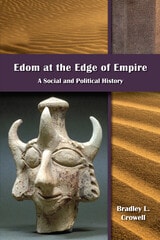
Edom at the Edge of Empire
A Social and Political HistoryBradley L. Crowell
SBL Press, 2021
A comprehensive history of a state on Judah’s border
Edom at the Edge of Empire combines biblical, epigraphic, archaeological, and comparative evidence to reconstruct the history of Judah's neighbor to the southeast. Crowell traces the material and linguistic evidence, from early Egyptian sources that recall conflicts with nomadic tribes to later Assyrian texts that reference compliant Edomite tribal kings, to offer alternative scenarios regarding Edom's transformation from a collection of nomadic tribes and workers in the Wadi Faynan as it relates to the later polity centered around the city of Busayra in the mountains of southern Jordan. This is the first book to incorporate the important evidence from the Wadi Faynan copper mines into a thorough account of Edom's history, providing a key resource for students and scholars of the ancient Near East and the Hebrew Bible.
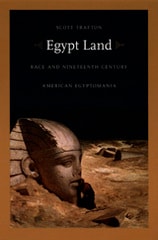
Egypt Land
Race and Nineteenth-Century American EgyptomaniaScott Trafton
Duke University Press, 2004
Drawing on literary and cultural studies, art and architectural history, political history, religious history, and the histories of archaeology and ethnology, Trafton illuminates anxieties related to race in different manifestations of nineteenth-century American Egyptomania, including the development of American Egyptology, the rise of racialized science, the narrative and literary tradition of the imperialist adventure tale, the cultural politics of the architectural Egyptian Revival, and the dynamics of African American Ethiopianism. He demonstrates how debates over what the United States was and what it could become returned again and again to ancient Egypt. From visions of Cleopatra to the tales of Edgar Allan Poe, from the works of Pauline Hopkins to the construction of the Washington Monument, from the measuring of slaves’ skulls to the singing of slave spirituals—claims about and representations of ancient Egypt served as linchpins for discussions about nineteenth-century American racial and national identity.
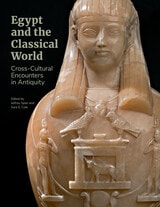
Egypt and the Classical World
Cross-Cultural Encounters in AntiquityJeffrey Spier
J. Paul Getty Trust, The, 2022
From Mycenaean weaponry found among the cargo of a Bronze Age shipwreck off the Turkish coast to the Egyptian-inspired domestic interiors of a luxury villa built in Greece during the Roman Empire, Egypt and the Classical World documents two millennia of cultural and artistic interconnectedness in the ancient Mediterranean. This volume gathers pioneering research from the Getty scholars' symposium that helped shape the major international loan exhibition Beyond the Nile: Egypt and the Classical World (J. Paul Getty Museum, 2018).
Generously illustrated essays consider a range of artistic and other material evidence, including archaeological finds, artworks, papyri, and inscriptions, to shed light on cultural interactions between Egypt, Greece, and Rome from the Bronze Age to the Late Period and Ptolemaic dynasty to the Roman Empire. The military's role as a conduit of knowledge and ideas in the Bronze Age Aegean, and an in-depth study of hieroglyphic Egyptian inscriptions found on Roman obelisks offer but two examples of scholarly lacunae addressed by this publication. Specialists across the fields of art history, archaeology, Classics, Egyptology, and philology will benefit from the volume's investigations into syncretic processes that enlivened and informed nearly twenty-five hundred years of dynamic cultural exchange.
The free online edition of this open-access publication is available at www.getty.edu/publications/egypt-classical-world/ and includes zoomable, high-resolution photography. Also available are free PDF, EPUB, and Kindle/MOBI downloads of the book.
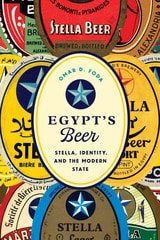
Egypt's Beer
Stella, Identity, and the Modern StateBy Omar D. Foda
University of Texas Press, 2019
Although alcohol is generally forbidden in Muslim countries, beer has been an important part of Egyptian identity for much of the last century. Egypt’s Stella beer (which only coincidentally shares a name with the Belgian beer Stella Artois) became a particularly meaningful symbol of the changes that occurred in Egypt after British Occupation.
Weaving cultural studies with business history, Egypt’s Beer traces Egyptian history from 1880 to 2003 through the study of social, economic, and technological changes that surrounded the production and consumption of Stella beer in Egypt, providing an unparalleled case study of economic success during an era of seismic transformation. Delving into archival troves—including the papers of his grandfather, who for twenty years was CEO of the company that produced Stella—Omar D. Foda explains how Stella Beer achieved a powerful presence in all popular forms of art and media, including Arabic novels, songs, films, and journalism. As the company’s success was built on a mix of innovation, efficient use of local resources, executive excellence, and shifting cultural dynamics, this is the story of the rise of a distinctly Egyptian “modernity” seen through the lens of a distinctly Egyptian brand.
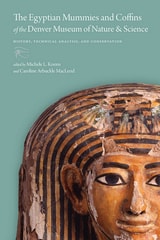
Egyptian Mummies and Coffins of the Denver Museum of Nature & Science
History, Technical Analysis, and ConservationMichele L. Koons
University Press of Colorado, 2020
This interdisciplinary volume provides a history of the mummies’ discovery and relocation to Colorado. It guides the reader through various analytical techniques, detailing past research and introducing new data and best practices for future conservation efforts. The new analysis includes more accurate radiocarbon dating, fully comprehensive data from updated CT scans, examples of Egyptian blue and yellow pigments on the coffins uncovered by non-invasive x-ray fluorescence, unprecedented analysis of the coffin wood, updated translations and stylistic analysis of the text and imagery on the coffins, gas chromatography of the paints and resins, linen analysis, and much more.
The Egyptian Mummies and Coffins of the Denver Museum of Nature & Science provides replicable findings and consistent terminology for institutions performing holistic studies on extant museum collections of a range of material types. It will add substantially to what we know about the effective conservation of Egyptian mummies and coffins.
Contributors: Christopher H. Baisan, Hans Barnard, Bonnie Clark, Pearce Paul Creasman, Farrah Cundiff, Jessica M. Fletcher, Kari L. Hayes, Kathryn Howley, Stephen Humphries, Keith Miller, Vanessa Muros, Robyn Price, David Rubinstein, Judith Southward, Jason Weinman
Egypt’s Football Revolution
Emotion, Masculinity, and Uneasy PoliticsBy Carl Rommel
University of Texas Press, 2021
Both a symbol of the Mubarak government’s power and a component in its construction of national identity, football served as fertile ground for Egyptians to confront the regime’s overthrow during the 2011 revolution. With the help of the state, appreciation for football in Egypt peaked in the late 2000s. Yet after Mubarak fell, fans questioned their previous support, calling for a reformed football for a new, postrevolutionary nation.
In Egypt’s Football Revolution, Carl Rommel examines the politics of football as a space for ordinary Egyptians and state forces to negotiate a masculine Egyptian chauvinism. Basing his discussion on several years of fieldwork with fans, players, journalists, and coaches, he investigates the increasing attention paid to football during the Mubarak era; its demise with the 2011 uprisings and 2012 Port Said massacre, which left seventy-two fans dead; and its recent rehabilitation. Cairo’s highly organized and dedicated Ultras fans became a key revolutionary force through their antiregime activism, challenging earlier styles of fandom and making visible entrenched ties between sport and politics. As the appeal of football burst, alternative conceptions of masculinity, emotion, and politics came to the fore to demand or prevent revolution and reform.
Electras
Aeschylus, Sophocles, and EuripidesMichael Davis
St. Augustine's Press, 2023
Davis accomplishes much more than an exegetical bridge as he connects us with ancient memory and wisdom. "When we cannot resist the temptation to recoil morally from their terminology, we risk the tragedy of losing their profound thoughts about our humanity––their philosophical anthropology." Davis has remarkably made of a niche study a stunning source material for more universal questions. This is a book that is as timely as it is ageless.
Eleftherios Venizelos
GreeceAndrew Dalby
Haus Publishing, 2010
Empires in Collision in Late Antiquity
G. W. Bowersock
Brandeis University Press, 2012
Encounter with the Plumed Serpent
Drama and Power in the Heart of MesoamericaMaarten Jansen
University Press of Colorado, 2007
By analyzing and cross-referencing the codices, which have been fragmented and dispersed in far-flung archives, the authors attempt to reconstruct Mixtec history. Their synthesis here builds on long examination of the ancient manuscripts. Adding useful interpretation and commentary, Jansen and Pérez Jiménez synthesize the large body of surviving documents into the first unified narrative of Mixtec sacred history.
Archaeologists and other scholars as well as readers with an interest in Mesoamerican cultures will find this lavishly illustrated volume a compelling and fascinating history and a major step forward in knowledge of the Mixtec.
Enlightenment in Colonial Egypt
Ahmad Lutfi al-Sayyid in His GenerationIsrael Gershoni and Molly Bernstein
University of Texas Press, 2026
A study of Ahmad Lutfi al-Sayyid, widely recognized as the creator of Egyptian nationalism, and his impact on Egyptian culture and history.
Ahmad Lutfi al-Sayyid (1872–1963) stands among the most creative, impactful intellectuals of modern Egypt and the Middle East. While best known as the architect of Egyptian nationalism, his nationalist endeavor was in fact part of his broader project to bring enlightenment to Egypt under the yoke of British colonialism. Through his articles, editorials, and mentoring, his newspaper al-Jarida became a key forum for the lively debates of the time, ranging from the role of Islam in society to women's inclusion, all toward shaping a unique colonial modernity for his country.
The most comprehensive study of Lutfi, his writing, and his impact, Enlightenment in Colonial Egypt deconstructs the view that he was a covert apologist for empire out of admiration for the liberal aspects of European enlightenment. Lutfi faced this duality head on: He believed it essential to embrace parts of the West’s enlightenment values and to decolonize and Egyptianize them in order to establish an authentic, indigenous, Egyptian civilization, appropriate for modernity. Israel Gershoni and Molly Bernstein argue that Lutfi successfully engaged with these most difficult challenges, shaping a detailed plan to implement enlightenment in the Egyptian national context.
Enmity and Feuding in Classical Athens
By Andrew Alwine
University of Texas Press, 2015
Much has been written about the world’s first democracy, but no book so far has been dedicated solely to the study of enmity in ancient Athens. Enmity and Feuding in Classical Athens is a long-overdue analysis of the competitive power dynamics of Athenian honor and the potential problems these feuds created for democracies.
The citizens of Athens believed that harming one’s enemy was an acceptable practice and even the duty of every honorable citizen. They sought public wins over their rivals, making enmity a critical element in struggles for honor and standing, while simultaneously recognizing the threat that personal enmity posed to the community. Andrew Alwine works to understand how Athenians addressed this threat by looking at the extant work of Attic orators. Their speeches served as the intersection between private vengeance and public sanction of illegal behavior, allowing citizens to engage in feuds within established parameters. This mediation helped support Athenian democracy and provided the social underpinning to allow it to function in conjunction with Greek notions of personal honor.
Alwine provides a framework for understanding key issues in the history of democracy, such as the relationship between private and public realms, the development of equality and the rule of law, and the establishment of individual political rights. Serving also as a nuanced introduction to the works of the Attic orators, Enmity and Feuding in Classical Athens is an indispensable addition to scholarship on Athens.
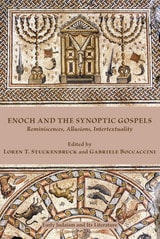
Enoch and the Synoptic Gospels
Reminiscences, Allusions, IntertextualityLoren T. Stuckenbruck
SBL Press, 2016
Essential research for students and scholars of Second Temple Judaism and the New Testament
Since Richard Laurence published the first English translation of 1 Enoch in 1821, its importance for an understanding of early Christianity has been generally recognized. The present volume is the first book of essays contributed by international specialists in Second Temple Judaism devoted to the significance of traditions found in 1 Enoch for the interpretation of the Synoptic Gospels in the New Testament. Areas covered by the contributions include demonology, Christology, angelology, cosmology, birth narratives, forgiveness of sins, veneration, wisdom, and priestly tradition. The contributors are Joseph L. Angel, Daniel Assefa, Leslie Baynes, Gabriele Boccaccini, Kelley Coblentz Bautch, Henryk Drawnel, André Gagné, Lester L. Grabbe, Daniel M. Gurtner, Andrei A. Orlov, Anders Klostergaard Petersen, Amy E. Richter, Loren T. Stuckenbruck, Benjamin Wold, and Archie T. Wright.
Features:
- Multiple approaches to thinking about the relationship between 1 Enoch and the Synoptic Gospels
- Exploration of the common socio-cultural and religious framework within which the traditions concerning Enoch and Jesus developed
- Articles presented at the Seventh Enoch Seminar in 2013
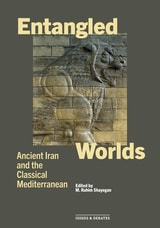
Entangled Worlds
Ancient Iran and the Classical MediterraneanM. Rahim Shayegan
J. Paul Getty Trust, The, 0
An exploration of the far-reaching exchanges between ancient Persia, Greece, and Rome, offering a bold new perspective on their interconnected cultural legacy.
For more than a millennium, ancient Persia and the classical Mediterranean were deeply intertwined—not merely through conflict but also through diplomacy, trade, and cultural exchange. From the rise of the Achaemenid Empire in the sixth century BCE to the fall of Rome in 476 CE and the twilight of Sasanian Persia in 651 CE, political, religious, and artistic exchanges shaped—and were shaped by—the dynamic interactions between ancient Persia, Greece, and Rome. These encounters fostered a complex web of cultural connectivity, challenging the notion of antiquity as a series of isolated civilizations and revealing its deep, enduring entanglements.
Bringing the disciplines of classics, Iranian studies, and global history into dialogue, this volume examines how successive Iranian empires—Achaemenid, Seleucid, Arsacid (Parthian), and Sasanian—engaged with their western (and occasionally eastern) neighbors. Essays on diplomacy, religion, art, and intellectual life offer fresh perspectives on ancient historiography, cross-cultural mythmaking, material and visual culture, and the political and religious dynamics of empire. Featuring more than 100 illustrations, Entangled Worlds is a compelling resource for scholars, students, and general readers interested in the shared legacies of the ancient world.
Epicurus in Lycia
The Second-Century World of Diogenes of OenoandaPamela Gordon
University of Michigan Press, 1996
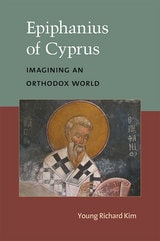
Epiphanius of Cyprus
Imagining an Orthodox WorldYoung Richard Kim
University of Michigan Press, 2015
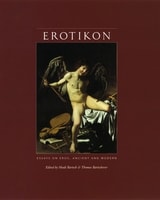
Erotikon
Essays on Eros, Ancient and ModernEdited by Shadi Bartsch and Thomas Bartscherer
University of Chicago Press, 2005
An idea charged with paradox, eros has always defied categorization, and yet it cannot—it will not—be ignored. Erotikon aims to raise the difficult question of what, if anything, unifies the erotic manifold. How is eros in a sculpture like eros in a poem? Does the ancient story of Cupid and Psyche still speak meaningfully to modern readers, and if so, why? Is Plato's eros the same as Freud's? Or Proust's? And what is the erotic dimension in Nietzsche's thought? While each essay takes on a specific issue, together they constitute a wide-ranging conversation in which these broader questions are at play. A compilation of the latest, best efforts to reckon with eros, Erotikon will appeal not just to scholars and educators, but also to artists and critics, to the curious and the disillusioned, to the prurient and the prudent.
Essays in Ancient and Modern Historiography
Arnaldo Momigliano
University of Chicago Press, 2012
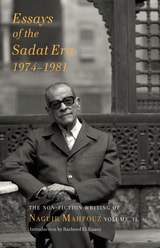
Essays of the Sadat Era
The Non-Fiction of Naguib Mahfouz: Volume IINaguib Mahfouz
Gingko, 2025
In these essays of the Sadat era, published in the state-owned Al-Ahram newspaper, Mahfouz seems an unreliable narrator. The tension between an author who rails against censorship, yet is bound within its confines, runs through this fascinating body of nonfiction writing. Nonetheless, Mahfouz’s own thoughts are unmistakably present. We gain his insight into diverse political topics, such as socioeconomic class, democracy and dictatorship, and Islam and extremism, topics which still seem highly pertinent to the situation in Egypt today.
A vital accompaniment to his literature, this collected work is contemporaneous with Mahfouz’s fictional works such as Karnak Café, The Harafish, and Arabian Nights and Days. Essays of the Sadat Era is the second of four volumes in which Mahfouz’s nonfiction work is translated into English for the first time.
Essays on Ancient and Modern Judaism
Arnaldo Momigliano
University of Chicago Press, 1994
Momigliano acknowledged that his Judaism was the most fundamental inspiration for his scholarship, and the writings in this collection demonstrate how the ethical experience of the Hebraic tradition informed his other works. Part 1 is devoted entirely to writings on ancient and medieval Judaism. In these essays, Momigliano ranges over such subjects as the stages of rapport between Hellenism and Judaism, the figure of Flavius Josephus, and the salient moments of Maccabean history. Part 2 comprises Momigliano's writings on modern subjects. Here are profiles of Jewish scholars of the classical world (Bernays, Bickerman, and Finley) together with those of eminent representatives of contemporary Jewish thought (Strauss, Scholem, and Benjamin). These essays gain special significance alongside Momigliano's reflections on Italian Jewry and the Weberian interpretation of Judaism.
Silvia Berti's Introduction discusses Momigliano's religious and intellectual formation, the key events of his life, and the influence of Judaism on his mature scholarship. In his Preface, Momigliano offers a personal meditation on his own Judaism and that of his family.
By the time of his death, Momigliano had acquired an international following. This volume will at last give his admirers in the English-speaking world easy access to an important body of his work.
Ethnic Relations in the Ancient Mediterranean
Social Life Under EmpirePhilip A. Harland
University of Chicago Press, 2026
With this book, Philip A. Harland presents a large-scale rereading of social and cultural life in the eastern part of the ancient Mediterranean in particular, examining social interactions among peoples, from culturally dominant groups to minority populations. Harland assesses literary and archaeological evidence to yield fresh insights into the dynamics of ethnic relations in the region and to explore how the population navigated questions of identification, differentiation, categorization, stratification, criminalization, and population production.
Harland considers encounters between peoples as well as their representations of one another, reframing the social landscape of the ancient world by focusing on the influence and ubiquity of the ethnographic imagination between the fifth century BCE and the third century CE. Drawing insights from anthropology, sociology, and postcolonial studies, Harland offers close readings of papyri, inscriptions, monuments, sculptures, and other materials that reflect interactions between different populations at all levels of society. He gives careful attention to the perspectives of enslaved, immigrant, and subject peoples, including Egyptians, Babylonians, Syrians, and Judeans under Persian, Hellenistic, or Roman rule.
Offering an innovative reading of social and cultural life from the ground up, this book reveals the extent to which ethnographic thinking structured the sociocultural landscape of the ancient world.
Euripides and the Instruction of the Athenians
Justina Gregory
University of Michigan Press, 1997