Results by title
653 books match the query 'Animals' and 24 start with e

East African Mammals
An Atlas of Evolution in Africa, Volume 2, Part A: Insectivores and BatsJonathan Kingdon
University of Chicago Press, 1984
Volume IIA of East African Mammals begins a two-part study of East Africa's smallest and least conspicuous mammals. It deals with bats and insectivores, including tenrecs, moles, hedgehogs, and shrews.
In each volume Kingdon combines his text with hundreds of finished drawings and quick sketches, the latter a form of field note that provides an incomparable description of the animal's movements and personality. Kingdom explains his drawings "as a wordless questioning of form. . . . The probing pencil is like the dissecting scalpel, seeking to expose relevant structures that may not be immediately obvious and are certainly hidden from the shadowy world of the camera lens." As an artist, Kingdon's achievement has been compared with Audubon's; as a scientist, his work has made these volumes indispensable to any serious student of East African mammals.
East African Mammals
An Atlas of Evolution in Africa, Volume 2, Part B: Hares and RodentsJonathan Kingdon
University of Chicago Press, 1984
Volume IIB of East African Mammals is a study of some of East Africa's smallest and least conspicuous mammals, hares and rodents.
In each volume Kingdon combines his text with hundreds of finished drawings and quick sketches, the latter a form of field note that provides an incomparable description of the animal's movements and personality. Kingdom explains his drawings "as a wordless questioning of form. . . . The probing pencil is like the dissecting scalpel, seeking to expose relevant structures that may not be immediately obvious and are certainly hidden from the shadowy world of the camera lens." As an artist, Kingdon's achievement has been compared with Audubon's; as a scientist, his work has made these volumes indispensable to any serious student of East African mammals.
East African Mammals
An Atlas of Evolution in Africa, Volume 3, Part A: CarnivoresJonathan Kingdon
University of Chicago Press, 1989
Volume IIIA documents the carnivores of East Africa—lions, cheetahs, jackals, otters, civets, genets, mongooses, hyenas, and such lesser-known species as the zorilla and the aardwolf.
The beauty of the animals, so vivid in these incomparable drawings, is made more poignant by the acknowledgment of their increasingly endangered status. Kingdon discusses the inevitable problems posed by large mammal communities in a developing continent and includes numerous maps indicating their declining ranges and populations.
East African Mammals
An Atlas of Evolution in Africa, Volume 3, Part B: Large MammalsJonathan Kingdon
University of Chicago Press, 1989
Volume IIIB celebrates the large mammals for which the African plains are so famous—elephants, rhinos, zebras, bushpigs, and warthogs, hippopotamuses, camels, chevrotains, giraffes. Kingdon brings his artist's eye to such puzzles as the zebra's stripes and the giraffe's spots, making original observations throughout the seven volumes about the evolutionary and functional significance of coat color, facial expressions, and curious forms and markings.
The beauty of the animals, so vivid in these incomparable drawings, is made more poignant by the acknowledgment of their increasingly endangered status. Kingdon discusses the inevitable problems posed by large mammal communities in a developing continent and includes numerous maps indicating their declining ranges and populations.
East African Mammals
An Atlas of Evolution in Africa, Volume 3, Part C: BovidsJonathan Kingdon
University of Chicago Press, 1989
East African Mammals
An Atlas of Evolution in Africa, Volume 3, Part D: BovidsJonathan Kingdon
University of Chicago Press, 1989
Eating the Ocean
Elspeth Probyn
Duke University Press, 2016
Echolocation in Bats and Dolphins
Edited by Jeanette A. Thomas, Cynthia F. Moss, and Marianne Vater
University of Chicago Press, 2003
Echolocation in Bats and Dolphins consists of six sections: mechanisms of echolocation signal production; the anatomy and physiology of signal reception and interpretation; performance and cognition; ecological and evolutionary aspects of echolocation mammals; theoretical and methodological topics; and possible echolocation capabilities in other mammals, including shrews, seals, and baleen whales. Animal behaviorists, ecologists, physiologists, and both scientists and engineers who work in the field of bioacoustics will benefit from this book.
Ecology and Evolution in the Tropics
A Herpetological PerspectiveEdited by Maureen A. Donnelly, Brian I. Crother, Craig Guyer, Marvalee H. Wake,
University of Chicago Press, 2005
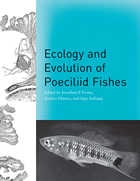
Ecology and Evolution of Poeciliid Fishes
Edited by Jonathan P. Evans, Andrea Pilastro, and Ingo Schlupp
University of Chicago Press, 2011
The history of biology is populated by numerous model species or organisms. But few vertebrate groups have aided evolutionary and ecological research more than the live-bearing fishes of the family Poeciliidae. Found throughout tropical and subtropical waters, poeciliids exhibit a fascinating variety of reproductive specializations, including viviparity, matrotrophy, unisexual reproduction, and alternative mating strategies, making them ideal models for research on patterns and processes in ecology, behavior, and evolution.
Ecology and Evolution of Poeciliid Fishes is a much-needed overview of the scientific potential and understanding of these live-bearing fishes. Chapters by leading researchers take up a wide range of topics, including the evolution of unisexual reproduction, life in extreme environments, life-history evolution, and genetics. Designed to provide a single and highly approachable reference, Ecology and Evolution of Poeciliid Fishes will appeal to students and specialists interested in all aspects of evolutionary ecology.
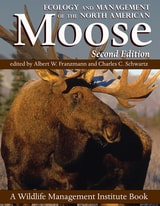
Ecology and Management of the North American Moose, Second Edition
Charles C. Schwartz
University Press of Colorado, 2007
Contributors include Warren B. Ballard, Arnold H. Boer, Anthony B. Bubenik, M. E. Buss, Kenneth N. Child, Vincent F.J. Crichton, Albert W. Franzmann, Kris J. Hundertmark, Patrick D. Karns, Murray W. Lankester, Richard E. McCabe, James M. Peek, Henry M. Reeves, Wayne L. Regelin, Lyle A. Renecker, William M. Samuel, Charles C. Schwartz, Robert W. Stewart, Ian D. Thompson, H. R. Timmermann, and Victor Van Ballenberghe. A Wildlife Management Institute book
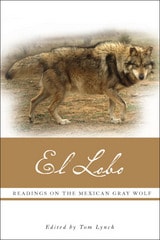
El Lobo
Readings on the Mexican Gray WolfTom Lynch
University of Utah Press, 2005
After roaming the desert Southwest for thousands of years, the Mexican gray wolf was, almost in the blink of an eye, driven to the brink of extinction. El Lobo collects writings that explore how this subspecies of wolf was brought so close to the edge of annihilation.
The first section, 'To the Brink,' includes essays that describe wolf biology, the campaign to exterminate wolves from the Southwest, and the wolf’s role in Native American cultures and in Mexican folklore. The second section, 'And Back,' illustrates a turnaround in attitudes and policy and includes Aldo Leopold’s famous essay 'Thinking Like a Mountain,' Rick Bass’s astute analysis of the political divide, and Sharman Apt Russell’s carefully woven plea in which she shares her experience with Pueblo Indian children meeting a wolf in their school auditorium. These essays, from both sides of the contested issue, resonate with passion, conviction, and the desire to save a world that is mightily at risk.
Electromyography for Experimentalists
Gerald E. Loeb and Carl Gans
University of Chicago Press, 1986
Elephant Don
The Politics of a Pachyderm PosseCaitlin O'Connell
University of Chicago Press, 2015
In Elephant Don, O’Connell, one of the leading experts on elephant communication and social behavior, offers a rare inside look at the social world of African male elephants. Elephant Don tracks Greg and his group of bulls as O’Connell tries to understand the vicissitudes of male friendship, power struggles, and play. A frequently heart-wrenching portrayal of commitment, loyalty, and affection between individuals yearning for companionship, it vividly captures an incredible repertoire of elephant behavior and communication. Greg, O’Connell shows, is sometimes a tyrant and other times a benevolent dictator as he attempts to hold onto his position at the top. Though Elephant Don is Greg’s story, it is also the story of O’Connell and the challenges and triumphs of field research in environs more hospitable to lions and snakes than scientists.
Readers will be drawn into dramatic tales of an elephant society at once exotic and surprisingly familiar, as O’Connell’s decades of close research reveal extraordinary discoveries about a male society not wholly unlike our own. Surely we’ve all known a Greg or two, and through this book we may come to know them in a whole new light.
Elephant Memories
Thirteen Years in the Life of an Elephant FamilyCynthia J. Moss
University of Chicago Press, 2000
Cynthia Moss studied the elephants in Kenya's Amboseli National Park for decades, and her long-term research revealed much of what we now know about these complex and intelligent animals. In Elephant Memories she turns that knowledge in an accessible, engaging, even moving story of individual elephants and their complicated relationships. With Moss as our guide, we get to know a number of elephants who are in a family group that is led by matriarchs Teresia, Slit Ear, Torn Ear, Tania, and Tuskless. and we develop new understanding of what elephants do when allowed to live in the wild. An afterword offers a view of the the families from a few years later and addresses current conservation issues.
Elephants and Kings
An Environmental HistoryThomas R. Trautmann
University of Chicago Press, 2015
Trautmann traces the history of the war elephant in India and the spread of the institution to the west—where elephants took part in some of the greatest wars of antiquity—and Southeast Asia (but not China, significantly), a history that spans 3,000 years and a considerable part of the globe, from Spain to Java. He shows that because elephants eat such massive quantities of food, it was uneconomic to raise them from birth. Rather, in a unique form of domestication, Indian kings captured wild adults and trained them, one by one, through millennia. Kings were thus compelled to protect wild elephants from hunters and elephant forests from being cut down. By taking a wide-angle view of human-elephant relations, Trautmann throws into relief the structure of India’s environmental history and the reasons for the persistence of wild elephants in its forests.
Ellie's Strand
Exploring the Edge of the PacificM. L. Herring
Oregon State University Press, 2018
Green Earth Book Award, Honor Book
There are days in late winter when the Pacific coast enjoys a brief spell of clear, warm weather. Most of the winter storms have passed and the summer fog has not yet settled in. This is when some coastal communities plan their annual beach clean-ups.
In this sequel to Ellie’s Log and Ricky’s Atlas, Ellie and Ricky travel to the Oregon coast from their home in the Cascade Mountains to help with a one-day beach clean-up. Hoping to find a prized Japanese glass float, they instead find more important natural treasures, and evidence of an ocean that needs its own global-scale clean-up.
Ellie and Ricky are amazed by their discoveries at the edge of the world’s largest ocean. Together, they realize the power of volunteering and grapple with the challenges of ocean conservation. In her journal Ellie records her observations of their adventures in her own words and pictures.
With charming pen-and-ink drawings and a compelling story, Ellie's Strand makes coastal science exciting for upper elementary school students. It will be a treasured companion for young beach explorers everywhere.
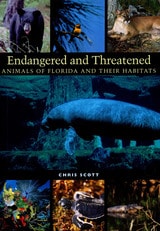
Endangered and Threatened Animals of Florida and Their Habitats
By Chris Scott
University of Texas Press, 2004
A biological crossroads where temperate gives way to tropical and east blends into west, Florida has over twenty-five primary habitat types, several of which are unique to the state. Within these richly varied natural communities lives an astonishing abundance of animals and plants, making Florida one of the United States' most biologically diverse regions. At the same time, sadly, Florida is also one of the country's most ecologically imperiled regions, second only to California in the number of its animals and plants that have been federally designated as endangered or threatened.
This fully illustrated book is a comprehensive, yet convenient and easy-to-understand guide to Florida's endangered and threatened animals and the habitats that support them. Chris Scott covers all 71 species, subspecies, or populations of mammals, birds, reptiles, fish, crustaceans, insects, corals, and mollusks. His species accounts describe each animal's listed status, identifying characteristics, historical and current distribution, biology, current threats, and conservation efforts. To make the crucial link between animals and their habitats, Scott also includes extensive discussions of Florida's natural regions; human impacts on the environment, including habitat destruction, pollution, and the introduction of invasive, nonnative species; and ongoing efforts to conserve and restore native plant and animal communities. With this wealth of information available in no other single volume, everyone who cares about the natural environment can help preserve one of America's biological treasurehouses.

Endlings
Fables for the AnthropoceneLydia Pyne
University of Minnesota Press, 2022
Amid the historical decimation of species around the globe, a new way into the language of loss
An endling is the last known individual of a species; when that individual dies, the species becomes extinct. These “last individuals” are poignant characters in the stories that humans tell themselves about today’s Anthropocene. In this evocative work, Lydia Pyne explores how discussion about endlings—how we tell their histories—draws on deep traditions of storytelling across a variety of narrative types that go well beyond the science of these species’ biology or their evolutionary history.
Endlings provides a useful and thoughtful discussion of species concepts: how species start and how (and why) they end, what it means to be a “charismatic” species, the effects of rewilding, and what makes species extinction different in this era. From Benjamin the thylacine to Celia the ibex to Lonesome George the Galápagos tortoise, endlings, Pyne shows, have the power to shape how we think about grief, mourning, and loss amid the world’s sixth mass extinction.
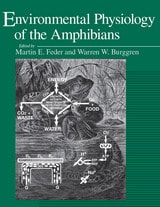
Environmental Physiology of the Amphibians
Edited by Martin E. Feder and Warren W. Burggren
University of Chicago Press, 1992
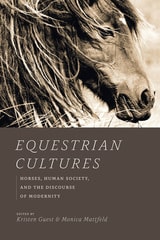
Equestrian Cultures
Horses, Human Society, and the Discourse of ModernityEdited by Kristen Guest and Monica Mattfeld
University of Chicago Press, 2019
Kristen Guest and Monica Mattfeld place the modern period front and center in this collection, illuminating the largely untold story of how the horse has responded to the accelerated pace of modernity. The book’s contributors explore equine cultures across the globe, drawing from numerous interdisciplinary sources to show how horses have unexpectedly influenced such distinctively modern fields as photography, anthropology, and feminist theory. Equestrian Cultures boldly steps forward to redefine our view of the most recent developments in our long history of equine partnership and sets the course for future examinations of this still-strong bond.
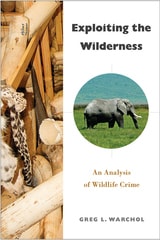
Exploiting the Wilderness
An Analysis of Wildlife CrimeGreg L. Warchol
Temple University Press, 2017
Illegally harvested ivory and endangered plants, mammals, reptiles, birds, and even insects are easily found for sale throughout East and Southern Africa. And this is just one part of the multi-billion-dollar illegal global trade in wildlife.
Wildlife is an important and even vital asset for both intrinsic and economic reasons. Yet it is illegally exploited on a massive scale to the point where some species now risk extinction. Exploiting the Wilderness provides a concise overview of this shameful business, describing some of the main species being exploited and examining select wildlife whose survival is imperiled due to heavy pressure from poachers to meet consumer demand.
Greg Warchol draws on his firsthand experience and research in Africa to examine the structure and operation of the illegal trade in wildlife. He identifies the participants as well as their motivations and operations, and explains the behavior of poachers, traffickers, and consumers of illegally obtained goods. He concludes with a description of legislative and law enforcement efforts to control and prevent wildlife exploitation along with a number of contemporary conservation initiatives designed to improve the ability of rangers to protect wildlife.
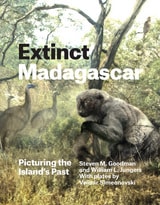
Extinct Madagascar
Picturing the Island's PastSteven M. Goodman and William L. Jungers
University of Chicago Press, 2014
In Extinct Madagascar, noted scientists Steven M. Goodman and William L. Jungers explore the recent past of these land animal extinctions. Beginning with an introduction to the geologic and ecological history of Madagascar that provides context for the evolution, diversification, and, in some cases, rapid decline of the Malagasy fauna, Goodman and Jungers then seek to recapture these extinct mammals in their environs. Aided in their quest by artist Velizar Simeonovski’s beautiful and haunting digital paintings—images of both individual species and ecosystem assemblages reproduced here in full color—Goodman and Jungers reconstruct the lives of these lost animals and trace their relationships to those still living.
Published in conjunction with an exhibition of Simeonovski’s artwork set to open at the Field Museum, Chicago, in the fall of 2014, Goodman and Jungers’s awe-inspiring book will serve not only as a sobering reminder of the very real threat of extinction, but also as a stunning tribute to Madagascar’s biodiversity and a catalyst for further research and conservation.
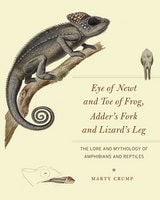
Eye of Newt and Toe of Frog, Adder's Fork and Lizard's Leg
The Lore and Mythology of Amphibians and ReptilesMarty Crump
University of Chicago Press, 2015
Frogs are worshipped for bringing nourishing rains, but blamed for devastating floods. Turtles are admired for their wisdom and longevity, but ridiculed for their sluggish and cowardly behavior. Snakes are respected for their ability to heal and restore life, but despised as symbols of evil. Lizards are revered as beneficent guardian spirits, but feared as the Devil himself.
In this ode to toads and snakes, newts and tuatara, crocodiles and tortoises, herpetologist and science writer Marty Crump explores folklore across the world and throughout time. From creation myths to trickster tales; from associations with fertility and rebirth to fire and rain; and from the use of herps in folk medicines and magic, as food, pets, and gods, to their roles in literature, visual art, music, and dance, Crump reveals both our love and hatred of amphibians and reptiles—and their perceived power. In a world where we keep home terrariums at the same time that we battle invasive cane toads, and where public attitudes often dictate that the cute and cuddly receive conservation priority over the slimy and venomous, she shows how our complex and conflicting perceptions threaten the conservation of these ecologically vital animals.
Sumptuously illustrated, Eye of Newt and Toe of Frog, Adder’s Fork and Lizard’s Leg is a beautiful and enthralling brew of natural history and folklore, sobering science and humor, that leaves us with one irrefutable lesson: love herps. Warts, scales, and all.