Results by title
200 books match the query 'Asian American & Pacific Islander' and 7 start with e
East is West and West is East
Gender, Culture, and Interwar Encounters between Asia and AmericaKaren Kuo
Temple University Press, 2012
Between 1919-1938, contact between Asia and America forced a reassessment of the normative boundaries of race, sex, gender, class, home, and nation. Karen Kuo’s provocative East Is West and West Is East looks closely at these global shifts to modernity.
In her analysis of five forgotten texts—the 1930 film East Is West, Frank Capra’s 1937 version of Lost Horizon and its 1973 remake, Younghill Kang's novel East Goes West, and Baroness Ishimoto’s memoir/manifesto, Facing Both Ways—Kuo elucidates how “Asia” played a role in shaping American gender and racial identities and how Asian authors understood modern America and its social, political, and cultural influence on Asia.
Kuo asserts that while notions of white and Asian racial difference remain salient, sexual and gendered constructions of Asians and whites were at times about similarity and intersections as much as they were about establishing differences.
Economic Citizens
A Narrative of Asian American VisibilityChristine So
Temple University Press, 2009
In the past fifty years, according to Christine So, the narratives of many popular Asian American books have been dominated by economic questions-what money can buy, how money is lost, how money is circulated, and what labor or objects are worth. Focusing on books that have achieved mainstream popularity, Economic Citizens unveils the logic of economic exchange that determined Asian Americans’ transnational migrations and national belonging.
With penetrating insight, So examines literary works that have been successful in the U.S. marketplace but have been read previously by critics largely as narratives of alienation or assimilation, including Fifth Chinese Daughter, Flower Drum Song, Falling Leaves and Turning Japanese. In contrast to other studies that have focused on the marginalization of Asian Americans, Economic Citizens examines how Asian Americans have entered into the public sphere.
Edith and Winnifred Eaton
Chinatown Missions and Japanese RomancesDominika Ferens
University of Illinois Press, 2002
Arguing that Edith as much as Winnifred constructed her persona along with her pen name, Ferens considers the fiction of both Eaton sisters as ethnography. Edith and Winnifred Eaton suggests that both authors wrote through the filter of contemporary ethnographic discourse on the Far East and also wrote for readers hungry for "authentic" insight into the morals, manners, and mentality of an exotic other.
Ferens traces two distinct discursive traditions–-missionary and travel writing–-that shaped the meanings of "China" and "Japan" in the nineteenth century. She shows how these traditions intersected with the unconventional literary careers of the Eaton sisters, informing the sober, moralistic tone of Edith's stories as well as Winnifred's exotic narrative style, plots, settings, and characterizations.
Bringing to the Eatons' writings a contemporary understanding of the racial and textual politics of ethnographic writing, this important account shows how these two very different writers claimed ethnographic authority, how they used that authority to explore ideas of difference, race, class and gender, and how their depictions of nonwhites worked to disrupt the process of whites' self-definition.
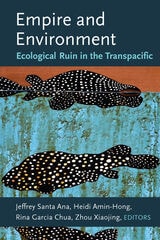
Empire and Environment
Ecological Ruin in the TranspacificJeffrey Santa Ana, Heidi Amin-Hong, Rina Garcia Chua, Zhou Xiaojing, Editors
University of Michigan Press, 2022
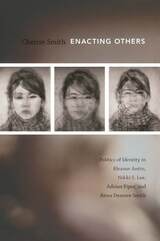
Enacting Others
Politics of Identity in Eleanor Antin, Nikki S. Lee, Adrian Piper, and Anna Deavere SmithCherise Smith
Duke University Press, 2011
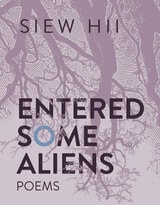
Entered Some Aliens
Siew Hii
University of Wisconsin Press, 2026
“There is no version of this wherein I am given the time machine and do not destroy it,” writes Siew Hii in this wide-ranging collection that offers a poet’s perspective on what it means to be a queer Asian American in the American South. Exuding wit and profound insight, Hii’s is a voice that can elicit both laughter and sober reflection within the space of a few lines. In an explosion of different styles and formats, she delivers precise, cutting observations about self, family, and strangers.
From taking aim at Hollywood’s representations of identity, to exploring the meaning and dynamics of family, to describing her adopted home of Florida through a set of formally explosive poems, Hii makes sense of an unjust and absurd world, all the while exhibiting genuine curiosity and humor. Entered Some Aliens offers rare and powerful insight into feeling out of place and out of time.

Everyone I Love, Alive
Jason Bayani
Omnidawn, 2025
With this collection of poems, Jason Bayani leans into traditions of lyric, song, and prayer to cultivate life while existing within a time of empire and societal collapse. Everyone I Love, Alive wrestles with form to summon both the living and the dead. Bayani’s rich language calls us to experience a connection to cultural heritage and, even during times of oppression, to find the compassion and awareness needed to drive change. These poems show how not only our love and desires—but also our rage and resistance—can be the very things that keep us alive.