Results by title
55 books match the query 'Biomedical' and 8 start with e
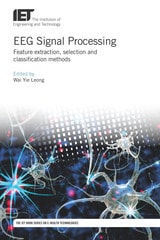
EEG Signal Processing
Feature extraction, selection and classification methodsWai Yie Leong
The Institution of Engineering and Technology, 2019
Electroencephalography (EEG) is an electrophysiological monitoring method used to record the brain activity in brain-computer interface (BCI) systems. It records the electrical activity of the brain, is typically non-invasive with electrodes placed along the scalp, requires relatively simple and inexpensive equipment, and is easier to use than other methods.
[more]
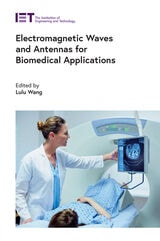
Electromagnetic Waves and Antennas for Biomedical Applications
Lulu Wang
The Institution of Engineering and Technology, 2022
Electromagnetic waves have long been used in medical settings for diagnostic purposes, such as for the detection of cancerous tissues, stroke events or cardiovascular risk, as the behaviour of the waves upon meeting their target gives pertinent information for diagnostic and imaging purposes.
[more]

Energy Harvesting Solutions for Implantable Medical Devices
Design, integration, and application of self-powered biomedical implantsJinwei Zhao
The Institution of Engineering and Technology, 2025
Implantable devices are becoming more prevalent in the monitoring and treatment of patients with chronic diseases such as heart failure, diabetes and cancer. Conventional implantable devices are battery-powered, but these batteries can suffer from a short lifespan, bulky size, or leakage hazards. Energy harvesting technologies are therefore emerging as an alternative to battery-powered devices.
[more]
Engineering High Quality Medical Software
Regulations, standards, methodologies and tools for certificationAntonio Coronato
The Institution of Engineering and Technology, 2018
No longer confined to medical devices, medical software has become a pervasive technology giving healthcare operators access to clinical information stored in electronic health records and clinical decision support systems, supporting robot-assisted telesurgery, and providing the technology behind ambient assisted living. These systems and software must be designed, built and maintained according to strict regulations and standards to ensure that they are safe, reliable and secure.
[more]
Enhanced Living Environments
From models to technologiesRossitza Ivanova Goleva
The Institution of Engineering and Technology, 2018
Enhanced living environments employ information and communications technologies to support true ambient assisted living for adults and people with disabilities. This book provides an overview of today's architectures, techniques, protocols, components, and cloud-based solutions related to ambient assisted living and enhanced living environments. Topics covered include: an introduction to enhanced living environments; pervasive sensing for social connectedness; ethics in information and communication technologies; service scenarios in smart personal environments; technological support to stress level monitoring; big data systems to improve healthcare information searching over the Internet; sensors for wireless body area networks; linear wireless sensor networks and protocols in next generation networks; model-compilation challenges for cyber-physical systems; health monitoring using wireless body area networks; wearable health care; and intelligent systems for after-stroke home rehabilitation.
[more]
Evolving Predictive Analytics in Healthcare
New AI techniques for real-time interventionsAbhishek Kumar
The Institution of Engineering and Technology, 2022
A major use of practical predictive analytics in medicine has been in the diagnosis of current diseases, particularly through medical imaging. Now there is sufficient improvement in AI, IoT and data analytics to deal with real time problems with an increased focus on early prediction using machine learning and deep learning algorithms. With the power of artificial intelligence alongside the internet of 'medical' things, these algorithms can input the characteristics/data of their patients and get predictions of future diagnoses, classifications, treatment and costs.
[more]

Explainable Artificial Intelligence in Medical Decision Support Systems
Agbotiname Lucky Imoize
The Institution of Engineering and Technology, 2022
Medical decision support systems (MDSS) are computer-based programs that analyse data within a patient's healthcare records to provide questions, prompts, or reminders to assist clinicians at the point of care. Inputting a patient's data, symptoms, or current treatment regimens into an MDSS, clinicians are assisted with the identification or elimination of the most likely potential medical causes, which can enable faster discovery of a set of appropriate diagnoses or treatment plans. Explainable AI (XAI) is a "white box" model of artificial intelligence in which the results of the solution can be understood by the users, who can see an estimate of the weighted importance of each feature on the model's predictions, and understand how the different features interact to arrive at a specific decision.
[more]

Exploring Intelligent Healthcare with Quantum Computing
Abhishek Kumar
The Institution of Engineering and Technology, 2024
Classical computers encode information in binary bits that can either be 0s or 1s. In a quantum computer, the basic unit of memory is a quantum bit or qubit. These qubits play a similar role in terms of storing information, but use physical systems, such as the spin of an electron or the orientation of a photon, to do so. In situations where there are a large number of possible feature combinations, quantum computers can consider them simultaneously, speeding up the data processing time.
[more]