211 books match the query 'Blacks' and 7 start with e
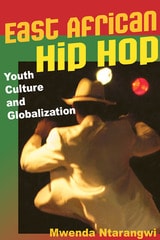
cover of East African Hip Hop: Youth Culture and Globalization

East African Hip Hop

Youth Culture and Globalization

Mwenda Ntarangwi

University of Illinois Press, 2008

In this book, Mwenda Ntarangwi analyzes how young hip hop artists in the East African nations of Kenya, Uganda, and Tanzania showcase the opportunities and challenges brought by the globalization of music. Combining local popular music traditions with American and Jamaican styles of rap, East African hip hop culture reflects the difficulty of creating commercially accessible music while honoring tradition and East African culture. Ntarangwi pays special attention to growing cross-border exchanges within East African hip hop, collaborations in recording music and performances, and themes and messages that transcend local geographic boundaries.

In using hip hop as a medium for discussing changes in East African political, economic, and social conditions, artists vocalize their concerns about economic policies, African identity, and political establishments, as well as important issues of health (such as HIV/AIDS), education, and poverty. Through three years of fieldwork, rich interviews with artists, and analysis of live performances and more than 140 songs, Ntarangwi finds that hip hop provides youth an important platform for social commentary and cultural critique and calls attention to the liberating youth music culture in East Africa.
[more]
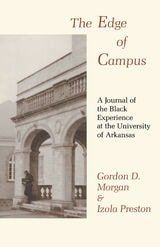
cover of Edge of Campus: A Journal of the Black Experience at the University of Arkansas

Edge of Campus

A Journal of the Black Experience at the University of Arkansas

Gordon Morgan

University of Arkansas Press, 1990
Written by the first black faculty member employed at the University and his wife, a longtime research assistant, this book chronicles the setbacks and triumphs in their attempts to bring true integration to the University of Arkansas.
[more]
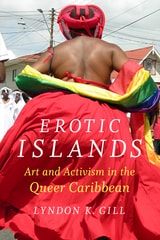
cover of Erotic Islands: Art and Activism in the Queer Caribbean

Erotic Islands

Art and Activism in the Queer Caribbean

Lyndon K. Gill

Duke University Press, 2018
In Erotic Islands, Lyndon K. Gill maps a long queer presence at a crossroads of the Caribbean. This transdisciplinary book foregrounds the queer histories of Carnival, calypso, and HIV/AIDS in the Republic of Trinidad and Tobago. At its heart is an extension of Audre Lorde's use of the erotic as theory and methodology. Gill turns to lesbian/gay artistry and activism to insist on eros as an intertwined political-sensual-spiritual lens through which to see self and society more clearly. This analysis juxtaposes revered musician Calypso Rose, renowned mas man Peter Minshall, and resilient HIV/AIDS organization Friends For Life. Erotic Islands traverses black studies, queer studies, and anthropology toward an emergent black queer diaspora studies.
[more]
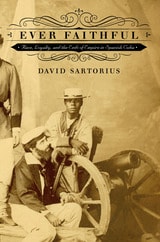
cover of Ever Faithful: Race, Loyalty, and the Ends of Empire in Spanish Cuba

Ever Faithful

Race, Loyalty, and the Ends of Empire in Spanish Cuba

David Sartorius

Duke University Press, 2013

Known for much of the nineteenth century as "the ever-faithful isle," Cuba did not earn its independence from Spain until 1898, long after most American colonies had achieved emancipation from European rule. In this groundbreaking history, David Sartorius explores the relationship between political allegiance and race in nineteenth-century Cuba. Challenging assumptions that loyalty to the Spanish empire was the exclusive province of the white Cuban elite, he examines the free and enslaved people of African descent who actively supported colonialism. By claiming loyalty, many black and mulatto Cubans attained some degree of social mobility, legal freedom, and political inclusion in a world where hierarchy and inequality were the fundamental lineaments of colonial subjectivity. Sartorius explores Cuba's battlefields, plantations, and meeting halls to consider the goals and limits of loyalty. In the process, he makes a bold call for fresh perspectives on imperial ideologies of race and on the rich political history of the African diaspora.
 
[more]
cover of Evidence of Things Not Seen: Fantastical Blackness in Genre Fictions

Evidence of Things Not Seen

Fantastical Blackness in Genre Fictions

Rhonda D. Frederick

Rutgers University Press, 2022
Evidence of Things Not Seen: Fantastical Blackness in Genre Fictions is an interdisciplinary study of blackness in genre literature of the Americas. The “fantastical” in fantastical blackness is conceived by an unrestrained imagination because it lives, despite every attempt at annihilation. This blackness amazes because it refuses the limits of anti-blackness. As put to work in this project, fantastical blackness is an ethical praxis that centers black self-knowledge as a point of departure rather than as a reaction to threatening or diminishing dominant narratives. Mystery, romance, fantasy, mixed-genre, and science fictions’ unrestrained imaginings profoundly communicate this quality of blackness, specifically here through the work of Barbara Neely, Colson Whitehead, Nalo Hopkinson, and Colin Channer. When black writers center this expressive quality, they make fantastical blackness available to a broad audience that then uses its imaginable vocabularies to reshape extra-literary realities. Ultimately, popular genres’ imaginable possibilities offer strategies through which the made up can be made real.

 
[more]
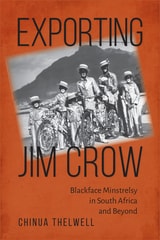
cover of Exporting Jim Crow: Blackface Minstrelsy in South Africa and Beyond

Exporting Jim Crow

Blackface Minstrelsy in South Africa and Beyond

Chinua Thelwell

University of Massachusetts Press, 2020

Following the pathways of imperial commerce, blackface minstrel troupes began to cross the globe in the mid-nineteenth century, popularizing American racial ideologies as they traveled from Britain to its colonies in the Pacific, Asia, and Oceania, finally landing in South Africa during the 1860s and 1870s. The first popular culture export of the United States, minstrel shows frequently portrayed black characters as noncitizens who were unfit for democratic participation and contributed to the construction of a global color line.

Chinua Thelwell brings blackface minstrelsy and performance culture into the discussion of apartheid's nineteenth-century origins and afterlife, employing a broad archive of South African newspapers and magazines, memoirs, minstrel songs and sketches, diaries, and interview transcripts. Exporting Jim Crow highlights blackface minstrelsy's cultural and social impact as it became a dominant form of entertainment, moving from its initial appearances on music hall stages to its troubling twentieth-century resurgence on movie screens and at public events. This carefully researched and highly original study demonstrates that the performance of race in South Africa was inherently political, contributing to racism and shoring up white racial identity.
[more]
cover of Ezili's Mirrors: Imagining Black Queer Genders

Ezili's Mirrors

Imagining Black Queer Genders

Omise'eke Natasha Tinsley

Duke University Press, 2018

From the dagger mistress Ezili Je Wouj and the gender-bending mermaid Lasiren to the beautiful femme queen Ezili Freda, the Ezili pantheon of Vodoun spirits represents the divine forces of love, sexuality, prosperity, pleasure, maternity, creativity, and fertility. And just as Ezili appears in different guises and characters, so too does Omise’eke Natasha Tinsley in her voice- and genre-shifting, exploratory book Ezili's Mirrors. Drawing on her background as a literary critic as well as her quest to learn the lessons of her spiritual ancestors, Tinsley theorizes black Atlantic sexuality by tracing how contemporary queer Caribbean and African American writers and performers evoke Ezili. Tinsley shows how Ezili is manifest in the work and personal lives of singers Whitney Houston and Azealia Banks, novelists Nalo Hopkinson and Ana Lara, performers MilDred Gerestant and Sharon Bridgforth, and filmmakers Anne Lescot and Laurence Magloire—none of whom identify as Vodou practitioners. In so doing, Tinsley offers a model of queer black feminist theory that creates new possibilities for decolonizing queer studies.
[more]