501 books match the query 'Catholic Church' and 16 start with e
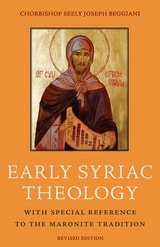
cover of Early Syriac Theology

Early Syriac Theology

Chorbishop Seely Joseph Beggiani

Catholic University of America Press, 2014
Presents the insights of St. Ephrem and Jacob of Serugh, two of the earliest representatives of the theological world-view of the Syriac church.
[more]
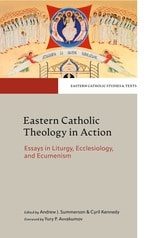
cover of Eastern Catholic Theology in Action: Essays in Liturgy, Ecclesiology, and Ecumenism

Eastern Catholic Theology in Action

Essays in Liturgy, Ecclesiology, and Ecumenism

Andrew J. Summerson

Catholic University of America Press, 2024
The Second Vatican Council urged Eastern Catholics to cultivate their share of divine revelation for the benefit of the entire Catholic Church. Yet, more than 50 years later, the Eastern Catholic Churches frequently remain on the margins, both in the theological academy and in the life of the Church more broadly. In an effort to remedy this situation, at least in part, this volume offers a scholarly reflection on the unique patrimony of the Eastern Catholic Churches, divided according to the categories of Liturgy, Theology, Spirituality, Discipline, and Culture. In so doing, it both follows the categories used to define a Church sui iuris in the Code of Canon Law for the Eastern Churches, and builds on the legacy of the Rev. Peter Galadza, to whom the volume is dedicated. On one hand, the volume and its essays are intentionally introductory, revealing the worlds of Eastern Catholicism and the variety of theological approaches that take place there. Emerging in part from the experience of teaching and preaching by scholars of Eastern Christianity, who are frequently asked for a basic introduction to Eastern Catholic theology, and have little to offer in response, these essays gather an international group of scholars engaging in critical, theological reflection from an Eastern Catholic perspective. This approach is rounded out by contributions from Roman Catholic, Orthodox, and Protestant scholars, who articulate their own reception and appreciation of the Eastern Catholic theological heritage.  At the same time, however, several of the essays in this volume relate the history and current reality of Eastern Catholicism to the Orthodox and Roman Catholic Churches, yet without ignoring how frequently Eastern Catholics live, worship, and theologize without self-conscious regard for their unique ecclesial situation. Indeed, these authors show, Eastern Catholic theology can be unself-consciously grounded in the patristic tradition, and Eastern Catholics can simply “do” theology, without worrying about ecclesial politics. Readers will thus find here the best of both worlds: both an introduction to the unique and frequently ignored patrimony of the Eastern Catholic Churches, and a series of essays that avoids the all-to-common pitfall of reducing these traditions to a parody of other Churches, Eastern or Western. Instead, by engaging with the sources of the Christian tradition – as Eastern Catholics, yes, but first and foremost as Christians – the authors reveal how much their tradition can offer the Catholic Church as a whole.
[more]
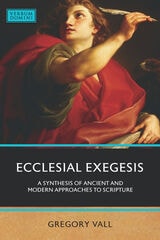
cover of Ecclesial Exegesis: A Synthesis of Ancient and Modern Approaches to Scripture

Ecclesial Exegesis

A Synthesis of Ancient and Modern Approaches to Scripture

Gregory Vall

Catholic University of America Press, 2022
There is broad support today for the idea that biblical scholarship ought to be informed by the faith of the Church and serve the life of the Church. In a word, it should be ecclesial. There is far less agreement, however, when one asks how this goal is to be achieved and what ecclesial exegesis ought to look like. In 1988, Joseph Ratzinger put forth his “Method C” proposal, calling for the development of a new exegetical and hermeneutical synthesis. This would be neither a retreat to the patristic-medieval approach (Method A) nor the continued hegemony of the historical-critical approach (Method B). The latter must be purified of its positivism through a transformational encounter with the former, so that the gifts of both might be released for the life of the Church. Such a synthesis, Ratzinger claimed, would require the philosophical, theological, exegetical, and hermeneutical work of “at least a whole generation” of scholars. Gregory Vall has devoted over thirty years to the development of ecclesial exegesis, and the present volume represents the mature fruit of his labor. Over against those who treat Dei Verbum as Vatican II’s endorsement of the historical-critical method, he demonstrates that the dogmatic constitution actually points to something very much like Ratzinger’s Method C. Employing a dialogic movement between the inductive-exegetical and the deductive-dogmatic, Vall offers nine studies that bring to the surface issues such as the relationship between Old Testament and New Testament, literal sense and spiritual sense, and Scripture and Tradition. While Vall brings theological knowledge and hermeneutical skill to the quest for Method C, he also provides a great deal of valuable exegesis of both testaments. Ecclesial Exegesis is not simply another book of theory. It demonstrates how Method C can be done.
[more]
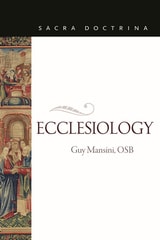
cover of Ecclesiology

Ecclesiology

Guy Mansini, OSB

Catholic University of America Press, 2021
The first part of the book explains the antecedent probability both of revelation and of God’s institution of a church. It is ecclesiology in the mode of fundamental theology. The second part rounds up what Scripture and Tradition teach about the Church under the heads of the People of God, the Temple of the Holy Spirit, the Bride of Christ, and the Body of Christ. The chapters present this thematic material under each head as a unified whole, across the Testaments, with each chapter keyed to one of the “marks” of the Church: the catholicity of the people of God, the apostolicity of the ministers of the messianic temple, the holiness of the Bride of Christ, and the unity of the Body of Christ. This already organizes things in a proto-systematic frame. The third part of the book gives systematic exploration, in reverse order, to the unity of the Church, with attention to non-Catholic ecclesial communities and churches, to the holiness of the Church, objective and subjective, to the apostolicity of the Church and her mediation of revealed truth and grace, and to the catholicity of the Church, with attention to non-Christian religions. The center of the book, on the definition of the Church as the sacrament of communion, renders recent French Dominican ecclesiology in a form more accessible to undergraduates and seminarians, rooting it in the New Testament teachings on communion and mysterion. The book concludes with a strenuous argument for the necessity of the Church and her mission of evangelization. Thus, the trajectory of the book is from the naturally knowable antecedent probability of the Church to its revealed necessity.
[more]
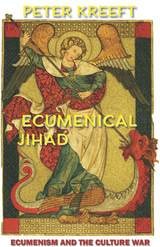
cover of Ecumenical Jihad: Ecumenism and the Culture War

Ecumenical Jihad

Ecumenism and the Culture War

Peter Kreeft

St. Augustine's Press, 2015

Juxtaposing “ecumenism” and “jihad,” two words that many would consider strange and at odds with one another, Peter Kreeft argues that we need to change our current categories and alignments. We need to realize that we are at war and that the sides have changed radically. Documenting the spiritual and moral decay that has taken hold of modern society, Kreeft issues a wake-up call to all God-fearing Christians, Jews, and Muslims to unite together in a “religious war” against the common enemy of godless secular humanism, materialism, and immorality.

Aware of the deep theological differences of these monotheistic faiths, Kreeft calls for a moratorium on our polemics against one another so that we can form an alliance to fight together to save Western civilization.
[more]
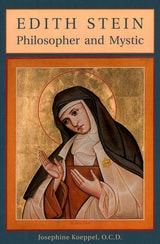
cover of Edith Stein: Philosopher and Mystic

Edith Stein

Philosopher and Mystic

Josephine Koeppel O.C.D.

University of Scranton Press, 2007

The twentieth anniversary of the beatification of Edith Stein (1891–1942), the accomplished Jewish philosopher who made a spiritual journey from atheism to agnosticism before eventually converting to Catholicism, will be celebrated in 2007. In Edith Stein: Philosopher and Mystic, Josephine Koeppel chronicles the life of this influential saint from her secular youth and entrance into a German monastery to her tragic death at Auschwitz. This accessible work will reward readers of all faiths interested in the life of a remarkable woman who changed the modern conception of sainthood.
 

[more]
cover of Embracing Age: How Catholic Nuns Became Models of Aging Well

Embracing Age

How Catholic Nuns Became Models of Aging Well

Anna I. Corwin

Rutgers University Press, 2021

Embracing Age: How Catholic Nuns Became Models of Aging Well examines a community of individuals whose aging trajectories contrast mainstream American experiences. In mainstream American society, aging is presented as a “problem,” a state to be avoided as long as possible, a state that threatens one’s ability to maintain independence, autonomy, control over one’s surroundings. Aging “well” (or avoiding aging) has become a twenty-first century American preoccupation. Embracing Age provides a window into the everyday lives of American Catholic nuns who experience longevity and remarkable health and well-being at the end of life. Catholic nuns aren’t only healthier in older age, they are healthier because they practice a culture of acceptance and grace around aging. Embracing Age demonstrates how aging in the convent becomes understood by the nuns to be a natural part of the life course, not one to be feared or avoided. Anna I. Corwin shows readers how Catholic nuns create a cultural community that provides a model for how to grow old, decline, and die that is both embedded in American culture and quite distinct from other American models.

Instructor's Guide is available at no cost (https://www.rutgersuniversitypress.org/media/wysiwyg/documents/corwin_instructor_guide_final.pdf).

Open access edition funded by the National Endowment for the Humanities.

The text of this book is licensed under a Creative Commons Attribution NonCommercial-NoDerivatives 4.0 International License: https://creativecommons.org/licenses/by-nc-nd/4.0/ 

Download open access ebook here (https://www.rutgersuniversitypress.org/media/wysiwyg/documents/embracing_age_open_access.pdf).
 

[more]
cover of Epistle to Marguerite de Navarre and Preface to a Sermon by John Calvin

Epistle to Marguerite de Navarre and Preface to a Sermon by John Calvin

Marie Dentière

University of Chicago Press, 2004

Born to a noble family in Tournai, Marie Dentière (1495-1561) left her convent in the 1520s to work for religious reform. She married a former priest and with her husband went to Switzerland, where she was active in the Reformation's takeover of Geneva.

Dentière's Very Useful Epistle (1539) is the first explicit statement of reformed theology by a woman to appear in French. Addressed to Queen Marguerite of Navarre, sister of the French king Francis I, the Epistle asks the queen to help those persecuted for their religious beliefs. Dentière offers a stirring defense of women and asserts their right to teach the word of God in public. She defends John Calvin against his enemies and attacks the hierarchy of the Roman Catholic Church. Her Preface (1561) to one of Calvin's sermons criticizes immodesty and extravagance in clothing and warns the faithful to be vigilant. Undaunted in the face of suppression and ridicule, this outspoken woman persisted as an active voice in the Reformation.
[more]
cover of Erasmus's Life of Origen

Erasmus's Life of Origen

Thomas P. Scheck

Catholic University of America Press, 2016
Erasmus of Rotterdam (1466-1536) hailed Origen of Alexandria (185-254) as a holy priest, a gifted homilist, a heroic Christian, and a celebrated exegete and theologian of the ancient Church. In this book Thomas Scheck presents one of the fruits of Erasmus's endeavors in the field of patristic studies (a particularly neglected field of scholarship within Erasmus studies) by providing the first English translation, annotated and thoroughly introduced, of Erasmus' final work, the Prefaces to his Edition of Origen's writings (1536). Originally published posthumously two months after Erasmus's death, the work surveys Origen of Alexandria's life, writings, preaching, and contribution to the Catholic Church. The staggering depth and breadth of Erasmus's learning are exhibited here, as well as the maturity of his theological reflections, which in many ways anticipate the irenicism of the Second Vatican Council with respect to Origen. Erasmus presents Origen as a marvelous doctor of the ancient Church who made a tremendous contribution to the Catholic exegetical tradition and who lived a saintly life.
[more]
cover of Eschatology: Death and the Eternal Life (Second Edition)

Eschatology

Death and the Eternal Life (Second Edition)

Joseph Ratzinger

Catholic University of America Press, 2007
Originally published in English in 1988, Joseph Ratzinger's Eschatology remains internationally recognized as a leading text on the "last things"—heaven and hell, purgatory and judgment, death and the immortality of the soul. This highly anticipated second edition includes a new preface by Joseph Ratzinger/Pope Benedict XVI and a supplement to the bibliography by theologian Peter A. Casarella. Eschatology presents a balanced perspective of the doctrine at the center of Christian belief—the Church's faith in eternal life. Recognizing the task of contemporary eschatology as "to marry perspectives, so that person and community, present and future, are seen in their unity," Joseph Ratzinger brings together recent emphasis on the theology of hope for the future with the more traditional elements of the doctrine. His book has proven to be as timeless as it is timely.

[more]
cover of Espana Pontifica: Papal Letters to Spain 1198-1303

Espana Pontifica

Papal Letters to Spain 1198-1303

Peter Linehan

Catholic University of America Press, 2022
Peter Linehan (+2020) followed his survey of original papal letters in Portugal, Portugalia pontifica 1198-1417 (2013) with the present volume, España Pontifica, that covers papal letters to Spanish recipients from Pope Innocent II (1198-1216) to Pope Boniface VIII (+1303). This volume will provide students of the medieval papacy and the Spanish church with an invaluable research tool to explore the relationship between Rome and Spain during the crucial period of the Spanish Reconquistà after the battles of Navas de Tolosa (1212) to the capture of Seville (1248). Linehan spent his career cataloguing papal letters from more than sixty Spanish repositories. For the past sixty years the Vatican has also been engaged in publishing surveys of original papal letters preserved from various European archives. However, this volume includes material that has not been included in these surveys.
[more]
cover of Eternal Life and Human Happiness in Heaven: Philosophical Problems, Thomistic Solutions

Eternal Life and Human Happiness in Heaven

Philosophical Problems, Thomistic Solutions

Christopher M. Brown

Catholic University of America Press, 2021
Eternal Life and Human Happiness in Heaven treats four apparent problems concerning eternal life in order to clarify our thinking about perfect human happiness in heaven. The teachings of St. Thomas Aquinas provide the basis for solutions to these four problems about eternal life insofar as his teachings call into question common contemporary theological or philosophical presuppositions about God, human persons, and the nature of heaven itself. Indeed, these Thomistic solutions often require us to think very differently from our contemporaries. But thinking differently with St. Thomas is worth it: for the Thomistic solutions to these apparent problems are more satisfying, on both theological and philosophical grounds, than a number of contemporary theological and philosophical approaches. Christopher Brown deploys his argument in four sections. The first section lays out, in three chapters, four apparent problems concerning eternal life—Is heaven a mystical or social reality? Is heaven other-worldly or this-worldly? Is heaven static or dynamic? Won’t human persons eventually get bored in heaven? Brown then explains how and why some important contemporary Christian theologians and philosophers resolve these problems, and notes serious problems with each of these contemporary solutions. The second section explains, in five chapters, St. Thomas’ significant distinction between the essential reward of the saints in heaven and the accidental reward, and treats in detail his account of that in which the essential reward consists, namely, the beatific vision and the proper accidents of the vision (delight, joy, and charity). The third section treats, in five chapters, St. Thomas’ views on the multifaceted accidental reward in heaven, where the accidental reward includes, among other things, glorified human embodiment, participation in the communion of the saints, and the joy experienced by the saints in sensing God’s “new heavens and new earth.” Finally, section four argues, in four chapters, that St. Thomas’ views allow for powerful solutions to the four apparent problems about eternal life examined in the first section. These solutions are powerful because, not only are they consistent with authoritative, Catholic Christian Tradition, but they do not raise any of the significant theological or philosophical problems that attend the contemporary theological and philosophical solutions examined in the first section.
[more]
cover of Eternal Sovereigns: Indigenous Artists, Activists, and Travelers Reframing Rome

Eternal Sovereigns

Indigenous Artists, Activists, and Travelers Reframing Rome

Gloria Jane Bell

Duke University Press, 2024
In 1925, Pius XI staged the Vatican Missionary Exposition in Rome’s Vatican City. Offering a narrative of the Catholic Church’s beneficence to a global congregation, the exposition displayed thousands of cultural belongings stolen from Indigenous communities, which were seen by one million pilgrims. Gloria Jane Bell’s Eternal Sovereigns offers critical revision to that story. Bell reveals the tenacity, mobility, and reception of Indigenous artists, travelers, and activists in 1920s Rome. Animating these conjunctures, the book foregrounds competing claims to sovereignty from Indigenous and papal perspectives. Bell deftly juxtaposes the “Indian Museum” of nineteenth-century sculptor Ferdinand Pettrich, acquired by the Vatican, with the oeuvre of Indigenous artist Edmonia Lewis. Focusing on Turtle Island, Bell analyzes Indigenous cultural belongings made by artists from nations including Cree, Lakota, Anishinaabe, Nipissing, Kanien’kehá:ka, Wolastoqiyik, and Kwakwaka’wakw. Drawing on years of archival research and field interviews, Bell provides insight into the Catholic Church’s colonial collecting and its ongoing ethnological display practices. Written in a voice that questions the academy’s staid conventions, the book reclaims Indigenous belongings and other stolen treasures that remain imprisoned in the stronghold of the Vatican Museums.
[more]
cover of Ethics of Procreation and the Defense of Human Life: Contraception, Artficial Fertilization, and Abortion

Ethics of Procreation and the Defense of Human Life

Contraception, Artficial Fertilization, and Abortion

Martin Rhonheimer

Catholic University of America Press, 2010

Building on the renewal of Thomistic ethics encouraged by key moral encyclicals including Humanae Vitae, Veritatis Splendor, and Evangelium Vitae, Swiss philosopher Martin Rhonheimer revisits some of the most difficult questions regarding the ethics of procreation and human life.
[more]
cover of Eucharistic Presence: A Study in the Theology of Disclosure

Eucharistic Presence

A Study in the Theology of Disclosure

Robert Sokolowski

Catholic University of America Press, 1994
[more]
cover of Every Catholic An Apostle: A Life of Thomas A. Judge, CM, 1868-1933

Every Catholic An Apostle

A Life of Thomas A. Judge, CM, 1868-1933

William L. Portier

Catholic University of America Press, 2017

Born in Boston of immigrant parents, Thomas A. Judge, CM (1868-1933) preached up and down the east coast on the Vincentian mission band between 1903 and 1915. Disturbed by the “leakage” of the immigrant poor from the church, he enlisted and organized lay women he met on the missions to work for the “preservation of the faith,” his watchword. His work grew apace with, and in some ways anticipated, the growing body of papal teaching on the lay apostolate. When he became superior of the godforsaken Vincentian Alabama mission in 1915, he invited the lay apostles to come south to help. “This is the layman’s hour,” he wrote in 1919. By then, however, many of his lay apostles had evolved in the direction of vowed communal life. This pioneer of the lay apostle founded two religious communities, one of women and one of men. With the indispensable help of his co-founder, Mother Boniface Keasey, he spent the last decade of his life trying to gain canonical approval for these groups, organizing them, and helping them learn “to train the work-a-day man and woman into an apostle, to cause each to be alert to the interests of the Church, to be the Church.” The roaring twenties saw the work expanded beyond the Alabama missions as far as Puerto Rico, which Judge viewed as a gateway to Latin America. The Great Depression ended this expansive mood and time and put agonizing pressure on Judge, his disciples, and their work. In 1932, the year before Judge’s death, the apostolic delegate, upon being appraised of Judge’s financial straits, described his work as “the only organized movement of its kind in the Church today that so completely meets the wishes of the Holy Father with reference to the Lay Apostolate.”
[more]