Results by title
662 books match the query 'China' and 18 start with e
Early Communist China
Two StudiesRonald Suleski and Daniel Bays
University of Michigan Press, 1969
Early Film Culture in Hong Kong, Taiwan, and Republican China
Kaleidoscopic HistoriesEmilie Yueh-yu Yeh, Editor
University of Michigan Press, 2018
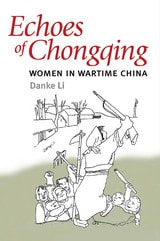
Echoes of Chongqing
Women in Wartime ChinaDanke Li
University of Illinois Press, 2010
This collection of annotated oral histories records the personal stories of twenty Chinese women who lived in the wartime capital of Chongqing during China's War of Resistance against Japan during World War II. By presenting women's remembrances of the war, this study examines the interplay between oral history and traditional historical narrative, public discourse, and private memories. The women interviewed came from differing social, economic, and educational backgrounds and experienced the war in a variety of ways, some of them active in the communist resistance and others trying to support families or pursue educations in the face of wartime upheaval. Their stories demonstrate that the War of Resistance had two faces: one presented by official propaganda and characterized by an upbeat unified front against Japan, the other a record of invisible private stories and a sobering national experience of death and suffering. The accounts of how women coped, worked, and lived during the war years in the Chongqing region recast historical understanding of the roles played by ordinary people in wartime and give women a public voice and face that, until now, have been missing from scholarship on the war.
Ecologies of Comparison
An Ethnography of Endangerment in Hong KongTim Choy
Duke University Press, 2011

Economic Reform in China
Problems and ProspectsJames A. Dorn and Wang Xi
University of Chicago Press, 1990
These clearly written and insightful essays address the roots of China's crisis. The authors focus on institutional changes necessary for a spontaneous market order and point to the close relation between economic reform and political-constitutional reform. Topics include the speed and degree of the transition, whether ownership reform must precede price reform, how inflation can be avoided, steps to depoliticize economic life, how to create an environment conducive to foreign trade and investment, and how to institute basic constitutional change and open China to the outside world.
The revolutionary changes now shaking the foundations of socialism and central planning in the Soviet Union and Eastern and Central Europe are sure to have an impact on China's future. Despite their seriousness, the events of Tiananmen Square may constitute only a temporary detour on the road toward a private market order. The essays in this volume help lay a rational framework for understanding China's present problems and for discussing the prospects for future reform.
Educated Youth and the Cultural Revolution in China
Martin Singer
University of Michigan Press, 1971

Education, Culture, and Identity in Twentieth-Century China
Glen Peterson, Ruth Hayhoe, and Yongling Lu, Editors
University of Michigan Press, 2001
Unlike most studies of modern Chinese education that focus exclusively on the post-1949 era, Education, Culture, and Identity in Twentieth-Century China represents a deliberate attempt to break through the 1949 barrier and embrace the entire century. Culture emerges in this study as a deeper level factor that underlay the development of education in each period and shaped certain recurrent patterns, while identity involves a search for individual and collective meaning that went on under different regimes.
The product of a genuinely multidisciplinary effort to promote cross-fertilization among an international team of scholars in a wide range of disciplines, Education, Culture, and Identity in Twentieth-Century China will interest students and scholars of modern China, comparative and international education, educational policy, and international relations. It will also appeal to policy makers and professionals associated with international organizations.
Glen Peterson is Associate Professor of History, University of British Columbia. Ruth Hayhoe is Director, Hong Kong Institute of Education. Yongling Lu is a graduate student in the History Department, Stanford University.
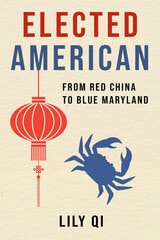
Elected American
From Red China to Blue MarylandLily Qi
Temple University Press, 2026
“Only in America can you run for office and get elected by people who can’t even pronounce your name.”—Lily Qi
Thirty years after her solo journey to America, Chinese-born Lily Qi became a Maryland state delegate. It was a gratifying moment she did not take for granted. Qi had overcome a viral WeChat disinformation campaign from her Chinese community and was met with skepticism from the Democratic establishment before being elected.
Elected American tells the inspirational story of Qi’s dreams, setbacks, and achievements with candor and humility. Growing up in Mao’s Shanghai, when “politics meant danger,” she never imagined running for public office. However, living in America, Qi came to see political participation as a missed opportunity for immigrants. As she campaigned to energize her cultural base, Qi realized she had to teach first-time voters how to make their votes count in a system not designed for them.
As the only U.S. state legislator who lived through China’s Cultural Revolution, Qi brings a rare cross-system perspective to American politics and modern-day Asian American identity. Elected American is a political memoir and an immigrant story that emphasizes that democracy doesn’t wait on the sidelines—it favors those who participate.
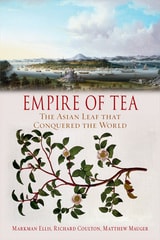
Empire of Tea
The Asian Leaf that Conquered the WorldMarkman Ellis, Richard Coulton, and Matthew Mauger
Reaktion Books, 2015
This impressively detailed book offers a rich cultural history of tea, from its ancient origins in China to its spread around the world. The authors recount tea’s arrival in London and follow its increasing salability and import via the East India Company throughout the eighteenth century, inaugurating the first regular exchange—both commercial and cultural—between China and Britain. They look at European scientists’ struggles to understand tea’s history and medicinal properties, and they recount the ways its delicate flavor and exotic preparation have enchanted poets and artists. Exploring everything from its everyday use in social settings to the political and economic controversies it has stirred—such as the Boston Tea Party and the First Opium War—they offer a multilayered look at what was ultimately an imperial industry, a collusion—and often clash—between the world’s greatest powers over control of a simple beverage that has become an enduring pastime.
Engaging Social Media in China
Platforms, Publics, and ProductionGuobin Yang
Michigan State University Press, 2021
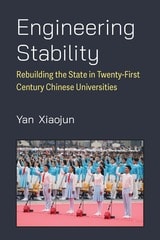
Engineering Stability
Rebuilding the State in Twenty-First Century Chinese UniversitiesYan Xiaojun
University of Michigan Press, 2024
Drawing on rich materials gathered from in-depth field research in China during the Xi Jinping era, Engineering Stability invites scholars of comparative politics, state theory, contentious politics, and political development to rethink and reimagine how what Yan calls “a compromised autocratic state” is rebuilt within and from itself after overcoming a traumatic moment of vulnerability. The book further details the four types of infrastructure — institutional, significative, regulatory, and incentivizing — that state rebuilders need to overhaul, and looks into the campaign of state rebuilding in post-Tiananmen Chinese universities and its implications for our understanding of politics in general.
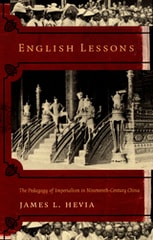
English Lessons
The Pedagogy of Imperialism in Nineteenth-Century ChinaJames L. Hevia
Duke University Press, 2003
Hevia analyzes British Foreign Office documents, diplomatic memoirs, auction house and museum records, nineteenth-century scholarly analyses of Chinese history and culture, campaign records, and photographs. He shows how Britain refigured its imperial project in
China as a cultural endeavor through examinations of the circulation of military loot in Europe, the creation of an art history of “things Chinese,” the construction of a field of knowledge about China, and the Great Game rivalry between Britain, Russia, and the Qing empire in Central Asia. In so doing, he illuminates the impact of these elements on the colonial project and the creation of a national consciousness in China.
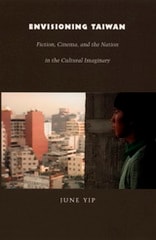
Envisioning Taiwan
Fiction, Cinema, and the Nation in the Cultural ImaginaryJune Yip
Duke University Press, 2004
Yip traces a distinctly Taiwanese sense of self vis-à-vis China, Japan, and the West through two of the island’s most important cultural movements: the hsiang-t’u (or “nativist”) literature of the 1960s and 1970s, and the Taiwanese New Cinema of the 1980s and 1990s. At the heart of the book are close readings of the work of the hsiang-t’u writer Hwang Chun-ming and the New Cinema filmmaker Hou Hsiao-hsien. Key figures in Taiwan’s assertion of a national identity separate and distinct from China, both artists portray in vibrant detail daily life on the island. Through Hwang’s and Hou’s work and their respective artistic movements, Yip explores “the imagining of a nation” on the local, national, and global levels. In the process, she exposes a perceptible shift away from traditional models of cultural authenticity toward a more fluid, postmodern hybridity—an evolution that reflects both Taiwan’s peculiar multicultural reality and broader trends in global culture.
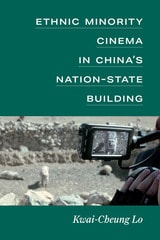
Ethnic Minority Cinema in China’s Nation-State Building
Kwai-Cheung Lo
University of Michigan Press, 2025
Lo understands these representations of ethnic minorities as part of a larger ecosystem and the cultures, values, and life practices of non-Han ethnic minorities as closely entwined with environmental issues and politics. This intertwining, Lo argues, suggests a crisis in “objectification and identification” of both people and the environment, that plays out in cinema featuring ethnic minorities. Lo traces these depictions of Chinese ethnic minority groups in films created by both Han-majority and non-Han filmmakers, examining how these representations became a site in which state authorities, Han and non-Han communities, and foreign agencies compete and interact under the larger context of building and imagining the Chinese nation-state.
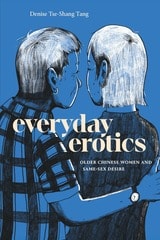
Everyday Erotics
Older Chinese Women and Same-Sex DesireDenise Tse-Shang Tang
Duke University Press, 2026
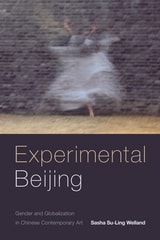
Experimental Beijing
Gender and Globalization in Chinese Contemporary ArtSasha Su-Ling Welland
Duke University Press, 2018
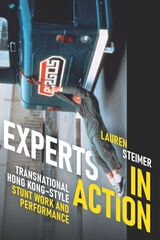
Experts in Action
Transnational Hong Kong–Style Stunt Work and PerformanceLauren Steimer
Duke University Press, 2021
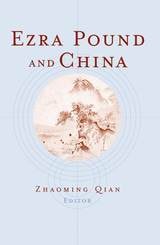
Ezra Pound and China
Zhaoming Qian, Editor
University of Michigan Press, 2003
Richly illustrated, the book draws readers closer to the heart of Pound's vision. Ezra Pound and China will become an invaluable resource to students and scholars of Pound, cultural studies, translation theory, poetics, Confucianism, and literary transmission and reception.
Zhaoming Qian is Professor of English, the University of New Orleans.