496 books match the query 'Christian Theology' and 18 start with e

cover of Early Letters to the Crown and Council of the Indies, 1516-1531: Primeras cartas para Las Indias

Early Letters to the Crown and Council of the Indies, 1516-1531

Primeras cartas para Las Indias

Bartolome de la Casas

Catholic University of America Press, 2026
Bartolomé de las Casas began his transatlantic career in 1502. Experiences of conquest and penitential discipline led him to renounce his Indian slaves and holdings. He dedicated his life to reforming Spain’s colonial project, eventually joining the Dominicans, and later serving as bishop. His works are foundational for our understanding of early colonialism. This volume’s seven letters—all but one in English for the first time—span the initial stage of his long career as “Protector of the Indians.” Las Casas harangues corrupt officials, denounces perverse incentives, and lays out detailed plans for Spain’s presence in the Americas. He calls for direct crown control with moral oversight by mendicant bishops, proposes alternatives to Indian labor, and demands restitution for stolen property. These letters led to legal changes in the Indies, influencing later Jesuit reducciones in the Río de la Plata and Franciscan missions in California. They also reveal an entrepreneurial Las Casas with moral reflection on early global trade and commerce. The watershed “Carta al Consejo”—a critical source for Latin American theology— concentrates all the force of his later writings into a figuratively rich, biblically saturated, theologically and philosophically sophisticated call to repentance and reform. His web of biblical allusions and dialogue with the Iberian Thomist renaissance are abundantly annotated. A lively introduction and copious notes carefully situate Las Casas within broader trends, including Europe’s nascent religious reformations. These letters also bridge his dramatic entry into the Dominican Order, documenting his transformation from temporal reformer to eschatological prophet. Students of law, theology, Christian mission, human rights, cultural and colonial history, and commerce, will find here rhetorical and theological treasures. While Las Casas is known chiefly for his polemical Brief Account of the Destruction of the Indies, these earliest letters suggest a far broader intellectual biography.
[more]
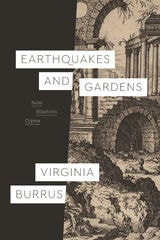
cover of Earthquakes and Gardens: Saint Hilarion’s Cyprus

Earthquakes and Gardens

Saint Hilarion’s Cyprus

Virginia Burrus

University of Chicago Press, 2023

Essays about ruination, resilience, reading, and religion generated by a reflection on a fourth-century hagiography.
 
In Jerome’s Life of Saint Hilarion, a fourth-century saint briefly encounters the ruins of an earthquake-toppled city and a haunted garden in Cyprus. From these two fragmentary passages, Virginia Burrus delivers a series of sweeping meditations on our experience of place and the more-than-human worlds—the earth and its gods—that surround us. Moving between the personal and geological, Earthquakes and Gardens ruminates on destruction and resilience, ruination and resurgence, grief and consolation in times of disaster and loss. Ultimately, Burrus’s close readings reimagine religion as a practice that unsettles certainty and develops mutual flourishing.
[more]
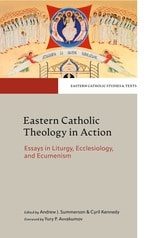
cover of Eastern Catholic Theology in Action: Essays in Liturgy, Ecclesiology, and Ecumenism

Eastern Catholic Theology in Action

Essays in Liturgy, Ecclesiology, and Ecumenism

Andrew J. Summerson

Catholic University of America Press, 2024
The Second Vatican Council urged Eastern Catholics to cultivate their share of divine revelation for the benefit of the entire Catholic Church. Yet, more than 50 years later, the Eastern Catholic Churches frequently remain on the margins, both in the theological academy and in the life of the Church more broadly. In an effort to remedy this situation, at least in part, this volume offers a scholarly reflection on the unique patrimony of the Eastern Catholic Churches, divided according to the categories of Liturgy, Theology, Spirituality, Discipline, and Culture. In so doing, it both follows the categories used to define a Church sui iuris in the Code of Canon Law for the Eastern Churches, and builds on the legacy of the Rev. Peter Galadza, to whom the volume is dedicated. On one hand, the volume and its essays are intentionally introductory, revealing the worlds of Eastern Catholicism and the variety of theological approaches that take place there. Emerging in part from the experience of teaching and preaching by scholars of Eastern Christianity, who are frequently asked for a basic introduction to Eastern Catholic theology, and have little to offer in response, these essays gather an international group of scholars engaging in critical, theological reflection from an Eastern Catholic perspective. This approach is rounded out by contributions from Roman Catholic, Orthodox, and Protestant scholars, who articulate their own reception and appreciation of the Eastern Catholic theological heritage.  At the same time, however, several of the essays in this volume relate the history and current reality of Eastern Catholicism to the Orthodox and Roman Catholic Churches, yet without ignoring how frequently Eastern Catholics live, worship, and theologize without self-conscious regard for their unique ecclesial situation. Indeed, these authors show, Eastern Catholic theology can be unself-consciously grounded in the patristic tradition, and Eastern Catholics can simply “do” theology, without worrying about ecclesial politics. Readers will thus find here the best of both worlds: both an introduction to the unique and frequently ignored patrimony of the Eastern Catholic Churches, and a series of essays that avoids the all-to-common pitfall of reducing these traditions to a parody of other Churches, Eastern or Western. Instead, by engaging with the sources of the Christian tradition – as Eastern Catholics, yes, but first and foremost as Christians – the authors reveal how much their tradition can offer the Catholic Church as a whole.
[more]
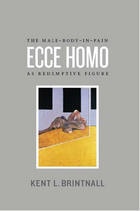
cover of Ecce Homo: The Male-Body-in-Pain as Redemptive Figure

Ecce Homo

The Male-Body-in-Pain as Redemptive Figure

Kent L. Brintnall

University of Chicago Press, 2011

Images of suffering male bodies permeate Western culture, from Francis Bacon’s paintings and Robert Mapplethorpe’s photographs to the battered heroes of action movies. Drawing on perspectives from a range of disciplines—including religious studies, gender and queer studies, psychoanalysis, art history, and film theory—Ecce Homo explores the complex, ambiguous meanings of the enduring figure of the male-body-in-pain.

Acknowledging that representations of men confronting violence and pain can reinforce ideas of manly tenacity, Kent L. Brintnall also argues that they reveal the vulnerability of men’s bodies and open them up to eroticization. Locating the roots of our cultural fascination with male pain in the crucifixion, he analyzes the way narratives of Christ’s death and resurrection both support and subvert cultural fantasies of masculine power and privilege. Through stimulating readings of works by Georges Bataille, Kaja Silverman, and more, Brintnall delineates the redemptive power of representations of male suffering and violence.
[more]
cover of Ecclesiology

Ecclesiology

Guy Mansini, OSB

Catholic University of America Press, 2021
The first part of the book explains the antecedent probability both of revelation and of God’s institution of a church. It is ecclesiology in the mode of fundamental theology. The second part rounds up what Scripture and Tradition teach about the Church under the heads of the People of God, the Temple of the Holy Spirit, the Bride of Christ, and the Body of Christ. The chapters present this thematic material under each head as a unified whole, across the Testaments, with each chapter keyed to one of the “marks” of the Church: the catholicity of the people of God, the apostolicity of the ministers of the messianic temple, the holiness of the Bride of Christ, and the unity of the Body of Christ. This already organizes things in a proto-systematic frame. The third part of the book gives systematic exploration, in reverse order, to the unity of the Church, with attention to non-Catholic ecclesial communities and churches, to the holiness of the Church, objective and subjective, to the apostolicity of the Church and her mediation of revealed truth and grace, and to the catholicity of the Church, with attention to non-Christian religions. The center of the book, on the definition of the Church as the sacrament of communion, renders recent French Dominican ecclesiology in a form more accessible to undergraduates and seminarians, rooting it in the New Testament teachings on communion and mysterion. The book concludes with a strenuous argument for the necessity of the Church and her mission of evangelization. Thus, the trajectory of the book is from the naturally knowable antecedent probability of the Church to its revealed necessity.
[more]
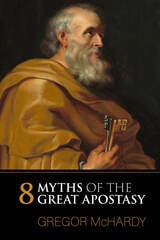
cover of Eight Myths of the Great Apostasy

Eight Myths of the Great Apostasy

Gregor McHardy

Signature Books, 2022

Latter-day Saints believe that, following the resurrection of Jesus Christ and the death of the original apostles, a Great Apostasy occurred that took God’s authorized servants from the earth and with them, direct revelation from God. This forced people to fend for themselves spiritually, which only resulted in lost truths, false doctrines, and a state of confusion that could only be remedied by a restoration. This, Mormons believe, was initiated by Joseph Smith, God’s chosen mouthpiece for this new era. But many church members’ understanding of this apostasy is tinged with tainted suppositions and misunderstandings. Statements such as “the priesthood was taken from the earth” and “the gospel was shattered into many pieces” are not only inaccurate but are curtly dismissive of fellow Christians. Gregor McHardy examines the fate of the apostles, the actual dissipation of authority following their deaths, the gradual onset of changed doctrines, and similar topics. 

McHardy’s careful, astute examination leads to a realization that Jesus’s prediction that “the gates of hell shall not prevail” against the organization Peter led was accurate. With that understanding, today’s Latter-day Saints can craft more positive, engaging statements about the nature and meaning of their Restoration. 
[more]
cover of Eighty-three Different Questions

Eighty-three Different Questions

Saint Augustine

Catholic University of America Press, 1982
No description available
[more]
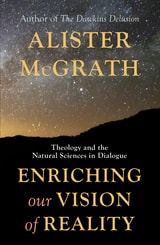
cover of Enriching Our Vision of Reality: Theology and the Natural Sciences in Dialogue

Enriching Our Vision of Reality

Theology and the Natural Sciences in Dialogue

Alister McGrath

Templeton Press, 2017

“Enriching our Vision of Reality is elegant, erudite, and animated by a constant enthusiasm for its subject. There is everything here—science, theology, philosophy, biography, even some poetry—all enlisted to help us to see the world as it is, both more clearly and with greater delight.” —Reverend Doctor Andrew Davison, Starbridge Lecturer in theology and natural sciences, University of Cambridge, and fellow in theology at Corpus Christi College

“It’s a pleasure to read an introduction to science and Christian belief that is both erudite and accessible. McGrath’s new book is rich with personal examples, biographies of famous scientists and theologians, and effective refutations of their detractors. This invitation to move forward from a bifurcated to an expansive view of reality is recommended for all who seek an ‘integrated understanding’ of science and Christian faith.” —Philip Clayton, editor of The Oxford Handbook of Religion and Science

In this exceptional volume, leading theologian Alister McGrath writes for scientists with an interest in theology, and Christians and theologians who are aware of the importance of the natural sciences. A scene-setting chapter explores the importance of the human quest for intelligibility. The focus then moves to three leading figures who have stimulated discussion about the relationship between science and theology in recent years: Charles Coulson, an Oxford professor of theoretical chemistry who was also a prominent Methodist lay preacher; Thomas F. Torrance, perhaps the finest British theologian of the twentieth-century; and John Polkinghorne, a theoretical physicist and theologian.

The final section of the book features six “parallel conversations” between science and theology, which lay the groundwork for the kind of enriched vision of reality the author hopes to encourage. Here, we are inspired to enjoy individual aspects of nature while seeking to interpret them in the light of deeper revelations about our gloriously strange universe.
 
[more]
cover of Eranistes

Eranistes

Gerard H. Theodoret of Cyrus

Catholic University of America Press, 2003
No description available
[more]
cover of Eric Voegelin's Late Meditations and Essays: Critical Commentary Companions

Eric Voegelin's Late Meditations and Essays

Critical Commentary Companions

Michael Franz

St. Augustine's Press, 2023

Eric Voegelin (1901–1985) is widely regarded as one of the greatest political philosophers of the 20th century, yet adequate understanding of his writings stands as a challenge for current and future generations. Voegelin’s thought continued to develop at a rapid pace during the last two decades of his life, and as Ellis Sandoz has written, his work found “not only its final but its most profound expression” during this period. Voegelin’s fame stemmed mostly from his many books and the laudatory review articles published in response to them, but he was “preeminently an essayist,” as Sandoz observes. The meditative analyses and essays written in the culminating phase of Voegelin’s career not only expand and deepen his work as a whole, but also revise central components of it in ways that compel reconsideration of even his most widely read texts.

Voegelin’s books gave rise to a vast secondary literature that continues to grow, yet the exceptionally impactful late essays and meditative works have never received the scholarly commentaries they deserve because they were published originally as journal articles or chapters in edited collections. This volume remedies that shortcoming with 14 critical analyses that elucidate the late essays while also addressing their implications for the entirety of Voegelin’s thought. The commentaries will prove invaluable to students and scholars in political science, philosophy, history, theology, and other disciplines, serving as a companion piece to the singularly important Vol. 12 of Voegelin’s Collected Works, Published Essays 1966–1985.
[more]
cover of Eschatology: Death and the Eternal Life (Second Edition)

Eschatology

Death and the Eternal Life (Second Edition)

Joseph Ratzinger

Catholic University of America Press, 2007
Originally published in English in 1988, Joseph Ratzinger's Eschatology remains internationally recognized as a leading text on the "last things"—heaven and hell, purgatory and judgment, death and the immortality of the soul. This highly anticipated second edition includes a new preface by Joseph Ratzinger/Pope Benedict XVI and a supplement to the bibliography by theologian Peter A. Casarella. Eschatology presents a balanced perspective of the doctrine at the center of Christian belief—the Church's faith in eternal life. Recognizing the task of contemporary eschatology as "to marry perspectives, so that person and community, present and future, are seen in their unity," Joseph Ratzinger brings together recent emphasis on the theology of hope for the future with the more traditional elements of the doctrine. His book has proven to be as timeless as it is timely.

[more]
cover of Eternal Life and Human Happiness in Heaven: Philosophical Problems, Thomistic Solutions

Eternal Life and Human Happiness in Heaven

Philosophical Problems, Thomistic Solutions

Christopher M. Brown

Catholic University of America Press, 2021
Eternal Life and Human Happiness in Heaven treats four apparent problems concerning eternal life in order to clarify our thinking about perfect human happiness in heaven. The teachings of St. Thomas Aquinas provide the basis for solutions to these four problems about eternal life insofar as his teachings call into question common contemporary theological or philosophical presuppositions about God, human persons, and the nature of heaven itself. Indeed, these Thomistic solutions often require us to think very differently from our contemporaries. But thinking differently with St. Thomas is worth it: for the Thomistic solutions to these apparent problems are more satisfying, on both theological and philosophical grounds, than a number of contemporary theological and philosophical approaches. Christopher Brown deploys his argument in four sections. The first section lays out, in three chapters, four apparent problems concerning eternal life—Is heaven a mystical or social reality? Is heaven other-worldly or this-worldly? Is heaven static or dynamic? Won’t human persons eventually get bored in heaven? Brown then explains how and why some important contemporary Christian theologians and philosophers resolve these problems, and notes serious problems with each of these contemporary solutions. The second section explains, in five chapters, St. Thomas’ significant distinction between the essential reward of the saints in heaven and the accidental reward, and treats in detail his account of that in which the essential reward consists, namely, the beatific vision and the proper accidents of the vision (delight, joy, and charity). The third section treats, in five chapters, St. Thomas’ views on the multifaceted accidental reward in heaven, where the accidental reward includes, among other things, glorified human embodiment, participation in the communion of the saints, and the joy experienced by the saints in sensing God’s “new heavens and new earth.” Finally, section four argues, in four chapters, that St. Thomas’ views allow for powerful solutions to the four apparent problems about eternal life examined in the first section. These solutions are powerful because, not only are they consistent with authoritative, Catholic Christian Tradition, but they do not raise any of the significant theological or philosophical problems that attend the contemporary theological and philosophical solutions examined in the first section.
[more]
cover of Ethics from a Theocentric Perspective, Volume 1: Theology and Ethics

Ethics from a Theocentric Perspective, Volume 1

Theology and Ethics

James M. Gustafson

University of Chicago Press, 1983
"Ethics from a Theocentric Perspective will surprise some, shock others, and unleash a flood of speculation about what has happened to James Gustafson. The answer quite simply is nothing has happened to Gustafson except that he has now turned his attention to developing his constructive theological position, and we should all be very glad. . . . In this, the first of two volumes, Gustafson displays his colors as a constructive theologian, and they are indeed brilliant and splendid. . . . Though Gustafson is a theologian who works in the Christian tradition, he reminds us that the God Christians worship is not merely the Christian God. For Gustafson the kind of God who is the object of the theologians's reflection eludes or surpasses the inevitably confessional activity of Christian theological reflection. Thus Gustafson, the constructive theologian, is also Gustafson the revisionist theologian who takes as his task nothing less than challenging the anthropocentrism that he alleges characterizes mainstream Western Christian theology."—Stanley Hauerwas, Journal of Religion
[more]
cover of Ethics from a Theocentric Perspective, Volume 2: Ethics and Theology

Ethics from a Theocentric Perspective, Volume 2

Ethics and Theology

James M. Gustafson

University of Chicago Press, 1984

Gustafson's two-volume work has been hailed as a major contribution to Christian ethics. In this second volume, Gustafson considers marriage, suicide, and the allocation of resources in famine and in biomedical research to develop an ethical outlook in which divine purpose is the basis of moral activity.

"Breadth and subtlety, wisdom and insight . . . Gustafson is a first-rate theologian."—Commonweal

"The two-volume work, now complete, will be a benchmark for discussions of Christian ethics for years to come. With it Gustafson becomes one of the thinkers by whom others can, by agreement or divergence, define their own ethics."—Roger L. Shinn, Christianity and Crisis

"Gustafson's theocentrism is an original and creative contribution to modern ethical discussion."—Douglas Sturm, Ethics
[more]
cover of Ethics of Liberation: In the Age of Globalization and Exclusion

Ethics of Liberation

In the Age of Globalization and Exclusion

Enrique Dussel

Duke University Press, 2012

Available in English for the first time, this much-anticipated translation of Enrique Dussel's Ethics of Liberation marks a milestone in ethical discourse. Dussel is one of the world's foremost philosophers. This treatise, originally published in 1998, is his masterwork and a cornerstone of the philosophy of liberation, which he helped to found and develop.

Throughout his career, Dussel has sought to open a space for articulating new possibilities for humanity out of, and in light of, the suffering, dignity, and creative drive of those who have been excluded from Western Modernity and neoliberal rationalism. Grounded in engagement with the oppressed, his thinking has figured prominently in philosophy, political theory, and liberation movements around the world.

In Ethics of Liberation, Dussel provides a comprehensive world history of ethics, demonstrating that our most fundamental moral and ethical traditions did not emerge in ancient Greece and develop through modern European and North American thought. The obscured and ignored origins of Modernity lie outside the Western tradition. Ethics of Liberation is a monumental rethinking of the history, origins, and aims of ethics. It is a critical reorientation of ethical theory.
[more]
cover of Eusebius of Emesa: Church and Theology in the Mid-Fourth Century

Eusebius of Emesa

Church and Theology in the Mid-Fourth Century

Robert E. Winn

Catholic University of America Press, 2011
Through a careful examination of his extant sermons, some of which survive in Latin and others in classical Armenian, this book invites readers to hear a bishop's voice from the mid- fourth century, an important period in late antique Christianity
[more]
cover of Exegetical Epistles

Exegetical Epistles

Thomas P. Jerome

Catholic University of America Press, 2023
The Nicene and Post-Nicene Fathers series of the 19th century rendered into English many of Jerome’s treatises and letters while bypassing his biblical commentaries as well as some of his most important exegetical letters. This omission, which was not helpful to scholarship, was probably due to the great length of these works. Although the problem was partly remedied by some new English translations of the 20th century, the present volume fills a significant lacuna by translating into English the Scriptural exegesis that Jerome conveyed in his relatively unknown epistles, many of which were composed in response to queries he had received from various correspondents. Many of these letters are presented here for the first time in English. Based on the Hilberg edition, this volume contains new translations, introduced and annotated, of Jerome’s Epistles 18-21, 25-30, 34-37, 42, 53, 55-56, 59, 64-65, 72-74, 78, 85, 106, 112, 119-121, 129, 130, and 140. Two newly translated letters from the famous exchange with Augustine over the meaning of Galatians 2:11-14 are included (Epp. 56 and 112), as well as a new rendering of Ep. 130 to Demetrias (which technically is not an “exegetical” letter but does present important information about the Pelagian controversy). Overall, this collection hopes to serve as a useful introduction to Jerome’s approach to biblical interpretation, of both the Old and the New Testament. Some letters focus on the historical meaning of Pauline and Gospel texts, while others contain allegorical expositions of Old Testament passages. Jerome’s competence as a Hebrew scholar will become evident to the reader of this volume as well as his thorough acquaintance with the antecedent Greek and Latin Christian exegetical traditions.
[more]
cover of Exegetical Epistles, Volume 2

Exegetical Epistles, Volume 2

Thomas P. St. Jerome

Catholic University of America Press, 2024

This is the second of a two-volume set that includes Thomas Scheck’s new translations of several of St. Jerome’s previously untranslated exegetical letters. Epistle 85 to St. Paulinus of Nola contains Jerome’s answers to two questions: how Exodus 7.13 and Romans 9.16 can be reconciled with free will, and what 1 Corinthians 7.14 means. Epistle 106 to Sunnias and Fretela, which deals with textual criticism of the Septuagint, consists of a meticulous defense of Jerome’s new translation of the Latin Psalter. Epistle 112 is a response to three letters from St. Augustine: Ep. 56 (contained in the previous volume), Ep. 67, and Ep 104. In the face of Augustine’s criticisms, Jerome defends his own endeavor to translate the Old Testament directly from the Hebrew text. He also vindicates his own ecclesiastical interpretation of Galatians 2.4-11, as he had set this forth in his Commentary on Galatians, and along the way he accuses Augustine of advocating the heresy of Judaizing. Epistle 119 to Minervius and Alexander contains Jerome’s answers to some eschatological questions regarding the interpretation of 1 Corinthians 15.51 and 1 Thessalonians 4.17. In Epistle 120 to Hedibia, Jerome tackles twelve exegetical questions that focus on reconciling the discrepant Resurrection accounts in the Gospels, as well as questions about Romans 9.14-29, 2 Corinthians 2.16, and 1 Thessalonians 5.23. In Epistle 121 to Algasia, Jerome clarifies eleven exegetical questions dealing with passages in the Gospels and Paul’s letters (Romans 5.7; 7.7-25; 9.3-5; Colossians 2.18-19; 2 Thessalonians 2.3). This letter also contains an exposition of the parable of the unjust steward (Luke 16.1-10), in which Jerome translates material from a commentary attributed to Theophilus of Antioch. In Epistle 129 to Dardanus, Jerome interprets “the promised land” and discusses the alleged crimes of the Jews. Epistle 130 to Demetrias is not an exegetical letter but an exhortation to the newly consecrated virgin on how to live out her vocation. In this letter Jerome reflects on Origenism and Pelagianism. Finally, in Epistle 140 to Cyprian the presbyter, Jerome expounds Psalm 90.
[more]