1566 books match the query 'Christianity' and 51 start with e
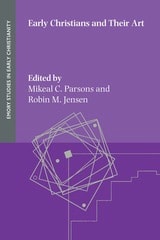
cover of Early Christians and Their Art

Early Christians and Their Art

Mikeal C. Parsons

SBL Press, 2023

This collection of eleven essays by biblical scholars, art historians, and experts in early Christianity explores a variety of topics and issues regarding the material culture of early Christianity recovered from Italy, Syria, Tunisia, and beyond. The essays place early Christian art representing such symbols as crosses, anchors, and shepherds found in sarcophagi, catacombs, architecture, mosaics, gems, and more in dialogue with New Testament and early Christian texts. Contributors Gregory M. Barnhill, Eric J. Brewer, Jeffrey M. Dale,† Zen Hess, Heidi J. Hornik, Jeffrey M. Hubbard, Robin M. Jensen, Bruce W. Longenecker, Mikeal Parsons, Christian Sanchez, Natalie Webb, Jason A. Whitlark, and David E. Wilhite place early Christian beliefs and practices in their proper historical, cultural, political, and religious contexts for scholars and students of the ancient world.
[more]
cover of Early Letters to the Crown and Council of the Indies, 1516-1531: Primeras cartas para Las Indias

Early Letters to the Crown and Council of the Indies, 1516-1531

Primeras cartas para Las Indias

Bartolome de la Casas

Catholic University of America Press, 2026
Bartolomé de las Casas began his transatlantic career in 1502. Experiences of conquest and penitential discipline led him to renounce his Indian slaves and holdings. He dedicated his life to reforming Spain’s colonial project, eventually joining the Dominicans, and later serving as bishop. His works are foundational for our understanding of early colonialism. This volume’s seven letters—all but one in English for the first time—span the initial stage of his long career as “Protector of the Indians.” Las Casas harangues corrupt officials, denounces perverse incentives, and lays out detailed plans for Spain’s presence in the Americas. He calls for direct crown control with moral oversight by mendicant bishops, proposes alternatives to Indian labor, and demands restitution for stolen property. These letters led to legal changes in the Indies, influencing later Jesuit reducciones in the Río de la Plata and Franciscan missions in California. They also reveal an entrepreneurial Las Casas with moral reflection on early global trade and commerce. The watershed “Carta al Consejo”—a critical source for Latin American theology— concentrates all the force of his later writings into a figuratively rich, biblically saturated, theologically and philosophically sophisticated call to repentance and reform. His web of biblical allusions and dialogue with the Iberian Thomist renaissance are abundantly annotated. A lively introduction and copious notes carefully situate Las Casas within broader trends, including Europe’s nascent religious reformations. These letters also bridge his dramatic entry into the Dominican Order, documenting his transformation from temporal reformer to eschatological prophet. Students of law, theology, Christian mission, human rights, cultural and colonial history, and commerce, will find here rhetorical and theological treasures. While Las Casas is known chiefly for his polemical Brief Account of the Destruction of the Indies, these earliest letters suggest a far broader intellectual biography.
[more]
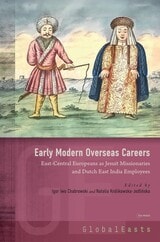
cover of Early Modern Overseas Careers: East-Central Europeans as Jesuit Missionaries and Dutch East India Employees

Early Modern Overseas Careers

East-Central Europeans as Jesuit Missionaries and Dutch East India Employees

Igor Chabrowski

Central European University Press, 2026

In the early modern period, two European networks, the Society of Jesus and the Dutch East India Company (VOC) spanned the globe and contributed to its multifaceted globalization. This book focuses on the members of the former, Jesuit missionaries, and the employees of the VOC originating from Central and Eastern Europe. The well-chosen case studies examine the group characteristics, career influences, and narratives of these Central Eastern Europeans. They explore the question of why subjects of Polish kings, Transylvanian princes, or Habsburg emperors dreamed of venturing overseas with the colonial merchants or aspired to work as missionaries in China and Japan.

The book examines the complexities of this early modern globalization: its scope, limits, importance, social, ethnic, and political ramifications. It researches how these networks reached out to the region of Central and Eastern Europe. The authors argue that the region was hardly considered peripheral from the perspective of Rome (and the Jesuits) or the Netherlands (and the colonial traders). They do, however, explore whether there were "glass ceilings," or limits of reach within the two networks for individuals from the Polish-Lithuanian Commonwealth or the former Kingdom of Hungary.
[more]
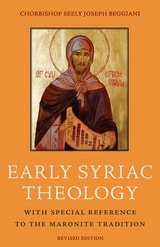
cover of Early Syriac Theology

Early Syriac Theology

Chorbishop Seely Joseph Beggiani

Catholic University of America Press, 2014
Presents the insights of St. Ephrem and Jacob of Serugh, two of the earliest representatives of the theological world-view of the Syriac church.
[more]
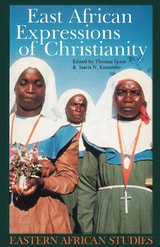
cover of East African Expressions of Christianity: Of Christianity

East African Expressions of Christianity

Of Christianity

Thomas Spear

Ohio University Press, 1998

Christianity has been spread in Africa by Africans. It is the story of peoples seizing control of their own spiritual destinies—rather than the commonplace notion that the continent’s Christian churches represent colonial and capitalist powers that helped subdue Africans to European domination. In short, once introduced, Christianity took on a powerful life of its own and spun out of the control of those who would retain ownership of doctrine and practice. East African Expressions of Christianity examines the experiences of African Christians as they explored the new faith, interpreted it in the context of their own values, appropriated it for themselves, and forged their own distinctive churches. Prominent Tanzanian and American historians, anthropologists, political scientists, and church people examine the translation of religious meanings across cultural boundaries; the religious and social appeal of the new faith; and the vital roles played by African evangelists, teachers, and translators in the spread of Christianity and the development of an African church.
[more]
cover of Ecclesiastical History, Books 1–5

Ecclesiastical History, Books 1–5

Catholic University of America Press, 1953
No description available
[more]
cover of Ecclesiastical History, Books 6–10

Ecclesiastical History, Books 6–10

Catholic University of America Press, 1955
No description available
[more]
cover of Ecclesiology

Ecclesiology

Guy Mansini, OSB

Catholic University of America Press, 2021
The first part of the book explains the antecedent probability both of revelation and of God’s institution of a church. It is ecclesiology in the mode of fundamental theology. The second part rounds up what Scripture and Tradition teach about the Church under the heads of the People of God, the Temple of the Holy Spirit, the Bride of Christ, and the Body of Christ. The chapters present this thematic material under each head as a unified whole, across the Testaments, with each chapter keyed to one of the “marks” of the Church: the catholicity of the people of God, the apostolicity of the ministers of the messianic temple, the holiness of the Bride of Christ, and the unity of the Body of Christ. This already organizes things in a proto-systematic frame. The third part of the book gives systematic exploration, in reverse order, to the unity of the Church, with attention to non-Catholic ecclesial communities and churches, to the holiness of the Church, objective and subjective, to the apostolicity of the Church and her mediation of revealed truth and grace, and to the catholicity of the Church, with attention to non-Christian religions. The center of the book, on the definition of the Church as the sacrament of communion, renders recent French Dominican ecclesiology in a form more accessible to undergraduates and seminarians, rooting it in the New Testament teachings on communion and mysterion. The book concludes with a strenuous argument for the necessity of the Church and her mission of evangelization. Thus, the trajectory of the book is from the naturally knowable antecedent probability of the Church to its revealed necessity.
[more]
cover of Economic Origins of Roman Christianity

Economic Origins of Roman Christianity

Robert B. Ekelund Jr. and Robert D. Tollison

University of Chicago Press, 2011
In the global marketplace of ideas, few realms spark as much conflict as religion. For millions of people, it is an integral part of everyday life, reflected by a widely divergent supply of practices and philosophical perspectives. Yet, historically, the marketplace has not always been competitive. While the early Common Era saw competition between Christianity, Judaism, and the many pagan cults, Roman Christianity came eventually to dominate Western Europe.
 
Using basic concepts of economic theory, Robert B. Ekelund Jr. and Robert D. Tollison explain the origin and subsequent spread of Roman Christianity, showing first how the standard concepts of risk, cost, and benefit can account for the demand for religion. Then, drawing on the economics of networking, entrepreneurship, and industrial organization, the book explains Christianity's rapid ascent. Like a business, the church developed sound business strategies that increased its market share to a near monopoly in the medieval period. This book offers a fascinating look at the dynamics of Christianity’s rise, as well as how aspects the church’s structure—developed over the first millennium—illuminate a number of critical problems faced by the church today.
[more]
cover of Ecstasies: Deciphering the Witches' Sabbath

Ecstasies

Deciphering the Witches' Sabbath

Carlo Ginzburg

University of Chicago Press, 1991
Weaving early accounts of witchcraft—trial records, ecclesiastical tracts, folklore, and popular iconography—into new and startling patterns, Carlo Ginzburg presents in Ecstasies compelling evidence of a hidden shamanistic culture that flourished across Europe and in England for thousands of years.
[more]
cover of Eduardo Balderas: Father of Church Translation, 1907-1989

Eduardo Balderas

Father of Church Translation, 1907-1989

Ignacio M. Garcia

Signature Books, 2024
Eduardo Balderas: Father of Church Translation tells the story of a child refugee from Mexico whose family came to live in Texas in the 1900s. There he joined the Church of Jesus Christ of Latter-day Saints, served a mission, became a branch president, and began translating for the church. He went on to translate the Pearl of Great Price, the Doctrine and Covenants, Jesus the Christ, church manuals, and the temple ceremony. He also founded the Spanish-language Liahona magazine, helped establish the church translation department, and served as a patriarch for Latinos in the US and other parts of the Spanish-speaking world.
[more]
cover of Educating Zion: The Diaries of BYU President Ernest L. Wilkinson, 1952–1971

Educating Zion

The Diaries of BYU President Ernest L. Wilkinson, 1952–1971

Gary James Bergera

Signature Books, 2025
During the twenty years he served as president of LDS Church-owned Brigham Young University (1951–71), Ernest L. Wilkinson transformed the school into a showplace of the church’s educational values. "More than any other single cause," his successor, Dallin H. Oaks, observed, “[Wilkinson's] remarkable and relentless leadership . . . is the key to the present stature of Brigham Young University.” Under Wilkinson, the student body grew more than four-fold to 25,000, the faculty tripled, colleges and departments more than doubled, library holdings increased nearly 500 percent, the number of buildings jumped twenty-fold, and as perhaps the most telling manifestation of Wilkinson's influence, annual LDS Church subsidies rose fifteen-fold to $22 million. His single-minded drive to mold BYU into the kind of institution he hoped would command the admiration of American academia permanently set the direction for Latter-day Saint higher education. As he presided over this academic landscape, Wilkinson produced about 5,000 pages of typed, single-spaced diaries–—a literary creation that ranks among the most important diaries in the history of the Church of Jesus Christ of Latter-day Saints. Wilkinson also had access to the highest echelon of the church, writing of numerous meetings of the First Presidency and Quorum of the Twelve Apostles. Educating Zion assembles in one volume an annotated abridgement of those diary entries having the greatest interest to modern readers. The diaries are both a remarkable achievement and a phenomenal historical record whose importance cannot be overstated.
[more]
cover of Eight Myths of the Great Apostasy

Eight Myths of the Great Apostasy

Gregor McHardy

Signature Books, 2022

Latter-day Saints believe that, following the resurrection of Jesus Christ and the death of the original apostles, a Great Apostasy occurred that took God’s authorized servants from the earth and with them, direct revelation from God. This forced people to fend for themselves spiritually, which only resulted in lost truths, false doctrines, and a state of confusion that could only be remedied by a restoration. This, Mormons believe, was initiated by Joseph Smith, God’s chosen mouthpiece for this new era. But many church members’ understanding of this apostasy is tinged with tainted suppositions and misunderstandings. Statements such as “the priesthood was taken from the earth” and “the gospel was shattered into many pieces” are not only inaccurate but are curtly dismissive of fellow Christians. Gregor McHardy examines the fate of the apostles, the actual dissipation of authority following their deaths, the gradual onset of changed doctrines, and similar topics. 

McHardy’s careful, astute examination leads to a realization that Jesus’s prediction that “the gates of hell shall not prevail” against the organization Peter led was accurate. With that understanding, today’s Latter-day Saints can craft more positive, engaging statements about the nature and meaning of their Restoration. 
[more]
cover of Embracing Age: How Catholic Nuns Became Models of Aging Well

Embracing Age

How Catholic Nuns Became Models of Aging Well

Anna I. Corwin

Rutgers University Press, 2021

Embracing Age: How Catholic Nuns Became Models of Aging Well examines a community of individuals whose aging trajectories contrast mainstream American experiences. In mainstream American society, aging is presented as a “problem,” a state to be avoided as long as possible, a state that threatens one’s ability to maintain independence, autonomy, control over one’s surroundings. Aging “well” (or avoiding aging) has become a twenty-first century American preoccupation. Embracing Age provides a window into the everyday lives of American Catholic nuns who experience longevity and remarkable health and well-being at the end of life. Catholic nuns aren’t only healthier in older age, they are healthier because they practice a culture of acceptance and grace around aging. Embracing Age demonstrates how aging in the convent becomes understood by the nuns to be a natural part of the life course, not one to be feared or avoided. Anna I. Corwin shows readers how Catholic nuns create a cultural community that provides a model for how to grow old, decline, and die that is both embedded in American culture and quite distinct from other American models.

Instructor's Guide is available at no cost (https://www.rutgersuniversitypress.org/media/wysiwyg/documents/corwin_instructor_guide_final.pdf).

Open access edition funded by the National Endowment for the Humanities.

The text of this book is licensed under a Creative Commons Attribution NonCommercial-NoDerivatives 4.0 International License: https://creativecommons.org/licenses/by-nc-nd/4.0/ 

Download open access ebook here (https://www.rutgersuniversitypress.org/media/wysiwyg/documents/embracing_age_open_access.pdf).

 

[more]
cover of Emma Lee

Emma Lee

Juanita Brooks

Utah State University Press, 1975
 Emma Lee is the classic biography of one of John D. Lee's plural wives. Emma experienced the best and worst of polygamy and came as near to the Mountain Meadows Massacre as anyone could without participating first hand. 
[more]
cover of Emotion and Devotion: The Meaning of Mary in Medieval Religious Cultures

Emotion and Devotion

The Meaning of Mary in Medieval Religious Cultures

Miri Rubin

Central European University Press, 2009
In Emotion and Devotion Miri Rubin explores the craft of the historian through a series of studies of medieval religious cultures. In three original chapters she approaches the medieval figure of the Virgin Mary with the aim of unravelling meaning and experience. Hymns and miracle tales, altarpieces and sermons – a wide range of sources from many European regions – are made to reveal the creativity and richness which they elicited in medieval people, women and men, clergy and laity, people of status and riches as well as those of modest means.
[more]
cover of Emotional and Priestly Logic of Plural Marriage, The

Emotional and Priestly Logic of Plural Marriage, The

Kathleen Flake

Utah State University Press, 2010

Kathleen Flake, associate professor of American religious history at Vanderbilt University examines the logic of those women who thrived, rather than suffered, in early Mormon polygamy, and finds that the marriage covenant granted them priestly rights and independence through the powers of heaven.
[more]
cover of Emperor Charles IV and the Origins of the Great Schism, c. 1375–1378

Emperor Charles IV and the Origins of the Great Schism, c. 1375–1378

Dušan Coufal

Karolinum Press, 2025

Reveals how Emperor Charles IV’s efforts to secure the imperial coronation of his son intersect with the early stages of the Great Western Schism.

Emperor Otto I the Great made history in the Holy Roman Empire with a significant dynastic achievement: in 967, he persuaded the pope to crown his son co-emperor in Rome. Two centuries later, another renowned emperor, Frederick Barbarossa, attempted a similar feat, negotiating with four different popes for the coronation of his descendant, but ultimately failed. A lesser-known parallel can be found in the life of Emperor Charles IV of the Luxembourg dynasty in the fourteenth century. After the Papal Curia returned to Rome from Avignon in early 1377, Charles made concerted efforts in Italy, France, and Germany to secure the imperial coronation of his son, Wenceslas. However, this bold ambition coincided with an unprecedented crisis in relations between the "French” cardinals and the newly elected Italian pope, Urban VI. Recognizing that the final chapter of Charles IV’s biography is deeply intertwined with the early history of the Great Western Schism offers a fresh perspective on a subject that has long captivated international scholarship.
[more]
cover of Emptiness: Feeling Christian in America

Emptiness

Feeling Christian in America

John Corrigan

University of Chicago Press, 2015

For many Christians in America, becoming filled with Christ first requires being empty of themselves—a quality often overlooked in religious histories. In Emptiness, John Corrigan highlights for the first time the various ways that American Christianity has systematically promoted the cultivation of this feeling.  

Corrigan examines different kinds of emptiness essential to American Christianity, such as the emptiness of deep longing, the emptying of the body through fasting or weeping, the emptiness of the wilderness, and the emptiness of historical time itself. He argues, furthermore, that emptiness is closely connected to the ways Christian groups differentiate themselves: many groups foster a sense of belonging not through affirmation, but rather avowal of what they and their doctrines are not. Through emptiness, American Christians are able to assert their identities as members of a religious community.

Drawing much-needed attention to a crucial aspect of American Christianity, Emptiness expands our understanding of historical and contemporary Christian practices. 
[more]
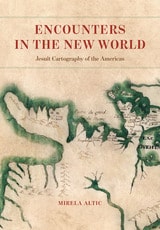
cover of Encounters in the New World: Jesuit Cartography of the Americas

Encounters in the New World

Jesuit Cartography of the Americas

Mirela Altic

University of Chicago Press, 2022

Analyzing more than 150 historical maps, this book traces the Jesuits’ significant contributions to mapping and mapmaking from their arrival in the New World.

In 1540, in the wake of the tumult brought on by the Protestant Reformation, Saint Ignatius of Loyola founded the Society of Jesus, also known as the Jesuits. The Society’s goal was to revitalize the faith of Catholics and to evangelize to non-Catholics through charity, education, and missionary work. By the end of the century, Jesuit missionaries were sent all over the world, including to South America. In addition to performing missionary and humanitarian work, Jesuits also served as cartographers and explorers under the auspices of the Spanish, Portuguese, and French crowns as they ventured into remote areas to find and evangelize to native populations.

In Encounters in the New World, Mirela Altic analyzes more than 150 of their maps, most of which have never previously been published. She traces the Jesuit contribution to mapping and mapmaking from their arrival in the New World into the post-suppression period, placing it in the context of their worldwide undertakings in the fields of science and art. Altic’s analysis also shows the incorporation of indigenous knowledge into the Jesuit maps, effectively making them an expression of cross-cultural communication—even as they were tools of colonial expansion. This ambiguity, she reveals, reflects the complex relationship between missions, knowledge, and empire. Far more than just a physical survey of unknown space, Jesuit mapping of the New World was in fact the most important link to enable an exchange of ideas and cultural concepts between the Old World and the New.
[more]
cover of Encyclical Letter Magnifica Humanitas: On Safeguarding the Human Person in the Time of Artificial Intelligence

Encyclical Letter Magnifica Humanitas

On Safeguarding the Human Person in the Time of Artificial Intelligence

Pope Leo XIV

Catholic University of America Press, 2026
"Humanity, created by God in all its grandeur, is today facing a pivotal choice: either to construct a new Tower of Babel or to build the city in which God and humanity dwell together. Each generation inherits the task of shaping its own era, of guiding history to become a place where the dignity of every person is safeguarded, justice is promoted and fraternity is made possible." Thus begins the first encyclical of the first pope from the United States, written during the country's 250th anniversary and addressing a topic - artificial intelligence - whose industry is centered in the United States. Yet Pope Leo's message is for everyone of good will throughout the world, to remind them of the principles of Catholic social teaching, the grandeur of being human, and the dignity of work as signposts in navigating the challenges and opportunities of an economy shaped by AI. This handsome paperback version from The Catholic University of America Press, the publishers of the pope's doctoral thesis, will spark reflection and action upon Pope Leo's words.
[more]
cover of Envisioning Scripture: Joseph Smith’s Revelations in Their Early American Contexts

Envisioning Scripture

Joseph Smith’s Revelations in Their Early American Contexts

Colby Townsend

Signature Books, 2022

The first fifty years of United States history was a period of seemingly endless possibility. With the birth of a new country during the age of revolutions came new religions, new literary genres, new political parties, temperance and abolitionist societies, and the expansion of print and marketing networks that would dramatically change the course of the century. Envisioning Scripture: Joseph Smith’s Revelations in Their Early American Contexts brings together ten essays from leading scholars on the history of early American religion and print culture. Covering issues of gender, race, prophecy, education, scripture, real and narrative time, authority and power, and apocalypticism, the essays invite the reader—scholar, student, etc.—to expand their knowledge of early Mormon history by grasping more fully the American contexts that Mormonism grew out of. 

Contributors include Catherine A. Brekus, William Davis, Elizabeth Fenton, Kathleen Flake, Paul Gutjahr, Jared Hickman, Susan Juster, Seth Perry, Laura Thiemann Scales, and Roberto A. Valdeón.
[more]
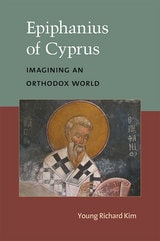
cover of Epiphanius of Cyprus: Imagining an Orthodox World

Epiphanius of Cyprus

Imagining an Orthodox World

Young Richard Kim

University of Michigan Press, 2015

Epiphanius of Cyprus offers the first complete biography in English of Epiphanius, lead bishop of Cyprus in the late fourth century CE and author of the Panarion, a massive encyclopedia of heresies. Imagining himself a defender of orthodoxy, he became an active heresy-hunter, involving himself in the most significant theological and ecclesiastical debates of his day.

Young Richard Kim studies the bishop as a historical person and a self-constructed persona, as mediated within the pages of the Panarion. Kim’s “micro-readings” of the Panarion present a close look at autobiographical anecdotes, situated in historical contexts, that profoundly shaped both Epiphanius’ character and how he wanted his readers to perceive him. “Macro-readings” examine portions of the Panarion that reflected how Epiphanius imagined his world, characterized by an orthodoxy that had existed since Creation and was preserved through the generations. In the final chapter, Kim considers Epiphanius’ life after the publication of the Panarion and how he spent years “living” the pages of his heresiology.

Kim brings a more balanced perspective to a controversial figure, recognizing shortcomings but also understanding them in light of Epiphanius’ own world. The bishop appears not as a buffoon, but as someone who knew how to use the power of the rhetoric of orthodoxy to augment his own authority. Quintessentially late antique, he embodied the contentious transition from the classical past to the medieval and Byzantine worlds.

This book will be of broad interest to students and scholars of ancient history, classics, and religious studies.
[more]
cover of Epistle to Marguerite de Navarre and Preface to a Sermon by John Calvin

Epistle to Marguerite de Navarre and Preface to a Sermon by John Calvin

Marie Dentière

University of Chicago Press, 2004

Born to a noble family in Tournai, Marie Dentière (1495-1561) left her convent in the 1520s to work for religious reform. She married a former priest and with her husband went to Switzerland, where she was active in the Reformation's takeover of Geneva.

Dentière's Very Useful Epistle (1539) is the first explicit statement of reformed theology by a woman to appear in French. Addressed to Queen Marguerite of Navarre, sister of the French king Francis I, the Epistle asks the queen to help those persecuted for their religious beliefs. Dentière offers a stirring defense of women and asserts their right to teach the word of God in public. She defends John Calvin against his enemies and attacks the hierarchy of the Roman Catholic Church. Her Preface (1561) to one of Calvin's sermons criticizes immodesty and extravagance in clothing and warns the faithful to be vigilant. Undaunted in the face of suppression and ridicule, this outspoken woman persisted as an active voice in the Reformation.
[more]
cover of Equal in Monastic Profession: Religious Women in Medieval France

Equal in Monastic Profession

Religious Women in Medieval France

Penelope D. Johnson

University of Chicago Press, 1991

In this study of the manner in which medieval nuns lived, Penelope Johnson challenges facile stereotypes of nuns living passively under monastic rule, finding instead that collectively they were empowered by their communal privileges and status to think and act without many of the subordinate attitudes of secular women. In the words of one abbess comparing nuns with monks, they were "different as to their sex but equal in their monastic profession."

Johnson researched more than two dozen nunneries in northern France from the eleventh century through the thirteenth century, balancing a qualitative reading of medieval monastic documents with a quantitative analysis of a lengthy thirteenth-century visitation record which allows an important comparison of nuns and monks. A fascinating look at the world of medieval spirituality, this work enriches our understanding of women's role in premodern Europe and in church history.



[more]
cover of Erasmus and the Jews

Erasmus and the Jews

Shimon Markish

University of Chicago Press, 1986

Erasmus of Rotterdam was the greatest Christian humanist scholar of the Northern European Renaissance, a correspondent of Sir Thomas More and many other learned men of his time, known to his contemporaries and to posterity for subtlety of his thought and the depth of his learning. He was also, according to some modern writers, an anti-Semite. In this complete analysis of all of Erasmus' writings on Jews and Judaism, Shimon Markish asserts that the accusation cannot be sustained. For Markish, to ask whether Erasmus was a friend or enemy of the Jews is to ask a modern question of a sixteenth-century man, whose attitude can best be called "asemitism." Erasmus' chief preoccupation was with the future of "the true philosophy of Christ"; he had little interest in the Jewish community of his own time.

Erasmus and the Jews discusses Erasmus' critique of Mosaic law and his view of the conflict between "Judaism" as legalistic morality and Jesus' teaching; his judgment on the Pharisees of Jesus' time; his emphasis on the importance of the study of Hebrew; and his opinions of sixteenth-century Jews. This meticulous analysis reveals an Erasmus who defended his vision of true piety by rejecting "Judaizing" Christians more than Jews and who saw the Old Testament as integral to the Christian worldview. As a Christian, he regretted nonbelief and pitied unbelievers, without vicious hostility toward any single people. His theological opposition to a form of religious thought which he identified with Judaism was not translated into crude prejudice against actual Jews. In general, his calm consideration of the strange and the foreign and his willingness to restrict his judgments to the philosophical realm were, Markish argues, early and significant steps toward enlightened toleration.

Markish's discussion of Erasmus is supplemented with an Afterword by theologian and philosopher Arthur A. Cohen, who offers a variant interpretation of Erasmus' writings and attitudes. The juxtaposed arguments of the two scholars make this an especially illuminating work for any student of Erasmus and his influence. Erasmus and the Jews also gives a necessary clarity to our understanding of the meaning of anti-Semitism and the history of religious toleration. Markish's profound knowledge of Erasmus allows him to demonstrate the fundamental importance of putting arguments and terminology in the context of a thinker's work and his own time.
[more]
cover of Eric Voegelin and the Problem of Christian Political Order

Eric Voegelin and the Problem of Christian Political Order

Jeffrey C. Herndon

University of Missouri Press, 2007

  Although some critics of Eric Voegelin’s later work have faulted his failure to deal with the historical Jesus and to address the implications of Christianity for social and political life, the recent publication of Voegelin’s History of Political Ideas has allowed a more complete assessment of his position regarding the Christian political order. This book addresses that criticism through an analysis of Voegelin’s early work.

            In Eric Voegelin and the Problem of Christian Political Order, Jeffrey C. Herndon analyzes the development of Voegelin’s thought regarding the origins of Christianity in the person of Jesus, the development of the church in the works of Paul, and the relationship between an immanent institutional order symbolizing the divine presence and the struggle for social and political order. Focusing on the tension between a spiritual phenomenon based on Pauline faith and the institutionalization of that experience in the church, Herndon offers one of the first examinations of the relationship of the History of Political Ideas to Voegelin’s larger body of work.

            In his wide-ranging study, Herndon explores Voegelin’s examination of the problem of Christian political order from the inception of Christianity through the Great Reformation. He also presents a clarification of Voegelin’s theory of civilizational foundation and of Voegelin’s philosophy of history with regard to Christianity and Western political order.

            Herndon addresses not only the nagging problem in Voegelin scholarship regarding his relationship with the historical Jesus but also the “Pauline compromises with the world” that enabled Christianity to become the instrument by which the West was civilized. He also shows that Voegelin’s interpretation of the historical pressures released by the Great Reformation is important to an understanding of his later work regarding the negative effect of Christian symbols in the creation of ideological disorder.

            Eric Voegelin and the Problem of Christian Political Order clarifies issues in Voegelin studies regarding the intersection between political theory and Christian concerns, addressing the relation of religious experience to the public sphere of political life in the West and helping to explain Voegelin’s contention that the death of the spirit is the price of progress. It offers scholars a perspective heretofore lacking in Voegelin scholarship and a clearer view of Voegelin’s understanding of the Christian dispensation and its influence on the course of Western development, history, and philosophy.
[more]
cover of Errand into the Wilderness of Mirrors: Religion and the History of the CIA

Errand into the Wilderness of Mirrors

Religion and the History of the CIA

Michael Graziano

University of Chicago Press, 2021

Reveals the previous underexplored influence of religious thought in building the foundations of the CIA.

Michael Graziano’s intriguing book fuses two landmark titles in American history: Perry Miller’s Errand into the Wilderness (1956), about the religious worldview of the early Massachusetts colonists, and David Martin’s Wilderness of Mirrors (1980), about the dangers and delusions inherent to the Central Intelligence Agency. Fittingly, Errand into the Wilderness of Mirrors investigates the dangers and delusions that ensued from the religious worldview of the early molders of the Central Intelligence Agency. Graziano argues that the religious approach to intelligence by key OSS and CIA figures like “Wild” Bill Donovan and Edward Lansdale was an essential, and overlooked, factor in establishing the agency’s concerns, methods, and understandings of the world. In a practical sense, this was because the Roman Catholic Church already had global networks of people and safe places that American agents could use to their advantage. But more tellingly, Graziano shows, American intelligence officers were overly inclined to view powerful religions and religious figures through the frameworks of Catholicism. As Graziano makes clear, these misconceptions often led to tragedy and disaster on an international scale. By braiding the development of the modern intelligence agency with the story of postwar American religion, Errand into the Wilderness of Mirrors delivers a provocative new look at a secret driver of one of the major engines of American power.
[more]
cover of Essays on American Indian and Mormon History

Essays on American Indian and Mormon History

Edited by P. Jane Hafen and Brenden W. Rensink

University of Utah Press, 2019

American Indians have long played a central role in Mormon history and its narratives. Their roles, however, have often been cast in support of traditional Mormon beliefs and as a reaffirmation of colonial discourses.

This collection of essays, many the result of a seminar hosted by the Charles Redd Center for Western Studies at Brigham Young University, explores the historical and cultural complexities of this narrative from a decolonizing perspective. Essays cover the historical construction of the “Lamanite,” settler colonialism and the Book of Mormon, and connections between the Seneca leader Handsome Lake and Joseph Smith. Authors also address American Indian Mormon tribal identities, Navajo and Mormon participation at the dedication of Glen Canyon Dam, the impact of Mormon Polynesian missionaries in Diné Bikéyah, the ISPP, and other topics. Prominent American Indian Mormon voices lend their creative work and personal experiences to the book.

With the aim of avoiding familiar narrative patterns of settler colonialism, contributors seek to make American Indians the subjects rather than the objects of discussion in relation to Mormons, presenting new ways to explore and reframe these relationships.
[more]
cover of Essays on the Modern Japanese Church: Christianity in Meiji Japan

Essays on the Modern Japanese Church

Christianity in Meiji Japan

Yamaji Aizan; Translated by Graham Squires, with Introductory Essays by Graham Squires and A. Hamish Ion

University of Michigan Press, 2000
Essays on the Modern Japanese Church (Gendai Nihon kyokai shiron), published in 1906, was the first Japanese-language history of Christianity in Meiji Japan. Yamaji Aizan’s firsthand account describes the reintroduction of Christianity to Japan—its development, rapid expansion, and decline—and its place in the social, political, and intellectual life of the Meiji period. Yamaji’s overall argument is that Christianity played a crucial role in shaping the growth and development of modern Japan.
Yamaji was a strong opponent of the government-sponsored “emperor-system ideology,” and through his historical writing he tried to show how Japan had a tradition of tolerance and openness at a time when government-sponsored intellectuals were arguing for greater conformity and submissiveness to the state on the basis of Japanese “national character.”
Essays is important not only in terms of religious history but also because it highlights broad trends in the history of Meiji Japan. Introductory chapters explore the significance of the work in terms of the life and thought of its author and its influence on subsequent interpretations of Meiji Christianity.
[more]
cover of Eternal Life and Human Happiness in Heaven: Philosophical Problems, Thomistic Solutions

Eternal Life and Human Happiness in Heaven

Philosophical Problems, Thomistic Solutions

Christopher M. Brown

Catholic University of America Press, 2021
Eternal Life and Human Happiness in Heaven treats four apparent problems concerning eternal life in order to clarify our thinking about perfect human happiness in heaven. The teachings of St. Thomas Aquinas provide the basis for solutions to these four problems about eternal life insofar as his teachings call into question common contemporary theological or philosophical presuppositions about God, human persons, and the nature of heaven itself. Indeed, these Thomistic solutions often require us to think very differently from our contemporaries. But thinking differently with St. Thomas is worth it: for the Thomistic solutions to these apparent problems are more satisfying, on both theological and philosophical grounds, than a number of contemporary theological and philosophical approaches. Christopher Brown deploys his argument in four sections. The first section lays out, in three chapters, four apparent problems concerning eternal life—Is heaven a mystical or social reality? Is heaven other-worldly or this-worldly? Is heaven static or dynamic? Won’t human persons eventually get bored in heaven? Brown then explains how and why some important contemporary Christian theologians and philosophers resolve these problems, and notes serious problems with each of these contemporary solutions. The second section explains, in five chapters, St. Thomas’ significant distinction between the essential reward of the saints in heaven and the accidental reward, and treats in detail his account of that in which the essential reward consists, namely, the beatific vision and the proper accidents of the vision (delight, joy, and charity). The third section treats, in five chapters, St. Thomas’ views on the multifaceted accidental reward in heaven, where the accidental reward includes, among other things, glorified human embodiment, participation in the communion of the saints, and the joy experienced by the saints in sensing God’s “new heavens and new earth.” Finally, section four argues, in four chapters, that St. Thomas’ views allow for powerful solutions to the four apparent problems about eternal life examined in the first section. These solutions are powerful because, not only are they consistent with authoritative, Catholic Christian Tradition, but they do not raise any of the significant theological or philosophical problems that attend the contemporary theological and philosophical solutions examined in the first section.
[more]
cover of Eternity in the Ether: A Mormon Media History

Eternity in the Ether

A Mormon Media History

Gavin Feller

University of Illinois Press, 2023

Mass media and the Church of Jesus Christ of Latter-day Saints evolved alongside each other, and communications technology became a fundamental part of the Church’s institutions and communities. Gavin Feller investigates the impact of radio, television, and the internet on Mormonism and what it tells us about new media’s integration into American life. The Church wrestled with the promise of new media to help implement its vision of Zion. But it also had to contend with threat that media posed to the family and other important facets of the Latter-day Saint faith. Inevitably, media technologies forced the leadership and lay alike to reconsider organizational values and ethical commitments. As Feller shows, the conflicts they faced illuminate the fundamental forces of control and compromise that enmesh an emerging medium in American social and cultural life.

Intriguing and original, Eternity in the Ether blends communications history with a religious perspective to examine the crossroads where mass media met Mormonism in the twentieth century.
[more]
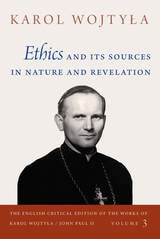
cover of Ethics and Its Sources in Nature and Revelation

Ethics and Its Sources in Nature and Revelation

Karol Wojtyla

Catholic University of America Press, 2026
The Catholic University of America Press is honored to publish the English Critical Edition of the Works of Karol Wojtyła/John Paul II. Prepared under the auspices of the John Paul II Institute in Washington DC, the English Critical Edition will comprise more than 20 volumes, covering all of John Paul II’s writings in the years before his papacy and a thematic selection of his papal writings. The third volume of the series presents various ethical and anthropological works by Karol Wojtyła. In addition to multiple essays, this volume features his larger works such as Ethics: Its Concept and Methodology, A Primer of Ethics, Considerations on the Essence of Man, and On the Knowability and Knowledge of God. It also contains Wojtyła’s reviews of books, master’s theses, and doctoral dissertations, written chiefly while he lectured at the Catholic University of Lublin. As was the case with previous volumes, Volume 3 also relies on the original manuscripts and typescripts of Wojtyła’s works. These original texts were compared with the Polish published editions, and all significant differences between them have been marked in the scholarly apparatus. Some of the essays in this volume have not been previously published in English, while some others have never been published before.
[more]
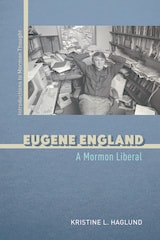
cover of Eugene England: A Mormon Liberal

Eugene England

A Mormon Liberal

Kristine L. Haglund

University of Illinois Press, 2021

Eugene England championed an optimistic Mormon faith open to liberalizing ideas from American culture. At the same time, he remained devoted to a conservative Mormonism that he saw as a vehicle for progress even as it narrowed the range of acceptable belief.

Kristine L. Haglund views England’s writing through the tensions produced by his often-opposed intellectual and spiritual commitments. Though labeled a liberal, England had a traditional Latter-day Saint background and always sought to address fundamental questions in Mormon terms. His intellectually adventurous essays sometimes put him at odds with Church authorities and fellow believers. But he also influenced a generation of thinkers and cofounded Dialogue, a Mormon academic and literary journal acclaimed for the broad range of its thought.

A fascinating portrait of a Mormon intellectual and his times, Eugene England reveals a believing scholar who emerged from the lived experiences of his faith to engage with the changes roiling Mormonism in the twentieth century.
[more]
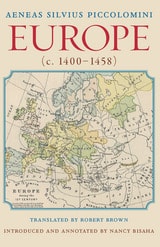
cover of Europe (c.1400-1458)

Europe (c.1400-1458)

Aeneas Silvius Piccolomini

Catholic University of America Press, 2013
This popular text circulated widely in manuscript form and was printed in several editions between the late 15th and the early 18th centuries, in Latin, German, and Italian. The present volume represents the first time this work has been translated into English, bringing its colorful narrative to the attention of a wider audience. This edition also provides extensive footnotes, an appendix of rulers, and a lengthy introduction to Aeneas?s life and the context and relevance of this work.
[more]
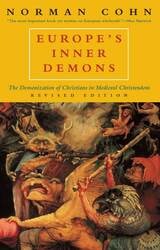
cover of Europe's Inner Demons: The Demonization of Christians in Medieval Christendom

Europe's Inner Demons

The Demonization of Christians in Medieval Christendom

Norman Cohn

University of Chicago Press, 2000

Europe's Inner Demons is a fascinating history of the irrational need to imagine witches and an investigation of how those fantasies made the persecutions of the middle ages possible. In addition, Norman Cohn's discovery that some influential sources on European witch trials were forgeries has revolutionized the field of witchcraft, making this one of the most essential books ever written on the subject.
[more]
cover of European Religious Cultures: Essays Offered to Christopher Brooke on the Occasion of His Eightieth Birthday

European Religious Cultures

Essays Offered to Christopher Brooke on the Occasion of His Eightieth Birthday

Edited by Miri Rubin

University of London Press, 2008
[more]
cover of Evagrius's Kephalaia Gnostika: A New Translation of the Unreformed Text from the Syriac

Evagrius's Kephalaia Gnostika

A New Translation of the Unreformed Text from the Syriac

Ilaria L.E. Ramelli

SBL Press, 2015

A new English translation for scholars and students of church history

Evagrius exerted a striking impact on the development of spirituality, of Origenism, and of the spiritual interpretation of the Bible in Greek, Syriac, and Latin Christianity. This English translation of the most complete Syriac version of Kephalaia Gnostika makes Evagrius Ponticus's thoughts concerning reality, God, protology, eschatology, anthropology, and allegorical exegesis of Scripture widely available.

Features:

  • English translation of the longer Syriac version discovered by Antoine Guillaumont
  • Commentary provides an integrated analysis of Evagrius's ascetic and philosophical writings
  • Extensive introduction on the importance of Evagrius and the context of his writings
[more]
cover of Evangelical Gotham: Religion and the Making of New York City, 1783–1860

Evangelical Gotham

Religion and the Making of New York City, 1783–1860

Kyle B. Roberts

University of Chicago Press, 2016

A portrait of born-again Protestantism in New York City from the American Revolution to the Civil War. 
 
At first glance, evangelical and Gotham seem like an odd pair. What does a movement of pious converts and reformers have to do with a city notoriously full of temptation and sin? More than you might think, says Kyle B. Roberts, who argues that religion must be considered alongside immigration, commerce, and real estate scarcity as one of the forces that shaped the New York City we know today.
 
In Evangelical Gotham, Roberts explores the role of the urban evangelical community in the development of New York between the American Revolution and the Civil War. As developers prepared to open new neighborhoods uptown, evangelicals stood ready to build meetinghouses. As the city’s financial center emerged and solidified, evangelicals capitalized on the resultant wealth, technology, and resources to expand their missionary and benevolent causes. When they began to feel that the city’s morals had degenerated, evangelicals turned to temperance, Sunday school, prayer meetings, antislavery causes, and urban missions to reform their neighbors. The result of these efforts was Evangelical Gotham—a complicated and contradictory world whose influence spread far beyond the shores of Manhattan.
 
 
[more]
cover of Evangelical Identity and Gendered Family Life

Evangelical Identity and Gendered Family Life

Gallagher, Sally K

Rutgers University Press, 2003

Evangelical Identity and Gendered Family Life provides a sociological and historical analysis of gender, family, and work among evangelical Protestants. In this innovative study, Sally Gallagher traces two lines of gender ideals—one of husbands’ authority and leadership, the other of mutuality and partnership in marriage—from the Puritans to the Promise Keepers into the lives of ordinary evangelicals today.  Rather than simply reacting against or accommodating themselves to “secular society,” Gallagher argues that both traditional and egalitarian evangelicals draw on longstanding beliefs about gender, human nature, and the person of God.

The author bases her arguments on an analysis of evangelical family advice literature, data from a large national survey and personal interviews with over 300 evangelicals nationwide. No other work in this area draws on such a range of data and methodological resources. Evangelical Identity and Gendered Family Life establishes a standard for future research by locating the sources, strategies, and meaning of gender within evangelical Protestantism.
[more]
cover of Evangelical News: Politics, Gender, and Bioethics in Conservative Christian Magazines of the 1970s and 1980s

Evangelical News

Politics, Gender, and Bioethics in Conservative Christian Magazines of the 1970s and 1980s

Anja-Maria Bassimir

University of Alabama Press, 2022

A comprehensive study of evangelical magazine discourse during the 1970s and 1980s and how it navigated and sustained religious convictions in a time of dramatic social change

The 1970s and 1980s were a tumultuous period in US history. In tandem with a dramatic political shift to the right, evangelicalism also entered the public discourse as a distinct religious movement and was immediately besieged by cultural appropriations and internal fragmentations. Americans in general and evangelicals in particular grappled with issues and ideas such as feminism, abortion, birth control, and restructuring traditional roles for women and the family. During this time, there was a surge in readership for evangelical periodicals such as Christianity Today, Moody Monthly, Eternity, and Post-Americans/Sojourners as well as the feminist newsletter Daughters of Sarah.

While each of these magazines—and other publications and media—contributed to and participated in the overall dissemination of evangelical ideology, they also had their own outlooks and political leanings concerning hot-button issues. In Evangelical News: Politics, Gender, and Bioethics in Conservative Christian Magazines of the 1970s and 1980s, Anja-Maria Bassimir presents a nuanced view of evangelicalism in the late twentieth century through the lens of the movement’s own media.

Bassimir argues that community can be produced in discourse, especially when shared rhetoric, concepts, and perspectives signal belonging. To accomplish this, Evangelical News traces the emergence of evangelical social and political awareness in the 1970s to the height of its power as a political program. The chapters investigate such topics as how evangelicals reenvisioned gender norms and relations in light of the feminist movement, the use of childhood as a symbol of unspoiled innocence, and the place of evangelicals as political actors.


[more]
cover of Everyday Apocalypse: Art, Empire, and the End of the World

Everyday Apocalypse

Art, Empire, and the End of the World

David Dark

Vanderbilt University Press, 2025

Everyday Apocalypse recovers the root meaning of the term apocalypse (revelation) to use the concept as a lens through which art and other acts of creative nonviolence that often go unseen may be brought into focus. Interweaving an examination of popular culture with ancient insight and contemporary political awareness, Dark uses the concept of the apocalyptic to celebrate epiphanies about the world we live in and the meaning of human experience within it. Since its original publication in 2002, the book has become a deeply influential text among two generations of intellectual evangelical Christians who find themselves at odds with their families and communities over issues of politics and culture, particularly in the South.

This revised edition of the book includes a foreword by Hanif Abdurraqib, an extensive afterword, updates in light of the passage of time since its publication, and new insights from the author, whose outspokenness has placed him outside of circles in which he was once supported and celebrated.
[more]
cover of Evidence for God from Physics and Philosophy: Extending the Legacy of Monsignor George Lemaître and St. Thomas Aquinas

Evidence for God from Physics and Philosophy

Extending the Legacy of Monsignor George Lemaître and St. Thomas Aquinas

Robert J. Spitzer, S.J.

St. Augustine's Press, 2015
[more]
cover of Exceptionally Queer: Mormon Peculiarity and U.S. Nationalism

Exceptionally Queer

Mormon Peculiarity and U.S. Nationalism

K. Mohrman

University of Minnesota Press, 2022

How perceptions of Mormonism from 1830 to the present reveal the exclusionary, racialized practices of the U.S. nation-state
 

Are Mormons really so weird? Are they potentially queer? These questions occupy the heart of this powerful rethinking of Mormonism and its place in U.S. history, culture, and politics. K. Mohrman argues that Mormon peculiarity is not inherent to the Latter-day Saint faith tradition, as is often assumed, but rather a potent expression of U.S. exceptionalism. 

Exceptionally Queer scrutinizes the history of Mormonism starting with its inception in the early 1830s and continuing to the present. Drawing on a wide range of historical texts and moments—from nineteenth-century battles over Mormon plural marriage; to the LDS Church’s emphases on “individual responsibility” and “family values”; to mainstream media’s coverage of the LDS Church’s racist exclusion of Black priesthood holders, its Native assimilation programs, and vehement opposition to the Equal Rights Amendment; and to much more recent legal and cultural battles over same-sex marriage and on-screen Mormon polygamy—Exceptionally Queer evaluates how Mormonism has been used to motivate and rationalize the biased, exclusionary, and colonialist policies and practices of the U.S. nation-state.

Mohrman explains that debates over Mormonism both drew on and shaped racial discourses and, in so doing, delineated the boundaries of whiteness and national belonging, largely through the consolidation of (hetero)normative ideas of sex, marriage, family, and economy. Ultimately, the author shows how discussions of Mormonism in this country have been and continue to be central to ideas of what it means to be American. 
[more]
cover of Exegetical Epistles

Exegetical Epistles

Thomas P. Jerome

Catholic University of America Press, 2023
The Nicene and Post-Nicene Fathers series of the 19th century rendered into English many of Jerome’s treatises and letters while bypassing his biblical commentaries as well as some of his most important exegetical letters. This omission, which was not helpful to scholarship, was probably due to the great length of these works. Although the problem was partly remedied by some new English translations of the 20th century, the present volume fills a significant lacuna by translating into English the Scriptural exegesis that Jerome conveyed in his relatively unknown epistles, many of which were composed in response to queries he had received from various correspondents. Many of these letters are presented here for the first time in English. Based on the Hilberg edition, this volume contains new translations, introduced and annotated, of Jerome’s Epistles 18-21, 25-30, 34-37, 42, 53, 55-56, 59, 64-65, 72-74, 78, 85, 106, 112, 119-121, 129, 130, and 140. Two newly translated letters from the famous exchange with Augustine over the meaning of Galatians 2:11-14 are included (Epp. 56 and 112), as well as a new rendering of Ep. 130 to Demetrias (which technically is not an “exegetical” letter but does present important information about the Pelagian controversy). Overall, this collection hopes to serve as a useful introduction to Jerome’s approach to biblical interpretation, of both the Old and the New Testament. Some letters focus on the historical meaning of Pauline and Gospel texts, while others contain allegorical expositions of Old Testament passages. Jerome’s competence as a Hebrew scholar will become evident to the reader of this volume as well as his thorough acquaintance with the antecedent Greek and Latin Christian exegetical traditions.
[more]
cover of Exegetical Epistles, Volume 2

Exegetical Epistles, Volume 2

Thomas P. St. Jerome

Catholic University of America Press, 2024
This is the second of a two-volume set that includes Thomas Scheck’s new translations of several of St. Jerome’s previously untranslated exegetical letters. Epistle 85 to St. Paulinus of Nola contains Jerome’s answers to two questions: how Exodus 7.13 and Romans 9.16 can be reconciled with free will, and what 1 Corinthians 7.14 means. Epistle 106 to Sunnias and Fretela, which deals with textual criticism of the Septuagint, consists of a meticulous defense of Jerome’s new translation of the Latin Psalter. Epistle 112 is a response to three letters from St. Augustine: Ep. 56 (contained in the previous volume), Ep. 67, and Ep 104. In the face of Augustine’s criticisms, Jerome defends his own endeavor to translate the Old Testament directly from the Hebrew text. He also vindicates his own ecclesiastical interpretation of Galatians 2.4-11, as he had set this forth in his Commentary on Galatians, and along the way he accuses Augustine of advocating the heresy of Judaizing. Epistle 119 to Minervius and Alexander contains Jerome’s answers to some eschatological questions regarding the interpretation of 1 Corinthians 15.51 and 1 Thessalonians 4.17. In Epistle 120 to Hedibia, Jerome tackles twelve exegetical questions that focus on reconciling the discrepant Resurrection accounts in the Gospels, as well as questions about Romans 9.14-29, 2 Corinthians 2.16, and 1 Thessalonians 5.23. In Epistle 121 to Algasia, Jerome clarifies eleven exegetical questions dealing with passages in the Gospels and Paul’s letters (Romans 5.7; 7.7-25; 9.3-5; Colossians 2.18-19; 2 Thessalonians 2.3). This letter also contains an exposition of the parable of the unjust steward (Luke 16.1-10), in which Jerome translates material from a commentary attributed to Theophilus of Antioch. In Epistle 129 to Dardanus, Jerome interprets “the promised land” and discusses the alleged crimes of the Jews. Epistle 130 to Demetrias is not an exegetical letter but an exhortation to the newly consecrated virgin on how to live out her vocation. In this letter Jerome reflects on Origenism and Pelagianism. Finally, in Epistle 140 to Cyprian the presbyter, Jerome expounds Psalm 90.
[more]
cover of Exodus!: Religion, Race, and Nation in Early Nineteenth-Century Black America

Exodus!

Religion, Race, and Nation in Early Nineteenth-Century Black America

Eddie S. Glaude Jr.

University of Chicago Press, 2000

No other story in the Bible has fired the imaginations of African Americans quite like that of Exodus. Its tale of suffering and the journey to redemption offered hope and a sense of possibility to people facing seemingly insurmountable evil.

Exodus! shows how this biblical story inspired a pragmatic tradition of racial advocacy among African Americans in the early nineteenth century—a tradition based not on race but on a moral politics of respectability. Eddie S. Glaude, Jr., begins by comparing the historical uses of Exodus by black and white Americans and the concepts of "nation" it generated. He then traces the roles that Exodus played in the National Negro Convention movement, from its first meeting in 1830 to 1843, when the convention decided—by one vote—against supporting Henry Highland Garnet's call for slave insurrection.

Exodus! reveals the deep historical roots of debates over African-American national identity that continue to rage today. It will engage anyone interested in the story of black nationalism and the promise of African-American religious culture.
[more]
cover of Experiments in the Fading Light

Experiments in the Fading Light

Peck, Steven L.

Signature Books, 2025

Experiments in the Fading Light is a poetic exploration that combines science, faith, and the aesthetic dimensions of art and nature. The poems range from a mischievous reimagining of the twelfth-century nun Hildegard von Bingen’s work on animals to looking at the deep suffering brought on by illness and other sorrows. The work also explores the concept of faith and meaning in light of how complicated life has become in our contemporary world.
[more]
cover of Explaining Christian Origins and Early Judaism: Contributions from Cognitive and Social Science

Explaining Christian Origins and Early Judaism

Contributions from Cognitive and Social Science

Petri Luomanen

SBL Press, 2016

Now in paperback!

Cognitive science of religion is a radically new paradigm in the study of religion. Historians of religion have shown increasing interest in this approach. The book is in four parts: an introduction to cognitive and social-scientific approaches, applications of cognitive science, applications of conceptual blending theory, and applications of socio-cognitive analyses.

Features:

  • Paperback format of an essential Brill resource
  • Essays that combine cognitive analysis with historical and social-scientific approaches to biblical materials, Christian origins, and early Judaism
  • Research for historians of religion, biblical scholars, and those working in the cognitive science of religion.
[more]
cover of Exploring the Nature of Law: Thomistic Juridical Realism and the Elements of Law's Ontology

Exploring the Nature of Law

Thomistic Juridical Realism and the Elements of Law's Ontology

Petar Popovic

Catholic University of America Press, 2025

This is a book about the nature of the reality or the phenomenon referred to as “law” by lawyers and legal officials, but also by members of communities living under law, to the extent that they conceptualize the realm of “law” as something sufficiently distinguishable from other different or broader realities and phenomena. The book belongs to the legal-philosophical field dedicated to the study of the very nature of law, that is, to the most basic or abstract part of the philosophy of law, which is sometimes referred to as “the philosophy of philosophy of law” or “general jurisprudence.” The scope of the book is to explore the essential features of law’s nature, namely, all those realities that pertain to law’s essence, the properties that make law into what it is. Despite the fact of plurality of legal-philosophical conceptions of law circulating in legal theory today, the book is optimistic about the very prospect of exploring the nature of law. It maintains that law has an essence and that it is possible to explore and describe this unique essence in an intelligible and reasonably detailed fashion, by identifying the basic elements of law’s ontology. The book advances the claim that Aquinas’s account of legal ontology denotes the most accurate understanding of the phenomenon that we call “law”—which the Angelic Doctor referred to as ius, constituted as such on the basis of the various manifestations of lex. Aquinas’s approach to understanding law’s nature that can be labeled “Thomistic juridical realism” and it may be categorized as a version of a natural-law theory of law. The book argues that a contemporary reading of Aquinas may indeed fruitfully contribute to an improved understanding of our present-day legal-philosophical analyses and discussions on the nature of law.
[more]