303 books match the query 'Church history' and 11 start with e
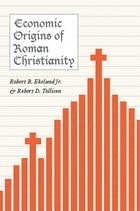
cover of Economic Origins of Roman Christianity

Economic Origins of Roman Christianity

Robert B. Ekelund Jr. and Robert D. Tollison

University of Chicago Press, 2011
In the global marketplace of ideas, few realms spark as much conflict as religion. For millions of people, it is an integral part of everyday life, reflected by a widely divergent supply of practices and philosophical perspectives. Yet, historically, the marketplace has not always been competitive. While the early Common Era saw competition between Christianity, Judaism, and the many pagan cults, Roman Christianity came eventually to dominate Western Europe.
 
Using basic concepts of economic theory, Robert B. Ekelund Jr. and Robert D. Tollison explain the origin and subsequent spread of Roman Christianity, showing first how the standard concepts of risk, cost, and benefit can account for the demand for religion. Then, drawing on the economics of networking, entrepreneurship, and industrial organization, the book explains Christianity's rapid ascent. Like a business, the church developed sound business strategies that increased its market share to a near monopoly in the medieval period. This book offers a fascinating look at the dynamics of Christianity’s rise, as well as how aspects the church’s structure—developed over the first millennium—illuminate a number of critical problems faced by the church today.
[more]
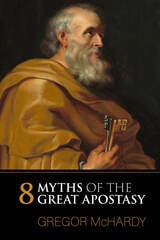
cover of Eight Myths of the Great Apostasy

Eight Myths of the Great Apostasy

Gregor McHardy

Signature Books, 2022

Latter-day Saints believe that, following the resurrection of Jesus Christ and the death of the original apostles, a Great Apostasy occurred that took God’s authorized servants from the earth and with them, direct revelation from God. This forced people to fend for themselves spiritually, which only resulted in lost truths, false doctrines, and a state of confusion that could only be remedied by a restoration. This, Mormons believe, was initiated by Joseph Smith, God’s chosen mouthpiece for this new era. But many church members’ understanding of this apostasy is tinged with tainted suppositions and misunderstandings. Statements such as “the priesthood was taken from the earth” and “the gospel was shattered into many pieces” are not only inaccurate but are curtly dismissive of fellow Christians. Gregor McHardy examines the fate of the apostles, the actual dissipation of authority following their deaths, the gradual onset of changed doctrines, and similar topics. 

McHardy’s careful, astute examination leads to a realization that Jesus’s prediction that “the gates of hell shall not prevail” against the organization Peter led was accurate. With that understanding, today’s Latter-day Saints can craft more positive, engaging statements about the nature and meaning of their Restoration. 
[more]
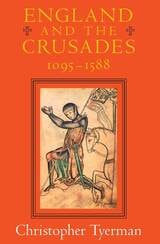
cover of England and the Crusades, 1095-1588

England and the Crusades, 1095-1588

Christopher Tyerman

University of Chicago Press, 1988

A potent mixt of salvation and adventure, the Crusades were one of the most prominent features of medieval Europe, reflecting and directing religious and secular movements in Western society for half a millennium. Christopher Tyerman offers the first book-length study of the role of England in the Crusades. Focusing on the courtroom and council chamber rather than the battlefield, he demonstrates the impact of the Crusades on the political and economic functions of English society.

Drawing on a wide range of archival, chronicle, and literary evidence, Tyerman brings to life the royal personalities, foreign policy, political intrigue, taxation and fundraising, and the crusading ethos that gripped England for hundreds of years.

"An ambitious task to undertake. . . . Tyerman has done the job not only thoroughly but brilliantly. . . . A highly impressive study, deserving rich praise and wide readership."—Norman Housley, Times Literary Supplement

"Christopher Tyerman has written a wonderful book. . . . [He] manages to confront thorny issues in scholarship and to contribute new perspectives on them."—William Chester Jordan, American Historical Review

"Tyerman provides valuable insights into preaching, recruitment, and the funding and organisation of crusading expeditions. . . . Fascinating new perspectives on English history."—Edward Powell, Sunday Times

"Impressive. . . . Tyerman's research has yielded valuable evidence, and his admirably lucid argument sheds new light on a complex and bloody period in English history."—Virginia Quarterly Review
[more]
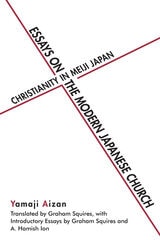
cover of Essays on the Modern Japanese Church: Christianity in Meiji Japan

Essays on the Modern Japanese Church

Christianity in Meiji Japan

Yamaji Aizan; Translated by Graham Squires, with Introductory Essays by Graham Squires and A. Hamish Ion

University of Michigan Press, 2000
Essays on the Modern Japanese Church (Gendai Nihon kyokai shiron), published in 1906, was the first Japanese-language history of Christianity in Meiji Japan. Yamaji Aizan’s firsthand account describes the reintroduction of Christianity to Japan—its development, rapid expansion, and decline—and its place in the social, political, and intellectual life of the Meiji period. Yamaji’s overall argument is that Christianity played a crucial role in shaping the growth and development of modern Japan.
Yamaji was a strong opponent of the government-sponsored “emperor-system ideology,” and through his historical writing he tried to show how Japan had a tradition of tolerance and openness at a time when government-sponsored intellectuals were arguing for greater conformity and submissiveness to the state on the basis of Japanese “national character.”
Essays is important not only in terms of religious history but also because it highlights broad trends in the history of Meiji Japan. Introductory chapters explore the significance of the work in terms of the life and thought of its author and its influence on subsequent interpretations of Meiji Christianity.
[more]
cover of Europe's Inner Demons: The Demonization of Christians in Medieval Christendom

Europe's Inner Demons

The Demonization of Christians in Medieval Christendom

Norman Cohn

University of Chicago Press, 2000
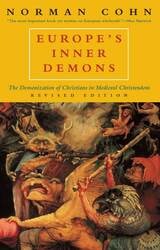
Europe's Inner Demons is a fascinating history of the irrational need to imagine witches and an investigation of how those fantasies made the persecutions of the middle ages possible. In addition, Norman Cohn's discovery that some influential sources on European witch trials were forgeries has revolutionized the field of witchcraft, making this one of the most essential books ever written on the subject.
[more]
cover of Eusebius of Emesa: Church and Theology in the Mid-Fourth Century

Eusebius of Emesa

Church and Theology in the Mid-Fourth Century

Robert E. Winn

Catholic University of America Press, 2011
Through a careful examination of his extant sermons, some of which survive in Latin and others in classical Armenian, this book invites readers to hear a bishop's voice from the mid- fourth century, an important period in late antique Christianity
[more]
cover of Evangelical Gotham: Religion and the Making of New York City, 1783–1860

Evangelical Gotham

Religion and the Making of New York City, 1783–1860

Kyle B. Roberts

University of Chicago Press, 2016
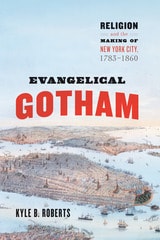
A portrait of born-again Protestantism in New York City from the American Revolution to the Civil War. 
 
At first glance, evangelical and Gotham seem like an odd pair. What does a movement of pious converts and reformers have to do with a city notoriously full of temptation and sin? More than you might think, says Kyle B. Roberts, who argues that religion must be considered alongside immigration, commerce, and real estate scarcity as one of the forces that shaped the New York City we know today.
 
In Evangelical Gotham, Roberts explores the role of the urban evangelical community in the development of New York between the American Revolution and the Civil War. As developers prepared to open new neighborhoods uptown, evangelicals stood ready to build meetinghouses. As the city’s financial center emerged and solidified, evangelicals capitalized on the resultant wealth, technology, and resources to expand their missionary and benevolent causes. When they began to feel that the city’s morals had degenerated, evangelicals turned to temperance, Sunday school, prayer meetings, antislavery causes, and urban missions to reform their neighbors. The result of these efforts was Evangelical Gotham—a complicated and contradictory world whose influence spread far beyond the shores of Manhattan.
 
 
[more]
cover of Exhibiting Evangelicalism: Commemoration and Religion’s Presence of the Past

Exhibiting Evangelicalism

Commemoration and Religion’s Presence of the Past

Devin C. Manzullo-Thomas

University of Massachusetts Press, 2022

Religion is a subject often overlooked or ignored by public historians. Whether they are worried about inadvertent proselytizing or fearful of contributing to America’s ongoing culture wars, many heritage professionals steer clear of discussing religion’s formative role in the past when they build collections, mount exhibits, and develop educational programming. Yet religious communities have long been active contributors to the nation’s commemorative landscape.

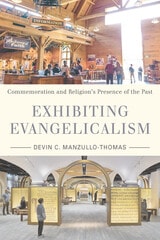
Exhibiting Evangelicalism provides the first account of the growth and development of historical museums created by white evangelical Christians in the United States over the twentieth and twenty-first centuries. Exploring the histories of the Museum of the Bible, the Billy Graham Center Museum, the Billy Sunday Home, and Park Street Church, Devin C. Manzullo-Thomas illustrates how these sites enabled religious leaders to develop a coherent identity for their fractious religious movement and to claim the centrality of evangelicalism to American history. In their zeal to craft a particular vision of the national past, evangelicals engaged with a variety of public history practices and techniques that made them major players in the field—including becoming early adopters of public history’s experiential turn.
[more]
cover of Expecting Pears from an Elm Tree: Franciscan Missions on the Chiriguano Frontier in the Heart of South America, 1830–1949

Expecting Pears from an Elm Tree

Franciscan Missions on the Chiriguano Frontier in the Heart of South America, 1830–1949

Erick D. Langer

Duke University Press, 2009

Missions played a vital role in frontier development in Latin America throughout the nineteenth and twentieth centuries. They were key to the penetration of national societies into the regions and indigenous lands that the nascent republics claimed as their jurisdictions. In Expecting Pears from an Elm Tree, Erick D. Langer examines one of the most important Catholic mission systems in republican-era Latin America, the Franciscan missions among the Chiriguano Indians in southeastern Bolivia. Using that mission system as a model for understanding the relationship between indigenous peoples and missionaries in the post-independence period, Langer explains how the missions changed over their lifespan and how power shifted between indigenous leaders and the missionaries in an ongoing process of negotiation.

Expecting Pears from an Elm Tree is based on twenty years of research, including visits to the sites of nearly every mission discussed and interviews with descendants of mission Indians, Indian chiefs, Franciscan friars, mestizo settlers, and teachers. Langer chronicles how, beginning in the 1840s, the establishment of missions fundamentally changed the relationship between the Chiriguano villages and national society. He looks at the Franciscan missionaries’ motives, their visions of ideal missions, and the realities they faced. He also examines mission life from the Chiriguano point of view, considering their reasons for joining missions and their resistance to conversion, as well as the interrelated issues of Indian acculturation and the development of the mission economy, particularly in light of the relatively high rates of Indian mortality and outmigration. Expanding his focus, Langer delves into the complex interplay of Indians, missionaries, frontier society, and the national government until the last remaining missions were secularized in 1949. He concludes with a comparative analysis between colonial and republican-era missions throughout Latin America.
[more]
cover of Experientia, Volume 2: Linking Text and Experience

Experientia, Volume 2

Linking Text and Experience

Colleen Shantz

SBL Press, 2012

This collection of essays continues the investigation of religious experience in early Judaism and early Christianity begun in Experientia, Volume 1, by addressing one of the traditional objections to the study of experience in antiquity. The authors address the relationship between the surviving evidence, which is textual, and the religious experiences that precede or ensue from those texts. Drawing on insights from anthropology, sociology, social memory theory, neuroscience, and cognitive science, they explore a range of religious phenomena including worship, the act of public reading, ritual, ecstasy, mystical ascent, and the transformation of gender and of emotions. Through careful and theoretically informed work, the authors demonstrate the possibility of moving from written documents to assess the lived experiences that are linked to them. The contributors are István Czachesz, Frances Flannery, Robin Griffith-Jones, Angela Kim Harkins, Bert Jan Lietaert Peerbolte, John R. Levison, Carol A. Newsom, Rollin A. Ramsaran, Colleen Shantz, Leif E. Vaage, and Rodney A. Werline.
[more]
cover of Explaining Christian Origins and Early Judaism: Contributions from Cognitive and Social Science

Explaining Christian Origins and Early Judaism

Contributions from Cognitive and Social Science

Petri Luomanen

SBL Press, 2016

Now in paperback!

Cognitive science of religion is a radically new paradigm in the study of religion. Historians of religion have shown increasing interest in this approach. The book is in four parts: an introduction to cognitive and social-scientific approaches, applications of cognitive science, applications of conceptual blending theory, and applications of socio-cognitive analyses.

Features:

  • Paperback format of an essential Brill resource
  • Essays that combine cognitive analysis with historical and social-scientific approaches to biblical materials, Christian origins, and early Judaism
  • Research for historians of religion, biblical scholars, and those working in the cognitive science of religion.
[more]
