Results by title
172 books match the query 'Citizenship' and 7 start with e
Education and Democratic Citizenship in America
Norman H. Nie, Jane Junn, and Kenneth Stehlik-Barry
University of Chicago Press, 1996
Norman H. Nie, Jane Junn, and Kenneth Stehlik-Barry provide answers by uncovering the causal relationship between education and democratic citizenship. They argue that citizenship encompasses both political engagement in pursuit of interests and commitment to democratic values that temper what citizens can do to win in politics. Education affects the two dimensions in distinct ways. Especially significant is the influence of education on political engagement through occupational prominence and position in social networks. Formal education orders the distribution of social position and connections and creates an uneven political playing field.
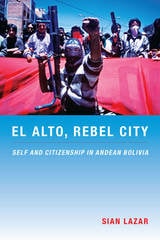
El Alto, Rebel City
Self and Citizenship in Andean BoliviaSian Lazar
Duke University Press, 2007
Drawing on ethnographic fieldwork conducted between 1997 and 2004, Lazar contends that in El Alto, citizenship is a set of practices defined by one’s participation in a range of associations, many of them collectivist in nature. Her argument challenges Western liberal notions of the citizen by suggesting that citizenship is not only individual and national but in many ways communitarian and distinctly local, constituted through different kinds of affiliations. Since in El Alto these affiliations most often emerge through people’s place of residence and their occupational ties, Lazar offers in-depth analyses of neighborhood associations and trade unions. In so doing, she describes how the city’s various collectivities mediate between the state and the individual. Collective organization in El Alto and the concept of citizenship underlying it are worthy of attention; they are the basis of the city’s formidable power to mobilize popular protest.
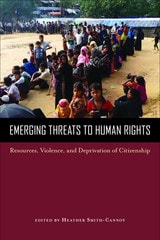
Emerging Threats to Human Rights
Resources, Violence, and Deprivation of CitizenshipHeather Smith-Cannoy
Temple University Press, 2019
As widespread environmental degradation threatens the basic human rights of a large proportion of the world’s population, we are also confronting the worst migration crisis in the modern era. Emerging Threats to Human Rights searches among the interrelated causes of these overlapping crises. The editor and contributors to this timely anthology assess how environmental resources, state violence, and the deprivation of nationality/citizenship are linked to gain a better understanding of how human rights abuses intersect with patterns of migration.
As some refugees flee violence at home, they arrive in an asylum country only to experience violence at the hands of the native population. Likewise, those denied citizenship rights in their country become vulnerable to human traffickers and other rights violations when they flee.
Bringing together scholars of resource dilemmas, violence, and citizenship as well as lawyers and human rights practitioners, Emerging Threats to Human Rights begins by identifying the core causes of human rights violations confronting our world today. Chapters also consider whether and to what extent these emerging threats to human rights serve as drivers of displacement.
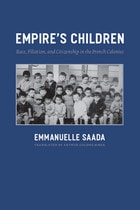
Empire's Children
Race, Filiation, and Citizenship in the French ColoniesEmmanuelle Saada
University of Chicago Press, 2012
Europe’s imperial projects were often predicated on a series of legal and scientific distinctions that were frequently challenged by the reality of social and sexual interactions between the colonized and the colonizers.When Emmanuelle Saada discovered a 1928 decree defining the status of persons of mixed parentage born in French Indochina—the métis—she found not only a remarkable artifact of colonial rule, but a legal bombshell that introduced race into French law for the first time. The decree was the culmination of a decades-long effort to resolve the “métis question”: the educational, social, and civil issues surrounding the mixed population. Operating at the intersection of history, anthropology, and law, Empire’s Children reveals the unacknowledged but central role of race in the definition of French nationality.
Through extensive archival work in both France and Vietnam, and a close reading of primary and secondary material from the Pacific islands and sub-Saharan and North Africa, Saada has created in Empire’s Children an original and compelling perspective on colonialism, law, race, and culture from the end of the nineteenth century until decolonization.

Equaliberty
Political EssaysÉtienne Balibar
Duke University Press, 2014
Ethics of Citizenship
Immigration and Group Rights in GermanyWilliam A. Barbieri Jr.
Duke University Press, 1998
Although some of Germany’s foreign workers have gradually attained a degree of social and economic legitimacy, Barbieri explains how they remain effectively excluded from true German citizenship. Describing how this exclusion has occurred and assessing current attitudes toward political membership in Germany, he argues for a just and democratic policy toward the tax-paying, migrant worker minority, one that would combine the extension of the individual rights of citizenship with the establishment of certain group rights. Through a dissection of ongoing public “membership debates” over issues such as suffrage, dual citizenship, and immigration and refugee policy, Barbieri identifies a range of competing responses to the question of who “belongs” in Germany. After critiquing these views, he proposes an alternative ethic of membership rooted in an account of domination and human rights that seeks to balance individual and group rights within the context of a commitment to democracy and equal citizenship.
Indispensable for scholars of German studies, Ethics of Citizenship also raises questions that will attract moral philosophers, constitutional scholars, and those interested in the continuing, global problems associated with migration.
Ethnic Routes to Becoming American
Indian Immigrants and the Cultures of CitizenshipRudrappa, Sharmila
Rutgers University Press, 2004
How does an immigrant become an ethnic American? And does American society fundamentally alter because of these newcomers?
In Ethnic Routes to Becoming American, Sharmila Rudrappa examines the paths South Asian immigrants in Chicago take toward assimilation in the late twentieth-century United States, where deliberations on citizenship rights are replete with the politics of recognition. She takes us inside two ethnic institutions, a battered women’s shelter, Apna Ghar, and a cultural organization, the Indo American Center, to show how immigrant activism, which brings cultural difference into public sphere debates, ironically abets these immigrants’ assimilation. She interlaces ethnographic details with political-philosophical debates on the politics of recognition and redistribution. In this study on the under-researched topic of the incorporation of South Asian immigrants into the American polity, Sharmila Rudrappa compels us to rethink ethnic activism, participatory democracy, and nation-building processes.