Results by title
718 books match the query 'Civil rights' and 17 start with e
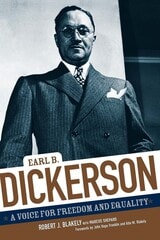
Earl B. Dickerson
A Voice for Freedom and EqualityRobert J. Blakely
Northwestern University Press, 2006
At fifteen, Earl Burrus Dickerson stowed away on a train in Canton, Mississippi, fleeing the racial oppression of his native South. But Chicago, the boy's destination, was no haven of racial fairness and equality. His flight north was in fact the beginning of a journey that would last a lifetime--and would forever pit Dickerson against the forces of racial injustice. Earl B. Dickerson's story, told here for the first time, is one of courage and character, of remarkable accomplishment in the face of terrible odds; it is also emblematic of the twentieth-century struggle for civil rights--a crucial chapter of African American history as it was lived by one uncompromising individual.
In this book, Robert J. Blakely tells how Dickerson (1891-1986) worked his way through preparatory schools and college, a segregated officer's training school, and law school at the University of Chicago. The story follows Dickerson's career as general counsel to the first insurance company owned and operated by African Americans; the first African American Democratic alderman elected to the Chicago City Council; a member of FDR's first Fair Employment Practices Committee; leader of the movement that broke the color barrier to membership in the Illinois Bar Association; and, perhaps most famously, the power behind Hansberry v. Lee, the U.S. Supreme Court case that marked the beginning of the end of restrictive real estate covenants--one of the most pernicious legal tools of segregation in the North. Blakely gives us a sense of the man behind the achievements, the life that defied conventions and statistics, and the world in which "the dean of Chicago's black lawyers" became a pioneering architect for equal opportunity in American life.
Ekklesia
Three Inquiries in Church and StatePaul Christopher Johnson, Pamela E. Klassen, and Winnifred Fallers Sullivan
University of Chicago Press, 2018
The first of a closely linked trio of essays is by Paul Johnson, and offers a new interpretation of the Brazilian community gathered at Canudos and its massacre in 1896–97, carried out as a joint churchstate mission and spectacle. In the second essay, Pamela Klassen argues that the colonial churchstate relationship of Canada came into being through local and national practices that emerged as Indigenous nations responded to and resisted becoming “possessions” of colonial British America. Finally, Winnifred Sullivan’s essay begins with reflection on the increased effort within the United States to ban Bibles and scriptural references from death penalty courtrooms and jury rooms; she follows with a consideration of the political theological pressure thereby placed on the jury that decides between life and death. Through these three inquiries, Ekklesia takes up the familiar topos of “church and state” in order to render it strange.
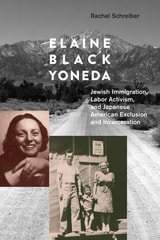
Elaine Black Yoneda
Jewish Immigration, Labor Activism, and Japanese American Exclusion and IncarcerationRachel Schreiber
Temple University Press, 2022
During World War II, Elaine Black Yoneda, the daughter of Russian Jewish immigrants, spent eight months in a concentration camp—not in Europe, but in California. She did this voluntarily and in solidarity, insisting on accompanying her husband, Karl, and their son, Tommy, when they were incarcerated at the Manzanar Relocation Center. Surprisingly, while in the camp, Elaine and Karl publicly supported the United States’ decision to exclude Japanese Americans from the coast.
Elaine Black Yoneda is the first critical biography of this pioneering feminist and activist. Rachel Schreiber deftly traces Yoneda’s life as she became invested in radical politics and interracial and interethnic activism. In her work for the International Labor Defense of the Communist Party, Yoneda rose to the rank of vice president. After their incarceration, Elaine and Karl became active in the campaigns to designate Manzanar a federally recognized memorial site, for redress and reparations to Japanese Americans, and in opposition to nuclear weapons.
Schreiber illuminates the ways Yoneda’s work challenged dominant discourses and how she reconciled the contradictory political and social forces that shaped both her life and her family’s. Highlighting the dangers of anti-immigrant and anti-Asian xenophobia, Elaine Black Yoneda recounts an extraordinary life.
Elite-Led Mobilization and Gay Rights
Dispelling the Myth of Mass Opinion BacklashBenjamin George Bishin, Thomas J. Hayes, Matthew B. Incantalupo, and Charles Anthony Smith
University of Michigan Press, 2021
Media and scholastic accounts describe a strong public opinion backlash—a sharply negative and enduring opinion change—against attempts to advance gay rights. Academic research, however, increasingly questions backlash as an explanation for opposition to LGBT rights. Elite-Led Mobilization and Gay Rights argues that what appears to be public opinion backlash against gay rights is more consistent with elite-led mobilization—a strategy used by anti-gay elites, primarily white evangelicals, seeking to prevent the full incorporation of LGBT Americans in the polity in order to achieve political objectives and increase political power. This book defines and tests the theory of Mass Opinion Backlash and develops and tests the theory of Elite-Led Mobilization by employing a series of online and natural experiments, surrounding the U.S. Supreme Court rulings in Obergefell v. Hodges and United States v. Windsor, and President Obama’s position change on gay marriage. To evaluate these theories, the authors employ extensive survey, voting behavior, and campaign finance data, and examine the history of the LGBT movement and its opposition by religious conservatives, from the Lavender Scare to the campaign against Trans Rights in the defeat of Houston’s 2015 HERO ordinance. Their evidence shows that opposition to LGBT rights is a top-down process incited by anti-gay elites rather than a bottom-up reaction described by public opinion backlash.
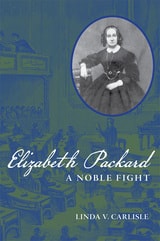
Elizabeth Packard
A Noble FightLinda V. Carlisle
University of Illinois Press, 2010
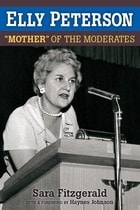
Elly Peterson
"Mother" of the ModeratesSara Fitzgerald
University of Michigan Press, 2012
"A magisterially written, well-researched, informative, and entertaining biography of a woman who helped throw open the doors to broader participation and power for women in the Republican Party and American politics."
---Dave Dempsey, author of William G. Milliken: Michigan's Passionate Moderate
"Elly Peterson will be a text to which historians and researchers turn for insight into the yin and yang of mainstream politics in the mid-century."
---Patricia Sullivan, past president, Journalism and Women Symposium
"This lively portrait of a leading woman in the Republican Party between 1952 and 1982 also charts the party's shift to the right after 1964, revealingly viewed through the eyes of liberal Republican women. Intensively researched with ethnographic attention to the subtleties of political culture, Fitzgerald's book is essential reading for anyone interested in how the Republican Party changed during the turbulent decades after 1960 and how women and women's issues shaped those changes."
---Kathryn Kish Sklar, Distinguished Professor of History, State University of New York, Binghamton
"Sara Fitzgerald tells Peterson's story in this superb and timely biography. It carries a message that deserves the widest audience as the nation struggles to find needed consensus on critical issues amid poisonous political partisanship that has made it increasingly difficult for public officials to bridge their differences. I hope that every American reads it."
---Pulitzer Prize winner Haynes Johnson, from the Foreword
"To understand the quest for equal rights in America you really need to meet those women who were active at the time of transition. In this gripping biography we meet one woman who entered a male dominated world and triumphed."
---Francis X. Blouin Jr., Director, Bentley Historical Library
"Sara Fitzgerald's writing is as intelligent as it is entertaining."
---Best-selling novelist Diane Chamberlain
Elly Peterson was one of the highest ranking women in the Republican Party. In 1964 she ran for a Michigan seat in the U.S. Senate and became the first woman to serve as chair of the Michigan Republican Party. During the 1960s she grew disenchanted with the increasing conservatism of her party, united with other feminists to push for the Equal Rights Amendment and reproductive choice, battled Phyllis Schlafly to prevent her from gaining control of the National Federation of Republican Women, and became an independent.
Elly Peterson's story is a missing chapter in the political history of Michigan, as well as the United States. This new biography, written by Sara Fitzgerald (a Michigan native and former Washington Post editor), finally gives full credit to one of the first female political leaders in this country.
When Peterson resigned in 1970 as assistant chairman of the Republican National Committee, David Broder of the Washington Post wrote that "her abilities would have earned her the national chairmanship, were it not for the unwritten sex barrier both parties have erected around that job."
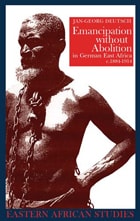
Emancipation without Abolition in German East Africa, c. 1884–1914
Jan-Georg Deutsch
Ohio University Press, 2006
This study examines the complex history of slavery in East Africa, focusing on the area that came under German colonial rule. In contrast to the policy pursued at the time by other colonial powers in Africa, the German authorities did not legally abolish slavery in their colonial territories. However, despite government efforts to keep the institution of slavery alive, it significantly declined in Tanganyika in the period concerned. The book highlights the crucial role played by the slaves in the process of emancipation.
Author Jan-Georg Deutsch explores the rise of slavery in Tanganyika in the second half of the nineteenth century, when the region became more fully integrated into the world economy.
An analysis of German colonial policy reveals that the authorities believed that abolition should be avoided at all costs since it would undermine the power and prosperity of the local slave-owning elites whose effective collaboration was thought to be indispensable to the functioning of colonial rule.
The author demonstrates how slaves by their own initiative brought the ”evil institution“ to an end, making the best of limited choices and opportunities available to them.
The study, of interest to historians of East Africa, makes a contribution to the more general debate about the demise of slavery on the continent.
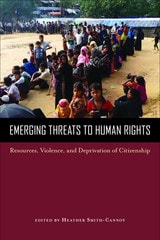
Emerging Threats to Human Rights
Resources, Violence, and Deprivation of CitizenshipHeather Smith-Cannoy
Temple University Press, 2019
As widespread environmental degradation threatens the basic human rights of a large proportion of the world’s population, we are also confronting the worst migration crisis in the modern era. Emerging Threats to Human Rights searches among the interrelated causes of these overlapping crises. The editor and contributors to this timely anthology assess how environmental resources, state violence, and the deprivation of nationality/citizenship are linked to gain a better understanding of how human rights abuses intersect with patterns of migration.
As some refugees flee violence at home, they arrive in an asylum country only to experience violence at the hands of the native population. Likewise, those denied citizenship rights in their country become vulnerable to human traffickers and other rights violations when they flee.
Bringing together scholars of resource dilemmas, violence, and citizenship as well as lawyers and human rights practitioners, Emerging Threats to Human Rights begins by identifying the core causes of human rights violations confronting our world today. Chapters also consider whether and to what extent these emerging threats to human rights serve as drivers of displacement.
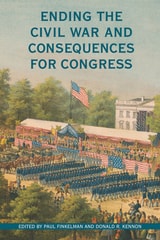
Ending the Civil War and Consequences for Congress
Paul Finkelman
Ohio University Press, 2019
The social changes and human and economic costs of the Civil War led to profound legal and constitutional developments after it ended, not least of which were the Fourteenth and Fifteenth Amendments and the many laws devised to protect the civil rights of newly freed African Americans. These amendments and laws worked for a while, but they were ineffective or ineffectively enforced for more than a century.
In Ending the Civil War and the Consequences for Congress, contributors explore how the end of the war both continued the trauma of the conflict and enhanced the potential for the new birth of freedom that Lincoln promised in the Gettysburg Address. Collectively, they bring their multidisciplinary expertise to bear on the legal, economic, social, and political aspects of the aftermath of the war and Reconstruction era. The book concludes with the reminder of how the meaning of the war has changed over time. The Civil War is no longer the “felt” history it once was, Clay Risen reminds us, and despite the work of many fine scholars it remains contested.
Contributors: Jenny Bourne, Carole Emberton, Paul Finkelman, Lorien Foote, William E. Nelson, Clay Risen, Anne Sarah Rubin, and Peter Wallenstein

Envisioning Global LGBT Human Rights
(Neo)colonialism, Neoliberalism, Resistance and HopeEdited by Nancy Nicol, Adrian Jjuuko, Richard Lusimbo, Nick Mulé, Susan Ursel, Amar Wahab, and Phyllis Waugh
University of London Press, 2018
Eternally Vigilant
Free Speech in the Modern EraEdited by Lee C. Bollinger and Geoffrey R. Stone
University of Chicago Press, 2001
"With group efforts, such as this collection of essays, it is almost inevitable that there will be a couple—and often several—duds among the bunch, or at least a dismaying repetition of ideas. Such is not the case here. . . . Whether one agrees with a given author or not (and it is possible to do both with any of the essays), each has something to add. Overall, Eternally Vigilant is a thoughtful and thought-provoking book, consistently intelligent and, at times, brilliant."—Richard J. Mollot, New York Law Journal
Contributors:
Lillian R. BeVier
Vincent Blasi
Lee C. Bollinger
Stanley Fish
Owen M. Fiss
R. Kent Greenawalt
Richard A. Posner
Robert C. Post
Frederick Schauer
Geoffrey R. Stone
David A. Strauss
Cass R. Sunstein
Ethics of Citizenship
Immigration and Group Rights in GermanyWilliam A. Barbieri Jr.
Duke University Press, 1998
Although some of Germany’s foreign workers have gradually attained a degree of social and economic legitimacy, Barbieri explains how they remain effectively excluded from true German citizenship. Describing how this exclusion has occurred and assessing current attitudes toward political membership in Germany, he argues for a just and democratic policy toward the tax-paying, migrant worker minority, one that would combine the extension of the individual rights of citizenship with the establishment of certain group rights. Through a dissection of ongoing public “membership debates” over issues such as suffrage, dual citizenship, and immigration and refugee policy, Barbieri identifies a range of competing responses to the question of who “belongs” in Germany. After critiquing these views, he proposes an alternative ethic of membership rooted in an account of domination and human rights that seeks to balance individual and group rights within the context of a commitment to democracy and equal citizenship.
Indispensable for scholars of German studies, Ethics of Citizenship also raises questions that will attract moral philosophers, constitutional scholars, and those interested in the continuing, global problems associated with migration.
Everyday Justice
A Legal Aid StoryAshley Wiltshire
Vanderbilt University Press, 2022
Those surviving on low incomes often see the legal system as an oppressive force stacked against them. Everyday Justice is about lawyers trying to make the law work for these people. This book traces the development and evolution of legal aid in Middle Tennessee from the late 1960s to the turn of the millennium, as told by Ashley Wiltshire, who worked for the Legal Aid Society of Middle Tennessee and the Cumberlands in all its incarnations for four decades, beginning a year after its inception.
Set in the context of the legal aid movement in the United States—beginning as a part of the social awakening in the post–Civil War era, continuing with volunteer efforts in the first part of the twentieth century, and coming to fruition beginning with the OEO Office of Legal Services grants of the 1960s as part of the War on Poverty—Everyday Justice is a story of Nashville, which levied an extended period of opposition because of prevailing cultural and religious views on race and poverty.
Everyday Justice
A Legal Aid StoryAshley Wiltshire
Vanderbilt University Press, 2022
Those surviving on low incomes often see the legal system as an oppressive force stacked against them. Everyday Justice is about lawyers trying to make the law work for these people. This book traces the development and evolution of legal aid in Middle Tennessee from the late 1960s to the turn of the millennium, as told by Ashley Wiltshire, who worked for the Legal Aid Society of Middle Tennessee and the Cumberlands in all its incarnations for four decades, beginning a year after its inception.
Set in the context of the legal aid movement in the United States—beginning as a part of the social awakening in the post–Civil War era, continuing with volunteer efforts in the first part of the twentieth century, and coming to fruition beginning with the OEO Office of Legal Services grants of the 1960s as part of the War on Poverty—Everyday Justice is a story of Nashville, which levied an extended period of opposition because of prevailing cultural and religious views on race and poverty.
Everyman's Constitution
Historical Essays on the Fourteenth Amendment, the "Conspiracy Theory," and American ConstitutionalismHoward Jay Graham
Wisconsin Historical Society Press, 1968
Expelled
James Lawson Jr. and Vanderbilt UniversityBenjamin Houston
Vanderbilt University Press, 2026
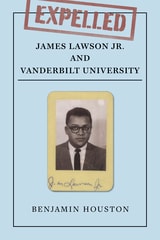
In February 1960, as lunch counter sit-ins began in Southern cities, national attention focused on Nashville, where demonstrations were carried out by an unusually organized and disciplined group of students tutored extensively in nonviolent direct action. Their mentor was Reverend James Lawson Jr., a graduate student at Vanderbilt University Divinity School with longstanding nonviolent credentials. His workshops with Nashville students, exploring Gandhian style philosophies and tactics, had predated the famed Greensboro sit-ins.
As demonstrations continued in Nashville and successive sit-ins saw violence erupt downtown, local Black ministers demanded an audience with Mayor Ben West. At this meeting, an exchange occurred that was misconstrued by subsequent newspaper reportage. Shortly thereafter, Lawson was summarily expelled from Vanderbilt, one semester shy of graduating.
Lawson’s ouster triggered a wave of repercussions and headlines. After extended negotiations with their superiors were rebuffed, a large contingent of Divinity School faculty resigned en masse. Simmering dissension between the university’s professors, Board of Trust, and administrators kept the crisis ongoing. Sustained criticism of Vanderbilt both within the city and nationally made for a turbulent situation as Lawson’s expulsion came to symbolize profound tensions about civil rights and racial justice.
Extraordinary Racial Politics
Four Events in the Informal Constitution of the United StatesFred Lee
Temple University Press, 2018
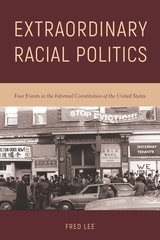
Extraordinary racial politics rupture out of and reset everyday racial politics. In his cogent book, Fred Lee examines four unusual, episodic, and transformative moments in U.S. history: the 1830s–1840s southeastern Indian removals, the Japanese internment during World War II, the post-war civil rights movement, and the 1960s–1970s racial empowerment movements. Lee helps us connect these extraordinary events to both prior and subsequent everyday conflicts.
Extraordinary Racial Politics brings about an intellectual exchange between ethnic studies, which focuses on quotidian experiences and negotiations, and political theory, which emphasizes historical crises and breaks. In ethnic studies, Lee draws out the extraordinary moments in Michael Omi and Howard Winant’s as well as Charles Mills’s accounts of racial formation. In political theory, Lee considers the strengths and weaknesses of using Carl Schmitt’s and Hannah Arendt’s accounts of public constitution to study racial power.
Lee concludes that extraordinary racial politics represent both the promises of social emancipation and the perils of state power. This promise and peril characterizes our contentious racial present.